


Looking for the real thing? Browse authentic Medieval & Crusader rings, each piece one of one, individually authenticated, with documented provenance. For the background, see the guide to medieval jewelry.
How archaeologists define Viking marriage gifts and rings
Terminology and time frame (c. 8th to 11th centuries)
In archaeological literature, references to marriage gifts commonly center on durable personal ornaments, with ancient viking wedding rings among the objects most often discussed as part of a negotiated exchange between families or households. Researchers typically use a broad chronological bracket for Viking studies, roughly c. 800 to 1050 CE, and interpret grave goods and hoards within that frame to understand social practice; museum summaries and syntheses provide useful overviews for this dating and terminology National Museum of Denmark.
Archaeologists treat labels like wedding gift or bridewealth as interpretive tools, often tied to burial context, hoard composition and dress fittings rather than explicit textual claims. That interpretive step means that the objects we call wedding gifts in publications are those that consistently appear in female graves, hoards or dress assemblages and that fit broader patterns of exchange reported by museum catalogues and recent syntheses.
A short typology checklist to compare an object to common Viking-age gift forms
Use this checklist to match objects to museum types
What counts as a wedding gift in the archaeological record
In practice, what counts as a wedding gift is a combination of find context and object class. Metal jewellery such as rings, arm-rings, neck-rings and penannular brooches is the most commonly attested class of objects interpreted as marriage-related gifts in Viking-age graves and hoards, and that frequency shapes how researchers read exchange practices in the record National Museum of Denmark.
Because the archaeological record is uneven, researchers complement metalwork with other lines of evidence such as ethnographic analogy and textile studies when available, but those perishable materials rarely survive with the same frequency as metal fittings and thus occupy a secondary place in typological discussions.

Marriage exchange and social meaning in Viking society
Bridewealth, display and household exchange
Jewellery in Viking contexts can function simultaneously as personal ornament, visible display of status and mobile wealth that could be used within negotiated marriage exchange. Arm- and neck-rings in particular have been interpreted as forms of convertible wealth that could move between households or act as bridewealth in some contexts, and this dual role helps explain their recurring presence in graves and hoards The Children of Ash and Elm, overview.
Display mattered. Wearing metalwork signalled identity, wealth and ties to a household network. Where an item appears in a grave with particular dress fittings or in a hoard associated with a domestic site, researchers treat it as part of broader household exchange rather than an isolated ornament, and that interpretive frame guides how museum catalogues label items found in such contexts.
Gendered roles and symbolic meanings
Scholars have long debated how gift exchange intersected with gender roles; foundational texts and recent museum interpretations together indicate that jewellery frequently appears in female graves and is therefore often read as part of female dress and exchange systems, though interpretations are cautious and contextual Women in the Viking Age, Cambridge University Press.
Recent syntheses emphasise that reading gender from goods requires attention to context and that typology, wear patterns and associated finds must all be considered before assigning a social meaning such as bridewealth or household transfer.
What the archaeological evidence shows about metal jewellery
Grave and hoard patterns
Museum catalogues and curated collection overviews make a clear empirical point: metal jewellery dominates the surviving record of objects interpreted as marriage-related gifts. Female burials and hoard deposits repeatedly yield finger rings, penannular brooches and tubular arm-rings, and these assemblages form the basis for claims about gift exchange in Viking-age studies British Museum collection overview.

Researchers and curators frequently rely on hoard evidence to track common forms because hoards preserve groups of metalwork that show circulation and reuse. That pattern explains why rings and arm-rings appear as markers of exchange in multiple regional traditions and why these items form the central comparative set for typology work.
Why rings, arm-rings and brooches dominate the record
Three practical factors make metal jewellery the leading class in discussions of marriage gifts. First, metal survives archaeologically far better than textiles or perishable household goods. Second, metal objects are portable and convertible, so they serve both as display and as a store of value. Third, clear typologies exist for many brooch and ring forms, which makes museum catalogue comparison feasible and repeatable Portable Antiquities Scheme.
Those three factors mean collections and databases will inevitably emphasise metalwork when reconstructing exchange practices, and readers should bear in mind that this emphasis reflects survival biases as well as social behaviour.
Common gift types: rings, brooches, arm-rings and neck-rings
Typical ring forms and features
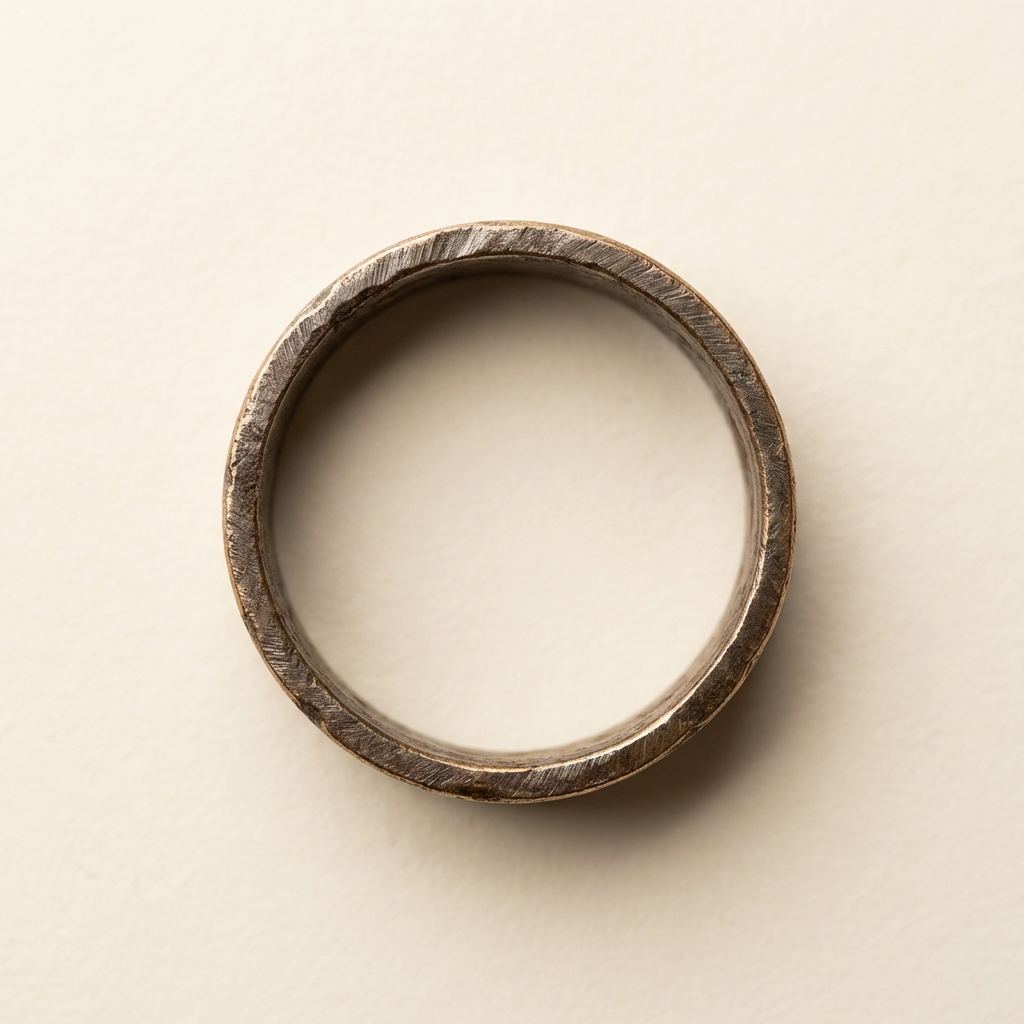
Finger rings in Viking contexts vary from simple hoops to fitted rings with bezels that sometimes hold intaglios or cut gemstones. Collectors should note bezel style, presence of intaglio, hoop thickness and evidence of wear consistent with age as primary indicators to compare with documented examples National Museum of Denmark.
Many published rings show wear consistent with long use rather than modern manufacture. Look for signs such as smoothing on the inner hoop, patina inside the bezel, and a lack of fresh tool marks that would indicate recent work. These details help distinguish an antiquity from a modern reproduction or an extensively restored item.
Brooch types and dress fittings
Brooches and dress fittings serve both to fasten clothing and to signal regional identity. Penannular brooches and certain regional oval brooches repeatedly appear in female dress assemblages and thus are often read as bride or dress gifts; typology and find context determine whether a brooch is likely to be associated with marriage exchange rather than a generic personal possession Portable Antiquities Scheme. Regional museum summaries also describe how oval and relief brooches appear in wealthy female burials Viking woman's brooches - MuseumNord.
Collectors comparing brooches should check shoulder forms, pin construction and hinge or spring mechanisms where preserved. These features are often diagnostic for a region and date and help link a market listing to museum-documented examples.
Regional signals and typology: why place and date matter
Scandinavian mainland versus British Isles and Baltic trends
Regional variation is pronounced. Scandinavian oval brooches, British Isles dress fittings and Baltic metalwork each follow different stylistic conventions, and these differences allow specialists to align objects with likely production areas and chronological windows; careful typological matching to catalogue examples is therefore essential British Museum collection overview, and academic syntheses treat regional distribution and brooch types in detail academic synthesis.
Small differences in motif, manufacturing details or fitting style can move a probable date range by decades, and so practitioners emphasize measured comparison to secure museum entries or finds databases rather than relying on broad stylistic labels.
Viking husbands commonly gave metal jewellery that served as both personal adornment and mobile wealth, such as rings, arm-rings, neck-rings and brooches. Collectors should prioritise documented provenance, condition and restoration notes, and typology matching to museum catalogues when evaluating such pieces.
When assessing an item, ask how its typology alters where it was likely made and what that implies for how it circulated. Practical comparison with curated collections can clarify whether a piece aligns with Scandinavian, British Isles or Baltic patterns.
How dating and typology guide interpretation
Typology provides the primary route for dating many metalwork types when secure stratigraphic or radiocarbon evidence is not available. Matching an object to a secure catalogue entry or hoard group can narrow a likely date and cultural attribution and thus refine claims about whether an item functioned as a marriage gift in its original context Portable Antiquities Scheme.
Because typology is comparative, even small differences in decorative program or construction can have outsized effects on attributions, so collectors should prefer listings that cite catalogue numbers, hoard entries or museum references when available.
Textiles and perishable gifts: the invisible half of marriage exchange
Why textile evidence is underrepresented
Textiles, clothing and small household items are likely to have been part of marriage exchange, but organic materials survive poorly and are therefore under-recorded in the archaeological record. That survival bias means many reconstructions of Viking marriage exchange lean on metalwork evidence while acknowledging an invisible perishable component Viking Ship Museum Roskilde knowledge.
Conservation specialists and textile studies help fill the gap by showing what garment fragments and textile impressions can reveal, but in many contexts the absence of perishable goods in collections reflects preservation rather than absence in life.
Using ethnographic analogy and conservation studies
Where direct textile evidence is missing, researchers use analogies and careful conservation reports to suggest what kinds of fabric or clothing might have accompanied metal gifts. These inferences are cautious and intended to complement, not replace, the clear metalwork record that dominates most catalogues and hoard studies Viking Ship Museum Roskilde knowledge.
For collectors, that means museum comparisons will often show the metal components of a dress set while the associated textiles remain absent or fragmentary, and collectors should adjust expectations accordingly when interpreting listings.
How to assess ancient viking wedding rings before buying
Provenance, documentation and catalog references
Prioritise documented provenance. A clear collection history, catalogue references or museum citations are the strongest indicators that a ring has been studied in a comparative context, and such documentation is essential when assessing an ancient ring or other dress fittings for purchase Portable Antiquities Scheme.
Ask sellers for precise documentation, such as previous collection notes, any museum accession numbers or references to published catalogues. Listings that rely solely on broad market descriptions without catalogue or hoard references should be treated with caution. You can also review seller listings on the Aurora Antiqua homepage for related catalog examples.
Follow @auroraantiqua for condition and provenance walkthroughs
If you want a printable checklist of documentation and condition checks to use when reviewing listings, download the article checklist to take with you while comparing catalogues and images.
Condition, patina and restoration notes
Condition checks are practical and specific. Look for consistent patina, smoothing consistent with long wear, lack of fresh tool marks and clear restoration notes that state what was stabilised, repaired or left untouched. Sellers who provide restoration notes and condition descriptions give buyers the most usable information for comparison Portable Antiquities Scheme.
Be attentive to seam lines or modern solder, uneven patina that suggests selective cleaning, and vague restoration language. Whenever possible, request close macro photographs of bezels, inner hoops and joins, and ask for any conservation reports that accompany the piece.
Restoration, conservation and what condition notes mean
Common conservation treatments and how they are described
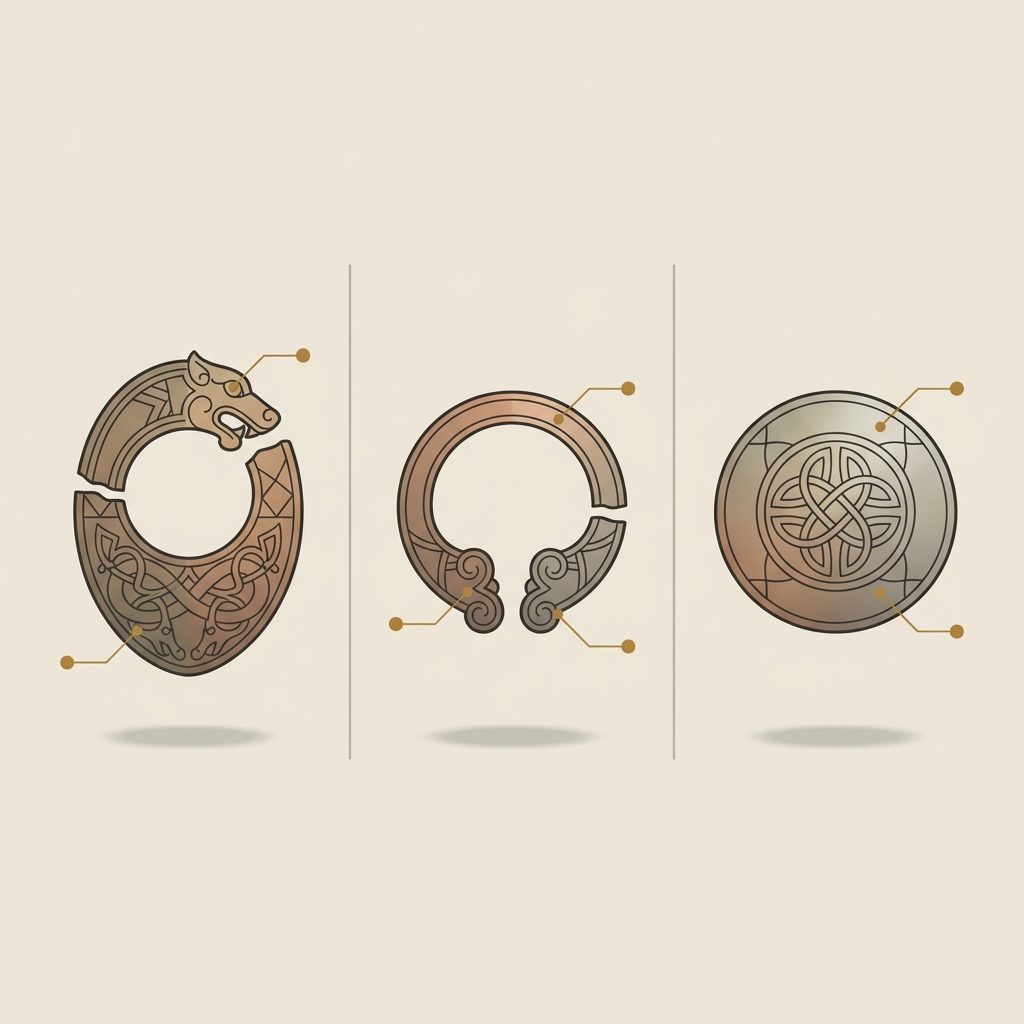
Descriptions that state precise interventions allow collectors to assess whether an object remains identifiable and whether restorations could have altered diagnostic features important for typology or dating.
When restoration affects identification or value
Restoration can assist legibility but can also obscure manufacturing traces that help with attribution. For example, added fills, recut decorations or replaced pins may complicate efforts to match an object to a specific typology, so transparent restoration notes are crucial for responsible evaluation National Museum of Denmark.
If key diagnostic features have been altered, seek independent condition advice or ask for prior publication references that describe the object before and after treatment.
Common mistakes and red flags when judging authenticity
Overreliance on market descriptions
A common error is trusting promotional language without verification. Listings that omit provenance, catalogue references or detailed condition notes but use evocative phrases about age or origin should prompt further questions rather than acceptance, and museum databases provide a safer comparative baseline Portable Antiquities Scheme.
Another mistake is assuming patina equals authenticity. Patina can be added or altered, and inconsistent surface chemistry or selective cleaning are red flags that warrant closer scrutiny and possibly scientific testing.
Ignoring inconsistent patina or missing provenance
Missing provenance and inconsistent or patchy patina are among the clearest practical red flags. If a listing lacks collection history, catalogue references or clear restoration notes, that absence should reduce confidence in an attribution and may justify declining the purchase or seeking independent assessment Portable Antiquities Scheme.
Typology mismatches are another signal. If an object in a market listing is described as a particular regional type but shows details that contradict that typology, request further images and references before proceeding.
Practical examples and museum case notes
Select examples from major collections
Major museums document many of the ring forms, arm-rings and brooches discussed above, and comparing a market listing to a museum entry can clarify likely dating and origin. The British Museum collection and the National Museum of Denmark provide accessible images and catalogue notes that serve as typology anchors for many comparanda British Museum collection overview, and other museum lists of key objects are useful for comparison Vikingtidsmuseet key objects.
The Portable Antiquities Scheme maintains local finds records that are particularly useful for matching small variations in motif and construction to regional patterns, and those searchable records are a practical resource for collectors seeking parallels Portable Antiquities Scheme.
What these examples teach about form and context
Museum examples typically show how rings and brooches sit within larger assemblages, which helps specify whether an object was likely personal adornment or part of a household exchange. Catalogue entries that include hoard associations or burial contexts are especially useful for assessing how items functioned socially in the past National Museum of Denmark.
Use these museum comparisons to test claims in listings: a good match will line up on form, fitting details, and documented provenance or catalogue citations. When in doubt, consult Q&A resources such as our Did Vikings have rings entry or seek independent specialist advice.
A responsible buying checklist for collectors
Pre purchase checks
Before you buy, request the following: documented provenance or collection history, catalogue or museum references, detailed condition notes and restoration reports, high-resolution images of diagnostic areas, and any prior publication references. These items form the backbone of a responsible purchasing decision and help tie market listings back to curated knowledge Portable Antiquities Scheme.
If a seller cannot provide such information, consider seeking independent condition advice or comparing the listing to museum entries before committing.
Questions to ask sellers and documentation to request
Useful questions include: Where did the piece come from originally, is there any accession or catalogue number, what conservation was performed, can you supply macro images of bezels and joins, and are there publication references. Sellers who can answer these make it easier to match the object to typology examples and to assess condition notes reliably Portable Antiquities Scheme.
When in doubt, ask for time to consult an independent specialist or request a written condition report. That extra step can prevent common mistakes that arise from ambiguous or incomplete listings.
Key takeaways about ancient viking wedding rings
Brief summary of evidence and collecting guidance
Metal jewellery, including ancient ring forms, arm-rings, neck-rings and brooches, dominates the archaeological record for marriage-related gifts in Viking contexts and is therefore the primary focus for both scholars and collectors. For purchasing, prioritise provenance, condition notes and typology matching to museum entries as the essential criteria for responsible assessment The Children of Ash and Elm, overview. Compare market items with curated examples in the Aurora Antiqua rings collection.
Open research questions remain, especially about regional timelines and the role of perishable goods in marriage economies, so treat interpretations as informed and provisional rather than definitive.
Open research questions
Researchers continue to refine regional chronologies and to explore how textiles and other perishable goods shaped marriage exchange. Those gaps mean collectors should rely on curated comparisons and documented provenance when forming attributions about an item.
Archaeological evidence shows metal jewellery such as finger rings, arm-rings, neck-rings and brooches were commonly associated with marriage exchange, supplemented in life by perishable goods that rarely survive in the record.
Look for documented provenance, consistent patina and detailed condition and restoration notes, compare diagnostic features to museum catalogues, and request high-resolution images of bezels and joins for independent assessment.
Textiles and other organic materials decompose more readily than metal, so they are under-represented archaeologically and often inferred from conservation studies or ethnographic analogy rather than direct survival.
More from Aurora Antiqua
References
- The silver hoards of the Vikings, Nationalmuseet / National Museum of Denmark
- Hoard find from Vester Vedsted, Nationalmuseet / National Museum of Denmark
- Viking silver arm-rings discovered on the shores of Clew Bay, Co. Mayo, National Museum of Ireland
- VIKING HOARD DECLARED TREASURE ON THE ISLE OF MAN, Manx National Heritage
- The World’s Largest Viking Treasure, Historiska museet / Statens historiska museer, Stockholm
- E.C.C.O. Professional Guidelines (II): Code of Ethics, European Confederation of Conservator-Restorers'
- About us, International Association of Dealers in Ancient Art
- Danefæ og andre løsfund, Slots- og Kulturstyrelsen (Danish Agency for Culture and Palaces)
From Aurora Antiqua
We sell authenticated ancient & medieval pieces, each individually examined before listing and backed by a Lifetime Authenticity Guarantee. One of a kind, sold once, never reproduced.
Browse Medieval & Crusader Rings →