


Looking for the real thing? Browse genuine ancient rings for sale, each piece one of one, individually authenticated, with documented provenance. For the background, see the guide to ancient jewelry.
At a glance: what 333 on jewelry means
When you see 333 stamped on a band, that numeric mark typically denotes a fineness of 333 parts per 1,000, which is about 33.3 percent gold and commonly called 8K or 8 carat in metric systems; in many contexts this reading is the starting point for further checks when evaluating a gold ring roman numerals or other hallmarked pieces.
Numeric fineness marks like 333 are read as separate information from maker markings, pictorial assay stamps, or decorative engravings, so a clear visual reading of the number is only the first step in assessing an item for collectors and buyers.
Follow technical notes and short find videos on Instagram
If you are deciding whether to dig deeper into testing or valuation, use the checklist below and the stepwise sections that follow to move from simple visual checks to instrument and laboratory testing as needed.
For practical purposes, knowing a ring is marked 333 matters because it signals a lower intrinsic gold content than higher carat marks and therefore different wear, cleaning and valuation considerations for an ancient ring or collector piece.
What 333 means on a gold ring roman numerals: fineness, naming and regional use
The three digit 333 stamp is a metric fineness notation that expresses the alloy as 333 parts gold per 1,000, commonly referred to as 8K or 8 carat in listings and assay guides; this naming appears in many European hallmark systems and is the standard way to convey that proportion of gold.
Assay offices and hallmark guides explain the metric fineness system and the common names used in trade, which is why listings or documents may use 333, 8K or 8 carat interchangeably depending on jurisdiction and audience https://www.assayofficelondon.co.uk/hallmarking/what-is-a-hallmark#convention, Goldsmiths' Company Assay Office
In many European countries official hallmarking practice will pair a numeric fineness mark with additional national assay marks or pictorial symbols that help place an object geographically, so collectors should expect variation in the exact marks and terminology they find.
Because terminology and marking practice vary, listing descriptions that use the phrase 8K gold hallmark may describe the same fineness as a 333 stamp, and that equivalence can help when you compare listings from different countries or auction catalogues.
Where to find hallmarks on a gold ring roman numerals and how to read them
Start any inspection by looking inside the band, under the bezel and along the shoulders or shank edges; these are the most common locations where makers and assay offices place fineness marks and other stamps.
When you find marks, read numeric fineness marks first, then note maker's marks, pictorial assay marks and any date letters; treating the number as the fineness indicator avoids confusing decorative or roman style engravings with alloy information The Goldsmiths' Company hallmarking guide
Treat a 333 stamp as an indicator of roughly 33.3 percent gold and start with careful visual documentation; follow with non invasive instrument testing such as handheld XRF and escalate to laboratory fire assay if the item is high value or provenance sensitive.
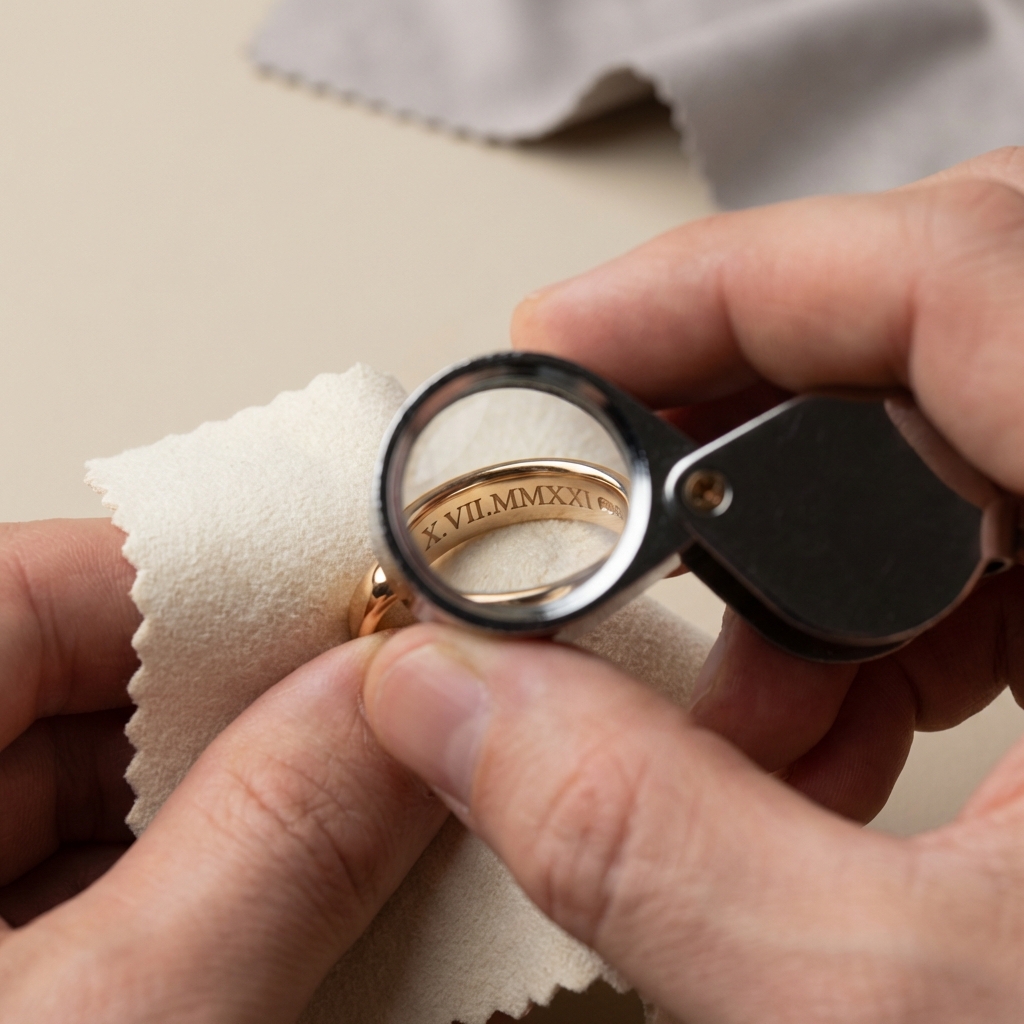
If a set of Roman numerals or ornate engravings appears on the same surface, examine spacing, depth and style: decorative engravings tend to be lightly incised or repeated as motif, while fineness marks usually appear as concise numerals in a consistent font and location.
Record all marks with clear photographs and measurements so you can compare them to assay office references or share them with a testing service without moving the piece excessively.
Quick at-home checks before testing
Use a jeweller's loupe or magnifier to inspect for mismatched colour at edges, small areas of worn plating and signs of repair; look for abrupt colour changes where the gold layer might thin at contact points, which can signal plating rather than solid alloy.
Weigh and measure the ring where possible and compare to expected weights for the style and material; extreme lightness or unexpectedly heavy weight relative to size can be a cue to investigate further, but these checks do not confirm fineness alone Gold test explained - Everything you need to know
Document condition, take photos under consistent light and note any restoration notes or visible solder lines before any instrument testing or surface cleaning is performed.
Non-destructive testing options: handheld XRF, what it shows and its limits
Handheld XRF gives a fast, non-destructive estimate of elemental composition and is commonly used by dealers, labs and collectors to screen for alloy content and to check whether a 333 mark matches a roughly 33 percent gold reading (see a comparison of gold testing methods comparing gold testing methods).
Because XRF measures surface composition, results can be biased when a piece has been plated, heavily corroded or bears a very thin gold layer, so a cautious reading treats XRF as an excellent screening tool that may require confirmatory lab work in sensitive cases Hallmarking, The Assay Office Birmingham

For routine checks on lower value items or preliminary verification of a suspected 333 fineness, handheld XRF is often sufficient; for high value, provenance sensitive or historically important rings, a laboratory fire assay or full analytical report will provide definitive confirmation.
Acid (touchstone) tests and laboratory methods: tradeoffs and when they matter
Touchstone or acid testing pits a small surface sample against calibrated acids to indicate broad fineness bands and can distinguish coarse groups such as 333, 585 or 750, but it is semi quantitative and requires practiced technique to interpret marks correctly GIA gold testing methods overview
Acid testing abrades a minute area of the metal and is best done by someone experienced; it can be an economical step when XRF is not available, but it does not match the precision of laboratory fire assay for final valuation or legal proof of content.
Fire assay or full laboratory testing remains the reference method when provenance or value is critical because it quantifies gold content precisely and is less sensitive to surface plating than handheld XRF readings https://www.assayofficelondon.co.uk/hallmarking/what-is-a-hallmark#convention, Goldsmiths' Company Assay Office
How assay offices, national marks and dating fit with a gold ring roman numerals reading
National assay offices can add pictorial marks, date letters or guaranty symbols alongside numeric fineness marks, and these combined marks help place an item in a jurisdictional and chronological context when cross referenced with official guides Compulsory Marks, The Company of Goldsmiths of Dublin, Assay Office Dublin Castle
Quick reference to check assay marks across jurisdictions
Use this to record marks before testing
Use official assay office resources to decode pictorial marks and date letters rather than relying on an isolated numeric reading; doing so can add helpful provenance context before you decide whether to commission further tests.
Because conventions vary across regions, consult the relevant national assay office guide when date letters or uncommon pictorial marks appear, and keep a photograph and careful notes for future reference.
How 333 (8K) affects care, patina and long-term wear for ancient rings
Alloys marked 333 contain substantially less gold than 14K or 18K alloys, which typically gives them different mechanical and surface behaviour; a lower gold percentage tends to make the alloy harder and more resistant to small dents while increasing the chance of base metal tarnish or distinct discolouration patterns over time The Goldsmiths' Company hallmarking guide
For ancient rings, preservation minded cleaning and minimal intervention are recommended; consult restoration notes and provenance statements, and when in doubt favour conservation approaches that stabilise condition rather than aggressive polishing which can remove historic patina and surface evidence.

Document any cleaning or stabilisation undertaken and include this information with condition notes so future owners and analysts understand what was altered and how that might affect later testing or visual assessment.
Decision checklist for buyers: authenticity, documentation and next steps
Minimum documentation to request includes clear photos of all marks, measurements, condition notes, any provenance or prior ownership references and explicit statements about observed assay marks; assemble these before making offers or commissioning tests The Goldsmiths' Company hallmarking guide
If documentation is incomplete or plating and repairs are suspected, pursue at least one instrument test such as handheld XRF; if the item has high value or important provenance, seek laboratory confirmation with a fire assay or full analytical report.
Keep a dated log of all inspections, tests and communications; store test reports, photos and condition notes with provenance records so the item's history is clear to future owners and specialists.
Common mistakes and red flags when you see 333 or other marks
One common error is mistaking decorative Roman numerals or ornate engravings for numeric fineness marks; always compare the style, location and depth of the mark and read numeric marks in their usual positions such as inside the band to avoid confusion Consumer Reports guide to jewelry markings
Red flags include inconsistent colour at edges, suspiciously perfect surface appearance on an ostensibly ancient piece, mismatched maker marks and evidence of surface plating; any of these should prompt instrument testing before a purchase.
When in doubt, pause the transaction and request time to obtain an XRF screen or independent laboratory report, because marks alone do not replace physical testing when provenance or value is at stake.
Real-world scenarios: sample readings and what they imply
Scenario A: a clear 333 stamp accompanied by a known assay office pictorial mark and consistent condition notes. In this case a handheld XRF that shows an alloy composition in the expected range can be a reasonable confirmation for routine purchases, particularly when provenance records are present Hallmarking, The Assay Office Birmingham
Scenario B: a 333 stamp visible but with colour mismatch at the shank edge and a faint layered appearance. Here a handheld XRF reading may be skewed by surface layers, so an acid test or lab confirmation is advisable before assuming the alloy is solid 333.
Keep short logs for each scenario recording photos, XRF screenshots if available, and any acid test marks; these records are useful for future resale and for maintaining the piece's documented provenance.
How Aurora Antiqua presents and documents ancient rings with numeric hallmarks
Aurora Antiqua lists curated ancient rings with condition notes, restoration and preservation notes and provenance references when available to help buyers assess marks such as 333 and contextualise any assay stamps or maker marks.
When a listing includes detailed photographs of the inside band and clear notes about any tests or stabilisation performed, collectors can use those materials to decide whether additional testing is warranted before purchase.
Summing up: what to do when you see 333 on a ring
Remember that 333 indicates roughly 33.3 percent gold, commonly called 8K, and that numeric fineness marks should be read alongside maker and assay marks to build a fuller picture before accepting a piece at face value https://www.assayofficelondon.co.uk/hallmarking/what-is-a-hallmark#convention, Goldsmiths' Company Assay Office
A short prioritized action plan is: 1) perform a careful visual inspection and document marks, 2) run or request a non destructive instrument screen such as handheld XRF, and 3) seek laboratory fire assay when the item is high value or provenance sensitive. Keep all reports and condition notes together with provenance records for future reference.
333 indicates about 33.3 percent gold, commonly called 8K, but a visible 333 stamp alone does not guarantee the alloy is solid gold; surface plating or repairs can mask true fineness and testing is recommended.
Handheld XRF is a reliable non destructive screening tool for alloy composition, but surface plating or corrosion can bias readings; confirm with laboratory testing if the item is high value or provenance sensitive.
An acid test abrades a tiny area and requires skill; it is semi quantitative and may slightly affect surface finish, so use a conservator or experienced tester for valuable or historic pieces.
More from Aurora Antiqua
References
- https://www.assayofficelondon.co.uk/hallmarking/what-is-a-hallmark#convention, Goldsmiths' Company Assay Office
- Legislation, The Company of Goldsmiths of Dublin, Assay Office Dublin Castle
- Compulsory Marks, The Company of Goldsmiths of Dublin, Assay Office Dublin Castle
- Hallmarking Act 1973, The National Archives / legislation.gov.uk, UK
- Hallmarking Guidance Notes: practical guidance in relation to the Hallmarking Act 1973, the UK Assay Offices
- 16 CFR 23.3, Misrepresentation as to gold content, Federal Trade Commission, eCFR
- Gesetz über den Feingehalt der Gold- und Silberwaren (FeinGehG, German law on gold and silver fineness), Bundesministerium der Justiz
- Hallmarking, The Assay Office Birmingham
- Hallmarking, The Goldsmiths' Company, The Goldsmiths Company Assay Office