


Looking for the real thing? Browse authenticated ancient rings, each piece one of one, individually authenticated, with documented provenance. For the background, see the guide to ancient jewelry.
What is the triskelion? Definition and archaeological anchor
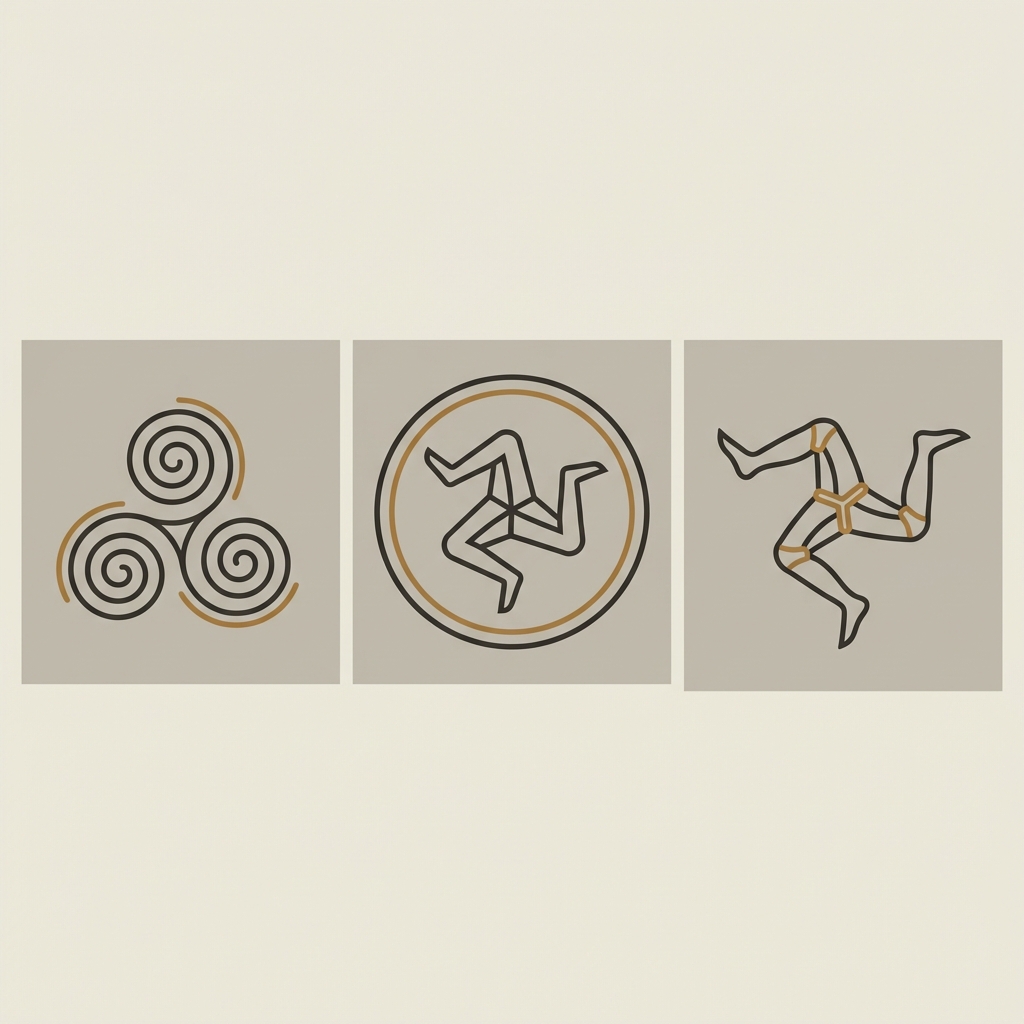
Basic visual forms: triple spiral, three legs, and variants, triskelion ring meaning
The term triskele or triskelion describes a recurring triple motif that appears in multiple visual forms across time and space, most commonly the triple spiral and the three-legged device; scholars treat it as a repeated visual idea rather than a single, fixed meaning, and this distinction matters when considering triskelion ring meaning in a collecting context Encyclopaedia Britannica entry on the triskele Wikipedia: Triskelion
Archaeologically, the best-documented early examples of the triple-spiral form come from Neolithic Ireland, where carved spirals at Brú na Bóinne are often cited as the principal anchor for claims about the motif's antiquity UNESCO World Heritage listing for Brú na Bóinne
Separate visual traditions include the Mediterranean three-legged form found on Greek and Sicilian material, which operates more as a civic or regional emblem in historic contexts; understanding these different traditions helps avoid assuming continuity of meaning across millennia British Museum collection highlights
See provenance and restoration details at @auroraantiqua
As a curator of ancient rings, Aurora Antiqua presents condition notes and provenance examples alongside each listing to help buyers judge symbolism in context without assuming a single meaning.
For collectors, the practical upshot is simple: a triskelion motif on an ancient ring suggests a visual vocabulary that can be traced to early carved forms and later emblematic uses, but the reasons people made or used the motif likely varied by time, place and function.
Newgrange and the Neolithic triple spiral
The carved triple spirals at Brú na Bóinne, commonly called Newgrange, are among the earliest clear archaeological occurrences of this triple motif and are frequently used as the primary evidence for the motif's deep antiquity; the site is recognized on the UNESCO World Heritage list, which summarizes its significance and long-standing attention in the literature UNESCO World Heritage listing for Brú na Bóinne
Foundational fieldwork and interpretive study, notably by Michael J. O'Kelly, treat the carvings as important expressions of late Neolithic art and ritual landscape design, while also acknowledging that exact ritual meanings remain the subject of scholarly debate and are not settled by archaeological context alone O'Kelly, Newgrange: Archaeology, Art and Myth
Celtic and later European interpretations
In Celtic studies and later European scholarship the triskelion is commonly discussed through interpretive frameworks such as motion, solar imagery, and triadic cosmologies; these frameworks are useful hypotheses but not definitive readings, because the evidence is often interpretive rather than documentary Encyclopaedia Britannica entry on the triskele (see our Celtic Rings collection)
A triskelion indicates a recurring visual motif found across different periods; it suggests possible cultural links but requires condition evidence, provenance documentation, and specialist input to support any specific cultural or chronological claim.
That uncertainty matters for buyers: assigning a single symbolic explanation to an individual ring is usually only supportable when the object comes with secure context or specialist assessment rather than solely on visual resemblance to later interpretive models.
Mediterranean three-legged forms and heraldic uses
A visually distinct three-legged triskelion appears in the ancient Mediterranean, notably on Sicilian coinage and other civic material where the device functions as a regional or civic emblem rather than an abstract spiral sign; museum research and collection records document these forms and their civic associations British Museum collection highlights (see our Ancient Greek Rings collection)
Later heraldic adaptations then develop independently in different places; a clear example is the Manx triskelion, which appears as three armored legs and has continuous official and regional use documented in government and heritage records Isle of Man government page on the Manx flag
Modern and contemporary uses of the triskelion
Contemporary deployments of the triskelion include regional identity, neo-pagan revival contexts, and decorative design; modern meanings are diverse and often reflect current cultural choices rather than historic functions or beliefs Encyclopaedia Britannica entry on the triskele. For a recent overview of modern interpretations see Vaia's triskele symbolism page

For collectors interested in wearable history, understanding contemporary uses helps situate how a motif is perceived today, while careful provenance documentation remains the decisive factor in linking a symbol to an earlier cultural meaning.
How the triskelion appears on rings and small jewelry
On rings and small jewelry the triskelion most commonly appears as carved intaglio designs, stamped bezels, or decorative applied mounts; these manufacturing pathways inform both how the motif looks and how it should be evaluated technically O'Kelly, Newgrange: Archaeology, Art and Myth
Collectors should look for specific material clues when assessing a candidate triskelion ring, including bezel type, evidence of tool marks consistent with period techniques, patina and chemical surface changes, and wear patterns that match age expectations Encyclopaedia Britannica entry on the triskele
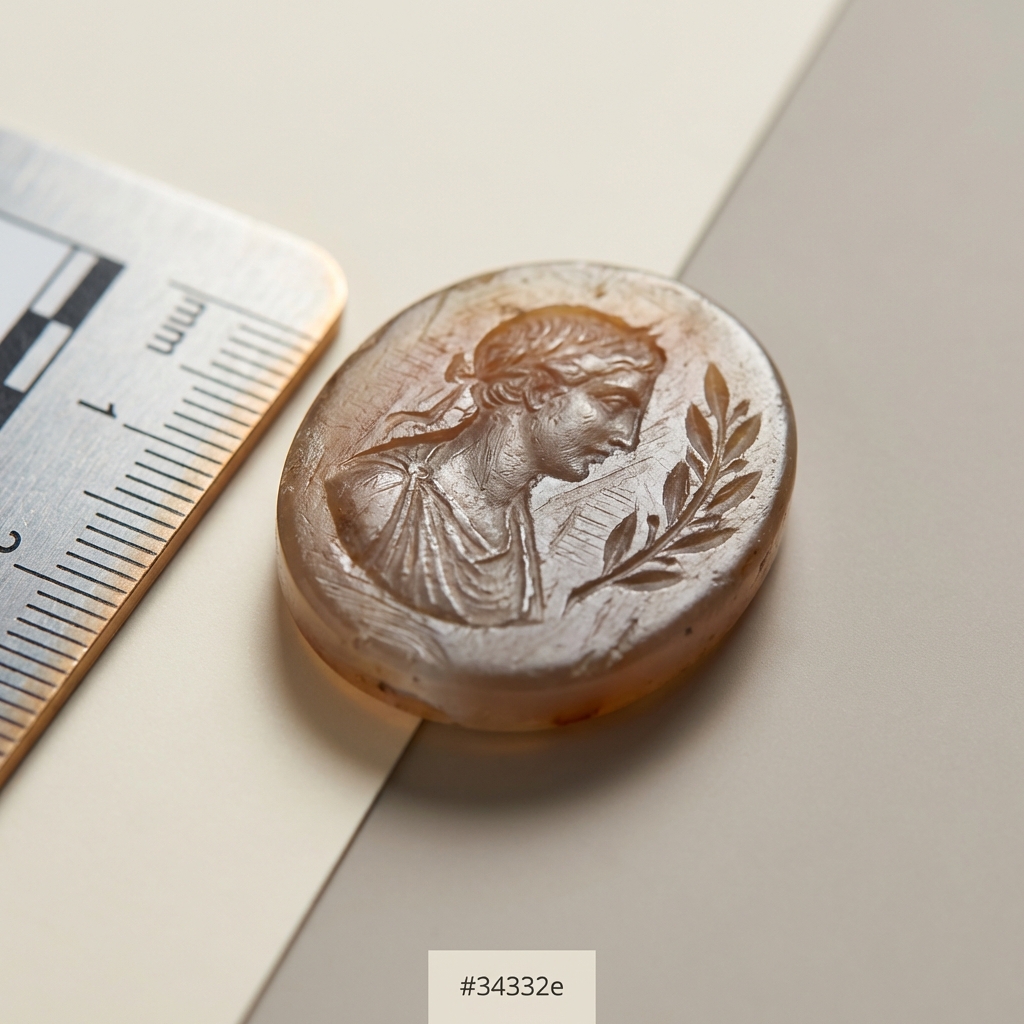
Practical inspection steps include photographing the bezel in natural light, seeking macro images of any intaglio or stamping, and asking for images of the ring from multiple angles to reveal applied mounts or solder lines that may indicate later alteration.
How to assess a triskelion ring before you buy
Start by prioritizing condition notes and high-resolution images that show the bezel, clear close-ups of any carving or stamping, and the ring band where tool marks or restoration evidence commonly appear; these items are the immediate technical base for any authenticity or dating assessment O'Kelly, Newgrange: Archaeology, Art and Myth or browse our rings collection
Next, request provenance documentation: collection history, prior ownership notes, any verification letters, and specialist reports where available, because confident attributions commonly rely on documented context as much as on visible wear or style Encyclopaedia Britannica entry on the triskele
Practical checklist to record images, measurements, provenance, condition, and restoration notes
Use with seller-supplied images
Use a prioritized decision checklist: if images and measurements are missing, treat the attribution as provisional; if restoration notes are absent or unclear, request specific photos of repaired areas before proceeding.
Consider a specialist report for higher-value pieces or where provenance gaps exist, and be cautious with stock photography or listings that omit clear condition notes and detailed restoration descriptions.
Common misidentifications and dating pitfalls
Common confusions include modern decorative spirals, recent stamped motifs that imitate ancient styles, and stylistic imitations; such items may look convincing at a glance but fail closer technical inspection for tool marks or patina consistent with long-term age O'Kelly, Newgrange: Archaeology, Art and Myth
Isolated small finds without clear provenance or specialist assessment are especially hard to date reliably, which is why many attributions remain tentative until further documentation or testing is available Encyclopaedia Britannica entry on the triskele
Condition, restoration and conservation notes relevant to rings
Restoration and preservation notes typically describe whether an object has been stabilized, whether structural repairs were made, and whether any original surfaces were left untouched; clear language helps buyers understand what was done and why O'Kelly, Newgrange: Archaeology, Art and Myth
When restoration is reported, request detailed photos of repaired areas and an explanation of materials used, since some conservation choices affect how a piece can be worn or displayed even if they do not speak directly to historic meaning.
Practical buying checklist and scenario walk-throughs
Core checklist before purchase: high-resolution, multi-angle images; exact measurements including ring size and bezel diameter; provenance documents or collection history; explicit restoration notes; and any available specialist opinions or verification letters O'Kelly, Newgrange: Archaeology, Art and Myth
Scenario one, cautious buyer: a budget-friendly ring with clear images but no provenance. Good practice is to buy only if the seller provides detailed condition notes and clear close-ups of the bezel; accept the attribution as uncertain for research purposes.
Scenario two, mid-level collector: a piece with partial provenance and restoration notes. Seek a dated inventory or a collector's note and ask for a brief specialist assessment; this level often suffices for display use if documentation is transparent.
Scenario three, advanced collector: high-value candidate with provenance chain and a specialist report. At this level, a formal written opinion or published cataloguing reference is advisable before acquisition.
Provenance, museum records and official documentation
Types of provenance that matter include prior ownership notes, collection history, catalog entries, and any verification letters or cataloguing records; these elements help place a motif within a documented chain and improve confidence in interpretation British Museum collection highlights
Regional emblem histories and continuous official use, like those recorded in government and heritage sources, can also help contextualize why a motif appears in certain regions, though such records rarely resolve prehistoric meanings Isle of Man government page on the Manx flag
Examples and brief evaluations
Example A: Carved intaglio with full provenance. Evidence that supports an ancient attribution includes consistent patina, tool marks visible in macro images, and a documented collection history; an expert would still phrase conclusions conditionally and note any restoration details that might affect reading O'Kelly, Newgrange: Archaeology, Art and Myth
Example B: Stamped bezel with partial provenance. Supportive signs are period-consistent bezel construction and some ownership history, but gaps in earlier collection history should be flagged and further documentation requested before firm statements are made.
Example C: Modern reproduction. Signs that undermine an ancient attribution include modern machine marks, lack of patina, and stock photography; an expert would label such an object as a modern decorative piece unless contrary evidence is supplied Encyclopaedia Britannica entry on the triskele
Conclusion: What a triskelion can and cannot tell you
The triskelion is a long-lived visual motif that spans Neolithic carved spirals at Newgrange through later Mediterranean three-legged emblems and modern revivals; Newgrange remains a key archaeological anchor for antiquity claims but does not deliver a single settled meaning for all occurrences UNESCO World Heritage listing for Brú na Bóinne
For buyers, the most useful steps are practical: request condition notes, provenance documentation, high-resolution images, and specialist input for high-value items, and describe symbol interpretation with conditional language rather than as a singular, definitive reading O'Kelly, Newgrange: Archaeology, Art and Myth
The motif is very old and appears in Neolithic contexts such as the carved spirals at Newgrange, but age alone does not fix a single meaning for all occurrences.
Not by itself; identifying origin requires bezel and tool mark analysis, patina, and preferably provenance documentation or specialist assessment.
Request high-resolution images, exact measurements, provenance history, restoration notes, and any specialist reports or verification letters.
More from Aurora Antiqua
References
- Triskelion, English Wikipedia, Wikimedia Foundation
- Turoe Stone, Heritage Ireland, Office of Public Works (Ireland)
- Brú na Bóinne Visitor Centre: Newgrange, Knowth and Dowth, Heritage Ireland, Office of Public Works (Ireland)
- Iron Age, National Museum of Ireland, Dublin
- Talismans, Visitatori salutem, Szepmuveszeti Muzeum, Museum of Fine Arts Budapest
- Object ID, International Council of Museums
- Code of Ethics, International Council of Museums (ICOM), Paris
- Triskelion, Wikipedia