


Looking for the real thing? Browse genuine Roman coins for sale, each piece one of one, individually authenticated, with documented provenance. For the background, see the guide to Roman jewelry.
What S.C. stands for: Senatus Consulto and historical context
Literal translation and conventional reading
The letters S.C. are conventionally read as Senatus Consulto, literally 'by decree of the Senate', and this reading is standard in modern numismatic reference works and catalogues, where it serves as a concise indication that the Senate authorised the issue of certain coin types OCRE - Online Coins of the Roman Empire
In many cases the legend S.C. appears on bronzes rather than on gold or silver imperial issues, which typically carry the emperor's titles and portrait; understanding that distinction helps frame why the Senate appears in the inscription rather than imperial titulature.

Why the Senate was involved in bronze coin issues
During the later Republic and the Empire the Senate retained a role in approving certain bronze issues, so the S.C. legend often reflects municipal or senatorial oversight of base-metal struck currency rather than direct imperial minting control British Museum - Coins and Medals
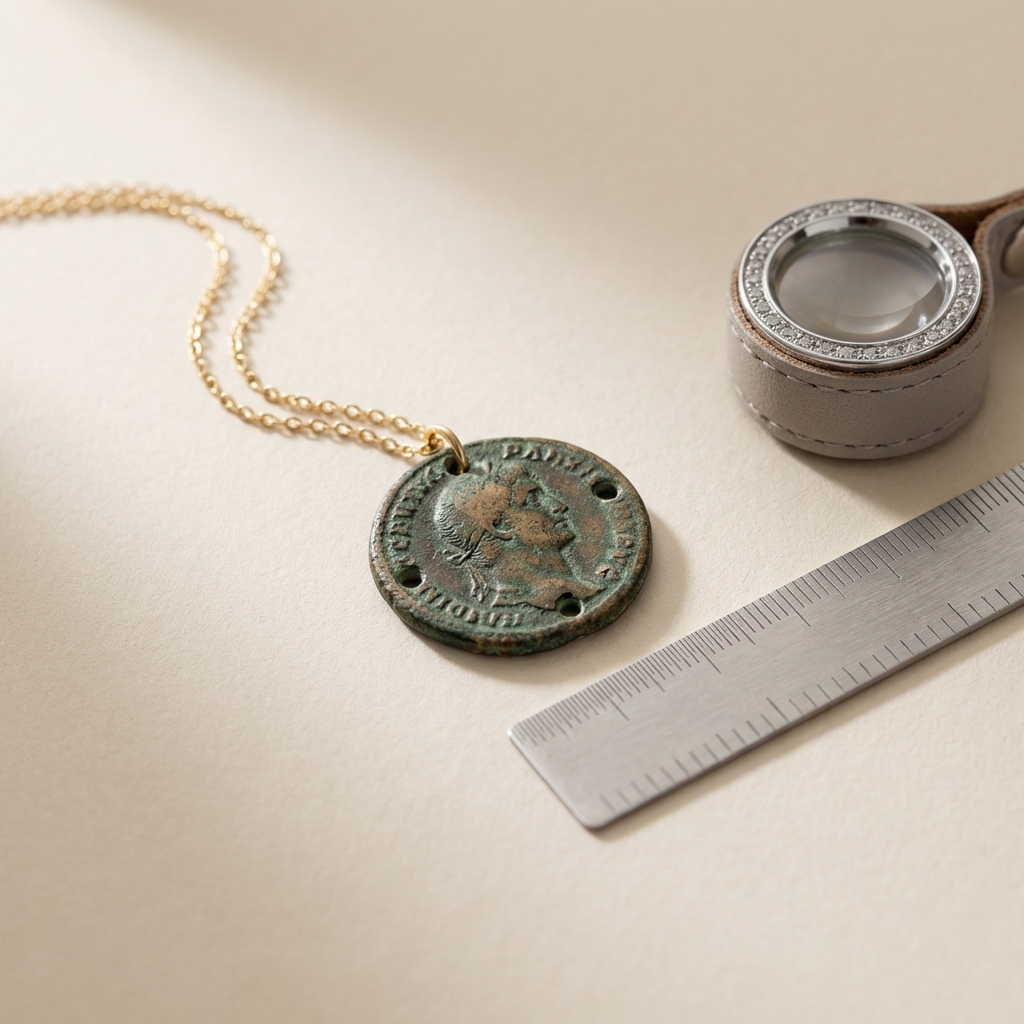
This administrative nuance is helpful for collectors: the presence of S.C. often indicates a bronze metal class and a particular administrative origin, which can narrow type attribution when combined with other visual and metrological evidence.
Where S.C. appears on coins: placement, punctuation and visual cues
Common locations: reverse, exergue, within wreaths
S.C. is most commonly found on the reverse of bronze coins, frequently in the exergue under the main design or set inside wreaths and close to control marks; knowing where to look simplifies visual checks when you study photos of a piece British Museum - Coins and Medals
When you examine a coin image, start with the reverse lower field and any wreath devices, because these places often contain the legend or abbreviated tokens that identify a particular issue or series.
Punctuation and form variants (S·C, SC, SENATVS·CONSULTVM)
The exact punctuation and spelling of the legend vary by issue: you will see S C, S·C, SC and the longer form SENATVS·CONSULTVM in catalogued examples, and these variants are recorded because punctuation and spacing can be diagnostic for attributions Ashmolean Museum, Coins and Medals
For photographic comparison pay attention to spacing, letterforms and any interpuncts, since those details may tie a coin to a known die family or minting practice rather than being mere ornamentation.
Denominations and periods where S.C. is most common
Bronze denominations: asses, dupondii, sestertii
S.C. is most frequently encountered on bronze and copper-alloy denominations such as the as, dupondius and sestertius, where the Senate's authority was conventionally recorded on the reverse of these lower-value issues OCRE - Online Coins of the Roman Empire (see an OCRE entry dupondius example) and for a catalogue-style listing see Numista - As (Claudius)
Recognising a Roman bronze coin by metal class can guide your expectations: if a piece is a bronze denomination the presence of S.C. is typologically appropriate, whereas the same mark on a silver coin would be unusual and merit closer scrutiny.
Imperial vs Republican contexts
The legend appears in both Republican and Imperial contexts, though it is especially associated with Imperial bronze issues where Senate approval of base-metal coinage continued in many series; corpora and museum catalogues document these patterns and evolving usages Metropolitan Museum of Art - Coins of the Roman Empire
Understanding the likely period range for a type helps when you compare letterforms and reverse layout to dated examples in referenced corpora and museum collections.
See behind the scenes on Instagram
Before you buy, check condition notes and documented provenance for any coin adapted to jewellery so you understand what was done to the piece and why
Variants in legends and how specialists record them
Abbreviated forms versus full legends
Catalogues and corpora record multiple legend forms, because both abbreviated tokens and longer inscriptions have been used historically; a search will turn up entries showing the full SENATVS·CONSULTVM form as well as the condensed S.C. variants OCRE - Online Coins of the Roman Empire
When you study an image of a coin, jot down the exact tokens you can read, including punctuation and unusual letter shapes, since those tokens are how specialists match examples to die-attributions in corpora.
Cataloguing practices and corpora to consult
Major databases and illustrated archives record die and legend variants with photographic or typological references, which is why specialist comparators such as OCRE, museum catalogues and illustrated archives are standard first stops for type confirmation WildWinds coin archive and reference and historic printed catalogues (see one example here)
Using those corpora you can see how a variant legend appears across multiple examples, which helps distinguish a genuine variant from an odd tooling mark or post-production alteration.
Why S.C. is a useful typological marker but not conclusive proof of authenticity
How S.C. fits into broader authenticity checks
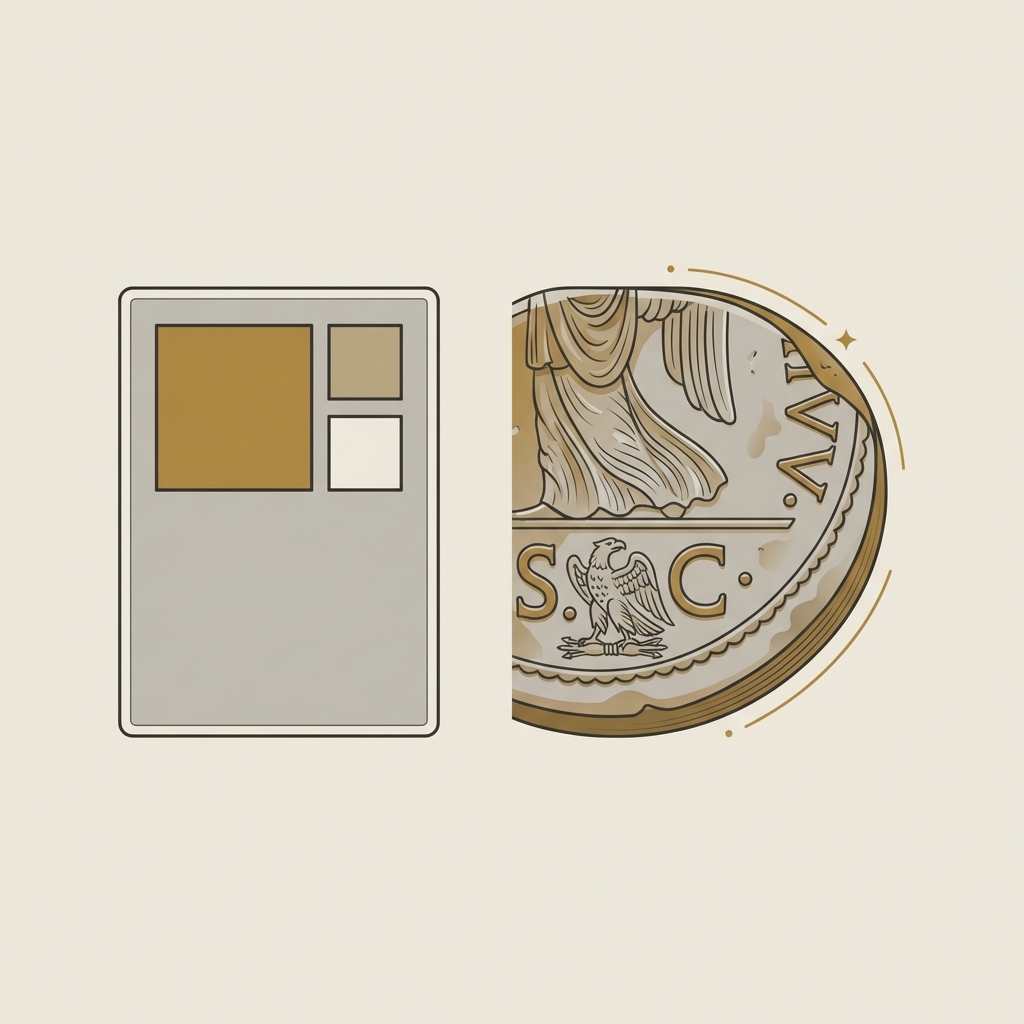
Collectors who rely solely on a legend can be misled, because the visual presence of letters can be copied or enhanced; for this reason you should verify measurements and compare fine details of die-engraving with trusted examples.
Compare a suspect coin to catalogue examples for verification
Use OCRE and museum catalogues for comparison
Limitations of legend-based identification
Lettering that looks correct to a non-specialist may still be modern or altered; differences in letter proportions, unexpected spacing, and tooling marks can indicate later interference and are best judged against high-quality museum or corpus examples Application of multi-modal 2D and 3D imaging and analytical techniques, npj Heritage Science (Springer Nature)
Always combine legend reading with metallurgical and stylistic checks, and when in doubt ask for provenance documentation or a specialist opinion (see how to tell if a Roman coin is real) rather than relying on the legend alone.
Practical checks to perform when viewing coin photos online
Photo angles and resolution to request
Request high-resolution photographs of obverse and reverse, a clear close-up of the exergue and any wreath or control marks, and a sharp image of the coin edge; these views help you confirm whether the S.C. legend sits where it should and whether the letterforms match catalogued examples British Museum - Coins and Medals
Ask for scale references and a photo showing the coin next to a ruler, and request an image taken under raking light so incised letterforms and surface repairs are more visible.
What to compare in databases and auction records
Compare the photographed legend tokens, punctuation and placement to type entries in OCRE and illustrated archives, noting any small departures in spacing or letter shape that appear across dies and issues OCRE - Online Coins of the Roman Empire
If a seller cites a catalogue reference, verify it by finding the corresponding corpus entry and matching both the legend and the die-state to the supplied images and measurements.
How to evaluate an ancient coin used in a necklace
authentic roman coin necklace
When a coin has been adapted into jewellery the presence of S.C. can help identify the type and likely metal class, but the conversion can obscure or remove parts of the reverse legend so you must ask for pre-mounting images where possible Encyclopaedia Britannica - Coin (Rome) overview
Because mounting, drilling or trimming for a bezel can cut into the exergue, buyers should request clear photos of the original reverse and the area around the legend to confirm reading and to detect any later re-engraving or smoothing.
What restoration and preservation notes should disclose
Sellers should provide conservation disclosures that distinguish stabilisation from invasive repairs; a good condition note will explain whether a coin was stabilised, filled, drilled or polished and why those steps were necessary for wearable use British Museum - Coins and Medals
When restoration notes are detailed and honest they increase the information available to a potential buyer and make it easier to assess how much of the original legend and surface remain intact.
Checklist: what to ask and what to require before buying
Minimum documentation and photo set
At minimum request clear obverse and reverse photos, a close-up of the exergue showing the S.C. legend, weight and diameter measurements, and any provenance or verification letters the seller can supply OCRE - Online Coins of the Roman Empire
Record these items with dates and filenames, and if possible save copies of the corpus or museum matches you used so your ownership records include the comparative evidence.
Red flags and acceptable condition descriptions
Red flags include inconsistent letterforms that do not match catalogue examples, patina described as 'original' without clear photographic support, and missing provenance for higher-value or well-documented types; acceptable condition descriptions clearly state repairs, drills, or stabilisation work Encyclopaedia Britannica - Coin (Rome) overview
If a listing omits basic measurements or refuses to provide close-up images of the reverse and edge, treat that as a reason to pause and seek more information before purchase.
Common mistakes, forgeries and restrikes involving legends
Ways legends are altered or added
Some modern restrikes and forgeries attempt to add or sharpen legends to conform with popular types, and this can create a superficially convincing S.C. that differs on closer inspection from authentic die-engraving WildWinds coin archive and reference
Look for signs of raised lettering from tooling with modern files, or inconsistencies in strike depth that betray later intervention rather than original minting.
How restrikes differ from ancient originals
Restrikes can be made from old dies or from modern tooling; authentic die-engraving tends to show consistent letter proportions and wear patterns across the field and across matched examples in corpora, while modern work frequently shows irregularities or unexpected tool marks OCRE - Online Coins of the Roman Empire
When you suspect a restrike, consult illustrated museum examples and auction records to check whether the lettering style, metal composition and die wear match documented genuine examples.
Practical examples: reading legends in photos and database matches
Step-by-step read of an exergue with S.C.
Start by photographing the exergue at high resolution, then transcribe every visible token including interpuncts, punctuation and control marks, and record measurements before searching in databases; precise transcription aids accurate matching WildWinds coin archive and reference
Search OCRE and museum catalogues with your transcription plus metal class and measurements to narrow results, and save the matched entries to your files to document the comparison process.
How to record and match observations in OCRE
When you find a likely match, note the corpus reference, image link and any recorded die signatures or mint marks so you can reference them in correspondence or provenance files; keeping that trail strengthens later resale or appraisal conversations OCRE - Online Coins of the Roman Empire
Small differences in punctuation or letter spacing can indicate different issues or even different mints, so exact matching of the exergue reading matters when a legend like S.C. is central to an attribution.
Conservation and wearing: how to care for a coin necklace
Safe cleaning and what to avoid
Avoid aggressive polishing or chemical cleaning that removes patina and fine surface details, and seek a conservator's advice for any necessary stabilisation; conservative treatment preserves both the legend and the historical surface British Museum - Coins and Medals
Wearing a coin regularly will cause gradual wear, especially where a pendant is drilled or set, so plan to rotate wearable antiquities and keep records of any conservation work.
S.C. is conventionally read as Senatus Consulto, a Senate decree commonly recorded on Roman bronze coinage; it helps identify the coin type but must be combined with weight, metal, style, patina and provenance to form a reliable assessment.
Storage and display recommendations
Store coin necklaces flat and separate from abrasive materials, avoid exposing mounted coins to chemicals or prolonged moisture, and retain detailed restoration notes with any resale or provenance documentation to maintain transparency for future buyers Encyclopaedia Britannica - Coin (Rome) overview
When possible, photograph the piece periodically to create a condition record that shows how wearing affects the exergue and the S.C. legend over time.
Quick summary and next steps for buyers
Key takeaways
In short, S.C. means Senatus Consulto and is a helpful typological marker on Roman bronze coins, but it is not proof of authenticity by itself; combine legend reading with measurements, patina, die-engraving style and provenance checks OCRE - Online Coins of the Roman Empire
Next steps are practical: request pre-mounting images if the piece was adapted for jewellery, compare the exergue to museum or corpus entries, and keep detailed condition notes if you proceed with a purchase.
No. S.C. is a typological marker commonly found on Roman bronze coins but it alone does not prove authenticity; it should be considered with weight, patina, style and provenance documentation.
S.C. typically appears on the reverse, often in the exergue or within a wreath, so request close-up photos of the reverse and the exergue to read the legend.
Request clear reverse and obverse images, weight and diameter measurements, condition and restoration notes, and any provenance or verification letters the seller can provide.
More from Aurora Antiqua
References
- Application of multi-modal 2D and 3D imaging and analytical techniques, npj Heritage Science (Springer Nature)
- AN UNKNOWN COIN DIE OF AUGUSTUS (27 BC, 14 AD), Journal of Ancient History and Archaeology, DOI
- Minting errors in ancient Rome: double die strikes in the light of coin finds, Novensia 36, University of Warsaw
- International Association of Professional Numismatists (IAPN), IBSCC
- ICOM-CC, International Council of Museums, Committee for Conservation
- Archaeological materials, Icon, The Institute of Conservation (UK)
- About us, International Association of Dealers in Ancient Art
- Online Coins of the Roman Empire, American Numismatic Society
- Online Coins of the Roman Empire: RIC III Antoninus Pius 1305A (dupondius), American Numismatic Society
- archive.org