


Looking for the real thing? Browse genuine ancient rings for sale, each piece one of one, individually authenticated, with documented provenance. For the background, see the guide to ancient jewelry.
Short answer: what the Bible actually says about rings and marriage tokens
Shortly put, the Hebrew Bible records gifts associated with marriage arrangements but does not set out a single formal engagement ring ritual identical to the modern Western custom. The narrative of Genesis 24, for example, records the giving of a nose ring and bracelets to Rebekah as part of a marriage arrangement, which shows that personal jewelry featured in marriage exchanges in biblical contexts Genesis 24 text at Bible Gateway.
At the same time, Mediterranean material culture records a wide variety of finger and signet rings used as seals, amulets, or status markers, and these Greco Roman practices influenced how rings were used socially and legally in many regions Metropolitan Museum of Art overview of Roman jewelry.

Putting these sources together suggests a picture in which rings appear among possible marriage tokens but are not described in the Hebrew Bible as a mandated, standardized betrothal object. Betrothal in biblical law and practice is better characterized by pledges, bride price, and contractual obligations rather than a single finger ring ceremony overview of kiddushin and betrothal practices.
Quick summary for readers who want a clear take-away about ancient engagement rings
For readers asking whether the Bible prescribes an engagement ring in the modern sense, the short answer is no. The scriptural record shows exchanges of jewelry within marriage arrangements, but the legal and social forms that constitute betrothal are broader than a single ring token Genesis 24 text at Bible Gateway.

How this article uses biblical and archaeological evidence
This article combines close reading of the relevant biblical passages with museum and archaeological evidence about rings in the ancient Near East and Mediterranean, so readers can see how textual examples and the material record complement each other Metropolitan Museum of Art overview of Roman jewelry.
Definitions and context: what we mean by rings, betrothal, and engagement in the ancient world
Definitions matter because modern categories do not map exactly onto ancient practice. By "ancient ring" I mean an object manufactured to be worn on a finger, which may include plain hoops, intaglio rings with engraved stones, and signet rings used to make impressions. A "token" is any small object given to signify an agreement or relationship.
"Betrothal" in the ancient Near Eastern and Israelite worlds is best understood as a legal and social process that commonly involved pledges, bride price, and gifts. That process could include jewelry among other signs, but it is not described in the Hebrew Bible as centered on a single prescribed finger ring ritual. For general descriptions of ancient betrothal customs see comparative summaries of kiddushin and related practices overview of kiddushin and betrothal practices.
Definitions: ancient ring, betrothal, bride-price, token
Ancient ring, as used here, includes hoop rings, intaglio rings with engraved stones, and rings that served as personal seals. Betrothal refers to the legally binding stage before full marriage, often involving pledges and bride price, while bride price denotes material compensation or obligations exchanged between families as part of matrimonial arrangements.
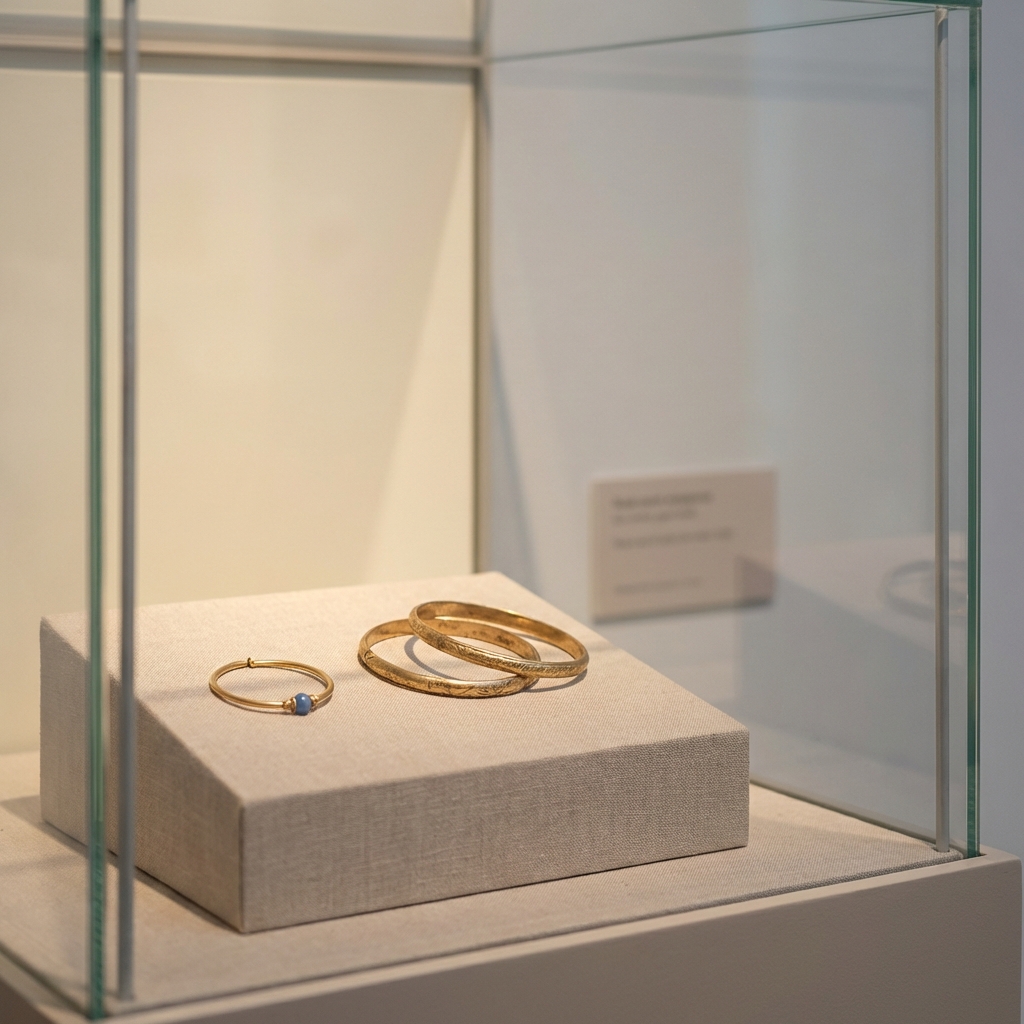
The modern engagement ring, as a standardized prewedding token given to be worn on a specific finger, is largely a post medieval European development. In contrast, ancient Near Eastern and Mediterranean cultures used a variety of tokens and contractual practices to signal betrothal, so an "engagement ring" in the modern sense is an imperfect label for many ancient jewelry items British Museum essay on the history of the wedding ring.
Rings in the Hebrew Bible: close reading of the main texts
Genesis 24 is the central narrative that readers invoke when they ask about rings in biblical marriage contexts. In that chapter Abraham's servant gives Rebekah a nose ring and bracelets as part of the marriage arrangement, and the gifts function within the narrative as marks of selection and family alliance Genesis 24 text at Bible Gateway.
Other biblical passages mention rings or jewelry in contexts of status or gift exchange, but these occurrences tend to show symbolic or social roles rather than a single prescriptive ritual. Readers should be cautious about extrapolating a uniform rite from scattered textual mentions.
compare biblical passages and object descriptions side by side
use one line per comparison
How translators and commentators read these passages varies by tradition. Some theological readings emphasize covenantal and identity themes when discussing ring imagery, but the interpretive move from symbolism to liturgical prescription is not compelled by the text alone British Museum essay on the history of the wedding ring.
Genesis 24 and the gifts to Rebekah
Genesis 24 narrates that Abraham's servant presents Rebekah with personal jewelry as part of arranging the marriage, and these gifts operate as tokens of the agreement and of family alliance rather than as a formalized single rite. The passage is often cited as the closest biblical parallel to later ringgiving customs Genesis 24 text at Bible Gateway.
Other biblical passages that mention rings or jewelry
The Hebrew Bible contains additional mentions of jewelry that indicate its role in status, wealth display, or gift exchange, but these references vary in function and context, and none prescribes an identical ritual to the modern engagement ceremony. Interpretations often depend on broader literary and cultural analysis rather than on a single directive in law codes or narrative.
Betrothal and tokens across the ancient Near East and Mediterranean
Across the ancient Near East, archaeology and textual studies show that betrothal and marriage were commonly formalized by gifts, pledges, and sometimes written agreements. Jewelry could appear among these gifts, but it was one of several possible tokens rather than a universal requirement, and practices varied widely by region and period archaeological review of betrothal tokens.
Because of this variation, scholars caution against linking a particular ring type directly to a formal betrothal act without contextual evidence. Regional differences, local customs, and changing practices over time mean that the material record must be interpreted with nuance rather than used to assert a single model for ancient marriage tokens archaeological review of betrothal tokens.

Common practices: gifts, written pledges, personal tokens
Gifts and pledges-sometimes recorded or witnessed-are recurrent elements in Near Eastern betrothal. Personal tokens, including jewelry, could be part of that assemblage, but written agreements and exchanges of property play a central role in legal sources describing betrothal customs.
Regional differences and archaeological cautions
Archaeological assemblages differ between Levantine, Anatolian, and Mediterranean contexts, and dating or attributing a ring to a betrothal function requires careful provenance and comparative catalogue evidence rather than assumption from form alone.
Greco-Roman rings: types, functions, and how they influenced marriage customs
Greco Roman archaeology documents widespread use of finger rings of several types, including intaglio rings with engraved gems and signet rings used to impress clay or wax as seals. These rings often functioned as personal identifiers and could be used in social or legal transactions, which means they had practical connections to marriage and household administration in many contexts Metropolitan Museum of Art overview of Roman jewelry.
Material and stylistic clues such as carved motifs, gem type, and workmanship help museum specialists place rings in chronological and cultural context, but attributing a ring specifically to betrothal requires additional contextual or documentary evidence V&A article on wedding rings and types.
The Bible shows jewelry used in marriage arrangements, such as the nose ring and bracelets given to Rebekah in Genesis 24, but it does not prescribe a single formal engagement ring ritual identical to modern Western practice. Rings appear in the wider Mediterranean material record as seals and personal identifiers, and modern readers can treat ringgiving as a culturally conditioned symbolic practice supported but not mandated by biblical precedent.
Intaglio and signet rings carried images that functioned as personal marks, and in some cases those images connected to family identity, religious symbolism, or social role. Understanding these functions helps explain why rings could be meaningful choice gifts in marriage related contexts across the Mediterranean.
Intaglio, signet, hoop and other common types
Intaglio rings often feature carved stones set in a bezel, producing an image that could be used as a seal. Signet rings emphasize that sealing function. Hoop rings may be simpler and worn as everyday personal jewelry, which complicates attempts to assign a single social function to rings found archaeologically V&A article on wedding rings and types.
Rings as seals, amulets, and status markers
Because rings were multifunctional, museums and catalogues often describe them by likely use, material, and context rather than by one social role. That descriptive practice is why museum essays are a useful starting point for collectors and students seeking to interpret ancient rings Metropolitan Museum of Art overview of Roman jewelry.
How scholars and museum writers interpret ring imagery and symbolism
Curators and scholars typically treat biblical ring imagery as symbolic of covenant, identity, or social status rather than as a prescriptive liturgical law. This interpretive stance frames ringgiving in narrative and legal texts as expressions of relationship and authority rather than as a single mandated ritual British Museum essay on symbolism and history.
Symbolic readings: covenant, identity, status
Ring imagery in some passages can be read as emblematic of covenantal ties or social identity. Such symbolic readings are common in museum commentary and theological reflection because objects often stand for affiliation, ownership, or rank in ancient sources British Museum essay on symbolism and history.
Follow behind the scenes on @auroraantiqua
Explore curated listings that include context, condition notes, and documentation so you can see how individual rings fit the patterns described here.
At the same time, curators and scholars emphasize limits to symbolic interpretation for legal practice. A symbolic reading does not by itself show that every instance of ring imagery functions as a legally binding betrothal instrument, and theological traditions differ in how they map symbols onto liturgy.
What this means for modern believers and collectors
Collectors and buyers of ancient rings, historical flexibility means you can select forms that reflect personal meaning while also respecting the object's cultural context and condition. Prioritise clear provenance and preservation documentation when considering an ancient ring V&A article on wedding rings.
For collectors and buyers of ancient rings, historical flexibility means you can select forms that reflect personal meaning while also respecting the object's cultural context and condition. Prioritise clear provenance and preservation documentation when considering an ancient ring V&A article on wedding rings.
Practical takeaways for people who want a symbolic ring
Choose a form that matches your own or your community's meaning, and ensure that the piece comes with clear condition notes and provenance information. For wearable antiquities, understand that patina and wear consistent with age are part of the object story and may affect choices about cleaning or modification.
How historical flexibility informs modern choices
Because ancient practices were varied, modern couples and collectors have room to adopt historical tokens creatively, whether that means wearing an intaglio, selecting a motif with symbolic resonance, or commissioning a new ring that references ancient forms while respecting conservation considerations.
How to evaluate an ancient engagement ring before you buy
When assessing an ancient ring, apply a short checklist: request provenance and documentation references, examine condition notes and restoration notes, ask for clear photos and precise measurements, and, when possible, seek independent verification or catalogue comparisons V&A guidance on evaluating rings.
Provenance can take many forms, including collection history, prior ownership notes, and verification letters. Restoration and conservation reports that describe what was stabilised or left untouched are especially useful for understanding how the object will behave if worn or conserved Metropolitan Museum overview of Roman jewelry and conservation.
Checklist: documentation, condition, restoration notes, measurements
Ask sellers for specific documentation such as collection history, invoices from prior sales, or verification letters from recognised specialists. Condition notes should list present issues, repaired areas, and whether original mounting or settings were altered during restoration.
Questions to ask sellers and curators
Key questions include: What is the documented provenance of this object? What conservation or restoration work was performed and when? Are there detailed measurements and high resolution photos that show the hallmarks, bezel, and shoulders? These questions help separate responsible listings from vague or unsupported ones.
Red flags and common mistakes when buying ancient rings
Avoid listings that make broad claims about dating or provenance without documentation. Dating and attribution are specialist tasks, and vague language or stock images without provenance should prompt caution archaeological review of betrothal tokens.
Misreading restoration and condition descriptions is another common mistake. A polished or heavily relined setting may look visually attractive while obscuring original features; clear restoration notes should explain what was done and why, rather than leaving buyers to guess.
How dating and attribution can be misrepresented
Claims about age or workshop attribution should be supported by catalog comparisons, specialist reports, or documented collection history. If a listing lacks these, treat the attribution as tentative and ask for further documentation.
Misreading restoration and condition descriptions
Read restoration notes carefully to see whether a conservator stabilised a cracked bezel, replaced a missing stone, or deliberately left patina in place. Each decision affects wearability and future conservation needs.
Practical examples and short case studies
Genesis 24 provides a valuable textual case where a nose ring and bracelets appear as marriage gifts, and that narrative illustrates how jewelry could signal alliance and selection in biblical storytelling Genesis 24 text at Bible Gateway.
By contrast, a Roman signet ring illustrated in museum catalogues often appears in contexts emphasizing sealing function and personal identification, showing that rings could perform administrative roles as well as symbolic ones Metropolitan Museum overview of Roman jewelry.
Genesis 24 example compared with a Roman signet scenario
The Genesis example highlights exchange and alliance through gifts described in narrative, while a Roman signet ring highlights the practical sealing and identity functions that make rings significant in legal and household transactions.
How museum catalogues classify similar finds
Museum catalogues typically describe material, motif, context of discovery, and likely function, and they flag uncertainties about dating or attribution. These catalogue practices are a useful model for buyers seeking transparent documentation about ancient rings V&A article on museum descriptions.
Care, conservation and legal considerations for owning ancient jewelry
Conservation starts with clear restoration notes. Notes that describe stabilisation, cleaning steps, and any replaced materials help owners and conservators plan care and avoid inadvertent damage from unsuitable cleaning methods Metropolitan Museum overview of conservation.
Legal and ethical considerations include checking that the object has provenance consistent with legal export and collecting practices. When in doubt, request documentation and, if necessary, consult a specialist or legal adviser about export or ownership issues.
Basic care and when to consult a conservator
For wearable antiquities, avoid household cleaners and seek a conservator's advice on safe cleaning and display. Conservators can advise on whether a ring is suitable for regular wear or should be reserved for occasional use and display.
Legal and ethical considerations around provenance and export
Provenance and documentation references matter for legality and ethics. Good listings make provenance and collection history available; unclear or missing provenance should be a reason to pause and ask for more information.
Putting it together: deciding if an ancient engagement ring is right for you
Decide first whether you are seeking a symbol that connects to a historical form or a usable daily wearable. If you want a wearable object, prioritise condition notes and conservator guidance; if you value symbolic resonance, focus on motifs and cultural meaning.
Balance personal significance with objective documentation. Prioritise pieces with transparent provenance and clear restoration notes rather than marketing claims about rarity or value that are unsupported by documentation V&A article on evaluating rings.
Matching historical meaning to personal intent
If a motif or period matters to you, ask sellers for comparative catalogue references that justify the attribution. A well documented piece should show where experts placed it within a typology or catalogue tradition.
Balancing wearability, documentation, and budget
Set expectations about conservation. Some one of a kind objects are suitable for occasional wear only, while others may have had conservation treatment that permits gentler daily use. Make budget decisions with both documentation and conservation costs in mind.
Further reading and trusted sources
For readers who want to follow the sources used here, start with the Genesis 24 text and museum essays on the history and function of rings. The Genesis passage provides the primary biblical example, while museum overviews explain ring types and likely functions in Mediterranean contexts Genesis 24 text at Bible Gateway.
Museum resources such as the V&A and Metropolitan Museum essays are useful starting points for object level questions, and museum catalogues remain indispensable when comparing attributions and dating V&A article on wedding rings.
Primary texts and museum essays to consult
Consult primary biblical passages and museum research notes for context. Good catalogue records include material, findspot when known, and discussion of likely function.
What to ask a curator or specialist
Ask for documented provenance, restoration and conservation reports, and catalogue comparisons. These items provide the most reliable context for understanding an ancient ring beyond the images in a listing.
No. The Hebrew Bible records gifts and tokens associated with marriage arrangements but does not prescribe a single modern engagement ring rite.
Yes. Rings appear in both textual and archaeological records as tokens, seals, or status markers, but their use varied regionally and was not universally required for betrothal.
Request provenance and documentation, detailed condition and restoration notes, clear measurements, and high resolution photos; ask for specialist or catalogue comparisons when needed.
More from Aurora Antiqua
References
- ring, Victoria and Albert Museum, London
- Internet History Sourcebooks: Medieval Sourcebook, Internet Medieval Sourcebook, Fordham University, New York
- William Wytlesey's ring, Victoria and Albert Museum, London
- Ring, Victoria and Albert Museum, London
- Ring, Victoria and Albert Museum, London
- Pliny the Elder, The Natural History, BOOK XXXIII, Perseus Digital Library, Tufts University (edition Bostock)
- jewishvirtuallibrary.org