


Looking for the real thing? Browse genuine ancient rings for sale, each piece one of one, individually authenticated, with documented provenance. For the background, see the guide to ancient jewelry.
What is an ancient amethyst ring?
An ancient amethyst ring is an antique ring set with amethyst, described as a historical object whose dating is an estimate tied to listing information or supporting documentation. The term usually applies to rings from Roman, Greek, Byzantine, Islamic, Celtic, medieval and post medieval periods when amethyst was used as a gemstone in rings, often set into bezels or simple hoops; details on dating should be tied to provenance or condition notes when available.
Amethyst itself is a variety of quartz and appears as a crystalline silicon dioxide, a physical fact that helps explain how it behaves during care and cleaning; this gemological background is relevant when deciding whether a short contact with water is safe for the stone and when risks come from the mounting instead GIA amethyst page and the GIA care guide

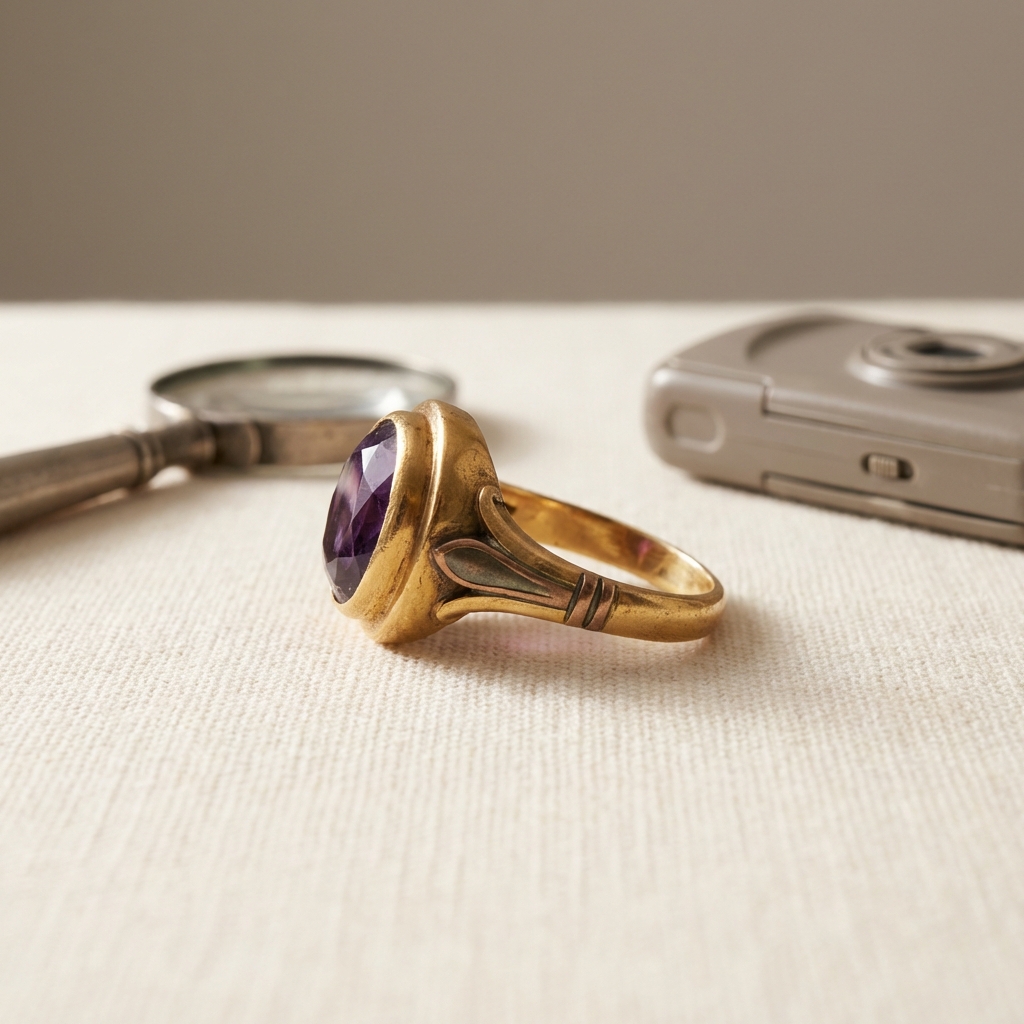
Typical historic settings for ancient rings include gold, silver, and various copper alloys such as bronze; construction often uses a bezel to hold the stone with shoulders and a hoop forming the band. Condition notes, restoration notes and any provenance information change how an owner approaches care, because documented repairs, soldering, or fills can be water sensitive.
When a listing or collection record provides restoration notes or provenance, use that context to set expectations for cleaning and handling, and treat undocumented repairs as potentially fragile until a conservator or curator has assessed the piece.
How water interacts with the amethyst stone
Amethyst is a quartz, with a Mohs hardness around 7, and it is not porous, so short contacts with clean, cool water typically do not damage the crystal itself; this means that the mineral is unlikely to be scratched or to absorb water in a way that changes its structure under ordinary handling GIA amethyst page
Colour stability in amethyst is more commonly threatened by prolonged exposure to strong light or heat rather than by ordinary water contact; owners should therefore avoid hot soaks, steam cleaning, or extended sunlight bleaching if they are concerned about preserving colour and tone GIA cleaning guidance
In practical terms, a brief, lukewarm rinse will likely leave the amethyst unchanged, but aggressive thermal or light exposure is the more probable cause of fading, so cleaning choices should minimise temperature swings and avoid harsh light during drying.

Why the setting matters for an ancient amethyst ring
Most water related problems with an ancient amethyst ring arise from the metal setting and any historic repairs rather than the stone itself. Silver and copper alloys, including bronze, are susceptible to chloride driven corrosion; chlorinated pool water and saltwater accelerate pitting and can trigger active corrosion processes that are particularly damaging to archaeological metals British Museum guidance on metals
When corrosion is active, you may see green or blue deposits, powdery flakes, or lifting around a bezel; these signs indicate that immersion or unrestricted water contact could worsen the condition, because chlorides and salts change the chemistry at the metal surface and can cause progressive damage Getty monograph on copper and bronze corrosion
Simple inspection tool to record visible corrosion and loose parts
Use gentle light and steady hands
Many antique mountings also contain old solder, adhesives, or porous fills; those materials can be water sensitive and may loosen, dissolve or fail if the piece is immersed or exposed to solvents, so treat any evidence of repair as a sign to proceed more cautiously and to seek specialist advice if unsure Smithsonian conservation advice
Because setting metals and historic interventions determine most cleaning risk, focusing on the mounting during assessment and cleaning significantly lowers the chance of accidental damage to the whole object.
Assessing your ring before any water contact
Before applying any cleaning method, photograph the ring from multiple angles under good, diffuse light and make short written condition notes that record visible repairs, loose stones, patina and any corrosion. Those records form the basis for later decisions and for any conservator consultation Canadian Conservation Institute advice
Look for visible warning signs such as green or blue corrosion deposits, powdery surface residues, pitting, loose bezels or lifting shoulders, and evidence of soft or cracking adhesives; if you see these signs, stop and do not immerse the ring because those conditions make water contact risky Smithsonian conservation advice
Avoid home tests that apply pressure, heat, or solvents; for example, do not probe a bezel with force, do not flush the ring with hot water to see if adhesives dissolve, and do not use household solvents to test for fills. Instead, document and pause if you face uncertainty, then consider a conservator's assessment.
Safe step-by-step cleaning for most ancient amethyst rings
This sequence suits many stable rings where the mount appears sound and there are no visible repairs or active corrosion. Prepare: a clean sink or basin, lukewarm water, a mild pH-neutral soap, a soft-bristle brush, cotton cloths or lint-free towels, and a camera to record before and after.
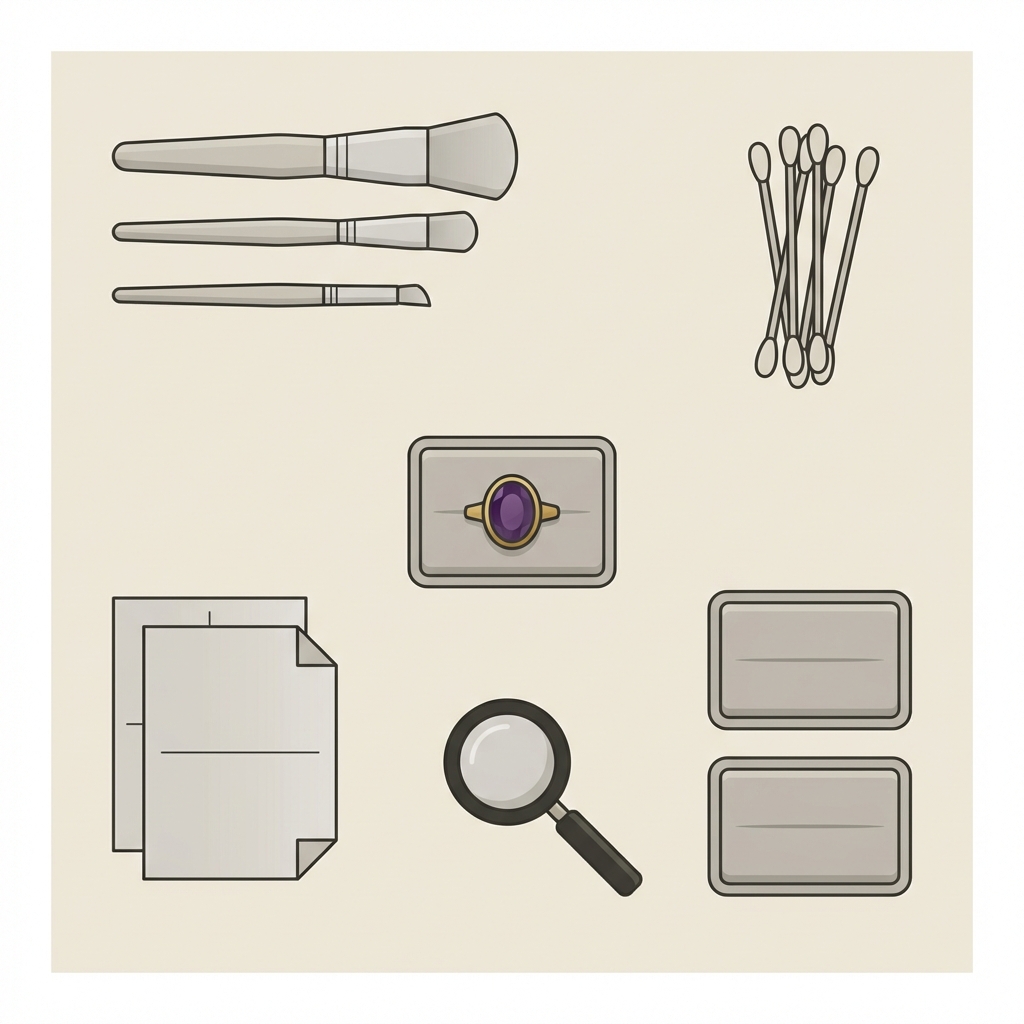
Step 1, document the object with photos and a short note recording weight, any marks, and visible wear. Step 2, mix a small basin of lukewarm water with a drop of mild pH-neutral soap and stir to make a gentle solution. Step 3, place the ring on a soft, padded surface while you work and avoid immersing it for prolonged periods. Step 4, use the soft-bristle brush to gently clean around the bezel and shoulders, working with light strokes and taking care at solder joints.
Brief contact with clean, cool water typically does not damage the amethyst crystal itself, but the metal setting and any historic repairs are the main sources of water-related risk and should guide care choices.
Step 5, rinse briefly in clean lukewarm water to remove soap, then lift the ring out and blot-dry immediately with a lint-free towel. Step 6, use a low-wattage lamp or ambient light to check for any change in appearance and photograph the ring again for your records. If any loosening, colour change, or new corrosion appears, stop and seek professional advice rather than continuing to clean.
Explicitly avoid bleach, chlorine, pool water, saltwater, prolonged soaking, and ultrasonic cleaning for pieces with unknown repairs or corrosion. These methods can accelerate corrosion in metals or dissolve adhesives used in old restorations, so they are not recommended for routine care GIA cleaning guidance
When water is too risky: fragile, repaired or filled rings
Immersion is too risky when you see signs of prior restoration, soft or brittle adhesives, visible fills, active corrosion, or obvious loss of metal continuity. In these situations, water can loosen stones, dissolve fillers, or encourage bronze disease in copper alloys, so pause and document rather than experimenting at home Smithsonian conservation advice
Adhesives and fills used in past repairs can be formulated from organic or inorganic materials that react differently to water and solvents. Because you often cannot identify the material by eye, conservators recommend local, targeted cleaning with swabs or dry methods rather than immersion for suspect pieces, and a professional assessment if the ring is valuable or fragile Canadian Conservation Institute guidance
If bezels look lifted, metal flaking, or the stone feels unusually loose, do not apply force or solvents; instead, store the ring safely and contact a conservator who can perform non-invasive tests and stabilisation if needed.
Professional conservation steps and what to expect
A conservator typically begins with a condition report that includes photography, notes on materials and visible repairs, and non-invasive testing; this documented approach guides a treatment plan that aims to stabilise rather than to return an object to a hypothetical original state British Museum conservation practice
@auroraantiqua: behind the scenes and conservator-ready tips
Contact a qualified conservator for a condition assessment when a ring shows corrosion, prior repair, or uncertain materials; a conservator can advise on safe cleaning and stabilisation without promising outcomes.
Treatments may include mechanical cleaning under magnification, controlled desalination for chloride contamination, consolidation of fragile solder or fills, and careful documentation of any intervention in restoration notes. Conservators emphasise minimal intervention and provide a written treatment report to accompany the piece after work is completed Getty conservation resources
After professional treatment, follow the conservator's aftercare instructions closely; these often include storage recommendations, handling limits, and a suggested schedule for condition checks or future treatments.
Common mistakes to avoid when cleaning ancient amethyst rings
Prolonged soaking is a frequent error; long soaks can shift salts, dissolve adhesives, or promote metal corrosion even when the stone appears unharmed. The safer alternative is short, targeted rinses and immediate drying GIA cleaning guidance
Using bleach, chlorine or exposing a ring to pool or salt water is risky for metal mountings; these agents accelerate corrosion in silver and copper alloys, which can lead to pitting and active corrosion processes. Use fresh, lukewarm rinses and avoid exposure to chlorides for historic mountings British Museum guidance on metals
Ultrasonic cleaners can be safe for modern, stable settings but are not appropriate for suspect or repaired antique rings, because vibrations can loosen stones and dislodge fragile fillings; a conservative, manual approach is usually a better first option Canadian Conservation Institute guidance
Real-world scenarios and a simple decision flow
Scenario A, a stable amethyst in a well-formed gold bezel with consistent patina, may be suitable for conservative home cleaning following the safe step-by-step sequence: document, gentle wash, soft brushing, brief rinse and immediate drying. This scenario presents relatively low risk because gold is less reactive to chlorides than copper alloys GIA amethyst page. See GIA durability discussion (SU87)
Scenario B, green corrosion around a bezel on a ring with a copper alloy core, suggests avoiding immersion and seeking a conservator; chlorides and salts change the corrosion chemistry and can lead to progressive bronze disease if not treated correctly Getty monograph on copper and bronze corrosion
Scenario C, visible adhesives or fills used to seat a stone, calls for local cleaning techniques such as dampened cotton swabs or mechanical cleaning under magnification rather than soaking; document condition and consult a conservator when in doubt. A simple decision flow is: assess, photograph, choose conservative local cleaning for stable pieces, stop and consult if warning signs appear Smithsonian conservation advice
Aftercare and storage for ancient amethyst rings
After any cleaning, dry the ring immediately and thoroughly with a lint-free cloth and allow it to air in a shaded, ventilated area until fully dry; avoid heat lamps or direct sunlight that could affect colour. Immediate drying reduces the time metals are exposed to moisture and limits corrosion risk GIA cleaning guidance
For long-term storage, keep rings in dry, padded containers away from humidity, household chemicals and direct sunlight. Use separate compartments or soft pouches to prevent contact with other objects, and consider silica gel in storage boxes to reduce ambient moisture where appropriate.
Perform periodic condition checks and new photographs, especially if you wear the ring regularly; small changes caught early can prevent larger conservation problems later.
Documentation and provenance: why notes and photos matter
Record clear before-and-after photos, written condition notes and any available provenance or collection history before attempting cleaning; this documentation supports later conservation decisions and helps preserve the object's history. Keep restoration notes with the object and attach any conservator reports to the documentation.
Provenance and collection history can affect priorities for treatment; pieces with well-documented histories may justify conservative stabilisation, while undocumented items with active corrosion may need urgent intervention. Treat documentation as part of stewardship for wearable history.
Summary checklist: do and don't for owners of ancient amethyst rings
Do: photograph the piece, use lukewarm water and mild pH-neutral soap for stable pieces, use a soft-bristle brush, dry immediately, store in dry padded containers, and keep condition and restoration notes.
Don't: soak the ring, use bleach or chlorine, expose the piece to prolonged sunlight or heat, use ultrasonic cleaning on suspect pieces, or ignore signs of corrosion or loose settings. When in doubt, contact a qualified conservator and provide your documentation.
Further reading and trusted resources
Authoritative sources that inform this guidance include the Gemological Institute of America for amethyst and cleaning, Smithsonian Museum Conservation Institute, the Canadian Conservation Institute for preventive care, the British Museum for metal conservation practice, and Getty Conservation Institute materials on copper and bronze corrosion. These institutions provide institutionally backed advice that is preferable to forum tips when handling antiquities GIA amethyst page and Gem-A research
To find a conservator, consult museum conservation departments, accredited conservation networks, or professional bodies that list trained specialists. Prefer conservators who provide written condition reports and treatment summaries or use our contact page to ask for guidance.
Closing: cautious care keeps history wearable
Key takeaways: the amethyst crystal itself is generally stable with brief clean water contact, but the metal setting and any past repairs are the primary sources of risk. Document, assess, use conservative cleaning for stable pieces, and consult a conservator for suspect items Smithsonian conservation advice
Aurora Antiqua acts as a curator and reference providing condition notes, restoration summaries and provenance context for listed pieces, helping collectors make informed choices about care, while encouraging professional assessment when needed.
Short contact with clean, cool water typically does not harm amethyst because it is a non-porous variety of quartz, but avoid hot soaks and strong light which are more likely to affect colour.
No, dishwashers and ultrasonic cleaners can be risky for antique settings and repaired pieces; use a conservative hand-cleaning method or consult a conservator for fragile items.
Contact a conservator if you see active corrosion, green or powdery deposits, loose bezels, visible adhesives or fills, or any condition that suggests prior repair or structural weakness.
More from Aurora Antiqua
References
- Archaeological materials, Icon, The Institute of Conservation (UK)
- Bronze disease, Conservation Wiki, AIC Wiki, American Institute for Conservation
- Standards: Konservatorische Behandlung von archäologischen Funden (conservation of archaeological finds), Bundesdenkmalamt Österreich
- Conserve O Gram 4/16: Creating A Microclimate Box for Metal Storage, National Park Service, US Department
- How to Care For Your Jewellery: The Ultimate Guide by the National Association
- Pearl Care and Cleaning Guide, Gemological Institute of America (GIA)
- Study on the effect of heat treatment on amethyst color and the cause, Springer Nature
- E.C.C.O. Professional Guidelines (II): Code of Ethics, European Confederation of Conservator-Restorers'