


Looking for the real thing? Browse our full ring collection, each piece one of one, individually authenticated, with documented provenance. For the background, see the guide to buying ancient artifacts.
What an ancient amethyst ring is and how it differs from modern jewelry
An ancient amethyst ring is a historical object that pairs a purple variety of quartz with a period setting and surface history, and it should be treated as both a gemstone question and an antiquities question. The stone itself fits the standard gem profile used by labs for identification, while the metalwork, patina and documented history inform whether the piece likely dates to an earlier era and how it was used.
For practical identification the stone side and the artifact side work together. Gemological resources set baseline properties for amethyst that buyers and examiners use as a starting point; these standard optical and physical values are summarized in reference material for amethyst GIA amethyst page. At the same time, wear consistent with age, solder styles and any restoration notes are essential context that change how you interpret tests.
Portable magnification to inspect surface features inclusions and tool marks
Portable tools help initial observation but do not replace laboratory analysis
Expect differences from modern jewelry: ancient settings are often hand worked, with irregular bezels, thicker patina in crevices and evidence of long term wear rather than factory finishes. A listing that includes condition notes and provenance can show how these elements are presented; such details help set realistic expectations about condition and attribution when you compare the stone and the setting Diana - Roman silver intaglio ring listing, and you can also review related items in the ancient Roman rings collection.
Simple visual clues and at-home checks for an ancient amethyst ring
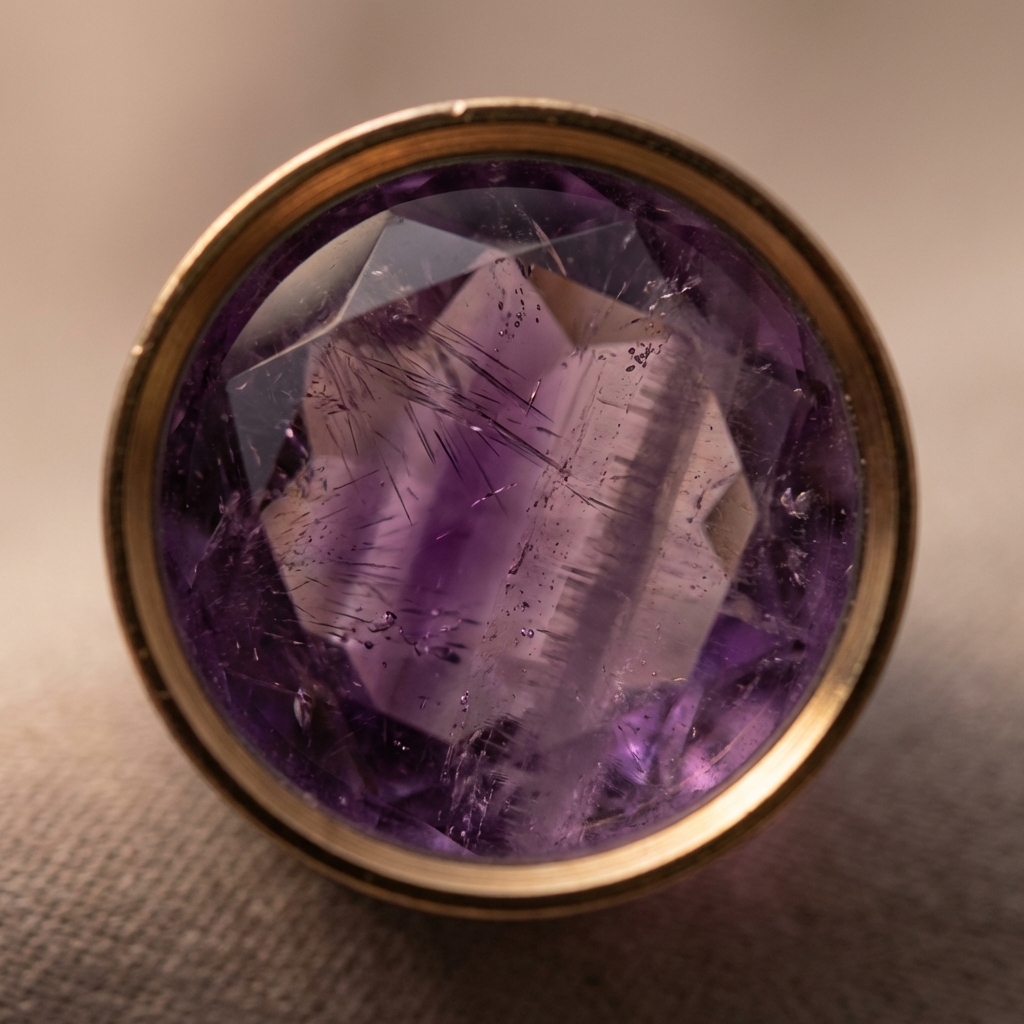
Start with basic visual signs: good amethyst typically shows a purple hue with variable saturation, visible color zoning and pleochroism that can be seen with slight rotation under steady light; natural inclusions and growth patterns are common and useful indicators. These visual clues are helpful first steps but are not definitive against some synthetics or treated material, so treat them as a screening stage rather than proof Gem-A amethyst guide.
Three simple at-home checks can help you triage a ring before you pay for professional testing. First, a loupe inspection can reveal natural inclusions, veils or growth tubes that are often present in natural amethyst. Second, a basic hardness comparison explains why amethyst should resist scratching from materials with lower Mohs ratings; Mohs hardness near 7 is the expected range for amethyst and guides whether a scratch test would be damaging or informative GIA amethyst page.
A third easy screen is a buoyancy or specific gravity float test done carefully in water, which can help detect some imitations but has limited precision and may be fooled by assembled or treated stones. Likewise shortwave or longwave UV checks sometimes show characteristic fluorescence but are not definitive. These at-home checks can reduce obvious fakes, yet they can also yield false positives or damage the ring if applied incorrectly, so any suspicious or high‑value item should be sent for lab testing AGS guidance on when to get a gemstone report.

Practical micro-steps: always inspect against neutral light, rotate the ring to see pleochroism, and use the loupe to look for natural inclusions rather than relying on color alone. Avoid aggressive scratch tests on the bezel or band, and never heat or try chemical cleaners that could alter patina or the stone.
When laboratory testing matters and which methods labs use
There are clear thresholds where lab testing moves from optional to essential: if the ring is costly collectible, historically significant, or its provenance is contested, a formal gemological report becomes the responsible next step. Recent laboratory practice emphasizes spectral and trace-element approaches to separate natural, heat‑treated and synthetic amethyst, so labs are the definitive route for such cases SSEF technical note (see GIA spectroscopy primer).
Key lab methods include Raman and UV-Vis spectroscopy, trace-element analysis and careful microscopic study of growth structures and inclusions. These methods have grown more effective in recent studies and are routine in reputable gem labs for distinguishing natural material from hydrothermal or synthetic products. A lab report typically lists observed optical properties, results from spectroscopy, and an opinion on natural versus synthetic or treated origin based on the instruments used Journal of Gemmology study. For Raman spectroscopy see recent Raman analyses and for comparative mineralogical data see comparative studies.
See behind the scenes at @auroraantiqua
Before you decide, consider requesting any existing lab reports and detailed condition notes so you can weigh what additional testing is necessary.
Understand what a lab report can and cannot do: modern spectroscopy can strongly indicate natural origin or reveal signs of heat treatment and synthetic growth, but some hydrothermal processes remain challenging to separate from natural material without multiple tests. For archaeological or historically important rings, labs focus on non-destructive methods first and will recommend further analysis if needed; this staged approach balances preservation with certainty SSEF technical note.
How to read metalwork, restoration notes and provenance for an ancient amethyst ring
Reading the metalwork helps you assess whether the bezel, shoulders and hoop show construction consistent with the claimed period. Look for solder styles, seam patterns, hand filing marks and patina depth in recesses; such physical signals often reflect workshop methods and use patterns that are meaningful for dating. When a listing includes condition and restoration notes, compare those descriptions to what you see in photos and ask for close images of suspicious joins or repairs Diana - Roman silver intaglio ring listing.

Restoration and preservation notes should state precisely what was stabilized, what was repaired and what was intentionally left untouched. For example, a note that a bezel was re-soldered using modern silver tells you there was intervention and explains why microscope inspection and a clear condition statement are important for attribution and conservation planning AGS guidance on when to get a gemstone report.
Provenance and collection history are supporting evidence, not a substitute for physical examination. Documentation such as prior ownership notes, catalog entries or verification letters can strengthen a case for age and origin, but the exact language matters: prefer clear collection history and dated references rather than general claims. When provenance is sparse, prioritize transparent condition notes and consider a specialist appraisal before purchase Diana - Roman silver intaglio ring listing.
A clear step-by-step buyer checklist for assessing an ancient amethyst ring
Prepare a short pre-purchase kit of questions and requests. Ask the seller for high-resolution photos of the stone and metal from multiple angles, precise measurements of the stone and ring, condition and restoration notes, and any provenance documentation. These essentials let you do a first triage and decide whether to proceed with at-home checks or request lab testing AGS guidance on when to get a gemstone report, and review similar items in the rings collection.
Evaluate photos for the presence of natural inclusions, color zoning and pleochroism, and check whether the bezel edges and solder lines look consistent with the claimed period. If photos are inconclusive, ask for a short video with neutral light and rotation so you can see pleochroic color changes; images that hide repair seams or recent solder are a red flag and merit further questioning Gem-A amethyst guide.
Decision flow: use safe DIY screens first, and if those screens raise doubts or the ring has notable provenance or value, request a current lab report from a recognized laboratory. If the ring is historically sensitive or its provenance is complex, follow the lab report with a specialist antiquities appraisal that can interpret metalwork, restoration notes and historical context for you SSEF technical note.
Common pitfalls and how to avoid false positives
Relying on color alone is dangerous because modern synthetics and some treated stones can match natural hues and saturation. Visual similarity does not equal natural origin; use color as a prompt to investigate further rather than proof of authenticity. Spectroscopic research shows color appearance can be misleading without instrument analysis Journal of Gemmology study.
Simple home tools can give false indications. A float test can be fooled by composite mounts or surface coatings, and a careless scratch test can damage metal or stone; handle DIY checks as triage tools and avoid irreversible experiments. When in doubt about potential damage or interpretive uncertainty, step back and consult a lab or conservator GIA amethyst page.
Distinguishing genuine age from modern repair is another frequent error. Modern solder or fresh metalwork can superficially mimic wear when polished; restoration notes and close inspection of joins and tool marks help avoid mistaking repairs for authentic aging. Always ask sellers for explicit restoration language and microscopic images if available Diana - Roman silver intaglio ring listing.
Real-world scenarios: how different cases should be handled
Low-value decorative ring: if the ring is inexpensive and you want it mainly for wear, practical DIY checks and careful return policies may be sufficient. Use loupe inspection and simple screens to decide if the stone looks acceptable for casual use, and avoid costly lab fees for low-stakes pieces. In many cases a clear condition note and honest photographs are the right balance for a decorative purchase.
Mid-value collectible: for rings of moderate value or with partial provenance, combine photographic evaluation, seller condition notes and at least one lab screening if the seller can provide it. A contemporary lab report that addresses natural versus synthetic origin and notes any heat treatment is recommended before committing funds AGS guidance on when to get a gemstone report.
Use careful visual screening, request condition and provenance documentation, perform safe at-home checks as a triage, and obtain a gemological lab report plus a specialist appraisal for mid to high value or historically significant rings.
High-value or historically sensitive piece: when the ring is historically important, has substantial provenance claims, or carries high market value, plan for a full gemological report that uses Raman, UV-Vis and trace-element analysis and then follow with a specialist antiquities appraisal. This two-step process respects both the gemological and archaeological aspects of the object and produces documentation suitable for conservation and responsible collecting SSEF technical note.
Conclusion and practical next steps for responsible buying
Request high-resolution images and precise condition language, ask sellers about prior ownership and any lab reports, and escalate to a reputable gem lab and a specialist antiquities appraiser for items with important provenance or contested history. Use curated sellers with transparent documentation as reference points, but avoid assuming certainty without tests and expert interpretation Diana - Roman silver intaglio ring listing, or consult our questions and answers blog.
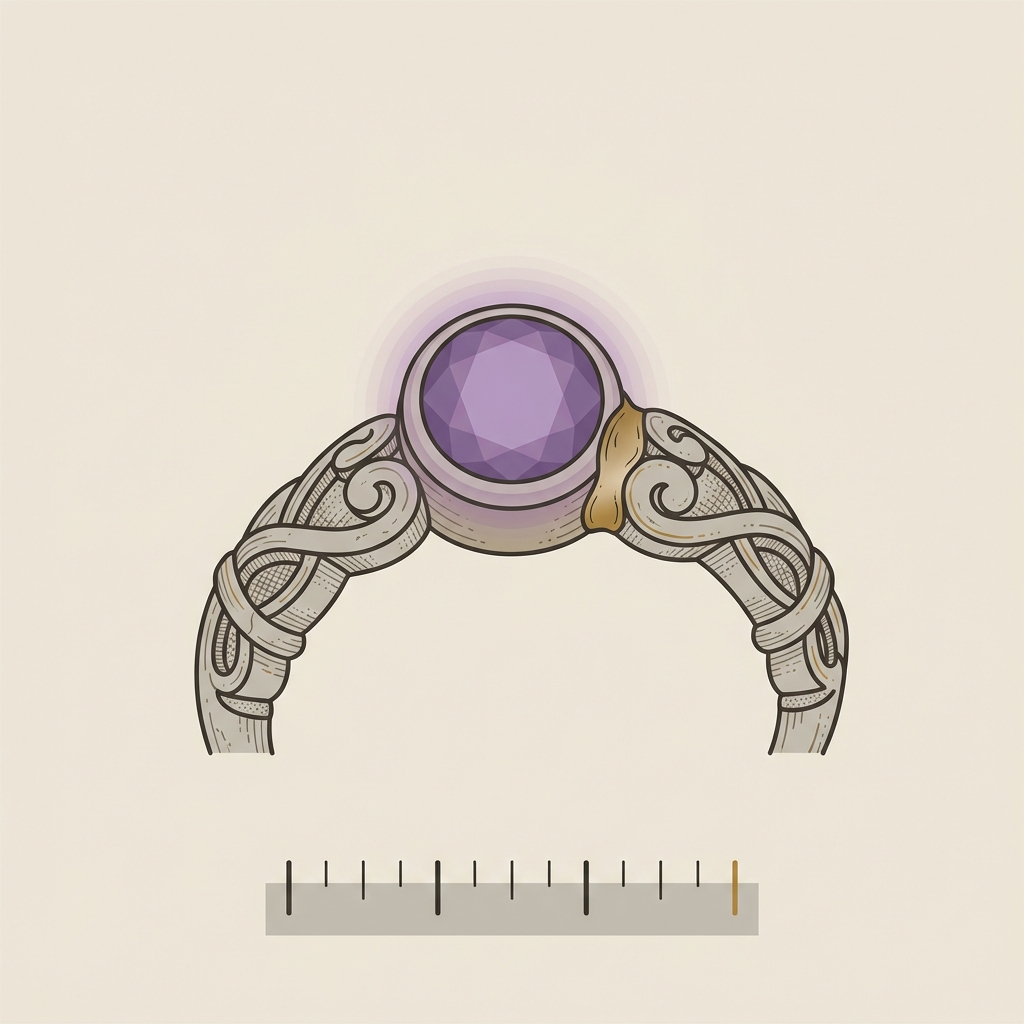
Start with loupe inspection for inclusions, rotate the stone in neutral light to check pleochroism, and ask for high resolution photos; avoid scratch tests and flotation if you are unsure.
Request a lab report when the ring is mid to high value, has important provenance claims, or when DIY checks leave doubt about natural versus synthetic origin.
Restoration notes clarify interventions and condition but do not by themselves prove a stone is natural; they should be considered alongside lab results and provenance.
More from Aurora Antiqua
References
- Study on the effect of heat treatment on amethyst color and the cause, Springer Nature
- Quartz, Handbook of Mineralogy, Mineral Data Publishing / Mineralogical Society of America, USA
- Kunststoffe als Imitationen für Edelsteine und organische Substanzen (plastic imitations of gems), Deutsche Gemmologische Gesellschaft
- Chart of Commercially Available Gem Treatments (Gems & Gemology, Winter 2002), Gemological Institute of America
- 16 CFR Part 23, Guides for the Jewelry, Precious Metals, and Pewter Industries, Federal Trade Commission, eCFR
- Characterization of Castellani nineteenth-century gold jewellery by in situ, Scientific Reports
- E.C.C.O. Professional Guidelines (II): Code of Ethics, European Confederation of Conservator-Restorers'
- Echtheitsuntersuchungen (authenticity testing), Curt-Engelhorn-Zentrum Archäometrie (CEZA), Mannheim
- Amethyst Gemstone, Gemological Institute of America
- PubMed Central