


Looking for the real thing? Browse our full ring collection, each piece one of one, individually authenticated, with documented provenance. For the background, see the guide to ancient jewelry.
How the term "Judah ring" is used today
The phrase "Judah ring" is most commonly encountered in modern commerce and devotional contexts, used to describe rings that bear the Lion of Judah or related Judeo Christian symbols rather than a discrete archaeological class.
In market listings the term often functions as a descriptive tag that signals a motif or devotional association to buyers, not a proven date or origin; readers should treat category labels as starting points for inquiry rather than definitive attribution.
When writers and sellers refer to the Lion of Judah as the source of the descriptor, they are drawing on an emblem with a long textual and religious history that is discussed in reference works.
One practical tool to begin a provenance check is a short checklist that helps you locate catalogue entries and published comparisons
Quick museum catalogue search checklist to start provenance checks
Begin with major national collections
That checklist can help you confirm whether a supposed historic label appears in primary catalogues or is simply a commercial term.
Many commercial labels reflect devotional interest or stylistic shorthand; treating them as the final word on origin risks misattribution and obscures the need for documentation and testing.
For example, jewellery described around Judaic motifs may use the Lion of Judah as a selling point while lacking any clear provenance or comparison to museum examples.
A simple first principle for buyers is to request clear collection history and documentation when a listing uses a culturally specific label such as "Judah ring".

Could a "Judah ring" be an ancient aztec ring?
The short answer for most market listings is that an "ancient aztec ring" attribution for an item described as a "Judah ring" is unlikely without strong, documented evidence, because the visual language and the known materials typical of Aztec jewellery do not align with Judeo Christian iconography.
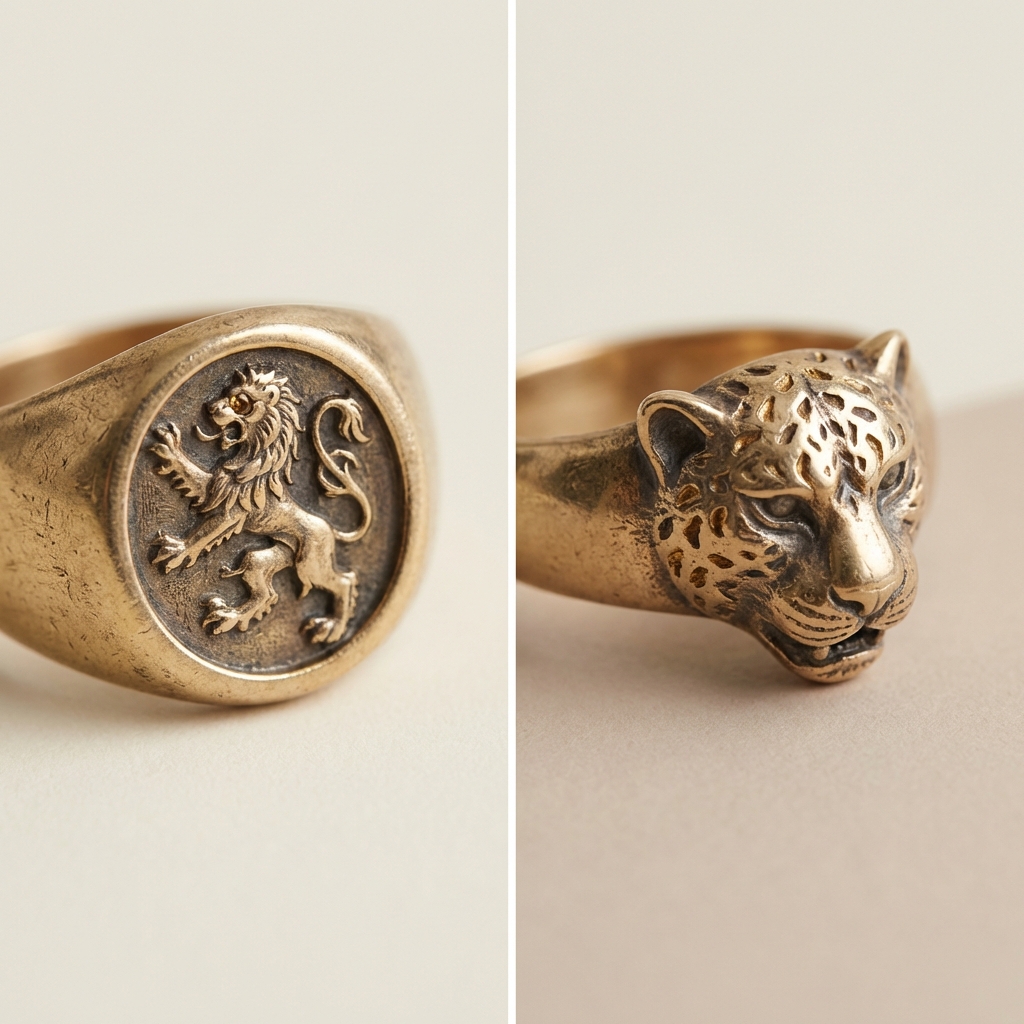
Museum and academic surveys of Aztec material culture show iconography and materials that differ substantially from Near Eastern Judaic motifs, so a cross cultural attribution needs solid comparative evidence before it is accepted by specialists The Metropolitan Museum of Art overview on Aztec art.
Where sellers claim cross cultural connections between Mesoamerican production and Near Eastern symbolism, collectors should ask for the documentary basis for that claim and seek typological comparison to museum examples rather than relying on market labels.
Absence of evidence for an established archaeological category called a "Judah ring" means that any Aztec attribution attached to that commercial label requires exceptional supporting documentation and, where feasible, technical analysis.
Key visual differences: Judaic motifs versus Aztec symbolism
Typical Judaic symbols that appear in listings labelled "Judah" include a stylised lion or related biblical motifs that are narrative and emblematic in a way that ties to Near Eastern iconographic traditions.
A Judah ring is a modern market descriptor referring to rings that bear the Lion of Judah or related Judeo Christian imagery, not a recognized archaeological category; accurate cultural attribution requires provenance and, where needed, specialist testing.
By contrast, Aztec jewellery and iconography tend to show native Mesoamerican motifs such as jaguar, eagle, and serpent imagery, and these are rendered with regional stylistic conventions that differ noticeably from Near Eastern emblem styles Encyclopaedia Britannica on the Lion of Judah.
Noticing whether a ring shows a jaguar face compared to a stylised heraldic lion can be a strong visual clue; if the motif does not match the claimed culture, treat the listing with healthy skepticism.
Another telling sign is whether the iconography fits known composition rules for the claimed tradition; mismatches in posture, costume, or surrounding motifs often indicate a modern, devotional, or hybrid design rather than an artefact with clear archaeological attribution.
Materials and techniques: what to expect from Aztec jewellery versus Near Eastern rings
Aztec jewellery prior to European contact frequently used featherwork, goldworking, shell and turquoise inlays and a set of regional manufacturing methods that shaped how motifs were represented and what materials were typical for high status pieces Metropolitan Museum of Art on Aztec materials and techniques.
Near Eastern Judeo Christian ring traditions tend to involve different combinations of metals and gem settings, and they often show intaglio carving or bezel-set stones in styles that reflect Mediterranean and Near Eastern workshops rather than Mesoamerican techniques.
When a published provenance or condition note claims a Mesoamerican origin for a ring that nevertheless uses materials or techniques uncommon to that region, collectors should ask for metallurgical or technical justification since material mismatch can be a valid ground for skepticism.
A practical step-by-step framework to evaluate a ring labelled 'Judah'
Start with a calm visual appraisal: note the motif, the style of depiction, how the figure is framed on the ring face, whether there is intaglio work, and whether wear patterns look consistent with circulated metalwork of considerable age.
Next, consult any condition notes, restoration notes, and photographs for evidence of age consistent wear; modern reproductions often lack the micro abrasion patterns and patina that develop over long burial or wear histories Canadian Conservation Institute guidance on identifying historic jewellery.
Third, request documentation: collection history, prior ownership notes, accession numbers for previous exhibitions, and any verification letters; these are the simplest forms of provenance and often determine whether further testing is worthwhile.
Fourth, compare the piece to published museum examples and photographs; typological comparison is a low cost but powerful way to see if motifs and manufacturing techniques align with the claimed culture.
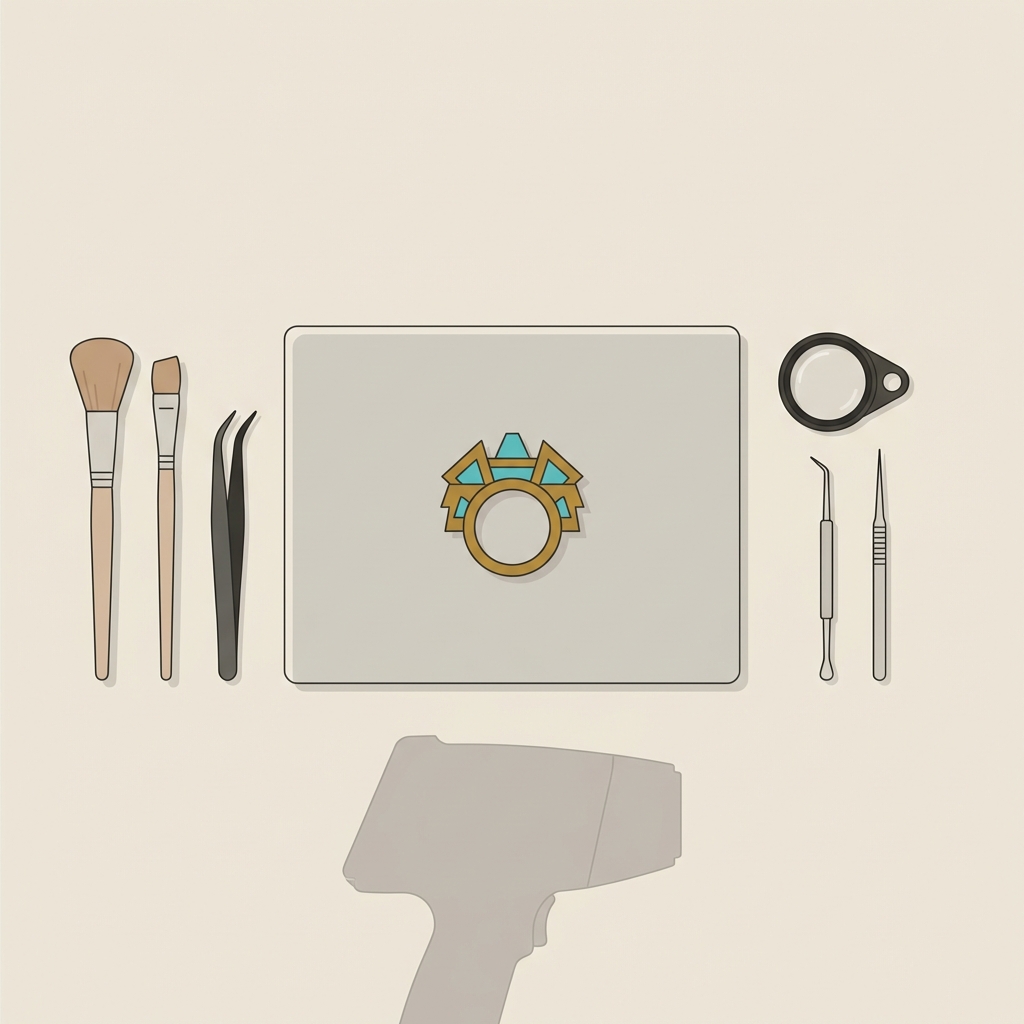
Fifth, if provenance is unclear or the item is high value, commission targeted scientific analysis from a qualified laboratory to confirm composition and production techniques before completing a purchase.
Finally, if anything about the iconography, material, or documentation seems inconsistent, pause and consult a specialist or a reputable dealer who provides clear condition notes and provenance references.
When to request scientific testing and what tests can show
Non destructive testing such as XRF (X ray fluorescence) can quickly show elemental composition and help verify whether a metal alloy matches expected profiles for a region or period; this test is a common first step in jewellery analysis Canadian Conservation Institute overview on testing.
More targeted metallographic study can reveal manufacturing marks, joining techniques, and microstructure that indicate ancient or modern methods, but such analysis should be done by laboratories that follow documented sampling protocols.
Isotopic analysis can provide information relevant to origin in some cases, but it cannot alone prove cultural attribution without clear archaeological context and should be interpreted alongside typology and provenance.
Provenance, documentation and buying responsibly for ancient pieces
Provenance is the documented chain of custody for an object; useful items include collection history, prior ownership notes, exhibition or catalogue references, and verification letters when available, all of which help establish context for attribution and legality.
Clear provenance reduces the risk that an item is associated with illicit trafficking and strengthens the credibility of a cultural attribution by providing verifiable points of comparison to public collections UNESCO on illicit trafficking and cultural property.

When a seller provides only vague or absent documentation, treat the attribution as provisional and ask for any supporting paperwork, accession numbers, or institutional references that can be checked against public records.
Sample questions to ask sellers include: What is the known collection history? Are there any prior catalogues or exhibition records? Have any scientific analyses been performed? What conservation or restoration has been done and are there condition notes to review?
Market red flags: how mislabelling and illicit trade can appear in listings
Common red flags in listings include ambiguous or absent provenance, overly generic historical claims, stock photos that do not match the actual item, and inconsistent iconography that does not align with the claimed culture.
Illicit trafficking concerns mean that buyers, dealers, and platforms have a shared responsibility to pause when provenance is weak and to request documentation and institutional verification before purchase UNESCO guidance on cultural property protection.
If a listing raises suspicion, practical immediate steps are to pause the transaction, ask the seller for full provenance documentation and condition notes, and consult public catalogues or a specialist who can assess the claim before funds change hands.
Reading condition and restoration notes: what wear consistent with age looks like
Patina and surface finishes are often described in condition notes; a stable, even patina and micro abrasion consistent with long term wear or burial are indicators that complement typological evidence and provenance.
Restoration and conservation work should be clearly documented in restoration notes; stabilising conservation is common and appropriate, while invasive reconstruction should be disclosed and assessed for its impact on attribution and display Canadian Conservation Institute on restoration and condition notes.
When restoration is not documented, or images show inconsistent surface finishes, treat the attribution as uncertain and consider requesting technical analysis or condition reports from a conservator.
How platforms and dealers classify devotional or modern 'Judah' rings
Platform categories and commercial tagging are primarily marketing tools and can conflate devotional or modern reproductions with objects that carry archaeological provenance; category labels alone are not evidence of age or origin for an object.
Ask sellers directly what basis they used for classification: whether the tag is a devotional category, a stylistic shorthand, or a claim based on documented provenance, and request supporting documentation if origin is material to your decision to buy.
Sample phrasing to request clarity might be: Please describe the basis for this classification and provide any accession numbers, prior catalogue references, or condition notes that support the claimed origin.
Practical scenarios: assessing three typical listings
Scenario A: A modern devotional ring labelled "Judah". In this hypothetical case the ring is sold with no provenance, bright finish, and a clearly contemporary production technique; the correct response is to treat it as modern devotional jewellery unless the seller can provide verifiable documentation or testing.
Scenario B: An unprovenanced item with mixed iconography. If a ring shows a hybrid of motifs, uneven patina, and no documentation, the prudent path is to request typological comparison to museum examples and consider scientific testing before purchase Museum references for typological comparison.
Scenario C: A well documented museum comparison. When a seller provides a clear collection history, prior catalogue references, and images that match published museum examples, the attribution becomes stronger, though scientific confirmation can still be valuable for high value pieces.
If you suspect illicit origin: steps to take and who to contact
If you suspect illicit origin, immediately pause any purchase and request the full provenance documentation and any export or legal paperwork the seller can provide.
Reporting pathways vary by country but may include national cultural heritage authorities and international organisations that track illicit trafficking; seeking institutional or legal advice is appropriate for high value or suspicious cases UNESCO on reporting illicit trafficking.
For buyers unsure how to proceed, consult a trusted institutional expert, a conservator, or legal counsel before completing a transaction that could carry ethical or legal risk.
How Aurora Antiqua presents ancient rings and documentation
Aurora Antiqua acts as a curated reference and trust layer for buyers seeking ancient rings and small artifacts, offering condition notes, provenance style references, and editorial context to help collectors understand what they are viewing.
The brand's stated capabilities include curated ancient rings spanning Roman, Greek, Byzantine, Islamic, Celtic, medieval, and post medieval periods, select small artifacts, restoration and preservation notes, provenance and documentation references, and editorial historical content to explain cultural context.
Aurora Antiqua typically presents pieces with clear condition notes and historical context so potential buyers can make informed decisions about attribution, conservation, and display.
Summary: can an ancient aztec ring be a 'Judah ring'?
Key takeaways: The label "Judah ring" is not a recognised archaeological category and commonly functions as a modern or devotional market descriptor rather than a formal typological class, so an "ancient aztec ring" attribution for such items is unlikely without strong, documented evidence.
Checklist to keep: confirm iconography match to known tradition, demand clear provenance and collection history, check material and technique consistency with the claimed culture, and pursue scientific testing when provenance is incomplete or the piece is high value.
Responsible collecting means treating market labels as starting points, seeking verifiable documentation, and consulting specialists or qualified laboratories when a claim matters for legal, ethical, or scholarly reasons.
No. The phrase is a modern market or devotional descriptor and is not established as a formal archaeological category.
In most cases no. Aztec iconography and materials differ from Near Eastern Judaic motifs, so such a claim needs strong provenance and technical evidence.
Ask for collection history, prior catalogue or exhibition references, any verification letters, and clear condition and restoration notes.
More from Aurora Antiqua
References
- ring, Victoria and Albert Museum, London
- Une bague-amulette judéo-chrétienne, Persée, Revue des etudes juives
- Amulet, Victoria and Albert Museum, London
- Research report: export licensing and provenance, GOV.UK, Department for Culture, Media and Sport (DCMS)
- The Past Polluted: A Pigovian Approach to the Black Market in Antiquities, International Journal of Cultural
- About us, International Association of Dealers in Ancient Art
- New Acquisitions of Archaeological Material and Works of Ancient Art, Association of Art Museum Directors (AAMD)
- Fighting the illicit trafficking of cultural property, UNESCO