


Looking for the real thing? Browse our full ring collection, each piece one of one, individually authenticated, with documented provenance. For the background, see the guide to ancient jewelry.
What we mean by ouroboros ring meaning
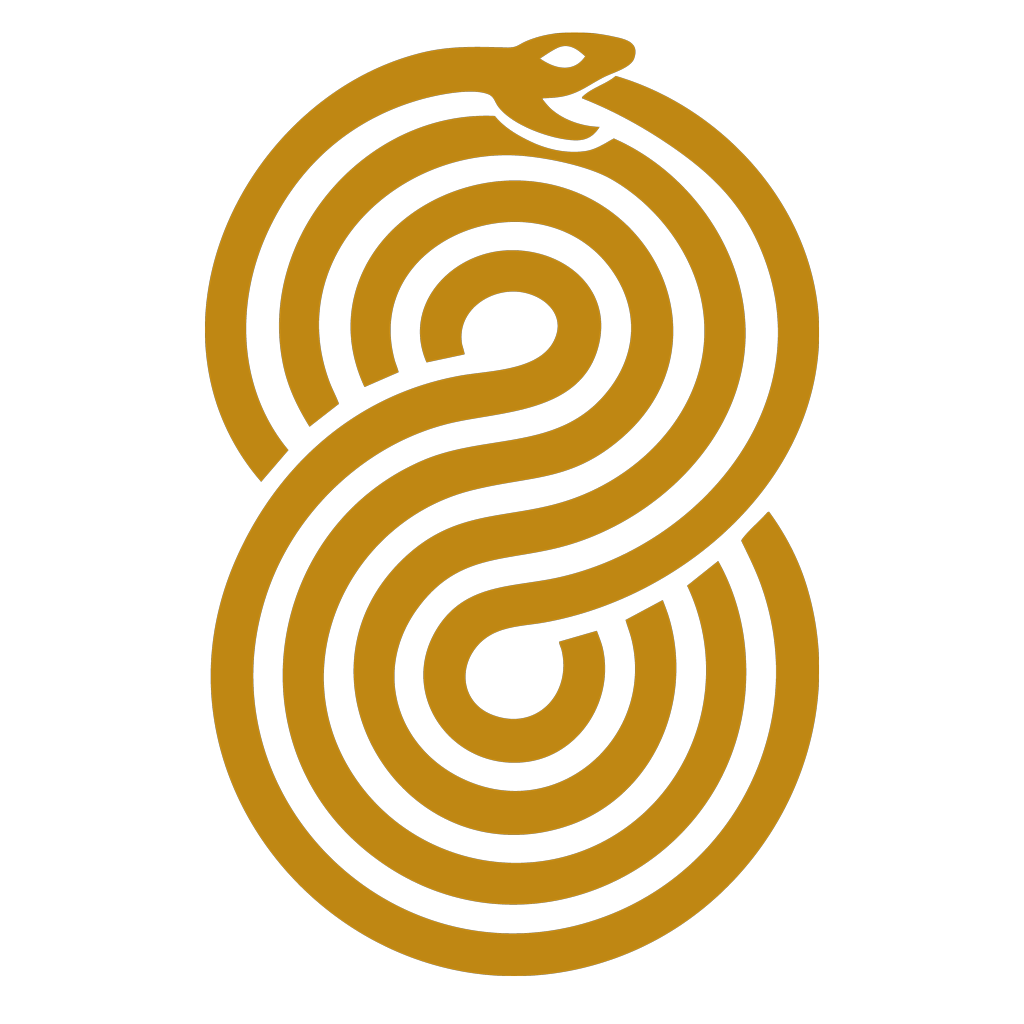
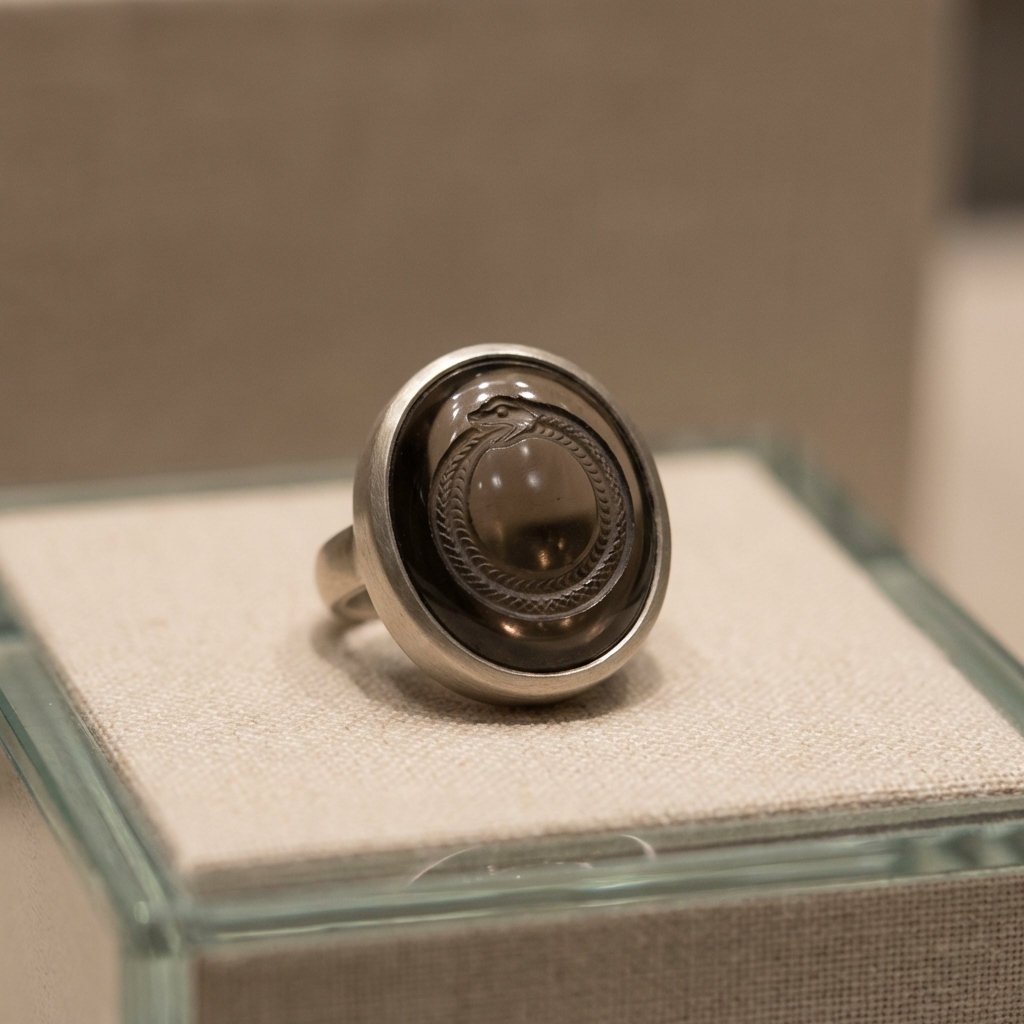
When people ask about ouroboros ring meaning they are often looking for a single declarative translation of a familiar image, the snake biting its own tail. The ouroboros, depicted as a snake forming a closed circle by consuming its tail, appears in art and material culture across time and is commonly associated with cyclical renewal and eternity in museum and reference literature Encyclopaedia Britannica.
That simple identification is useful but incomplete. Curators and scholars treat the motif as polyvalent, and the same circular snake design can serve different roles depending on context, manufacture, and the wider iconographic program in which it appears. The Metropolitan Museum of Art and related curatorial essays emphasize reading an object through multiple lines of evidence rather than assuming a single fixed message The Metropolitan Museum of Art Heilbrunn Timeline of Art History.
See behind the scenes with @auroraantiqua
Download the assessment checklist or review example condition notes to help you compare a ring's visible features and documentation in a clear, step by step way.
In this article the term ouroboros ring meaning is used as a working phrase to ask how one should interpret a snake motif on a finger ring, not to assert a single ancient intent. Throughout the following sections I will use museum records, comparative literature, and practical collecting criteria to show how different readings gain or lose probability depending on available evidence.
Scope of this article
This guide is aimed at collectors and history minded buyers who want to form an evidence based reading of a snake ring. It covers typology and material signals, key cultural traditions that recur in museum catalogues, and a step by step interpretive framework that you can apply to an individual piece without assuming more than the surviving evidence supports. See related items in our rings collection.
How museums and scholars treat the question
Museum curators commonly present snake motifs with conditional language that links visual form to probable function and symbolism, and they recommend using provenance and condition notes to support any specific claim. For a general overview of how curatorial practice frames the motif across periods see the Met's interpretive summary and comparable museum notes The Metropolitan Museum of Art Heilbrunn Timeline of Art History.
A brief historical overview of snake rings
Snake motifs, including the ouroboros form, are attested from Late Antiquity and earlier, and they persist as a visible element in medieval iconography and decorative arts. Reference literature and museum summaries trace a continuity in the use of serpents as symbolic devices that is filtered through changing intellectual traditions and local practices Encyclopaedia Britannica.
Over time the motif accumulated additional layers of meaning. For example, Late Antique and medieval authors and commentators incorporated the circular snake into philosophical and alchemical systems, which then influenced how later collectors and makers read the image. Curatorial essays often point out that these historiographical layers matter when interpreting later examples The Metropolitan Museum of Art Heilbrunn Timeline of Art History.
How form and design signal probable meanings
Visual form is one of the principal tools scholars use to estimate a ring's likely function. Common types include simple coiled bands formed into a snake, bands with an applied head, and biting tail representations in the ouroboros form; rings with carved intaglios or engraved scenes add further information about intended use and reading The Metropolitan Museum of Art Heilbrunn Timeline of Art History.
Coiled bands and plain bronze serpent rings are often treated in archaeological literature as personal amulets or everyday wear, while more complex head bezels and intaglio scenes can point toward signet or status use when combined with other evidence. Formal features do not prove intent but they shift the probability toward particular interpretations.
Visual form checklist for ring assessment
Use as a quick visual triage
When you are visually assessing a ring, pay attention to the degree of three dimensional modeling on the head, whether the snake is biting the tail or simply coiled, and signs of wear that indicate long term handling. These cues are practical because they connect manufacturing technique and usewear to the likely social role of the object Victoria and Albert Museum research notes.
Material matters: gold, bronze, gemstones and social signaling
Material choice and gem technique are strong circumstantial indicators of a ring's social reading. Precious metals and carved gemstone intaglios are more frequently associated with status signaling, identity, and official functions in published catalogues, while bronze and simpler metalwork appears more often in archaeological assemblages as everyday or amuletic objects World History Encyclopedia. See parallels in our Ancient Greek Rings collection.
That said, material alone is not definitive. A bronze ring with an unusual motif could still have belonged to an individual of standing in a local community, and small differences in gemstone carving or mounting can shift interpretation. Curators recommend combining material data with provenance and typology rather than relying on metal alone Victoria and Albert Museum research notes.
The Egyptian uraeus and protective snake imagery
The Egyptian uraeus, a rearing cobra motif, is a distinct tradition in which the snake functions primarily as a protective emblem tied to royal authority and divine guardianship. Curatorial records for relevant objects emphasize the protective and regalia related associations of the uraeus in Egyptian material culture British Museum collection and curatorial notes.

Because the uraeus belongs to a specific iconographic and ritual field, the protective reading is most appropriate when an object shows clear Egyptian provenance or recognisable stylistic markers tied to Egyptian regalia. If such contextual markers are absent, the uraeus reading should be treated as a possible but not inevitable interpretation.
Collectors should therefore look for provenance information or collection history that links a piece to Egyptian contexts before applying the uraeus interpretation with confidence. Condition and restoration notes can also reveal whether key diagnostic features have been lost or altered by conservation interventions.
Greco Roman and Byzantine uses: protection, healing and household associations
In Greek, Roman and Byzantine sources snake imagery appears across contexts that suggest a range of functions including protection, healing, and household cult associations. Object catalogues and specialist studies record examples where serpents relate to domestic cults, medical symbolism, or personal amulets, and these parallels are often the starting point for museum descriptions World History Encyclopedia.
Regional variation matters. A ring in a provincial find context may have served a local household protective function, while a comparable motif in an urban or elite assemblage might be more likely linked to status or professional identity. Scholars urge readers to consult iconographic parallels within the same region and period to refine interpretation Journal of Ancient Symbol Studies.
Late Antiquity and the alchemical layering of the ouroboros
After Late Antiquity the ouroboros acquired additional philosophical and alchemical associations in medieval texts, and this historiographical development affects how later objects are described in museum literature. Curatorial commentary often notes this layering when presenting medieval or early modern artifacts that bear the circular snake motif The Metropolitan Museum of Art Heilbrunn Timeline of Art History.
Wearing a snake ring today can express personal themes like renewal or protection, while historically the motif's meaning depends on material, design, and documented context; combine evidence to produce a probabilistic interpretation.
These later alchemical and philosophical readings are valuable for understanding the motif's reception history, but they do not automatically explain the intentions of earlier makers. For individual ancient rings the alchemical gloss should be treated as part of a later interpretive tradition that may or may not apply to the artifact in its original cultural context Encyclopaedia Britannica.
A step by step framework to interpret an individual snake ring
Step 1: Identify material and manufacture. Record metal type, gemstone presence, surface treatment, and signs of casting or engraving. These observations form the primary dataset for interpretation and should be noted in condition notes or your assessment checklist Victoria and Albert Museum research notes.
Step 2: Check iconography and typology. Is the snake coiled, biting its tail, or shown in profile as a rearing cobra? Does the ring include an intaglio scene or personalized marks? Typology helps you place the object within known design families that have published parallels Catalogue of the Engraved Gems and Finger-Rings in the Ashmolean Museum, II: Roman, BAR Publishing, via Fulcrum.
Step 3: Consult provenance and find context. Provenance notes, prior collection history, and any findspot information greatly increase the confidence of a reading. When provenance is absent, treat functional claims as probabilistic rather than definitive and note that curatorial best practice supports this cautious approach The Metropolitan Museum of Art Heilbrunn Timeline of Art History.
Step 4: Compare museum parallels and literature. Use published catalogues, collection entries, and comparative images to test your reading. Close parallels in well documented collections strengthen a particular interpretation more than a superficial motif match Encyclopaedia Britannica. For example, see the Walters intaglio and related entries Intaglio with an Ouroboros, and consult published catalogues such as the Getty Museum catalogue of ancient gems and rings Ancient gems and finger rings - Getty Museum.
Step 5: Present an informed, probabilistic reading. Combine material, iconography, provenance, and comparative literature to offer a reasoned interpretation. Clearly separate what the historical evidence supports from the modern personal meanings a wearer may assign, and include condition notes to show what evidence remains visible.
Decision criteria for buying: what to check before you buy
Request documentation and provenance checks. Ask for collection history, prior ownership notes, and any verification letters that accompany the listing. These documents are central to moving from a speculative interpretation to a responsible, evidence based claim about a ring's likely role or date The Metropolitan Museum of Art Heilbrunn Timeline of Art History. You can also compare the listing to product pages such as the Chimaron ring on our site to see how cataloguing details are presented Chimaron product page.
Examine condition, restoration and expected wear. Look for clear restoration notes that explain what was stabilized or repaired and what was left as original. Conservation disclosures can affect how iconographic details are read and should be part of any purchasing calculus.
Know when to seek specialist input. For high value or ambiguous items, consider asking a qualified conservator or a curator with regional expertise to review photographs and documentation before you commit to purchase.
Reading condition, restoration and provenance notes
Common restoration interventions include solder repairs, replacement or reattached bezels, and surface stabilizations. Each of these can obscure diagnostic details such as fine engraving or tool marks that inform typology, so clear restoration notes are important for interpretation Victoria and Albert Museum research notes.
Provenance statements vary in precision, from detailed collection history entries to brief seller assertions. Useful provenance language includes named prior collections, acquisition dates, and any supporting documentation like catalog entries or historic photographs. Where provenance is incomplete, cross checking with museum catalogues and published literature helps reduce risk Encyclopaedia Britannica.
When condition notes or restoration disclosures are absent or vague, treat interpretive claims with caution and consider requesting a condition report or higher resolution images before forming a firm conclusion about meaning or function.
Typical mistakes and interpretation pitfalls
A common error is projecting modern meanings such as rebirth or personal transformation onto an ancient object without sufficient contextual support. Modern personal readings are legitimate for the wearer, but they are not the same as historically evidenced functions and should be presented as contemporary layers over the object rather than core ancient testimony Journal of Ancient Symbol Studies.
Another pitfall is overreliance on a single attribute, such as motif type or metal, to make a broad claim. For example, assuming every gold serpent ring is high status without checking provenance and typology can lead to misleading conclusions. Balance single attributes with comparative literature and condition notes.
Practical examples and interpretive scenarios
Example A: A carved gemstone intaglio with a serpent motif accompanied by a clear collection history and dated catalog entry is likely to support a social reading such as signet use or identity marker when the comparative literature shows similar items in documented elite contexts. In such cases material and provenance together increase confidence in a social interpretation World History Encyclopedia.
Example B: A coiled bronze serpent ring showing long term wear consistent with age and coming from an archaeological context or metal detecting assemblage will often be read as an everyday amulet or personal protective device. Wear patterns and simple manufacture typically point toward repeated handling rather than formal signet use Victoria and Albert Museum research notes.

In both scenarios museum parallels and published catalogue matches are the decisive tests. Even when a modern collector assigns personal symbolism, the historically informed interpretation should be stated probabilistically and supported by material and contextual evidence.
Modern meanings, wearing a snake ring today and respectful interpretation
Contemporary wearers commonly use snake rings to express ideas like rebirth, transformation, protection, or erotic symbolism. These modern meanings are valid personal layers and often explain why historic motifs remain attractive, but they are not direct evidence of ancient intent in every case Journal of Ancient Symbol Studies. See also a popular history article on the symbol's use in later periods The History Behind the Ouroboros.
When describing a purchased piece consider language that separates historical reading from personal meaning. For example, say: the ring appears to share formal features with documented amuletic examples from region X, and as a modern wearer I find it meaningful for rebirth. This keeps historical claims conditional while acknowledging personal significance.
Conclusion and next steps for collectors
In summary, ouroboros ring meaning is best treated as probabilistic: the circular snake motif often carries associations of eternity and renewal in interpretive traditions, but an individual ring's likely meaning depends on material, design, provenance, and comparative literature Encyclopaedia Britannica.
Collectors should prioritize clear condition notes, provenance statements, and comparative museum records when forming interpretations, and seek specialist input for high value or ambiguous cases. Doing so supports a respectful approach that recognizes both ancient context and modern personal use.
The ouroboros appears in Late Antique and earlier sources and was reused in medieval and early modern texts; its precise age varies by region and example.
Not always. Protection is a common reading in many traditions, but the meaning depends on material, design, provenance and comparative parallels.
Yes. Modern personal meanings are valid as wearer statements, but they should be presented separately from historically supported interpretations.
More from Aurora Antiqua
References
- Catalogue of the Engraved Gems and Finger-Rings in the Ashmolean Museum, II: Roman, BAR Publishing, via Fulcrum
- Philip Kiernan and Klaus-Peter Henz, Rings from the Forbidden Forest, Cambridge University Press
- Pliny the Elder, The Natural History, BOOK XXXIII, Perseus Digital Library, Tufts University (edition Bostock)
- Talismans, Visitatori salutem, Szepmuveszeti Muzeum, Museum of Fine Arts Budapest
- Getty Provenance Index, J. Paul Getty Trust, Getty Research Institute, Los Angeles
- Auction Terminology, Christie's
- Ring, Victoria and Albert Museum
- Ancient Gems and Finger Rings: Catalogue of the Collections, The Getty
From Aurora Antiqua
We sell authenticated ancient & medieval pieces, each individually examined before listing and backed by a Lifetime Authenticity Guarantee. One of a kind, sold once, never reproduced.
Browse Authenticated Ancient Rings →