


Looking for the real thing? Browse authenticated ancient artifacts, each piece one of one, individually authenticated, with documented provenance. For the background, see the guide to buying ancient artifacts.
What is a medieval pendant? Definitions, context and how scholars draw the line
The term medieval pendant is commonly used in museum catalogues and scholarship to describe a wearable object whose primary purpose is display or devotion. Museums and object studies usually treat pendants and amulets as overlapping categories: a pendant can be primarily decorative or devotional, while an amulet is defined by an intended protective or magical efficacy, and single items can fall into both groups depending on context V&A article on pendants and amulets.
For collectors this working distinction is practical rather than absolute. An item's form, iconography and documented use can point toward one function or the other, but owners in the medieval period often used the same object for personal devotion and for protection, so classification can be interpretive rather than definitive Metropolitan Museum of Art overview of medieval jewellery. See also an online review discussing interpretation challenges AJA online museum review.
Collectors should look for physical signs like suspension wear, cavities for relics, and inscriptions, and then confirm those signs with provenance statements, condition and restoration notes, or institutional references before deciding how to interpret the piece.
Scholarly definitions matter because they shape cataloguing practice, conservation decisions and legal assessments. When a piece is entered into a collection catalogue as an amulet, the catalogue typically notes invocations, reliquary compartments or saint imagery; when it is recorded as a pendant, emphasis falls on suspension, ornament and stylistic typology. Those cataloguing choices inform how a modern buyer reads condition notes and provenance statements.
Understanding whether an item is best approached as a pendant or an amulet also influences care and display. An object containing textile or bone relics will have different conservation needs than an open decorative pendant, and institutional catalogues often record such distinctions to guide handling and future study Metropolitan Museum of Art overview of medieval jewellery.

How pendants and amulets worked in medieval Europe: overlap, examples and common forms
In medieval Europe many pendants doubled as amulets, a relationship well documented in museum collections and archaeological literature. Crosses, reliquary pendants and objects bearing saints' images or inscribed prayers were commonly worn both as devotional signs and as protective devices, a dual function that reflects lived religious practice between roughly the tenth and fourteenth centuries Metropolitan Museum of Art overview of medieval jewellery.
Reliquary pendants provide a clear example: small cavities or sealed compartments could hold textile fragments, bone, or other relic material and these objects were carried close to the body for protection and intercession. Where a pendant contains such a compartment it can be reasonable to read it as an amulet as well as jewellery, though confirming the presence of relic material typically requires documentation or testing rather than visual assumption L'amulette « égyptienne » d'Argentomagus (Indre), Isabelle Fauduet, Revue archéologique du Centre de la France, via Persée. For further object-level analyses see the Science Museum's overview of amulets A history of amulets.
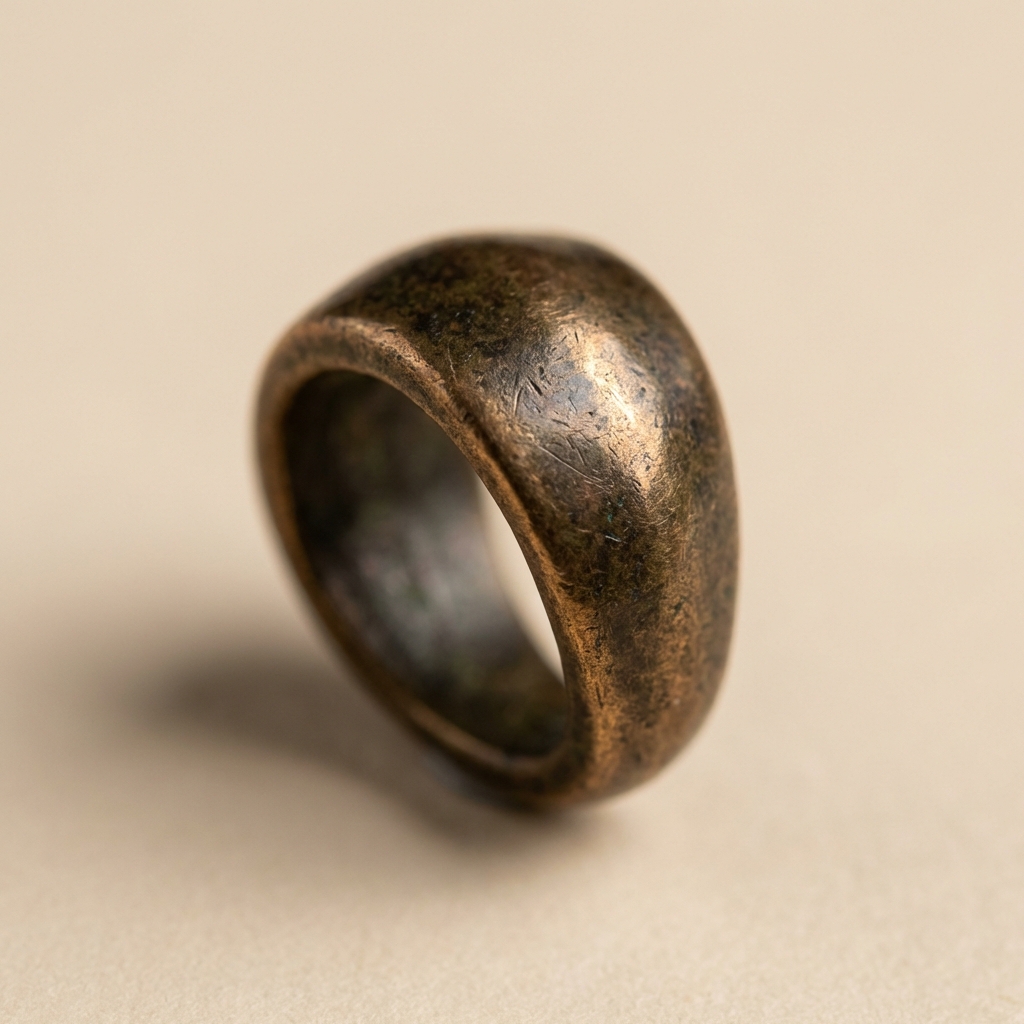
How to identify a medieval pendant versus a medieval amulet: a practical visual and documentary checklist
Start with visible features. Look for an integral suspension loop, evidence of long-term wear on the hoop or attachment point, and any cavities or sealed compartments that could hold relic fragments. Visible inscriptions, invocations or saint imagery are further pointers to amuletic use but do not by themselves prove the presence of relic material. Museum guidance recommends combining visual inspection with documentation and condition notes to form a reliable assessment V&A article on pendants and amulets.
Next, check the listing or catalogue for condition and restoration notes. A clear condition statement will say what was stabilised, repaired or left untouched; restoration notes can disclose modern interventions that change how an object should be interpreted. A trustworthy listing will also include provenance statements or references to institutional cataloguing when available, and those documentary cues often weigh more heavily than appearance alone About us, International Association of Dealers in Ancient Art.
A short practical checklist to assess suspension, wear, cavities, inscriptions, provenance and condition notes
Use alongside high resolution images
When you inspect images, use magnified views of the suspension and bezel, request photos of the interior where a cavity is suspected, and compare wear patterns across surfaces. A suspension loop worn smooth on its interior face suggests repeated use as a pendant, while an unperturbed loop might indicate limited wear. These visual diagnostics are recommended in museum object-study practice but should be treated as suggestive rather than conclusive V&A article on pendants and amulets.
Practical caveat: visual cues can point you toward an assessment, but scientific testing and reliable provenance remain essential to confirm claims about relics or inscriptions. Where sellers or catalogues report laboratory analysis or institutional verification, use those reports to support your interpretation rather than relying on appearance alone Talismans, Visitatori salutem, Szepmuveszeti Muzeum, Museum of Fine Arts Budapest.
Materials, motifs and apotropaic signs: what signals amuletic purpose
Common medieval materials include bronze and other copper alloys, silver and gold, and occasionally intaglios or set semi-precious stones such as carnelian or agate. Some amulets might also incorporate textile or bone relic fragments within small compartments, and listings or museum descriptions will often note such inclusions when known British Museum amulet collection entry. See a specific British Museum object entry for a comparable example British Museum object H_1941-1208-1.
Iconography and inscriptions are strong indicators of intended protective use. Saints' images, invocations, crosses and explicit apotropaic symbols were frequently used to invoke protection or intercession, and these motifs are commonly cited in object studies as signifiers of amuletic function. Reading these signs in context, alongside material and provenance information, gives a stronger basis for interpretation Medieval Archaeology article on amulets and pendants.
Materials can also affect conservation and authenticity questions. Bronze corrodes and develops a characteristic patina that can be consistent with long-term wear, while silver objects may show polishing or later repairs that complicate visual reading. Listings that include clear condition notes and restoration histories allow collectors to separate original features from later interventions British Museum amulet collection entry.
Collector decision criteria: provenance, legal checks and condition notes you must review
Before offering a price or placing a bid, request provenance documentation, prior ownership notes, and references to any institutional cataloguing. Provenance and legal status are central to responsible collecting because medieval objects can be subject to export controls and disputed ownership claims; written provenance helps reduce this risk and gives context about collection history Dealing in Cultural Objects (Offences) Act 2003, The National Archives, legislation.gov.uk.
Read condition and restoration notes carefully. A clear condition report should list what was stabilised, repaired or left untouched and should indicate whether any modern reconstruction affects the object's original form. Restoration notes help interpret whether a suspected relic compartment is an original feature or a later modification, and they are a standard part of responsible listings and museum records V&A article on pendants and amulets.
Request legal documentation where relevant, such as export permits or acquisition records, and ask for catalogue references if the object has been studied or displayed by an institution. If a seller cannot provide basic provenance information, treat that as a substantive risk factor and consider seeking independent curatorial advice before proceeding Informations for the art trade, Federal Office of Culture (FOC), Switzerland.
Important next step for buyers
Request provenance documents and condition reports before bidding or buying
When in doubt, pause and ask specific questions: exact dates or ranges used in cataloguing, the wording of provenance statements, whether laboratory testing has been done, and whether restoration records detail any interventions. Prioritise sellers who include transparent documentation in their listings and who will supply high resolution images and condition reports on request V&A article on pendants and amulets.
Common mistakes and red flags when assessing pendants and amulets
A frequent error is to assume protective function from decorative motifs alone. A cross motif may be ornamental, devotional or amuletic depending on context; without provenance or supporting documentation it is risky to ascribe protective intent solely on the basis of an image or form. Museum object studies caution against conflating motif with function without corroborating evidence Metropolitan Museum of Art overview of medieval jewellery.
Image
Modern repair or reconstruction can also mislead. Repairs made to stabilise fragments or to reattach suspension loops may alter wear patterns or create the appearance of a compartment. Inspection of restoration notes and, where possible, a conservator's report will help separate original features from later interventions and reduce misinterpretation V&A article on pendants and amulets.
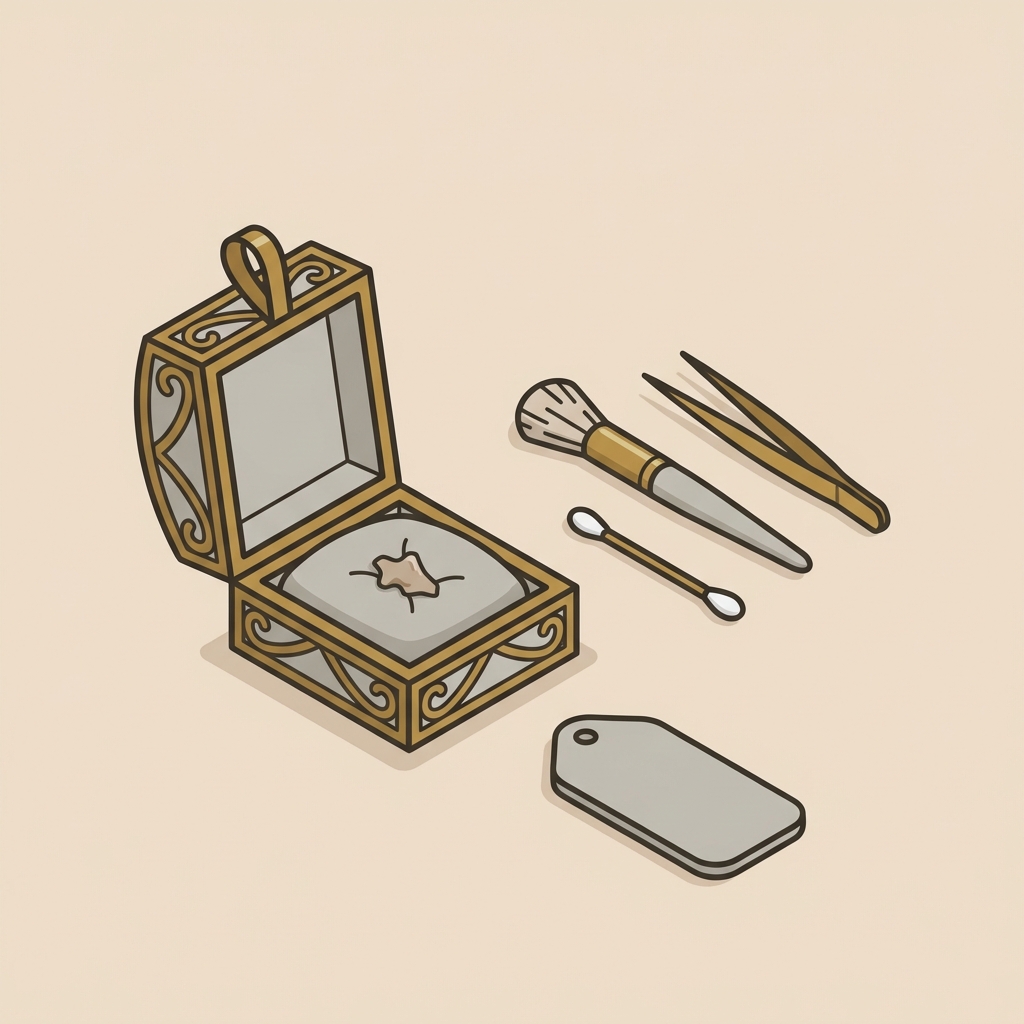
Practical examples and scenarios: reading three typical listings
Example A: a small bronze cross with a sealed cavity and partial inscription. Visual clues such as a sealed compartment and an invocation or saint name suggest the object may have been used for protective purposes in addition to being worn as a pendant. To move from suggestion to confidence request condition notes that describe the cavity and any laboratory testing or sampling that has been performed Metropolitan Museum of Art overview of medieval jewellery.
Example B: a decorative intaglio pendant with visible wear on the suspension and no inscription. Wear consistent with repeated use on the hoop suggests the object served mainly as a pendant for display or personal adornment, though intaglios can also carry symbolic meaning. Check for restoration notes that clarify whether the intaglio is original and ask for provenance information to understand the object's collection history V&A article on pendants and amulets.

Example C: a small reliquary pendant with a short provenance note indicating prior collection history and a conservator's condition report. Here the documented collection history and the conservator's notes increase confidence that the pendant served a devotional and protective role, but buyers should still review the exact wording of provenance statements and any scientific reports provided L'anneau sigillaire d'Arégonde, femme de Clotaire Ier, découvert à Saint-Denis, Bulletin de la Societe.
In each scenario, apply the stepwise checklist: examine suspension and wear, request targeted images, read condition and restoration notes, and ask for provenance details. These steps reflect museum practice and help buyers translate visual evidence into responsible purchasing decisions V&A article on pendants and amulets. See our featured collections for examples featured collections.
Conclusion: choosing between a medieval pendant and an amulet - next steps for responsible collectors
In summary, the difference between a pendant and an amulet often lies in intended use as recorded by museum studies: a pendant is primarily wearable and decorative or devotional, while an amulet is intended for protection or efficacy. Many medieval objects served both roles, and reading objects requires attention to materials, motifs, wear, and documentation Metropolitan Museum of Art overview of medieval jewellery.
Practical next steps include asking sellers for provenance documentation, condition and restoration notes, and any references to institutional cataloguing. When documentary evidence is insufficient and the object in question might contain relic material or has disputed provenance, consider independent curatorial advice or scientific testing before committing to a purchase Publication 561 (12/2025), Determining the Value of Donated Property, Internal Revenue Service (IRS), USA. For more context see Aurora Antiqua's medieval pendants collection medieval pendants collection and our Medieval Jewelry overview.
Readers who want to learn more should consult institutional catalogues and published museum resources, and use the stepwise checklist provided earlier when reviewing listings. Approached carefully, collecting wearable medieval objects can be a way to engage with tangible history while maintaining ethical and legal standards of acquisition.
Look for a combination of visual signs such as a sealed cavity, inscriptions or saint imagery, consistent wear at the suspension point, and corroborating provenance or condition reports; use documentation rather than appearance alone.
Materials like bronze, silver and objects set with intaglios were common for both pendants and amulets; the presence of a relic fragment or a sealed compartment is a stronger indicator of amuletic function than material alone.
Request the exact provenance wording, high resolution photos including suspension and interior views, condition and restoration notes, and any references to institutional cataloguing or laboratory testing.
More from Aurora Antiqua
References
- L'amulette « égyptienne » d'Argentomagus (Indre), Isabelle Fauduet, Revue archéologique du Centre de la France, via Persée
- About us, International Association of Dealers in Ancient Art
- Talismans, Visitatori salutem, Szepmuveszeti Muzeum, Museum of Fine Arts Budapest
- L'anneau sigillaire d'Arégonde, femme de Clotaire Ier, découvert à Saint-Denis, Bulletin de la Societe
- Dealing in Cultural Objects (Offences) Act 2003, The National Archives, legislation.gov.uk
- Informations for the art trade, Federal Office of Culture (FOC), Switzerland
- The Past Polluted: A Pigovian Approach to the Black Market in Antiquities, International Journal of Cultural
- Publication 561 (12/2025), Determining the Value of Donated Property, Internal Revenue Service (IRS), USA
- Adornment, Identity, and Authenticity: Ancient Jewelry In and Out of Context, American Journal of Archaeology
- A history of amulets in ten objects, Science Museum Group Journal, journal.sciencemuseum.ac.uk