


Looking for the real thing? Browse our full ring collection, each piece one of one, individually authenticated, with documented provenance. For the background, see the guide to ancient jewelry.
What is a mourning or widow's ring? Definition and historical context
An antique widows ring is a piece of mourning jewellery made or adapted to mark bereavement, often carrying an inscription, hairwork or sombre materials that link it to a specific individual or event. This form of artifact belongs to a long material culture of remembrance that museums and academic collections trace back to antiquity, although it was most fully systematized in later centuries; readers should treat specific dating as an interpretive judgement tied to documentation rather than a fixed fact and always consult provenance notes for a given item. V&A article on mourning jewellery
Museum collections label such rings in ways that emphasise their commemorative function, typical materials and any associated collection history, and those labels often guide how scholars and buyers think about the category. When a ring carries hairwork, an inscription or a clearly funerary motif, curators tend to list those features in the object record to help later users understand possible dating and social meaning. This practice underlines why provenance and documentation matter when assessing an ancient ring. See related rings collection.
Origins from antiquity to early modern use
Remembrance rings and related tokens appear across many periods and cultures, with examples that can be placed in broader antiquity and also in early modern practice; the long continuity of the idea helps explain why later fashions drew on older motifs. Interpreting an individual ring requires linking visible features and inscriptions to known workshop conventions and collection records rather than assuming a single origin. For an overview of English examples see English Mourning Jewellery at the University of Oxford.
How the term has been used in collections and museums
Museums often apply the term mourning jewellery or memorial ring when the object record shows clear commemorative intent, for example when an inscription names a deceased person or when hair is incorporated into the setting; those labels guide how researchers and collectors discuss the piece. For practical buying decisions, treat museum descriptions as context rather than a certificate of provenance.
Victorian etiquette and how historical rules were structured
The Victorian period established the clearest social framework for mourning jewellery, with staged periods of mourning and specific conventions for which items were appropriate at different times; these historical rules remain an important reference for modern etiquette discussions, but they are historical precedents rather than prescriptions for contemporary conduct. British Library overview of Victorian mourning practices

In 19th-century practice, stages of mourning could dictate when more public or more private pieces were worn, and inscriptions or hairwork often signalled close family ties or the status of the deceased; understanding those stages helps modern owners interpret the social meaning attached to certain motifs. Use this information as background rather than a binding rule for your own choices. See contemporary accounts of Victorian mourning on the National Trust site at Forget me not - revealing Victorian mourning customs.
A short photo and measurement checklist to assess a listing before purchase
Use with the seller's condition notes
Staged mourning in Victorian sources gave particular attention to signifiers such as black enamel, jet and hairwork, and these signifiers were used to communicate both private grief and public observance. When evaluating a ring attributed to the period, compare listed materials and inscriptions with established collection descriptions to judge plausibility and relevance. Additional practical notes on Victorian mourning jewellery are available at Victorian Mourning Jewellery.
Scholars and curators use inscriptions, maker marks and collection history to build an interpretive chain of evidence; a named inscription or a documented prior ownership can be strong contextual clues but should be read alongside scientific or conservator notes when available.
Typical materials, motifs and diagnostic signs in antique mourning rings
Common materials include black enamel and jet, and common features are incorporated hairwork, commemorative inscriptions and symbolic motifs such as urns, hearts or religious emblems; these elements regularly appear across museum records and help identify an object as mourning jewellery. V&A article on mourning jewellery
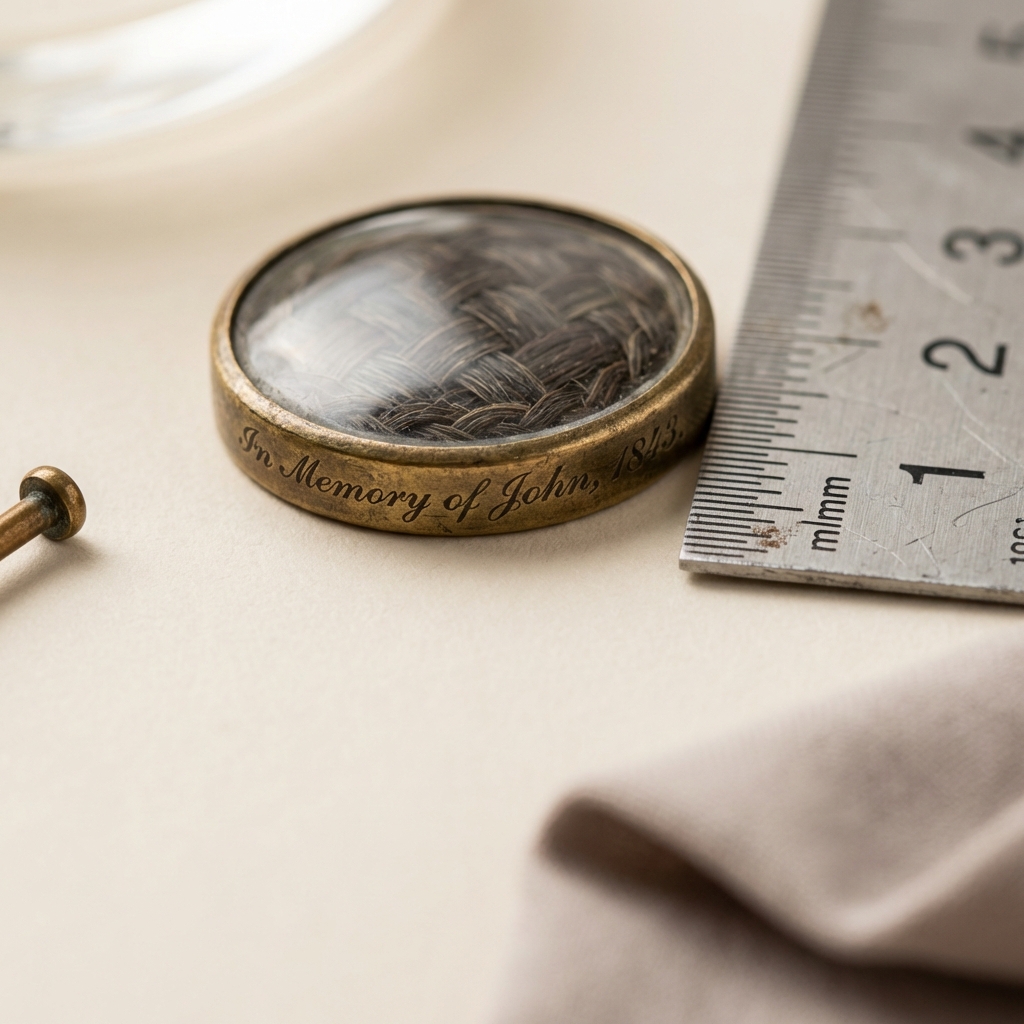
Hairwork is a particularly diagnostic feature because it ties the object to a person, but it also raises clear conservation concerns and usually appears in conjunction with inscriptions or dates. Treat hairwork as part of the object's evidence chain and ask for specific condition notes if a listing claims hair is original.
Common materials: black enamel, jet, hairwork, gemstones
Black enamel and jet were widely used for their sombre appearance and relative availability; occasionally a gemstone or intaglio appears, but the overall palette is typically subdued. Where a ring includes a gemstone, the setting and wear patterns can help indicate whether the stone is original or a later substitution, so compare photographs to condition reports where possible.
Motifs and iconography: urns, hearts, religious symbols, inscriptions
Urns, hearts and simple religious iconography are recurring motifs that signalled memorial intent and could help date a piece when combined with inscription style and hallmarks. Inscriptions often include names, dates or short commemorative phrases, and the lettering style can sometimes be cross-referenced with collection catalogues to narrow a likely period. When a catalogued date or attribution is offered, treat it as the seller's stated interpretation until independent documentation is available. Smithsonian care notes and object guidance
Modern etiquette in 2026: personal choice, cultural sensitivity and common practices
Contemporary advice emphasises personal choice and cultural sensitivity, and it recognises that a widow or wearer may choose any finger or way of wearing a mourning ring depending on family custom, religious obligation or personal preference rather than a single universal rule. This shift away from fixed prescription is reflected in modern etiquette writing. Debrett's modern etiquette guidance
For many wearers today the priority is contextual clarity: pairing subdued materials with neutral clothing, avoiding ostentatious displays and being mindful of setting and audience. These practical choices allow the ring to function as private remembrance or quiet memorial without attracting undue attention. Consider matching the ring's scale to your wardrobe and keeping other hand jewellery minimal for formal occasions; see examples in the medieval crusader rings collection.
Pause and confirm context before wearing
If you are considering wearing a mourning ring in public or at a family event, review the piece's documentation and think about how your cultural or familial context shapes what feels appropriate.
Regional and religious norms remain relevant. Different communities may expect distinct signs or durations of public mourning, so when in doubt consult family elders, religious leaders or local protocol rather than relying solely on Victorian precedent.
Deciding to buy: provenance, documentation and authentication checklist
Before purchasing, request written provenance notes, collection history and any verification letters the seller can provide; these form the primary documentary evidence that links an object to past ownership and helps a buyer assess ethical and legal collecting questions. Museum collection practices emphasise the value of such documentation when interpreting an item. British Museum collection overview
Ask for condition notes and clear restoration notes that describe what was stabilised, repaired or left untouched, and request high-resolution photographs of hallmarks, inscriptions and the setting. Knowing whether hairwork is original, whether enamel has been retouched, or whether a hoop has been modernised affects both care decisions and the object's interpretive value.
When a listing raises uncertainties, consider a third-party opinion from an independent conservator or a specialist in historic jewellery; professionals can test metals or examine solder joins and can offer a written assessment that supplements seller documentation.
Caring for an antique mourning ring: conservation best practices
Avoid abrasive cleaning and do not expose fragile enamel, hairwork or corroded metals to aggressive solvents; museum conservation guidance recommends gentle handling and storage in stable, low-humidity conditions to limit further degradation. For fragile or complex pieces, consult a trained conservator before attempting any cleaning or repair. Metropolitan Museum conservation guidance
Daily precautions include keeping the ring away from perfumes and lotions, avoiding rough contact during manual tasks and storing the piece flat in a padded box or acid-free envelope to protect delicate decoration and patina. Photograph the ring on receipt to document condition and any preexisting damage.
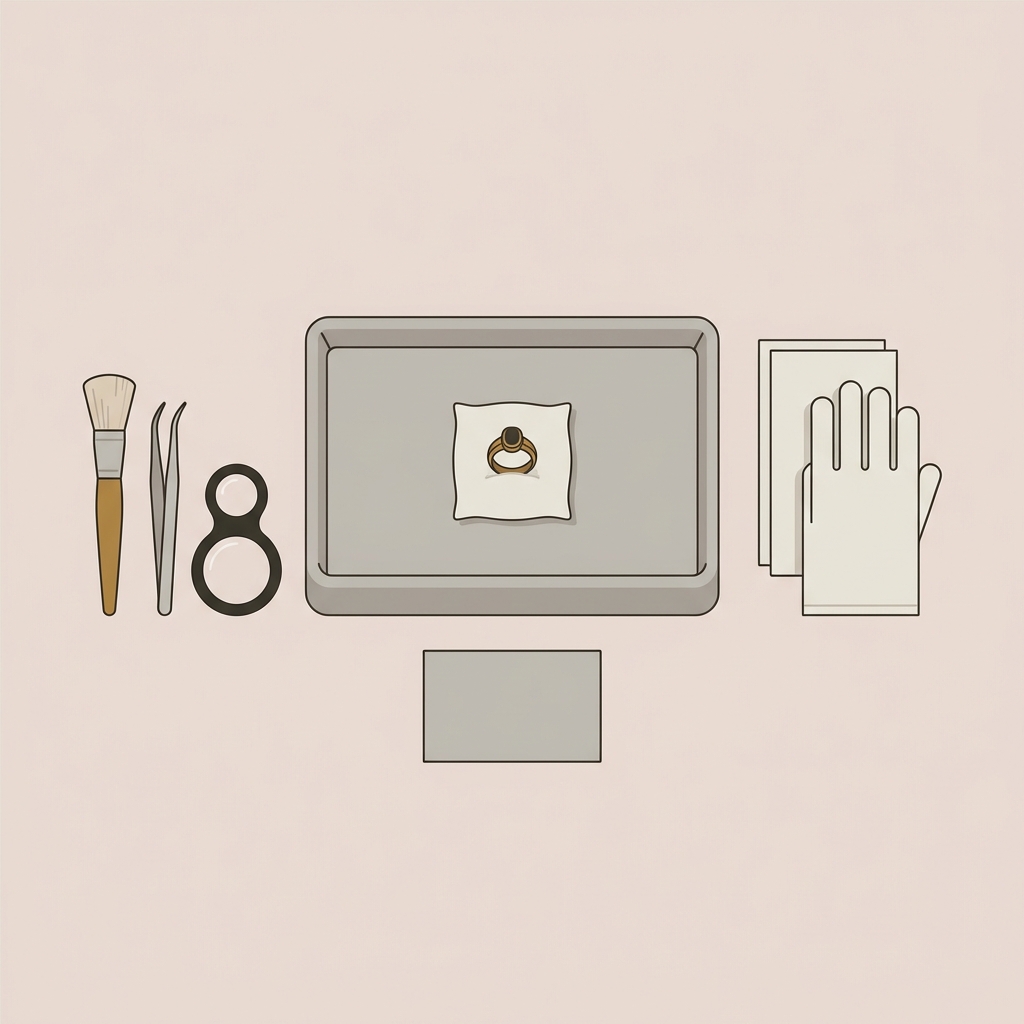

Hairwork requires specialist attention because it can be brittle and adherent to adhesives that age differently from metals; stabilisation or consolidation should only be carried out by a conservator with experience in organic materials. Conservator reports can also provide guidance about permissible display durations and environmental limits.
How to wear a mourning ring respectfully today: styling, occasions and finger choice
Conservative styling helps maintain the ring's commemorative tone: subdued palettes, restrained settings and simple complementary jewellery lessen the risk of turning a memorial object into a fashion statement. Consider matching the ring's scale to your wardrobe and keeping other hand jewellery minimal for formal occasions. See similar medieval crusader rings for scale and styling reference.
Finger choice varies by culture and personal preference; some families prefer the left ring finger, others choose the right hand, and in many cases the decision is a matter of private custom rather than public convention. If a ring carries clear religious iconography, be mindful of the setting and the audience when wearing it in interfaith or public contexts.
When appropriate, a short explanation to close friends or family can provide context, but privacy is equally valid; there is no obligation to announce a ring's significance unless you wish to do so.
Common mistakes and etiquette pitfalls to avoid
A frequent error is overstating provenance or making absolute authenticity claims without supporting documentation; present provenance as evidence that should be evaluated, and avoid categorical statements unless the item has verifiable third-party confirmation. Treat seller documentation as part of the evidentiary chain rather than a final certification. British Museum collection overview
Decide based on documented history of the piece, local and family customs, and conservation needs; when in doubt consult family, religious leaders or a conservator.
Another common pitfall is improper cleaning: abrasive methods or household chemicals can remove patina, damage enamel and destroy hairwork, so avoid DIY restoration and seek professional advice for any intervention. Smithsonian care notes and object guidance
Be sensitive about display and storytelling: avoid using an antique mourning ring as a provocative accessory in settings where it may cause offence or be misunderstood; respect for the object's social meaning protects both the wearer and the memory the piece represents.
Practical scenarios and examples: religious and regional variations
Christian, Jewish and Islamic mourning practices can influence choices about symbols, display and the duration of public observance; specific motifs or inscriptions may resonate differently within each tradition, so treat the examples below as general tendencies rather than prescriptive rules. Consult local or family guidance when a ring's iconography intersects with religious practice. British Museum collection overview
For secular wearers, family customs often determine how a ring is used: some families keep a ring as an heirloom to be worn at anniversaries or funerals, others prefer private keeping. When family tradition differs from broader etiquette, prioritise community norms and clear communication to avoid inadvertent offence.
When you are unsure about symbolism or the acceptability of wearing a piece in a given setting, ask a trusted community figure or elder for guidance; humility and a willingness to learn are the most respectful approaches.
Conclusion: deciding if an antique mourning ring is right for you and next steps
Deciding whether to buy or wear an antique mourning ring combines historical awareness, careful documentation checks and a respect for cultural context; summarise your decision by confirming provenance notes, assessing condition reports and reflecting on how the piece will be used. Consider conservator advice for fragile elements and be transparent about uncertainties when discussing the object with others. V&A article on mourning jewellery
If you proceed, ask the seller for clear photographs, written condition and restoration notes, and any collection history they can provide; those materials will help you care for the piece and honour its commemorative purpose. When in doubt, lean on the documentation and the guidance of professional conservators or museum resources. You can contact the seller to request photographs and provenance details.
Modern practice prioritises personal choice and cultural or family norms, so there is no single required duration; follow what feels respectful in your community and consult family or religious advisors when unsure.
Do not use abrasive cleaners or household chemicals; for fragile enamel, hairwork or corroded metals consult a professional conservator before attempting any cleaning.
Request written provenance and condition notes, any prior ownership or collection history, and clear photographs of hallmarks, inscriptions and fragile areas.
More from Aurora Antiqua
References
- Gimmel Ring, Victoria and Albert Museum, London
- The Form of Solemnization of Matrimony, The Church of England
- Pliny the Elder, The Natural History, BOOK XXXIII, Perseus Digital Library, Tufts University (edition Bostock)
- Aulus Gellius, Attic Nights, Book X, LacusCurtius, Bill Thayer, University of Chicago (Loeb Classical Library edition)
- Silver and plate, Icon, The Institute of Conservation (UK)
- How to Care For Your Jewellery: The Ultimate Guide by the National Association
- Leitfaden Standards Bewahren, Deutscher Museumsbund e.V
- English Mourning Jewellery, england.prm.ox.ac.uk
- Learning resources, The British Library