


Looking for the real thing? Browse authenticated ancient rings, each piece one of one, individually authenticated, with documented provenance. For the background, see the guide to ancient jewelry.
What is an antique widows ring?
Definition and alternative names
An antique widows ring is a specific form of mourning jewellery, historically worn or held to remember a deceased person and often made to record a name, date or brief inscription. The term mourning ring is widely used in museum and curatorial literature to describe these commemorative pieces, which were particularly common in Britain and northern Europe from the 17th through the 19th centuries Victoria and Albert Museum.
These rings can appear in many forms, but they typically share a commemorative purpose and visual cues that signal bereavement. Variants include rings set with black enamel, cut jet, or a glazed compartment containing a plait of hair from the deceased, and the language used by makers and owners can vary by period and region. Further identification guidance is available from An Identification Guide to Mourning and Sentimental Jewels, and related examples are shown in the rings collection.

Typical commemorative functions
Mourning rings functioned as personal memorials, gifts to family or friends, or tokens distributed at funerals to mark the passing of an individual. They could be commissioned by relatives, inscribed with a short epitaph, and in some cases distributed as part of the funeral service to mourners British Museum.
Because styles and wording changed over time, the term widows ring may be used in different historical contexts to describe similar commemorative objects. Use conditional language when attributing a date or social meaning, since specific practices and materials differ across periods and places.
A printable inspection checklist to guide visual assessment of a ring
Use with high-resolution images
Historical context: how and why mourning rings were used
Social customs and funerary practice
Mourning rings were part of a broader set of funerary customs that emphasised remembrance and public expression of loss. In many households, commissioning a ring or distributing them at funerals served both private and social functions, recording names and dates that anchored personal memory in an object Victoria and Albert Museum.
Over time, the form of mourning jewellery reflected changing religious sensibilities, social status and the economics of manufacture. Wealthier patrons could afford hand-engraved inscriptions and fine materials, while later periods saw more accessible methods for producing commemorative items. Further tips on identification appear at How to identify: antique mourning jewellery.

Geographic and chronological spread
The practice of wearing or keeping mourning rings was especially pronounced in Britain and parts of western and northern Europe from the 17th through the 19th centuries, though related commemorative jewellery appears elsewhere and in other periods. Regional differences affected materials, inscriptions and iconography British Museum.
In the Victorian era, visible mourning customs became more codified and widely visible, which increased demand for mourning jewellery and introduced some mechanically produced features such as printed or stamped inscriptions used in less expensive pieces Smithsonian Magazine.
Materials and design features to expect in an antique widows ring
Common metals, black materials and inlaid hair
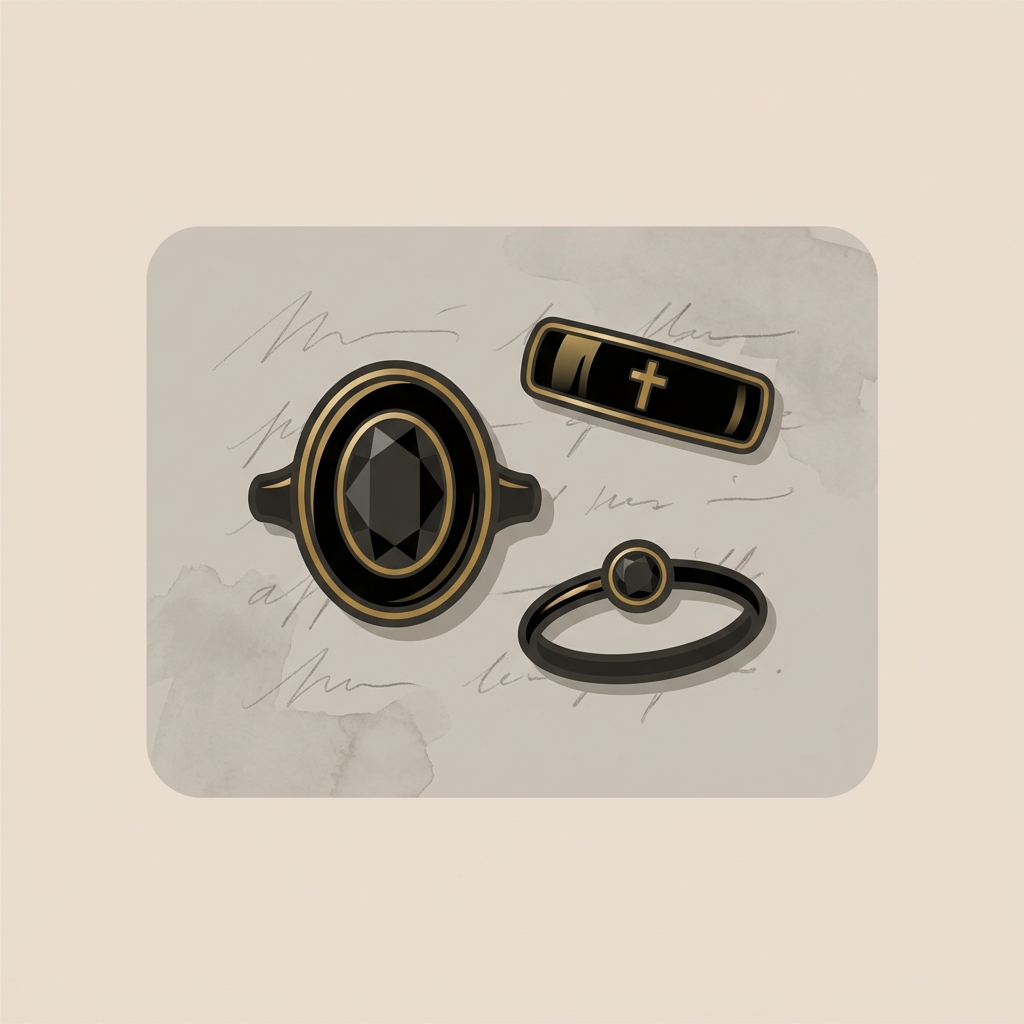
Historic mourning rings frequently use gold or silver mounts combined with applied black enamel or cut jet, and during the 18th and 19th centuries many examples include a glazed bezel containing a plait or lock of human hair preserved as a keepsake. These materials and treatments were chosen for visual contrast and symbolic effect The Metropolitan Museum of Art.
When examining images or objects, note that the hair may be arranged beneath a glass or glazed surface and that the bezel can show signs of shrinkage or settling where materials have aged. Such physical responses to time are often more informative than modern printed substitutes. See related offerings at Aurora Antiqua, and further identification examples at Identifying hairwork and mourning jewelry.
Look for hand-engraved inscriptions, age-consistent patina and wear, visible hallmarks or makers' punches, and provenance documentation; when in doubt, request a specialist report or laboratory tests.
Inscription styles, hallmarks and makers' punches
Inscription styles vary: older examples often have hand-engraved text with irregular letterforms, while later mass-produced pieces may show uniform printed inscriptions or stamped lettering. Interior hallmarks or makers' punches, when present, can help with dating and metal identification but should be interpreted with care British Museum.
Age-consistent surface features such as patina on the hoop, wear on the shoulders, and microscopic signs of tooling around engraved letters are useful indicators that a piece has seen long-term use or prolonged storage rather than recent manufacture.
How to identify an authentic antique widows ring
Visual checklist for photos and in-person inspection
Start with clear, high-resolution images of the bezel interior, the band interior and any inscriptions. Check for hand-engraved lettering, visible hallmarks, and evidence that hair or enamel shows ageing rather than a printed or modern insert. These initial photographic checks form the first line of due diligence for a potential purchase The Metropolitan Museum of Art.
Examine enamel edges for shrinkage lines, and look at the bezel rim for modern adhesives or recent soldering that would suggest later repair. If the ring contains hair, magnified views can reveal natural fibre characteristics that differ from synthetic threads or printed representations.
Follow Jakob's short inspection checklist on @auroraantiqua for quick visual tips
For a quick reference, consult the buying checklist below and compare images and hallmarks before asking for technical tests.
When to seek technical tests or specialist reports
If an item is priced for its age or provenance, or if photographic evidence leaves important questions, request a metal assay and a microscopic examination of hair and enamel. Independent technical checks materially strengthen authenticity claims beyond a dealer statement alone The Metropolitan Museum of Art.
Ask sellers for any provenance documents, catalogue references or prior sale history and, when available, any conservator notes. Combined, these elements help determine whether further laboratory testing is warranted.
Provenance and documentation: what strengthens an authenticity claim
Useful provenance records and catalogue references
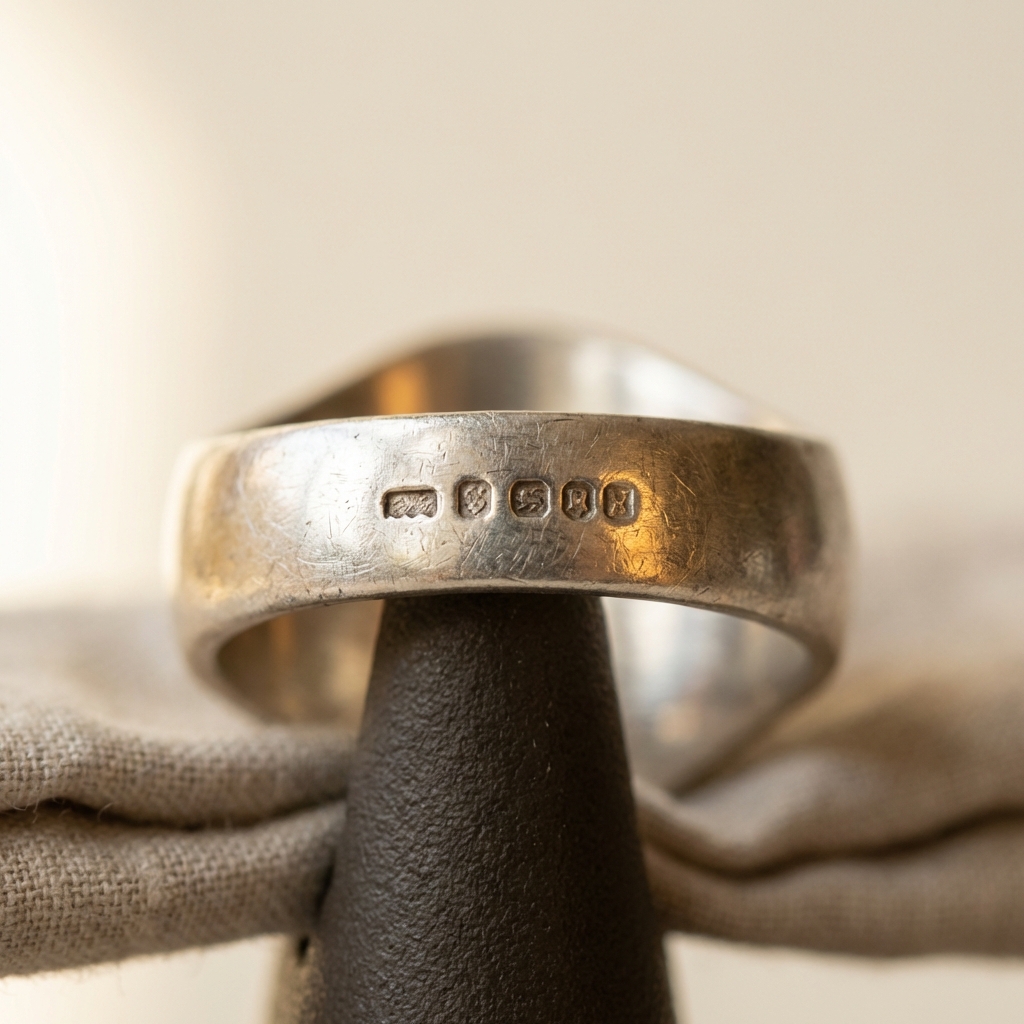
Provenance that materially supports authenticity includes dated sale records, catalogue entries, prior collection notes and independent verification letters from recognised experts or institutions. Such records link an object to a verifiable history that goes beyond a seller's own certificate The Metropolitan Museum of Art.
Well-documented provenance can show continuity of ownership and provide context for inscriptions or iconography. Photographs from earlier catalogues or auction listings are especially useful when they include clear images of hallmarks or interior inscriptions.
How to evaluate dealer statements and certificates
Dealer certificates can be helpful but should be weighed alongside independent evidence. A certificate that summarises condition notes, restoration history and references to prior sales is more informative than a simple statement of authenticity without supporting documentation British Museum.
When a certificate claims laboratory testing, ask for the testing body and method. Independent third-party reports or assays from recognised laboratories are more persuasive than undocumented assertions.
Buying checklist: questions to ask and documents to request
Essential information to request from a seller
Request these items before committing: high-resolution images of the bezel interior and band, written condition notes that detail any repairs or restorations, clear images of hallmarks or makers' punches, and any known provenance or catalogue references. Such documentation significantly reduces uncertainty when assessing a piece online British Museum.
Ask whether any restoration was performed, what was done, and whether restoration notes are available. Clearly recorded restoration notes help you understand which parts of the ring are original and which were altered.
When to pause or seek a specialist report
If the price reflects significant historical importance or if the object has ambiguous hallmarks or recent repairs, pause and consider commissioning a specialist report. For high-value purchases, a metal assay and microscopic analysis of hair or enamel are reasonable safeguards The Metropolitan Museum of Art.
Remember that photographs alone have limits. If an object lacks clear provenance or presents conflicting visual signs, independent testing is the prudent next step.
Care, conservation and safe display of mourning rings
Museum-minded handling and cleaning basics
Conservative care preserves original material and documentary value. Museums and trusts recommend minimal, reversible cleaning and advise against household polishes that remove patina or thin metal surfaces. Safe storage in a stable, low-humidity environment is recommended to slow further deterioration National Trust.
Handle rings with clean hands or gloves, support delicate bezels when examining hair or glazed inserts, and store objects away from direct sunlight and extremes of heat to protect organic and glazed materials.
When to consult a conservator
Defer major restoration to a trained jewellery or museum conservator. Professional conservators use reversible methods and document interventions, which helps maintain an object's condition notes and provenance integrity Historic England.
Keep restoration notes with the object and request a conservator's report for any intervention that removes original material or alters the object's appearance.
Common mistakes, red flags and final guidance
Typical errors buyers make
Common mistakes include relying on low-resolution photos, accepting undocumented certificates without supporting evidence, and failing to notice signs of modern adhesives or inconsistent wear. These oversights can lead to misattribution or unexpected restoration costs The Metropolitan Museum of Art.
Buyers also sometimes assume that a visually convincing hair insert or printed inscription is genuinely old. Close inspection and, when needed, specialist testing, clarify whether such features are period or later additions.
Summary: balanced expectations and next steps
Combine visual checks, provenance documents and selective technical testing to reach a reasonable degree of confidence. For most collectors, clear photographs, condition notes and hallmark images will resolve many questions; for higher-value pieces, independent assays and microscopy are the right next steps British Museum.
Maintain realistic expectations, document all communications and keep conservation and restoration notes with the object. This approach preserves both the ring's material history and its value as a piece of wearable heritage.
Widows ring is a common phrasing for a mourning ring; both refer to commemorative jewellery made to mark bereavement. Use specific features such as inscriptions, black materials and hair inserts to distinguish period examples.
Photographs can resolve many questions if they are high resolution and show hallmarks, bezel interior and inscriptions, but some issues require microscopic or laboratory analysis to confirm.
Store in stable, low-humidity conditions, avoid direct sunlight and extremes of temperature, handle with gloves, and keep documentation and any conservator notes with the object.
More from Aurora Antiqua
References
- Ring, Victoria and Albert Museum, London
- Ring, Victoria and Albert Museum, London
- Posy ring, London Museum (formerly Museum of London)
- Hallmarking, The Goldsmiths' Company, London
- The Gemstone Book, CIBJO Blue Book, Coloured Stone Commission, CIBJO, The World Jewellery Confederation
- How to Care For Your Jewellery: The Ultimate Guide by the National Association
- Silver and plate, Icon, The Institute of Conservation (UK)
- Archaeological materials, Icon, The Institute of Conservation (UK)
- About us, International Association of Dealers in Ancient Art