


Looking for the real thing? Browse authenticated Ancient Roman rings, each piece one of one, individually authenticated, with documented provenance. For the background, see the guide to Roman jewelry.
What an intaglio ring was in Roman times: a clear definition
Short glossary: intaglio, signet, bezel (roman intaglio ring)
An intaglio ring in the Roman world is, fundamentally, a metal-mounted ring that holds a gemstone carved in intaglio so the recessed design can produce a raised impression when pressed into a soft medium, serving both as personal jewellery and as a practical seal for marking documents or goods, a definition commonly presented in museum overviews and collection summaries Metropolitan Museum overview.
The carved face sits slightly recessed within a bezel so that the intaglio plane does not catch in use and so impressions read correctly when stamped into wax or clay, and mounts were typically made in precious or base metals depending on owner and function British Museum collection guidance.

How museums summarize the object type
Museum catalogue entries and online collection pages typically call these objects engraved gems or signet rings and emphasise their dual role as wearable items and as functional seals used to authenticate marks or identify an owner or office Metropolitan Museum overview.
When museums publish these objects they usually note material, tentative dating, provenance if known, and a short interpretation of the imagery; these standard entry elements help collectors compare public documentation with private listings British Museum collection guidance.
How intaglio rings fit into Roman history and geography
Where examples come from: findspots and collections
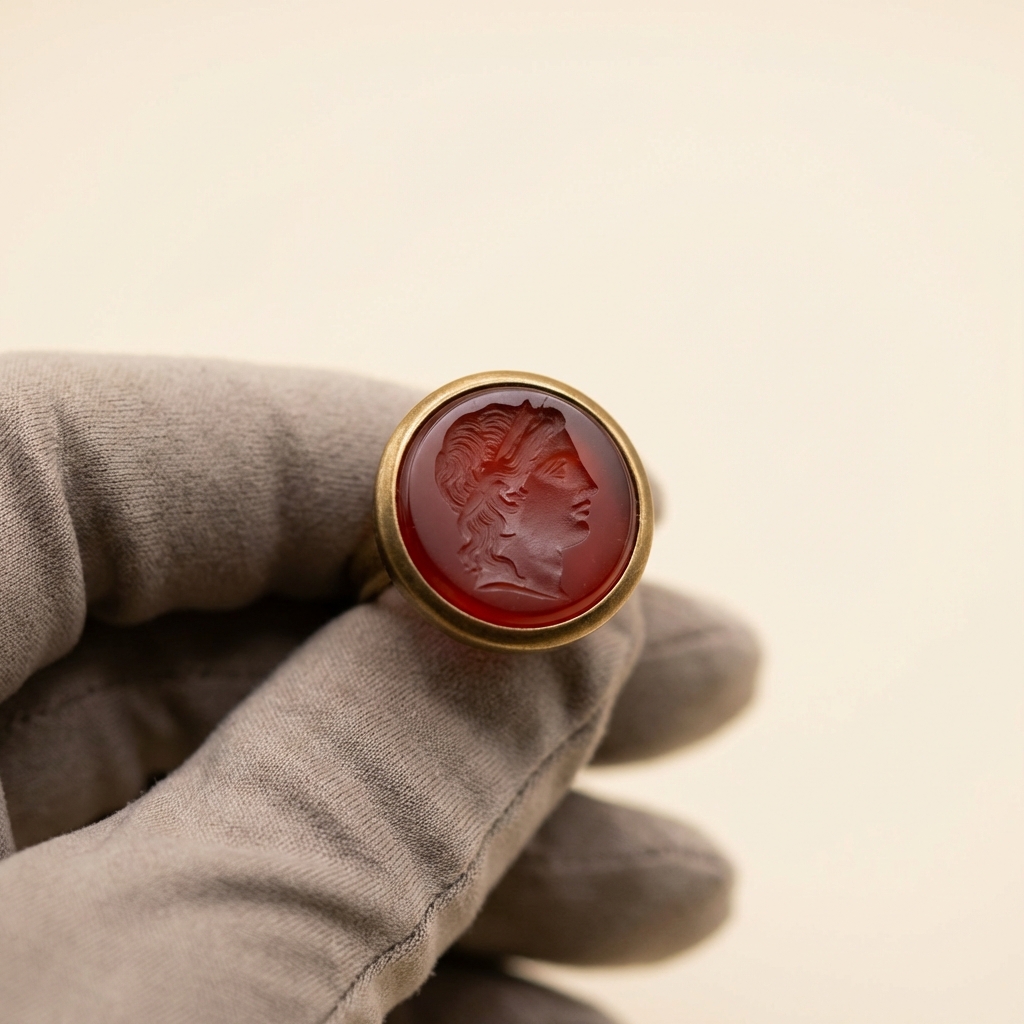
A great number of surviving Roman intaglio rings are known from museum collections and public findspot records, and databases that collate finds continue to be a primary source for mapping distribution and common types Portable Antiquities Scheme guidance.
Because many examples enter the market without clear excavation records, securely documented museum pieces and findspot-linked entries are particularly valuable for building comparative frameworks used to date and attribute rings A Corpus of Roman Engraved Gemstones from British Sites, University of Michigan Press / BAR Publishing.
Regional differences and circulation
Surviving material suggests that styles and circulating media varied across provinces and city centres, so regional find evidence and collection history matter when interpreting a ring's likely origin and social context Portable Antiquities Scheme guidance.
Use and frequency of signet use could differ between administrative centres and rural areas, and circulation of gemstones and finished rings across trade networks means that provenance and workshop attribution require careful, evidence based comparison Bagues et anneaux à l'époque romaine en Gaule, Persée, Persee (CNRS, ENS de Lyon, Ministere francais).
How Roman intaglios were made and set
Engraving techniques: drills and wheel cutting
Engravers worked small, using drills, bow tools, or wheel cutting to incise designs into hard chalcedony group stones; the resulting toolmarks and cutting styles are among the primary technical clues specialists use to relate a gem to a period or workshop Metropolitan Museum overview.
An intaglio ring could mean ownership, legal authority or personal protection depending on imagery and use; collectors should combine provenance, condition notes, stylistic comparison and targeted testing to form a careful, evidence based judgement.
Small-scale metalworking and setting
After carving, stones were set into a metal mount, often with a simple bezel or with more elaborate shoulders and hoop forms in gold, silver or copper-alloy, and close inspection of how a gem was seated and secured can reveal later repairs or re-settings that affect attribution and condition notes Victoria and Albert Museum conservation guide.
Toolmarks on both gem and mount, alongside stylistic carving conventions, allow specialists to propose approximate dates or likely workshops, though such assignments are commonly phrased as probable rather than definitive without contextual finds or technical testing Journal of Roman Archaeology overview.
Common materials and gemstones used in Roman intaglios
Typical stones and why they were chosen
Roman intaglios are commonly cut from chalcedony-group stones such as carnelian, sardonyx, jasper and other chalcedony types, choices driven by hardness, polish potential and the aesthetic of a deep red or banded surface that reads well in impression work Metropolitan Museum overview.
Because these stones take a fine polish and show carved lines clearly, they were practical for both small figurative scenes and for clearer heraldic or monogram impressions when used as seals Portable Antiquities Scheme guidance.
Mounting metals and matching materials
Mounts were made in gold, silver or bronze, with choice of metal often reflecting owner status or intended use; gold examples are frequent in high status contexts while silver and copper-alloy mounts are common for everyday wear and functional seals British Museum collection guidance.
Because visual identification has limits, when materials matter for authentication or appraisal, specialist gemological identification and elemental assays provide more reliable confirmation than surface appearance alone Victoria and Albert Museum conservation guide.
Iconography: motifs, gods and symbols on intaglio gems
Common subjects and what they signified
Imagery on intaglios spans deities and mythological episodes, portraits, animals and heraldic or abstract symbols; such motifs could signal personal devotion, civic identity, family emblems or serve as easily recognised marks for sealing Metropolitan Museum overview.
Because certain iconographic types correlate with datable monuments or securely contextualised finds, imagery can sometimes help narrow dating or regional attribution when used alongside other evidence Portable Antiquities Scheme guidance.
Dating and workshop attribution rely heavily on stylistic carving conventions and parallels with securely dated finds; specialists compare motif treatment, figure proportions and finishing with catalogue examples to propose probable dates and regional affinities Fund des Monats August 2019 (Find of the Month), Landesamt für Denkmalpflege und Archäologie Sachsen-Anhalt.
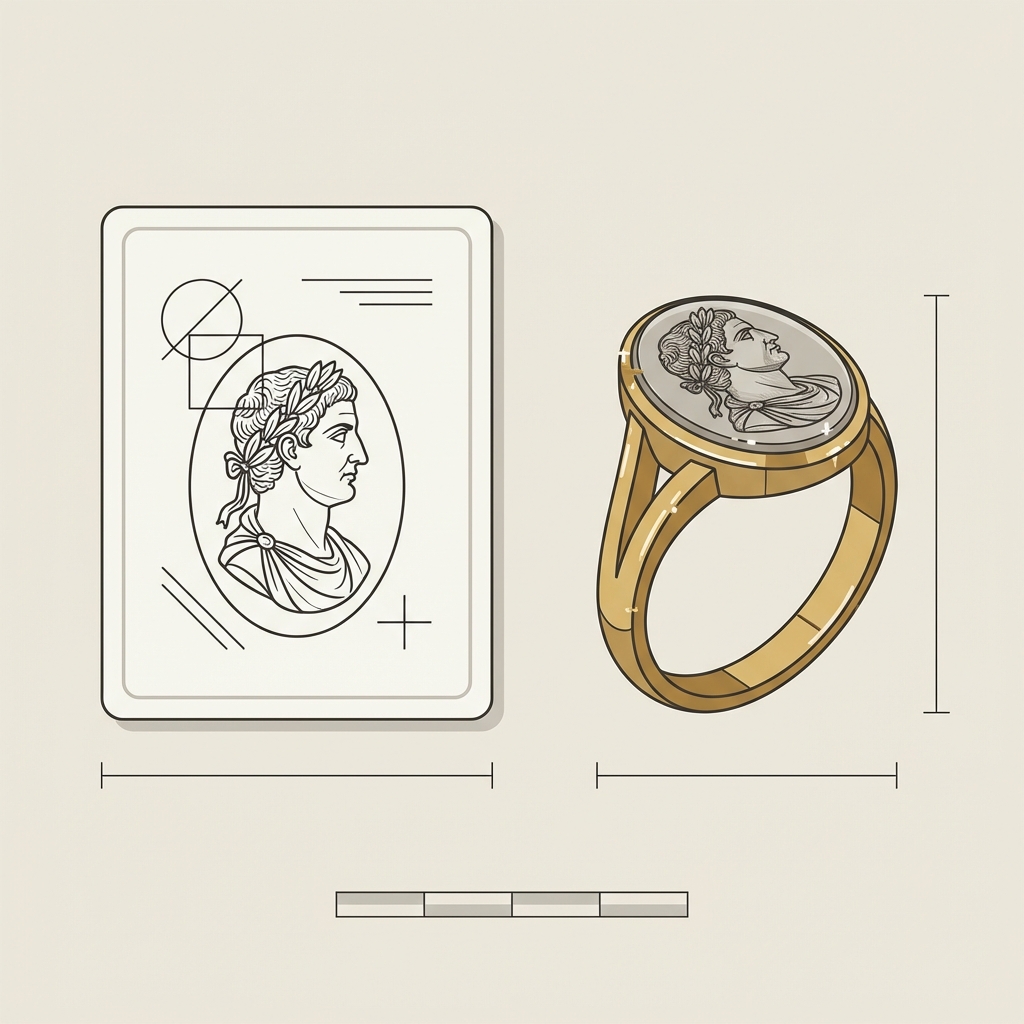
Because published, datable parallels remain central to attribution, the growth of findspot-linked publications and catalogues is helping refine chronological frameworks for intaglio production and circulation Portable Antiquities Scheme guidance.
a short condition and documentation checklist for initial assessment
Use as a starting review tool
Technical markers and emerging research
Toolmarks, microscopic wear patterns and mount manufacture details are technical clues that specialists use to refine dating or workshop attributions, and there is an active research agenda to expand systematic microwear and compositional datasets to strengthen these inferences Journal of Roman Archaeology overview.
Where laboratory methods such as gemological identification or elemental assays are available, they can materially increase confidence in attributions, while the absence of such tests means provenance statements should be treated as provisional Victoria and Albert Museum conservation guide. See a gemmological case study here.
How museums and findspot databases document intaglios
What catalogue entries typically include
Reputable catalogue entries typically list material identification, a reasoned dating estimate, condition and conservation notes, and any provenance or collection history that can be documented, providing the basic elements collectors should seek when comparing items Metropolitan Museum overview.
Good entries often include close photography, measurements and a discussion of comparanda that justify dating and attribution statements, which helps buyers and researchers evaluate the evidence behind a claim intaglio (gemma incisa) Mercurio stante, 100 dC, 299 dC, Istituto Centrale per il Catalogo e la Documentazione.
Why findspot and collection history matter
Findspot-linked records and clear collection history strengthen confidence in interpretation because they ground an object in archaeological or archival context rather than leaving it dependent on stylistic judgment alone Portable Antiquities Scheme guidance.
When findspot information is lacking, provenance statements that include prior owners, acquisition dates and any conservation reports are the next best evidence, and gaps in that chain should prompt further enquiry or testing Museum catalogue essay.
A step-by-step framework to assess an ancient intaglio before buying
Document checklist
Begin with documentation: request collection history, prior ownership notes and any verification letters, and compare those statements with public databases and museum parallels to see if the item fits known types and provenances Portable Antiquities Scheme guidance.
Absence of paperwork does not automatically mean a forgery, but a documented chain of custody materially improves confidence and should be prioritised for higher value acquisitions Museum catalogue essay.
Condition and restoration assessment
Review condition notes carefully, asking whether a listing describes stabilisation, repairs or untouched areas, and request detailed photos of the bezel, hoop and any joins to detect modern solder or rework that affects attribution Victoria and Albert Museum conservation guide.
Acceptable conservation interventions should be documented; undocumented repairs or modern re-settings are a common complicating factor and warrant caution or third party assessment Victoria and Albert Museum conservation guide.
Technical testing and when to ask for it
When provenance is incomplete or materials are unclear, ask for non invasive tests such as gemological identification and portable XRF to check mount composition, and consider microscopy for toolmark analysis when attribution hinges on carving style Victoria and Albert Museum conservation guide. Guidance on handheld XRF is available here, and recent XRF analyses are discussed in the literature here.
Practical constraints apply: not every seller will supply exhaustive testing, but documented results from a qualified laboratory or conservator materially strengthen an attribution and are worth requesting for higher risk purchases Portable Antiquities Scheme guidance.
Buyer checklist: practical tips for collectors and first-time buyers
Questions to ask the seller
Essential questions include requests for provenance documentation, full condition and restoration notes, details of any technical testing performed and who carried it out, and whether the item has appeared in any publications or catalogues Victoria and Albert Museum conservation guide.
Ask for measurements and weights, and for the exact wording of any previous catalogues or collection entries rather than broad claims about age or rarity, so you can verify statements against public records and parallels Portable Antiquities Scheme guidance.
What to look for in photos and measurements
Request sharp macro photographs of the intaglio in profile, the bezel and hoop junctions, and any visible toolmarks or repairs, because these views allow initial screening for modern tooling or suspicious joins Victoria and Albert Museum conservation guide.
Measurements and a clear scale help determine whether a gemstone was reworked or recut to fit a later mount, which is an important consideration noted in professional condition reports Bague : satyre jouant de la double flûte devant une statue, Musee du Louvre, Paris, Departement des Objets d'art.
Common mistakes and red flags to avoid
Provenance and provenance gaps
A common mistake is to accept vague provenance statements without supporting documents; lack of a clear chain of custody or findspot information should prompt requests for independent verification or testing Portable Antiquities Scheme guidance.
When claims rely primarily on visual similarity to a museum piece but lack documented history, treat attribution as provisional and seek third party comment where possible A. M. Caggiani u. a., Corroborating the autoptic identification, Wiley, Journal of Raman Spectroscopy.
Misreading wear, restoration and modern tooling
Wear patterns can be misleading: heavy surface polish may indicate modern reworking, and inconsistent toolmarks between gem and mount can reveal later interventions, so compare images closely and ask for microscopic views if attribution is critical Victoria and Albert Museum conservation guide.
If restoration notes are missing or vague, request a conservator report, because undocumented repairs complicate dating and can materially change a ring's interpretation Victoria and Albert Museum conservation guide.
Care and conservation: handling and preserving an antique intaglio ring
Basic handling and storage advice
Handle an antique intaglio ring with care to avoid stressing the bezel or hoop; hold it by the band rather than the stone where possible, and avoid ultrasonic cleaners or household chemicals that can harm patina or destabilise old repairs Victoria and Albert Museum conservation guide.
Store pieces in stable, low humidity conditions and avoid direct sunlight on dyed or heat treated stones; separate storage reduces risk of abrasion to the stone and metal mount Victoria and Albert Museum conservation guide.
When to consult a conservator
Consult a professional conservator for any cleaning beyond gentle dust removal, for suspected structural instability in the bezel or hoop, or when planning to commission analytical testing, because conservators document interventions and preserve the object's research value Victoria and Albert Museum conservation guide.
Keep records of any conservation interventions and request detailed condition reports when acquiring, as those notes are important parts of provenance and future research documentation Museum catalogue essay.
Illustrative scenarios: reading a listing, evaluating a catalog entry
Scenario A: a well-documented catalogue entry
For a well documented catalogue-style entry, check that the listing includes precise material identification, collection history, condition notes and comparanda, and verify those details against public databases and museum catalogues to see if the item fits known types Metropolitan Museum overview.
If these elements are present and photographic evidence aligns with the written notes, the item typically requires fewer immediate technical tests; nevertheless, buyers often still request targeted non invasive checks for additional confidence A. M. Caggiani u. a., Corroborating the autoptic identification, Wiley, Journal of Raman Spectroscopy.
Scenario B: an online listing with minimal provenance
For a minimal online listing, prioritise asking for provenance details, condition photographs and any prior test reports, and be prepared to decline or request third party testing when documentation is thin or ambiguous Portable Antiquities Scheme guidance.
When in doubt, seek independent opinion from a qualified conservator or a recognised comparative catalogue before committing to purchase, especially for pieces where visual assessment leaves significant questions about age or restoration Victoria and Albert Museum conservation guide.
Summary and next steps for collectors
Quick recap checklist
In short: prioritise documented provenance, clear condition and restoration notes, and targeted technical testing where attribution is important; combine motif study, mount and toolmark assessment, and published parallels to reach balanced judgements Portable Antiquities Scheme guidance.
When documentation is incomplete, treat attributions as provisional and seek independent testing or third party opinions to reduce risk before purchase Victoria and Albert Museum conservation guide.
Further reading and research directions
Authoritative public collections and findspot databases provide the best accessible comparanda, and emerging research into microwear and compositional datasets promises improved workshop attributions over time, so track recent catalogue publications and database updates Museum catalogue essay. Visit the Aurora Antiqua blog for site updates and articles.
For collectors who want guided comparison, Aurora Antiqua offers curated listings with condition notes and contextual entries intended to help bridge the gap between market listings and museum standard documentation while encouraging cautious, evidence based collecting. See our Ancient Roman Rings collection for examples.
An intaglio is a gemstone carved in reverse so its recessed design makes a raised impression when pressed into soft media; on Roman rings this allowed the stone to function as both decoration and a working seal.
Hard chalcedony group stones such as carnelian, sardonyx and jasper are commonly used because they take a fine polish and retain carved detail well.
Request provenance or collection history, detailed condition and restoration notes, measurements and, when important, non invasive test reports such as gemological ID or portable XRF from a qualified lab or conservator.
More from Aurora Antiqua
References
- Art & Architecture Thesaurus Full Record Display (Getty Research)
- A Corpus of Roman Engraved Gemstones from British Sites, University of Michigan Press / BAR Publishing
- Bagues et anneaux à l'époque romaine en Gaule, Persée, Persee (CNRS, ENS de Lyon, Ministere francais)
- Amnon Rosenfeld, Michael Dvorachek, Shua Amorai-Stark, Elsevier, Journal of Archaeological Science
- Uncovering Roman Carlisle 2024 autumn excavation announced, Cumberland Council
- intaglio (gemma incisa) Mercurio stante, 100 dC, 299 dC, Istituto Centrale per il Catalogo e la Documentazione
- Fund des Monats August 2019 (Find of the Month), Landesamt für Denkmalpflege und Archäologie Sachsen-Anhalt
- Bague : satyre jouant de la double flûte devant une statue, Musee du Louvre, Paris, Departement des Objets d'art
- A. M. Caggiani u. a., Corroborating the autoptic identification, Wiley, Journal of Raman Spectroscopy
- Gem-A, The Gemmological Association of Great Britain
From Aurora Antiqua
We sell authenticated ancient & medieval pieces, each individually examined before listing and backed by a Lifetime Authenticity Guarantee. One of a kind, sold once, never reproduced.
Browse Ancient Roman Rings →