


Looking for the real thing? Browse authentic Ancient Greek rings, each piece one of one, individually authenticated, with documented provenance. For the background, see the guide to ancient jewelry.
What the question really asks: context and key definitions
The straightforward modern question "Which finger means not married?" assumes a single, widely held convention that marks marital status by the presence or absence of a ring on a single finger. In classical and Hellenistic Greek contexts that assumption does not hold: finger symbolism varied by region and period, and rings performed a range of social and personal functions, so there is no single ancient Greek "unmarried finger" in the archaeological record Encyclopaedia Britannica.
To answer the question usefully we must set clear boundaries. This article focuses on Classical and Hellenistic Greek contexts and on the archaeological and visual record preserved in graves, museum collections, and vase painting. Later Roman and medieval European practices, including the idea of the left fourth finger as specially linked to love, are a separate reception history and should not be projected back without evidence Smithsonian Magazine.
Want behind-the-scenes details and provenance updates?
For a practical evaluation, read the checklist in the framework section below that prioritises provenance, morphology, and context over finger position alone.
When people ask about an "unmarried finger" they often mean a quick visual test when looking at an image or object. That test can be helpful only as a preliminary clue. The most reliable interpretations rely on documented context such as burial assemblages, inscriptions, or published museum records rather than finger position in isolation Metropolitan Museum of Art collection overview. For a short discussion aimed at collectors see our did the ancient Greeks wear rings Q&A.
Because the phrase used by modern audiences implies a single cultural rule, this section clarifies terminology. By "finger symbolism" we mean intentional social meaning attached to wearing rings on particular digits; by "marital marker" we mean an object or practice used in ceremony or law to signal marriage. Both concepts are present in some societies, but in classical Greek material culture rings are often ambiguous in social meaning and multifunctional Encyclopaedia Britannica.
How rings functioned in the Greek world: more than just marital tokens
In many Greek contexts rings were primarily signets used for sealing documents or marking ownership; an intaglio carved into the bezel often identified the wearer or acted as a functional tool, and that function can be independent of marital status Metropolitan Museum of Art collection overview. For catalogue-level discussion of gems and finger rings see the Getty Museum catalogue Ancient gems and finger rings.
Other rings carried amuletic or protective value: motifs such as animals, mythological figures, or abstract symbols can point to protective meanings rather than a marital role, and museum catalogues commonly note these iconographic cues when assessing function British Museum collection pages.
Rings also served as personal ornaments and markers of status. The choice of metal, the presence of gemstones or a carved intaglio, and the ring's workmanship often communicate social identity and wealth. Exhibition notes for Hellenistic jewellery emphasise such variety and the need to read each ring within its provenanced context Benaki Museum exhibition page.
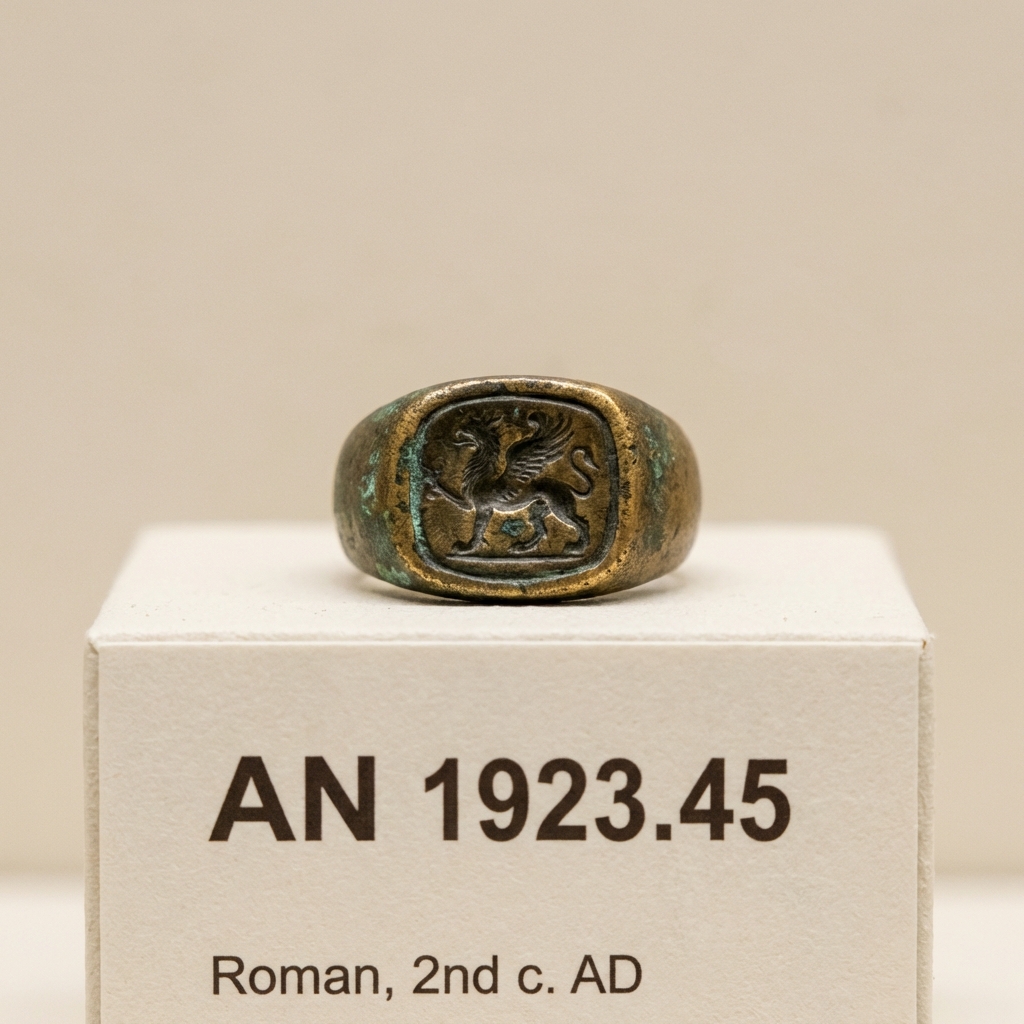
Because a single ring could be a signet, an amulet, and a personal ornament simultaneously, interpreting finger placement as a direct signal of marital status risks misreading multifunctional objects. For many rings, motif and manufacture provide stronger interpretive leads than finger position alone Metropolitan Museum of Art collection overview.
What the archaeological and visual record says about finger placement
Three broad evidence types support our view of variability: rings in graves and burial assemblages, vase imagery that depicts jewellery in social scenes, and extant rings whose measurements and wear can be directly examined. All three point to rings appearing on multiple fingers and on both hands across time and place in the Greek world Encyclopaedia Britannica.
In grave contexts archaeologists have found rings alongside other grave goods, sometimes in pairs, sometimes worn on fingers in articulated hands, and sometimes placed elsewhere in the tomb. These assemblages show no consistent single-finger pattern that could be read as a universal marker of unmarried status; instead, rings appear in varied combinations that require close study of the burial context Encyclopaedia Britannica.
Vase imagery offers scenes of banquets, weddings, and domestic life in which rings feature among multiple exchanged items such as belts, necklaces, and gifts; in those visual programmes exchange objects often vary and include non-ring tokens, demonstrating rings were one of several possible markers in ceremonial contexts British Museum collection pages.
There is no single finger that meant not married in ancient Greek contexts; ring placement varied and must be interpreted using provenance, motif, and contextual evidence.
Surviving rings allow direct technical study: ring hoops, bezels, intaglio subjects, and patina reveal use-wear consistent with signet use or repeated wear rather than a single ceremonial purpose. Measurements and mounting styles also help specialists place a ring in functional categories, but by themselves they seldom prove marital use without supporting contextual information such as grave association or inscription technical study from the Met.
When analysing finger placement in images or objects, prioritise provenance and dating. Museum catalogue entries and exhibition notes usually summarise provenance, previous owners, and publication history; those records are essential for robust claims about social meaning Benaki Museum exhibition page.
Why the Roman 'vena amoris' story should not be projected back onto classical Greece
The belief that a vein ran from the fourth finger of the left hand to the heart and therefore made that finger special for rings-the so-called "vena amoris"-is primarily a Roman and later tradition in reception history, and it enters modern thinking through medieval and post-medieval European practices rather than clear evidence from classical Greek sources Smithsonian Magazine.
Scholars and popular histories trace how Roman customs and late antique interpretations influenced European ring traditions, and museum summaries of rings caution against assuming the artefact record from classical Greece follows those later patterns Aulus Gellius, Attic Nights, Book X, LacusCurtius, Bill Thayer, University of Chicago (Loeb Classical Library edition).
Because the vena amoris story arrived in later sources, it is a reception element rather than a direct archaeological indicator for the classical period. In practice this means that seeing a ring on the fourth finger in a Greek vase painting does not automatically indicate marital status; local conventions, artistic choices, or anachronistic restorations can all affect depiction Smithsonian Magazine.
A practical framework: how to decide if a ring indicates marriage
Use a stepwise assessment that treats finger placement as a supporting clue, not proof. Step 1: check provenance and dating. A secure find spot, an accession number, or a published catalogue entry materially strengthens any social interpretation Metropolitan Museum of Art collection overview.
Step 2: analyse motif and manufacturing features. An intaglio with a personal seal, an amuletic symbol, or a commonly attested iconographic type can push interpretation toward signet or protective use rather than marriage. Always record bezel type, intaglio subject, and evident wear consistent with age British Museum collection pages.

Step 3: read the wider context in images and burials. Is the ring shown in a ceremony scene alongside belts or necklaces? Is it found with paired objects or within a bridal assemblage? Those contextual markers make a marital interpretation more plausible. If publication or catalogue discussion explicitly mentions marriage contexts, give that source priority in your claim Encyclopaedia Britannica. Example finds and catalogues can be compared with items such as the Chimaron ring in our product listings; such comparisons do not replace provenance evidence.
Supplement these steps with documentation practice: cite the museum catalogue or an exhibition page when you state an object's social function. For collectors and analysts, a short citation that includes accession number and a stable museum record is often more informative than a general statement about finger placement Metropolitan Museum of Art collection overview.
When reporting findings, prefer conditional language. For example: "The ring's bezel motif and burial association suggest it may be part of a bridal assemblage, but finger placement alone does not prove marriage." Such phrasing keeps claims accurate and defensible in publication or cataloguing contexts Encyclopaedia Britannica.
Common mistakes and how to avoid them
One common error is overreading isolated images: a single vase scene or a single photograph of an object is rarely sufficient evidence. Always check whether the image is published with catalogue information or comes from a curated museum record before drawing conclusions British Museum collection pages.
Another mistake is assuming later European customs apply to classical Greece. The straight transfer of the vena amoris story or medieval marriage practices into classical interpretation leads to misleading statements; treat those later traditions as reception history, not primary evidence Smithsonian Magazine.
Restoration and display choices also introduce error. Modern re-mounting, presentation with glues or reconstructed fingers, and photography angles can make a ring look as though it belonged on a particular digit when the original context is ambiguous. Always consult condition notes and restoration notes in a catalogue entry if they are available Metropolitan Museum of Art collection overview.
Illustrative examples: short case studies from museum records
Example A: A signet-style bezel found in a burial context at a site later represented in a museum catalogue. The catalogue entry describes a carved intaglio consistent with seal use and lists the ring among other personal items, which supports a signet interpretation rather than a single ceremonial meaning Metropolitan Museum of Art collection overview and related catalogue notes Catalogue of the finger rings (archive).
A quick cataloguing checklist to verify context and publication
Use museum records first
Example B: A vase painting that shows a woman receiving goods in a domestic or ceremonial scene includes rings among other exchange items such as belts and necklaces. The imagery suggests rings could be part of a broader gift-exchange practice in marriage-related scenes, but the presence of multiple object types means finger position alone is not decisive British Museum collection pages.
Example C: An inscribed ring recorded in an exhibition catalogue with clear provenance and a collection history entry provides the strongest interpretive basis. When a ring bears an inscription that names a person or uses language tied to marriage, the combination of inscription, provenance, and publication allows qualified statements about social role; always follow the catalogue entry and cite it in any claim Benaki Museum exhibition page.
Across these cases the pattern is consistent: catalogue entries and object records supply the decisive evidence. When museums publish accession details, context, and condition notes, they allow trained readers and collectors to make conditional, well-sourced interpretations rather than rely on finger position alone Metropolitan Museum of Art collection overview.
Takeaways for collectors and image analysts: responsible language and next steps
Short practical guidance: prioritise provenance, motif analysis, and context; treat finger position as a clue, not proof. When describing an object, include the accession number and a citation to the museum record if available before asserting social meaning Metropolitan Museum of Art collection overview. You can compare similar objects in our Ancient Greek rings collection for stylistic parallels, but always rely on provenance first.
Example phrasing to avoid overclaiming: "Based on the burial assemblage and the bezel motif, the ring may have been associated with marriage rituals, though finger placement alone is not conclusive." That style of conditional wording keeps statements useful for collectors and respectful of the limits of the evidence Encyclopaedia Britannica.
Next steps: consult published catalogue entries or exhibition pages, compare similar objects in museum collections, and, when possible, look for inscriptions or paired objects that strengthen a marital interpretation. These verification steps reduce the risk of common interpretive errors and support responsible collecting and writing about antiquities Encyclopaedia Britannica.
For image analysts working with historical photographs, maintain a checklist: note source, check for republished edits, and verify whether the item is shown in a curated museum context with condition notes. When in doubt, describe the evidence and its limits rather than asserting a single social meaning Encyclopaedia Britannica.
Final practical note
The short answer to "Which finger means not married?" in classical Greek contexts is that there is no single divorced or unmarried finger to point to; finger placement is variably used and must be interpreted in context, with provenance and publication as the primary guides Metropolitan Museum of Art collection overview.
No. Rings appear among many different object types and often functioned as signets, amulets, or personal ornaments; marriage could be signalled by a variety of items and contextual cues.
Not by itself. Finger position is a supporting clue that must be combined with scene context, associated objects, inscriptions, or catalogue evidence.
Consult provenance records, museum catalogue entries, condition and restoration notes, and relevant publications before making claims about marital status.
More from Aurora Antiqua
References
- Aulus Gellius, Attic Nights, Book X, LacusCurtius, Bill Thayer, University of Chicago (Loeb Classical Library edition)
- Pliny the Elder, The Natural History, BOOK XXXIII, Perseus Digital Library, Tufts University (edition Bostock)
- Pliny the Elder, The Natural History, BOOK XXXIII, Perseus Digital Library, Tufts University (edition Bostock)
- Gimmel Ring, Victoria and Albert Museum, London
- The Form of Solemnization of Matrimony, The Church of England
- Internet History Sourcebooks: Medieval Sourcebook, Internet Medieval Sourcebook, Fordham University, New York
- Ring, The Cleveland Museum of Art
- Thumb Ring, The Cleveland Museum of Art
- Ancient Gems and Finger Rings: Catalogue of the Collections, The Getty
- resources.metmuseum.org