


Looking for the real thing? Browse our Medieval ring collection, each piece one of one, individually authenticated, with documented provenance. For the background, see the guide to ancient jewelry.
Quick answer: are the female sign and the ankh the same?
Short answer, visually they sometimes look similar, but historically they are distinct symbols with different meanings and lineages. The modern female sign, a circle with a small cross beneath, originates in astronomical and astrological notation for the planet Venus and is conventionally read as a stylised hand mirror associated with the goddess Venus or Aphrodite; reference works treat this as a separate development from the Egyptian ankh, which is an ancient hieroglyph meaning life Wikipedia article on Female symbol.
The Egyptian ankh has its own long history in Egyptian religious and funerary art, and museum catalogues and Egyptological literature present it as a hieroglyphic emblem rather than a derivative of planetary notation Encyclopaedia Britannica entry on the ankh.
Because the compact Venus glyph derives from astronomical and alchemical notation that reduced visual elements into a small, cross-like mark; it is distinct from the Egyptian ankh which is a hieroglyphic emblem meaning life.
Readers often use the phrase 'female symbol as a cross' to describe the small cross beneath the Venus circle, or they may be thinking of looped symbols with a cross-like stem. Both observations are understandable, but similarity of silhouette does not mean shared origin; museums and reference guides keep the two traditions apart for that reason.
Below we unpack what each sign is, how scholars trace their development, and what collectors should check when seeking ankh rings for women or cross-form historic pieces.
What the female sign (♀) is and how it developed
The sign now used to mark female gender and biological sex has its roots in astronomical and astrological notation for the planet Venus. In that technical tradition a circle with a small cross or handle beneath identified the planet in charts and diagrams, and that graphic carried symbolic associations with the goddess Venus in later emblematic readings Wikipedia article on Female symbol.
Scholars and reference works often describe a conventional, secondary interpretation of the glyph as a stylised hand mirror linked to Venus or Aphrodite, and they also note an association in early modern emblem books between the Venus symbol and the metal copper, as used in alchemical and planetary-metal correspondences Survey of how planetary and alchemical symbols developed. That association helps explain why the symbol appears in alchemical contexts, yet it is not the same lineage as Egyptian religious iconography.
Experts caution that the precise medieval pathways that simplified a variety of manuscript and diagrammatic marks into the compact modern glyph are not fully resolved. Palaeographic and iconographic work tracks probable routes through astronomical tables and alchemical manuscripts, but a single turning-point document is not universally agreed, so careful, conditional language is appropriate when discussing origins Survey of how planetary and alchemical symbols developed.
What the ankh (☥) is: Egyptian meaning and evidence
The ankh is an ancient Egyptian hieroglyph and a religious emblem that is conventionally translated as meaning life. It occurs widely in Egyptian art, funerary scenes and temple contexts where gods, pharaohs and priests are shown holding or offering the ankh in ritual gestures, and museum catalogues present it as a distinct element of Egyptian iconography Encyclopaedia Britannica entry on the ankh.
Major collections and museum timelines catalogue the ankh both as a sign in inscriptions and as a standalone object form used in amulets and jewelry. The Metropolitan Museum of Art, for example, includes the ankh in its art-historical overviews of Egyptian motifs and object types, which helps to anchor its use and meaning in Egyptology rather than in planetary symbol systems The Metropolitan Museum of Art's ankh overview. Survey literature and journal volumes trace related object histories in museum cataloguing.
When the ankh is worn in jewelry, its origin as an Egyptian emblem and its semantic association with life and protection inform how curators and scholars describe such pieces. That separate semantic trajectory distinguishes it from the astronomical Venus sign even when both forms use a looped shape over a lower element.
See short object studies and provenance notes on @auroraantiqua
View @auroraantiqua on InstagramWhy they look similar at a glance but are not the same
At a quick glance both symbols can be read as a loop above a vertical or cross-like element, which creates the impression of kinship. The loop plus stem arrangement is a simple graphic device and can appear in several unrelated traditions, so casual comparison rests on silhouette rather than on documented transmission Wikipedia article on Female symbol.
Visual similarity does not equate to shared origin. The female sign belongs to astronomical and alchemical graphic systems, while the ankh derives from hieroglyphic and ritual contexts. Museums and reference works typically label these symbols separately and explain their different semantic histories to avoid conflation Encyclopaedia Britannica entry on the ankh.
Origins and scholarly debates: how the modern female sign simplified into a cross-like glyph
Scholarly reconstruction of the female sign's path is based on palaeography, emblem books, astronomical tables and alchemical manuscripts that together show how compact glyphs evolved for practical notation. Research emphasises that the simplified cross-like form likely emerged through a series of graphic conventions rather than from a single decisive source Survey of how planetary and alchemical symbols developed.
Several survey works and historians urge caution about absolute origin stories. The question of medieval and early modern graphic transmission remains open in detail, and specialists continue to trace possible manuscript abbreviations and diagrammatic reductions that produced the neat, single-character sign used today Wikipedia article on Female symbol.

Using a curated object as a visual reference can help readers see how looped or cross-like motifs appear in wearable forms without implying a direct textual link between traditions. The product above is included as a catalogue-style example of a medieval cross-form piece and not as a stand-in for Egyptian ankh origin.
How the Venus sign migrated into modern gender signage and Unicode
The Venus or female sign moved from specialised astronomical use into wider modern contexts through emblematic literature, typographic practice and signage. Once a graphic becomes conventional for a concept, it can be repurposed for gender signage and shorthand, a movement well documented in reference sources Wikipedia article on Female symbol.
Standardised character encoding played a practical role in the symbol's ubiquity. The FEMALE SIGN has a Unicode code point, which formalises its shape for fonts and digital signage and helps explain why it appears so commonly in typographic contexts today Unicode chart for FEMALE SIGN (U+2640).
What this means for jewelry: ankh rings for women and cross-form wearable pieces
For buyers interested in ankh rings for women, symbolism and origin matter, and so do condition notes and provenance. When a listing claims an Egyptian ankh origin, treat that as a claim to examine rather than as a given, and ask for documentation if none is supplied The Metropolitan Museum of Art's ankh overview. Consider browsing the store's rings collection for comparable wearable forms.
Authentic Egyptian-derived ankh motifs, later historic revival examples and modern reinterpretations can look similar in small wearable forms. Distinguishing among them comes from the piece's documented context, comparative typology and any available provenance or collection history rather than from silhouette alone Encyclopaedia Britannica entry on the ankh.
quick pre-purchase condition and provenance check
Ask for bezel and shoulder close-ups
When the seller supplies good condition notes and images of bezel, shoulders and patina, the buyer gains the visual evidence needed to match the claimed origin. Aurora Antiqua’s curated listings typically highlight condition notes, restoration notes and provenance references, which is the kind of transparency to expect when assessing an ankh ring for women or a cross-form antiquity.
Decision checklist: how to evaluate an ankh or cross-form historic piece
Use a short, concrete checklist when contacting a seller. Ask for a clear provenance statement or collection history, specific condition notes describing any corrosion or loss, restoration notes that say what was stabilised or repaired, measurements in millimetres and high-resolution photos of the bezel and shoulders. These items form the minimum dossier to assess a wearable antiquity British Museum collection term on the ankh. For further guidance see the store's questions and answers hub questions and answers.
Interpreting restoration language is part of the checklist. If a listing uses terms like stabilised, repaired or left untouched, request a short description of the work and images showing repaired areas. Restoration notes are evidence of conservation decisions and can clarify which parts of a piece are original and which were intervened on The Metropolitan Museum of Art's ankh overview.
Restoration, conservation and what to look for in condition notes
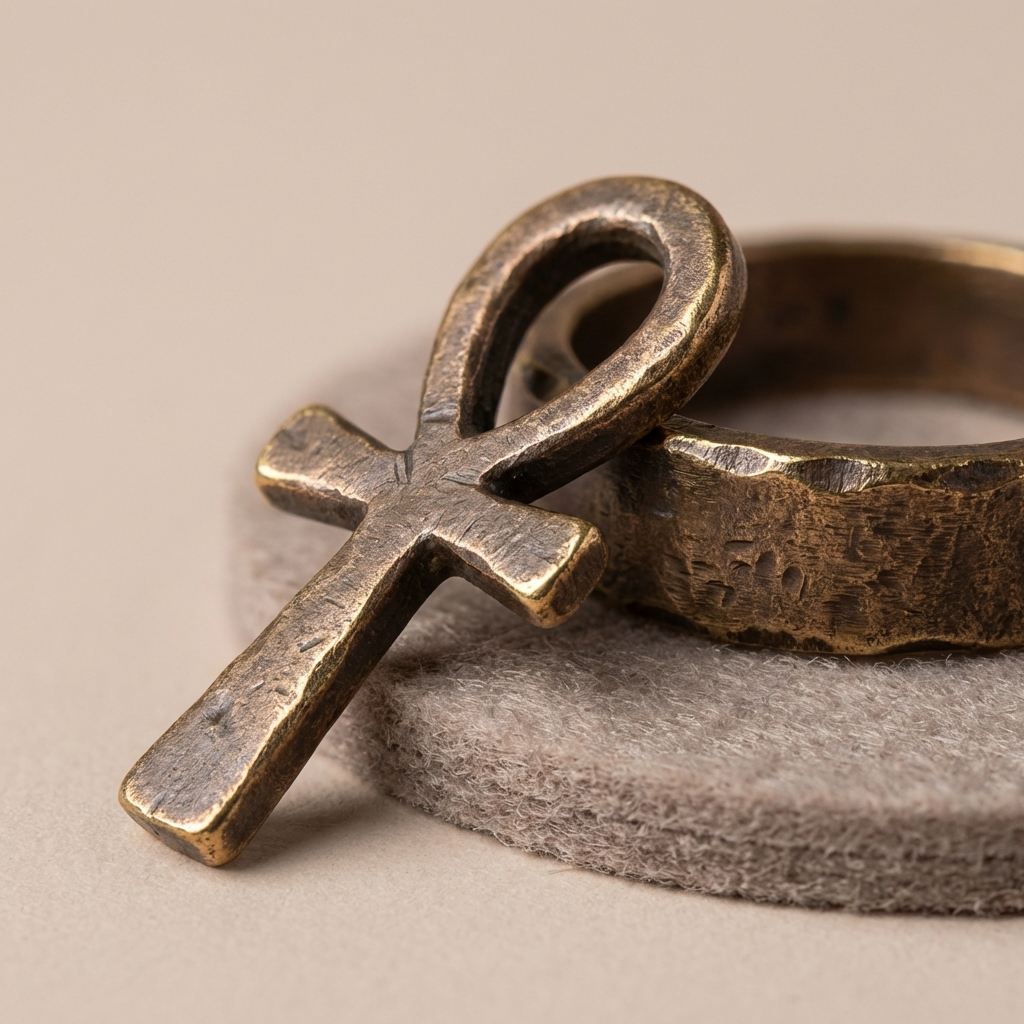
Common restoration terms should be read with care. 'Stabilised' often means a conservator or restorer has treated active corrosion or looseness to prevent further loss; 'repaired' describes physical reconstructions or joins; and 'left untouched' indicates no modern consolidation was performed. Ask for photos that show repaired joins and their edges to judge workmanship and compatibility with the original material The Metropolitan Museum of Art's ankh overview.
Transparent restoration notes are part of responsible cataloguing. They do not in themselves prove provenance, but they tell the buyer how to interpret condition and can point to conservators or workshops involved, which is useful if further verification is sought.
Common buying pitfalls and misconceptions
A frequent mistake is assuming that a cross-form ring is automatically an Egyptian ankh. Many cultures used looped and cross-like motifs for unrelated purposes, so a visual match needs independent documentary support. Treat stylistic claims as starting points for verification rather than as conclusive evidence Wikipedia article on Female symbol.
Another common pitfall is over-reliance on a seller's stylistic description without photos of critical areas. A good photograph of bezel and shoulders, clear restoration notes and a provenance statement reduce the risk of misattribution. If a listing lacks these, ask for them before committing to a purchase Encyclopaedia Britannica entry on the ankh.
Practical examples and scenarios for buyers
If a listing provides robust provenance and a verification letter from a recognized collection, verify the names and dates in that paperwork and compare the object visually with museum parallels. Ask the seller for specific photographs that match the dossier entries, such as an image of an inventory label or a prior sale catalogue reference British Museum collection term on the ankh.
If a listing offers only stylistic claims, take conservative steps: request more high-resolution photos, ask for detailed condition and restoration notes, and consider seeking an independent opinion from a dealer or conservator before purchasing. If those items are not forthcoming, it is reasonable to pause or walk away from the sale.
How Aurora Antiqua frames ankh-style pieces and what to ask sellers
Aurora Antiqua presents curated ancient rings and small artifacts with condition notes, restoration notes and provenance and documentation references when available. This editorial framing is intended to help buyers understand the object's history and current condition without implying absolute claims about origin when documentation is absent The Metropolitan Museum of Art's ankh overview.
Suggested questions to send to a seller include: 1) What is the documented provenance or collection history for this item? 2) Are there verification letters or prior sale records? 3) Please describe any restoration or conservation work and give dates. 4) Can you provide high-resolution photos of the bezel and shoulders? 5) What measurements and weight can you confirm? 6) Has the piece been X-rayed or otherwise tested? 7) Are there any prior ownership notes or catalogue entries? 8) Who performed the restoration, if any? These questions align with the brand's recommended due diligence and help buyers judge claims carefully.
Conclusion: how to read symbols and buy responsibly
Key takeaways are simple. The Venus or female sign and the Egyptian ankh can resemble one another in silhouette, but they have independent origins and different meanings. Rely on museum and reference sources for background on symbols and on seller documentation when evaluating a sale Wikipedia article on Female symbol.
For collectors seeking ankh rings for women, prioritise provenance documentation, transparent condition notes and clear restoration descriptions. Use the decision checklist and ask sellers for bezel and shoulder close-ups to make informed, conservative purchases. Responsible buying starts from evidence and careful questions rather than silhouette alone.
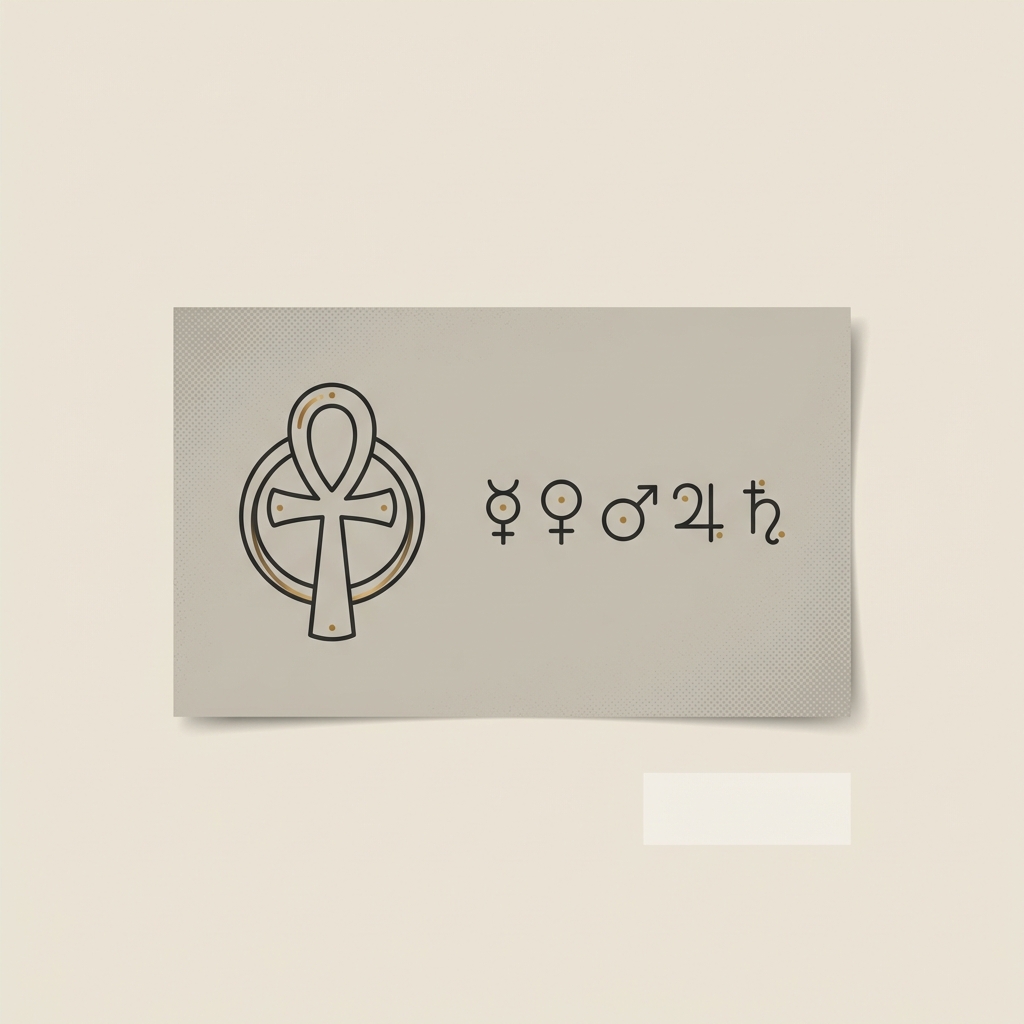
No. They can look similar, but the female sign is an astronomical and alchemical glyph associated with Venus; the ankh is an Egyptian hieroglyph meaning life. Treat them as distinct unless supported by documentation.
Request provenance or collection history, restoration and condition notes, high-resolution photos of bezel and shoulders, measurements and any verification letters. Use these items to corroborate stylistic claims.
Restoration notes do not prove origin by themselves but are important evidence. Transparent restoration and condition descriptions help interpret which parts are original and which have been repaired.
More from Aurora Antiqua
References
- Amulet of an Ankh, inv. no. 1894.103, Art Institute of Chicago
- Artifacts: Amulets, Mummification, Online Exhibits, Spurlock Museum of World
- Faience Technology. In: UCLA Encyclopedia of Egyptology (Paul T. Nicholson), University of California, Los
- Archaeological materials, Icon, The Institute of Conservation (UK)
- About us, International Association of Dealers in Ancient Art
- Research report: export licensing and provenance, GOV.UK, Department for Culture, Media and Sport (DCMS)
- Federal Register, U.S. Customs and Border Protection, Department of Homeland Security
- Gender symbol, Wikipedia
- isac.uchicago.edu
- Trump’s interpreters for Putin meetings face ethical dilemma, The Conversation