


Looking for the real thing? Browse authentic Medieval & Crusader rings, each piece one of one, individually authenticated, with documented provenance. For the background, see the guide to medieval jewelry.
What we mean by ancient wedding rings: definition and context
The term ancient wedding rings is shorthand for a group of objects with varied uses in antiquity: finger hoops worn as personal ornament, ring seals that functioned as signets, and rings that marked social status or legal acts.
Wedding rings are neither purely biblical nor purely pagan; they reflect a syncretic history where Near Eastern and Egyptian uses predate Israelite mentions, Roman betrothal practices provided a ritual framework, and Christian liturgy later assimilated these elements.
For clarity, an ancient ring can be a plain hoop, a bezel set with an intaglio, or a signet with a carved face; terms such as anulus and signet ring are useful labels when discussing form and function, while condition notes like patina and bezel wear help describe the object's present state.
Archaeological and museum records show that rings served as both ornament and practical seal across Egypt and the ancient Near East long before the Roman period, providing a material context for later customs; see Encyclopaedia Britannica for a broad summary of this archaeological depth Encyclopaedia Britannica, and for related notes see our blog overview Aurora Antiqua blog.
Archaeological and historical evidence across regions
Egypt and the ancient Near East: early uses and seal functions
Rings appear in the material record of Egypt and the Near East primarily as personal ornaments and administrative tools, including seal rings used to impress clay or wax, which demonstrates a legal and practical role for rings in civic life as well as private display.
Museum collections and typologies catalogue these early examples and help date forms and techniques; consult the British Museum overview for detailed object records that illustrate this regional early use The British Museum.
Collections and catalogues are a primary tool for dating and attributing rings because they assemble finds, provenanced objects, and typological parallels that indicate chronological depth and regional variation; this comparative framework is essential for placing a single ring within broader patterns.

In the Mediterranean, Greco-Roman workshops produced a range of ring types, including gold and silver hoops with intaglios and signet faces, and the Roman anulus became a recognizable class of ring associated in sources and scholarship with betrothal and legal acts.
The Metropolitan Museum of Art's timeline on rings provides typological descriptions and contextualizes how Roman ring types circulated across the Mediterranean world The Metropolitan Museum of Art.
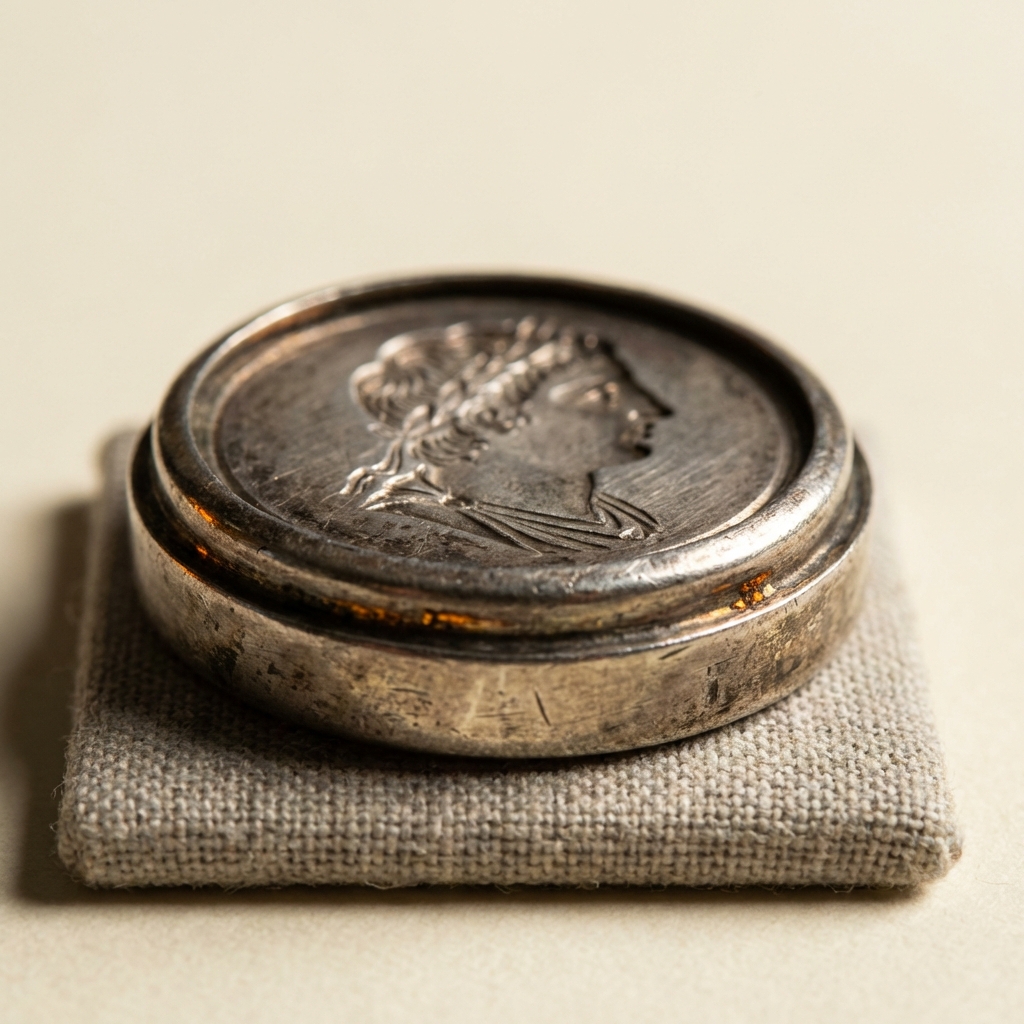
Collections and catalogues are a primary tool for dating and attributing rings because they assemble finds, provenanced objects, and typological parallels that indicate chronological depth and regional variation; this comparative framework is essential for placing a single ring within broader patterns.
Reference overviews that synthesize archaeological finds and collection histories can guide such comparisons, as seen in broad treatments of ring history Encyclopaedia Britannica.
How ring exchange moved from daily use into marriage rites
Roman betrothal customs: the anulus and anulus pronubus
Roman legal and social practice used named rings such as the anulus and the anulus pronubus (see discussion History Unfettered) in betrothal and wedding contexts, a usage that later scholarship links to Mediterranean marriage customs rather than to a single scriptural mandate.
That Roman usage provides a plausible route by which ring exchange could acquire a formal role in marriage ceremonies in communities influenced by Roman law and custom; for discussion of Roman ring types and their social functions see The Metropolitan Museum of Art overview The Metropolitan Museum of Art.
Follow the behind-the-scenes process on @auroraantiqua
Explore curated listings that include condition notes and provenance references to see how collectors and curators present claims about a ring's historical role.
Adaptation and assimilation in early Christian communities
Over subsequent centuries Christian liturgical practice incorporated ring-giving in many regions, adapting earlier legal, symbolic, and devotional meanings; historical summaries of liturgical adoption outline how ring-giving became one element in marriage rites rather than a direct biblical prescription Catholic Encyclopedia historical summary.
Regional variation and open questions in transmission
Because the evidence is regional and diachronic, scholars note variation in timing and pathways by which Roman and Near Eastern ring usages became ritualized in different Christian communities, leaving some open questions about precise transmission routes and local adaptations.
Surveys that compare regional practices and legal sources can illustrate these variations; for a concise synthesis of ring history across regions consult Encyclopaedia Britannica Encyclopaedia Britannica.
What biblical texts actually say about rings
Examples from scriptural passages that mention rings
Biblical texts record rings as gifts and as symbols of authority in several narratives, including instances where signet rings mark a transfer of authority or social favor, which indicates descriptive use of rings within scripture.
Historically minded readers should treat these scriptural mentions as part of a broader cultural record rather than as an explicit legal code prescribing a ring-exchange ritual; for a readable overview of scriptural and historical context see History.com History.com.
Limits of the scriptural record: descriptive not prescriptive
Israelite law and prophetic literature do not establish a single, prescriptive ritual of exchanging a wedding ring in the way later Roman or medieval practices do, so the scriptural record is best read as descriptive evidence about social uses of rings.
Scholarly treatments that situate biblical mentions within ancient Near Eastern practice note the descriptive character of these references and recommend combining textual and archaeological sources when assessing ritual origins Biblical Archaeology Review.
How to judge influence when evaluating an ancient ring: four decision criteria for collectors
Provenance and documentation: what to look for
Provenance and clear collection history are the first line of evidence when a seller or catalogue suggests a marital or ceremonial use; prioritize items with detailed documentation over claims made without context.
Museum typologies and published provenance can help verify whether a ring matches forms associated with betrothal in certain regions; consult museum overviews for typological comparisons The Metropolitan Museum of Art.
Dating, typology, and iconography
Use typology, stylistic features, and iconography to assess whether a ring fits models known from the Roman or Near Eastern record; elements such as an intaglio subject, bezel shape, and metalwork technique can point toward likely origins.
The British Museum catalogue and comparable resources provide typological parallels that help match a ring's features to known workshops and periods The British Museum.
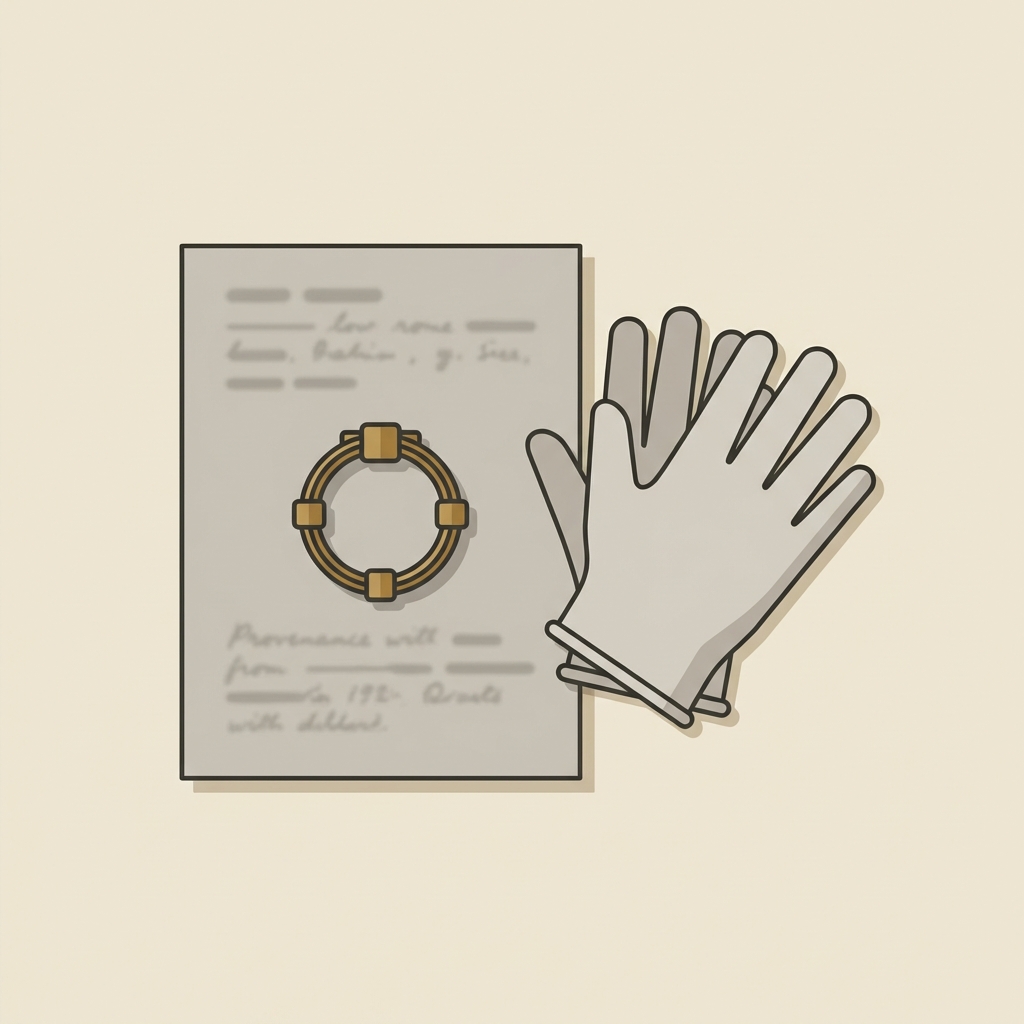
When restorations are documented, collection records often explain what was stabilized or left untouched; such restoration notes are essential context for judging claims about ritual use Encyclopaedia Britannica.
Condition and restoration notes that affect interpretation
Read condition notes and restoration records carefully because repaired bezels, reworked mounts, or modern additions can obscure original iconography and alter arguments about function or date.
When restorations are documented, collection records often explain what was stabilized or left untouched; such restoration notes are essential context for judging claims about ritual use Encyclopaedia Britannica.
Common misconceptions and pitfalls
Misreading a ring as proof of marriage
A single ring rarely proves marital use on its own; confident attribution to betrothal typically requires multiple lines of evidence such as context of discovery, inscriptions, and close typological matches with rings known from marriage contexts.
Writers and sellers may conflate symbolism, legal usage, and personal adornment; careful interpretation weighs each possibility and looks for documentary support rather than relying on a single appealing narrative History.com.
A short viewing protocol to evaluate claims about a ring's ritual use
Use with seller documentation
Assuming biblical origin from a single mention
Because biblical passages mention rings descriptively, assuming a direct biblical origin for modern ring exchange confuses textual presence with ritual prescription and can overstate the scriptural role in later liturgical practice.
Scholarly discussions that combine textual and archaeological evidence caution against single-source claims and recommend a balanced reading of scripture and material culture Biblical Archaeology Review.
Overlooking regional and chronological variation
Interpreting a ring without attention to its date and region risks projecting later meanings back onto earlier objects; what a ring signified in Roman Italy could differ from its role in Bronze Age Near Eastern administration.
Museum typologies and comparative studies help avoid such errors by showing how symbolism and legal uses shift across time and place The Metropolitan Museum of Art.
Practical collecting scenarios and examples
Scenario A: a Roman anulus with clear provenance
Imagine a catalogue entry describing a Roman anulus with a readable intaglio, a stable provenance chain to a published collection, and condition notes that list only conservation rather than invasive restoration; these elements together strengthen any argument that the ring fits a Roman betrothal typology. See comparable items in our Ancient Roman Rings collection Ancient Roman Rings collection and consult museum parallels such as a Met object Metropolitan gold finger ring.

Scenario B: a Near Eastern ring with ambiguous inscription
Consider a Near Eastern ring that carries a worn inscription; without clear reading or archaeological context, the inscription can be suggestive but not decisive, and typology plus metallurgical fit must carry the interpretive weight.
In such cases collectors should ask for condition and restoration notes, any prior collection history, and comparisons with museum-held parallels before accepting claims about ritual status.
How to read catalog entries and condition/restoration notes
Catalog entries that transparently list provenance, dates of acquisition, and specific restoration actions give buyers the tools to judge claims; look for measured language that frames dating as an estimate and describes what was conserved.
Aurora Antiqua presents curated ancient rings spanning Roman, Greek, Byzantine, Islamic, Celtic, medieval, and post medieval periods with condition notes and provenance references when available to help buyers weigh such claims. See our rings catalog Aurora Antiqua rings collection.
Conclusion: a balanced answer-both influences shaped the practice
Wedding ring practice is best described as syncretic: Near Eastern and Egyptian usages provided early material and symbolic precedents, Roman legal and social forms such as the anulus contributed a ritual framework, and later Christian liturgical practices assimilated these elements into marriage rites.
Readers assessing individual ancient rings should therefore combine provenance, typology, condition notes, and comparative museum records rather than seeking a single textual origin; this approach helps distinguish descriptive biblical mentions from the wider cultural history that shaped the practice.
No. Biblical passages mention rings as gifts or symbols of authority but do not prescribe a single ritual of ring exchange in Israelite law; they are best read as descriptive evidence within a broader cultural record.
Rarely; establishing marital use typically requires multiple lines of evidence such as provenance, archaeological context, inscriptions, and typological matches with rings known from wedding contexts.
Clear provenance, good typological parallels in museum collections, and transparent condition and restoration notes together provide the strongest support for a claim that a ring was used in betrothal or wedding rites.
More from Aurora Antiqua
References
- Pliny the Elder, The Natural History, BOOK XXXIII, Perseus Digital Library, Tufts University (edition Bostock)
- Pliny the Elder, The Natural History, BOOK XXXIII, Perseus Digital Library, Tufts University (edition Bostock)
- Aulus Gellius, Attic Nights, Book X, LacusCurtius, Bill Thayer, University of Chicago (Loeb Classical Library edition)
- Internet History Sourcebooks: Medieval Sourcebook, Internet Medieval Sourcebook, Fordham University, New York
- The Form of Solemnization of Matrimony, The Church of England
- Gimmel Ring, Victoria and Albert Museum, London
- Ring, Victoria and Albert Museum, London
- ring, Victoria and Albert Museum, London
- Ancient Gems and Finger Rings: Catalogue of the Collections, The Getty