


Looking for the real thing? Browse authentic Medieval & Crusader rings, each piece one of one, individually authenticated, with documented provenance. For the background, see the guide to buying ancient artifacts.
What an antique viking ring is and why context matters
An antique viking ring is best understood as a small personal ornament that dates to the Viking Age period and that displays typological or stylistic features archaeologists associate with that era; dating is an estimate based on form, motifs and materials rather than a single certifying test. The term covers a range of objects from simple bronze hoops and cast silver rings to more complex pieces with a bezel, intaglio or applied motifs, and the same vocabulary is used by museums when describing comparable finds British Museum Vikings: art and society.
Common forms include plain hoops, cast or banded rings with applied bezels, and rings with small intaglios or set stones such as carnelian and agate; typical materials are bronze, silver and occasionally gold, and many pieces show a characteristic patina and wear consistent with long use. Photographs that show the bezel, interior surfaces and any intaglio details help identify these features and are a baseline for assessment without laboratory work.
Because many Viking-age rings survive in worn or repaired condition, provenance and condition notes change what buyers should reasonably expect: an item described as "one of a kind" may still have modern repairs or stabilisation that affect value and display. Museum-style condition notes and restoration notes help read that history and set realistic expectations for collectors.
Basic definition and common forms
At its clearest, an antique viking ring is an antiquity attributed to the Viking Age by typology and contextual evidence, presented as an archaeological-era object rather than a modern reproduction. Look for descriptions that specify the ring's material, visible motifs and any bezel or intaglio features, and ask whether the item has been stabilised or undergone restoration before purchase.
Historical periods and geographic spread (Viking Age overview)
The Viking Age is conventionally dated by scholars to roughly the late 8th through early 11th centuries in northern Europe, but related forms and workshop traditions continued to influence smithing in adjacent regions. Regional variation matters: motifs and techniques may link a piece to Scandinavia, the British Isles or continental trading centres, and comparative typology in museum literature remains a primary reference for these attributions British Museum Vikings: art and society.
Why provenance and condition notes change expectations
Provenance and condition notes explain what is known about where an object has been since its discovery, and what, if any, interventions have been made to stabilise, clean or repair it. For buyers, these notes move a ring from an attractive photograph to an assessable object because they disclose prior ownership, restoration history and any testing that has been done. When such notes are absent, buyers should treat attributions as provisional and request further documentation.
Legal and provenance basics buyers must know
International frameworks set baseline expectations that traded antiquities should be accompanied by lawful export and import documentation and by provenance that supports legal ownership; this is the starting point for responsible buying and for asking sellers the right questions UNESCO guidance on fighting illicit trafficking.
International frameworks and buyer responsibilities
Under international guidance, such as the 1970 framework, buyers are expected to seek evidence that a piece left its country of origin legally and that it is not subject to an export restriction or an unresolved repatriation claim. Treat these principles as a practical due diligence checklist rather than a single legal test: ask for export licences, collection history or published references when provenance is not immediately clear UNESCO guidance on fighting illicit trafficking.
Local reporting rules and find procedures (example: Portable Antiquities Scheme)
In the United Kingdom and nearby jurisdictions, reporting schemes and laws such as the Portable Antiquities Scheme and the Treasure Act make find reporting and documentation part of the public record, and published entries are a valuable provenance resource for metal finds from Britain and northern Europe Portable Antiquities Scheme treasure guidance.
Follow Jakob for provenance and testing insights
Request documentation, condition notes and any export paperwork before completing a purchase to protect yourself as a buyer.
What 'provenance' commonly includes
Provenance commonly includes a clear collection history, prior ownership notes, any publication references, and paperwork such as export licences or acquisition receipts; written restoration notes and conservation reports are also part of a useful provenance bundle. When provenance is fragmentary, ask sellers for dated photographs or catalogue entries that place the ring in a collection history.
How specialists date and attribute Viking rings
Typology and iconography are core tools experts use to date and attribute rings: motifs, construction methods and decorative vocabulary are compared with museum examples and published typologies to form a period estimate rather than a categorical proof British Museum Vikings: art and society.
Typology, iconography and workshop attributions
Experts look at iconography and motif patterns such as animal interlace, simple geometric bezels, or inscribed forms to suggest workshop traditions or regional styles; these comparisons are most useful when accompanied by references to published examples or documented finds. Attributions to a particular workshop or region are hypotheses grounded in stylistic comparison and should be presented as such.
Dating estimates from style and metallurgy
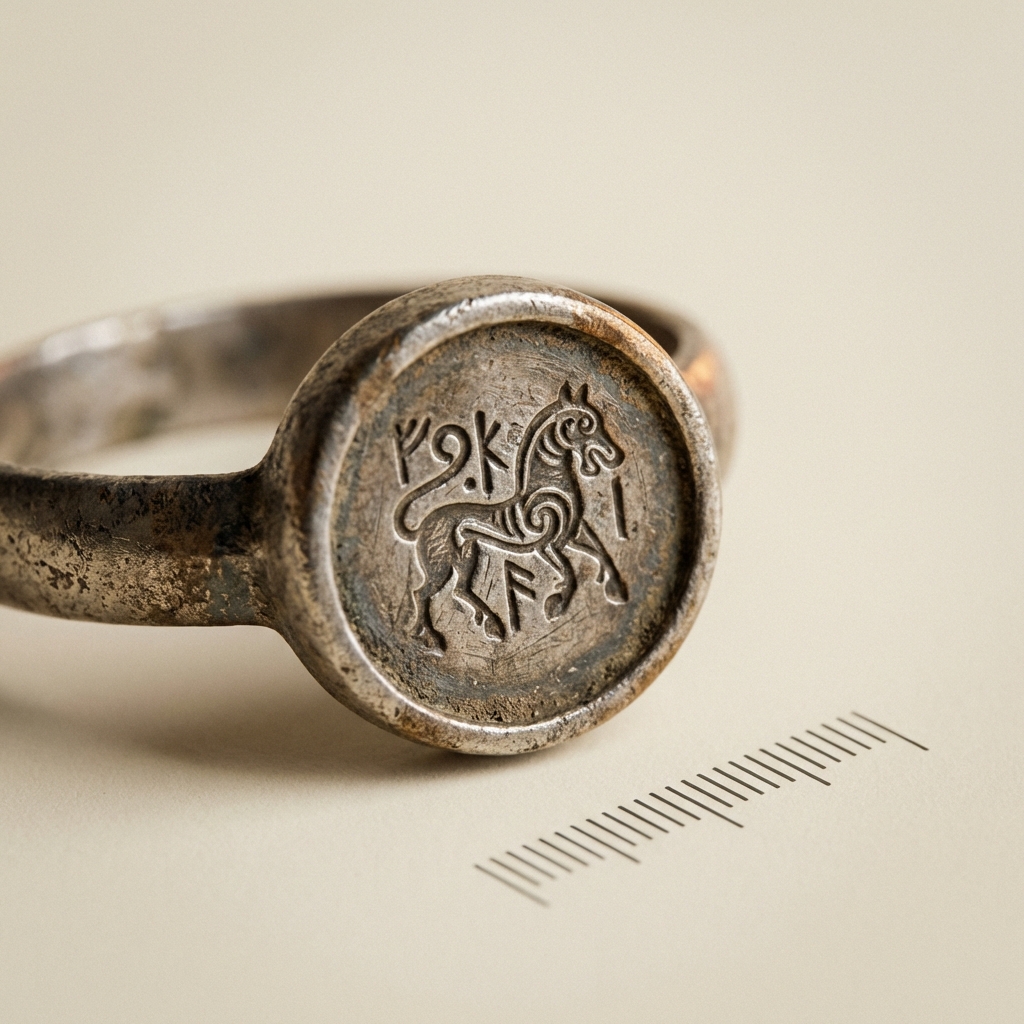
Metallurgical observations, such as alloy composition and manufacturing traces, combined with stylistic dating can narrow estimates for period attribution; however, these remain estimates unless supported by laboratory work that quantifies composition or microstructure. Requesting clear condition and restoration notes helps interpret visible evidence and whether later repairs affect stylistic readings.
Limitations of visual dating and when to seek lab work
Visual dating can be precise when an item matches well-published types, but it cannot reliably detect modern forgeries or recent reconstructions alone. For higher-value purchases or where attribution is critical, a written recommendation to seek non-destructive testing or a conservation report is prudent; such tests can corroborate or challenge visual attributions.
Scientific authentication and conservation reports you can ask for
Non-destructive and laboratory analyses are established methods for authentication, and they can substantially increase confidence in an attribution when conducted by accredited labs or university departments Nuclear Techniques for Cultural Heritage Research (IAEA Radiation Technology), International Atomic Energy (see Raman microscopy and XRF analysis).
Non-destructive tests: XRF and what it can tell you
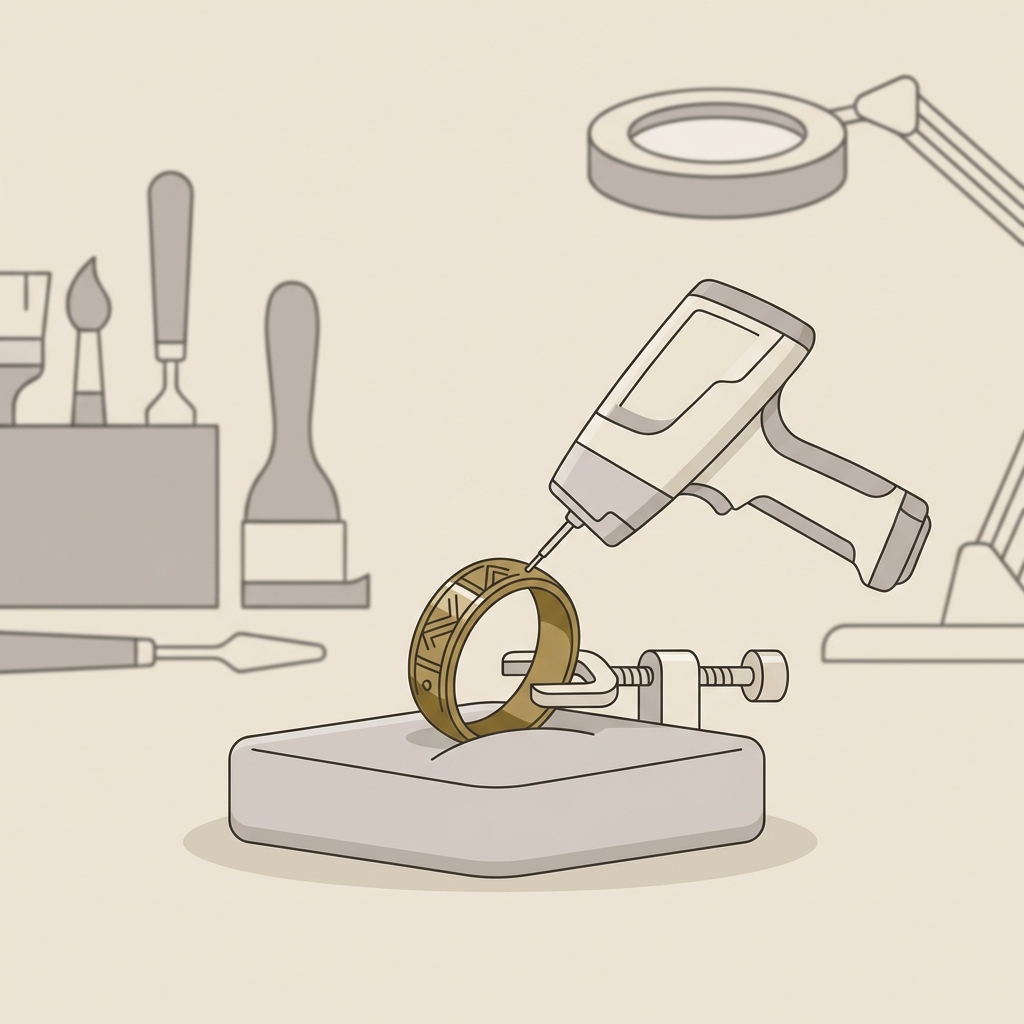
XRF elemental scans are a common non-destructive test used to estimate alloy composition and detect suspicious modern alloys or plating; while XRF does not produce a certificate of age, the elemental fingerprint is useful for comparing a ring to expected alloy ranges for an attributed period. When a seller provides an XRF readout, check that the test was performed by a competent operator and that the report identifies instrument settings and the measured elements. See also portable XRF technology for common practice in field applications.
Yes, you can buy genuine Viking-age jewelry when items are traded with lawful export/import documentation and clear provenance; always request condition notes and any lab or conservation reports before purchase.
Laboratory methods: metallography and isotope analyses
Metallography and isotope analysis are stronger laboratory approaches that can reveal manufacturing microstructure, casting and working traces or element ratios that are difficult to reproduce in modern forgeries. These methods are typically lab-based and may be requested for higher-value items or when visual and XRF results leave significant questions about origin or manufacturing period Nanostructured Silver Found in Ancient Dacian Bracelets from Cehei Hoard, Salaj, Romania, Nanomaterials (MDPI), via PubMed Central. Recent studies on lead isotope and trace element analyses illustrate how isotope data can be used in provenance work lead isotope and trace element analyses.
What to expect from a conservation or lab report
A conservation report should include clear condition notes, a summary of any restoration or stabilisation work, descriptions of tests performed and the laboratory or conservator who carried out the analysis. Look for named professionals or accredited institutions on reports and for concise descriptions of methods and limitations so you can interpret what was and was not resolved by testing.
Where to buy an antique viking ring: channels and market practice
Reputable auction houses and specialist dealers remain primary channels for acquiring authenticated Viking jewellery, and their listings often include condition notes and provenance documentation that buyers can verify; treat public sale records and specialist listings as the market baseline for pricing and attribution checks Auction Terminology, Christie's.
Auction houses and sale records
Auction sale records are useful benchmarks for price ranges because they show realised prices for comparable items and the condition under which they sold; consult recent sale records and descriptions to set realistic expectations for what similar rings have fetched at public venues. If a listing claims a matching sale record, ask for the catalogue page or lot number to verify the comparison.
Specialist dealers and curated listings
Specialist dealers who present curated listings with provenance, restoration notes and high-resolution photographs offer a trust layer for buyers, but their documentation should still be assessed critically, looking for independent substantiation of provenance and named conservators where tests have been performed. A dealer-led conservation report or a third-party test increases transparency and buyer confidence. See curated selections such as our rings collection for examples of how listings can be presented.
Online marketplaces and red flags
Online marketplaces can host legitimate listings but also pose higher risk because many private-sales postings lack verifiable provenance or third-party reports; missing condition details or evasive answers about restoration are common warning signs. Before buying online, request written condition notes, any available test results and clear images of joins, hallmarks and the ring interior.
A practical buying checklist and decision framework
Prioritise the following documentation before completing a purchase: clear photos with scale and multiple angles, exact measurements, condition notes, restoration notes, provenance or collection history, any export or acquisition paperwork, and copies of lab or conservation reports when available. Treat this bundle as the minimum file you should receive before payment.
Essential documentation to demand before paying
Ask sellers for dated high-resolution images showing the ring from multiple sides, interior details, hallmarks if present, and microscopic images of suspicious joins or repairs. Request a written condition statement and restoration notes that name the conservator or describe intervention methods, and insist on any provenance documentation such as prior collection invoices or catalogue references. When these are missing, pause the transaction and ask why.
How to weigh condition, restoration notes and price
Price should be evaluated against recent sale records and against the condition statement: simple bronze or common silver pieces often sit at lower price points while well-provenanced gold or inscribed items command higher prices. Use published sale records and the condition report to compare like with like rather than relying on single images or seller assertions Auction Terminology, Christie's.
When to walk away or seek independent opinion
If provenance is absent, restoration is undocumented, or sellers refuse a reasonable period to obtain third-party verification, these are valid reasons to pause or decline a purchase. For costly pieces, an independent specialist opinion or a lab test request is a prudent decision and part of normal due diligence practices recommended by professionals ICOM code of ethics.

Common pitfalls, scams and red flags to avoid
Claims without documentation or vague provenance are among the clearest red flags; listings that offer sweeping period attributions without collection history, export paperwork or named conservators should be treated cautiously and verified independently when possible Portable Antiquities Scheme treasure guidance.
Claims without documentation or vague provenance
Vague phrases such as "from a private collection" without dates, names or prior sale records provide little verifiable information and make it difficult to assess legal status and authenticity. Ask for dated invoices, prior catalogue references or photographs that show the item in an earlier collection context.
Overreliance on photos and stock descriptions
Photographs can be helpful but also misleading; misleading scale, lighting that hides joins or retouched images can obscure signs of modern work. Request photos with a scale, a numbered ruler or a conservator's colour card to reduce ambiguity and ask for microscopic images of edges and joins to spot modern tooling marks.
Misinterpreting restoration or modern repairs
Undocumented repairs complicate attribution because new solder, added components or re-polishing can disguise original surfaces; always seek written restoration notes that describe what was stabilised, what was repaired and what was intentionally left untouched so you can assess how interventions affect attribution and value.
Practical examples and what to do next
Scenario 1: A low-budget bronze hoop listed with a short description. For lower-cost pieces, request clear photographs, exact weight and measurements, a condition note and any available find or collection history; if these are missing, the buyer should treat the listing as higher risk and limit the purchase amount or seek a short return window.
Scenario 2: A high-end silver ring with a bezel and an inscribed motif. For higher-value items, insist on a conservation report, any XRF scans performed, and clear provenance documentation that links the ring to prior ownership or published references. If these are not available, ask for a time-limited hold while independent testing or specialist consultation is arranged. See related curated listings for similar items here.
Quick evaluation steps to request basic verification
Use before payment
How to request and read a provenance/condition statement
Use a short template message asking the seller for: full measurements and weight, dated photos from multiple angles, a written condition statement that lists interventions, and any supporting provenance documents or lab results. When responses are partial, follow up with specific requests for missing elements and note whether the seller provides named professionals for tests or conservation work.
Final checklist and suggested next steps
Final steps: compare the documentation bundle to recent sale records, check that any technical reports are dated and signed by accredited personnel, and decide whether the documentation level matches the price and your risk tolerance. If you plan to wear an antiquity, confirm which restorations were stabilising and whether the piece is safe to handle or requires a conservation mount.
Aurora Antiqua acts as a curator-style reference and presents curated ancient rings with condition notes and provenance references when available, helping buyers understand what to ask for and what documentation to expect. Use curated listings as a starting point for asking these questions, but treat each purchase as an independent verification exercise.
Yes, in many jurisdictions you can buy Viking-age jewelry legally if the item has lawful export/import documentation and clear provenance; check local find-reporting rules and ask sellers for relevant paperwork.
An XRF scan reports elemental composition and can flag unexpected alloys or plating, but it does not prove age by itself; use it alongside conservation notes and other tests.
Treat refusal as a red flag, pause the purchase, and either request a returnable hold while you seek independent advice or decline the sale if documentation is not forthcoming.
More from Aurora Antiqua
References
- Nuclear Techniques for Cultural Heritage Research (IAEA Radiation Technology), International Atomic Energy
- Nanostructured Silver Found in Ancient Dacian Bracelets from Cehei Hoard, Salaj, Romania, Nanomaterials (MDPI), via PubMed Central
- Sources of early Islamic silver: lead isotope analysis of dirhams, Antiquity (Antiquity Publications /)
- Auction Terminology, Christie's
- About us, International Association of Dealers in Ancient Art
- Danefæ og andre løsfund, Slots- og Kulturstyrelsen (Danish Agency for Culture and Palaces)
- About, Treasure Trove Unit, Scotland (King's and Lord Treasurer's Remembrancer)
- The Vale of York Viking Hoard returns to York, York Museums Trust (Yorkshire Museum)
- Oval Brooch, Viking, 900 to 1000, Acc. 1982.323.1, The Metropolitan Museum of Art, New York