


Looking for the real thing? Browse authentic Medieval & Crusader rings, each piece one of one, individually authenticated, with documented provenance. For the background, see the guide to medieval jewelry.
What is an antique Viking ring? Definition and historical context
An antique Viking ring is a wearable object from Norse contexts, broadly dated to the Viking Age, c. 8th to 11th centuries, found across Scandinavia and the North Atlantic. Museum catalogues commonly group such finds into three practical categories for study and display: arm-rings, finger or signet rings, and simple hoops, a classification that helps collectors and researchers talk about function and form in consistent terms British Museum.
These categories are not mere labels. They reflect different uses in life. Arm-rings could be large and visible, finger rings sometimes carried personal marks, and hoops appear as simple wearable ornaments. Across many finds, rings served multiple roles at once, combining ornament, visible social sign, and a portable store of metal that could be exchanged or given as gifts.
Follow @auroraantiqua for finds, restorations and provenance notes
Read the checklist and conservation tips below to make practical decisions about condition and documentation before you commit to a purchase
The geographic frame for most material described as Viking-age runs from mainland Scandinavia into island and coastal contexts in the North Atlantic, including sites where Norse settlers were active. This definition emphasises region and period without implying identical practices in every community.
Types: arm-ring, finger and signet rings, simple hoops
Where and when: Scandinavia and the North Atlantic, c. 8th to 11th centuries
Functions in Norse society, in short, ranged from dress and status display to economic and ceremonial practice; later sections explain the evidence behind these roles and how to read it.
How Viking rings were made and decorated
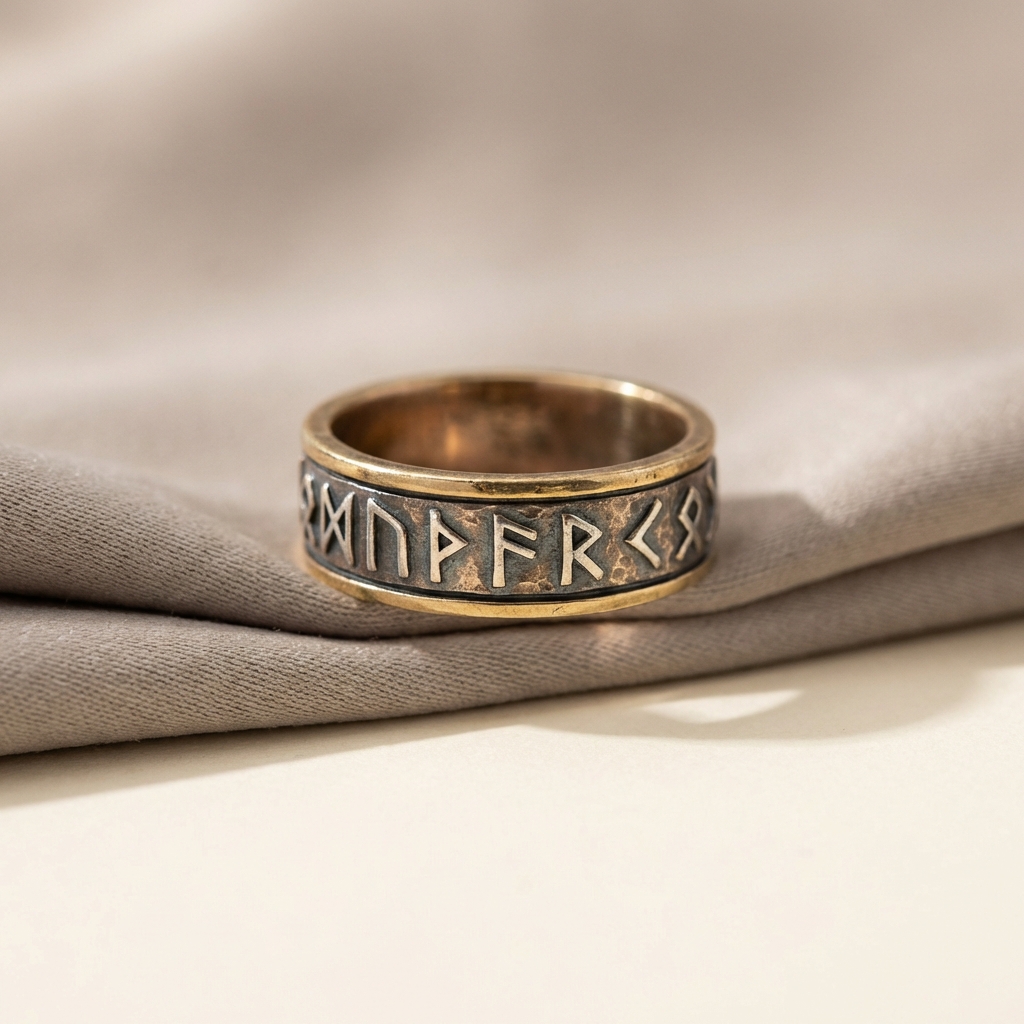
Many Viking-age rings show production methods that are diagnostic for dating and attribution. One common construction is the twisted rod, where two or more metal wires were twisted before being formed into a hoop and finished with cast terminals or shaped ends. Conservators and archaeologists frequently cite these manufacturing traits when describing finds in museum catalogues National Museum of Denmark.
Decoration ranges from geometric interlace and animal-style motifs to occasional Christian symbols. These programs can appear as incised lines, cast reliefs, or simple punched patterns. Because decorative vocabulary changed over time and by workshop, motif and manufacturing observations are most valuable when combined with clear find context for stylistic dating.
Common manufacturing methods: twisted rods, cast terminals, soldering and casting
Typical decorative programs: interlace, animal styles and occasional Christian motifs
How manufacture helps stylistic dating is a practical point: a twisted-rod hoop with cast terminals may suggest a particular century or regional workshop when matched to securely dated parallels and excavation data.
What does a Viking ring mean? Social and symbolic roles
Rings in Norse society carried layered meanings. One key interpretation from archaeological literature is that arm-rings functioned as visible insignia of allegiance and as practical stores of metal that could be given in gift-exchange or used within oath-making rituals. This dual role appears repeatedly in regional studies and synthesis works on Viking social practice Antiquity article on arm-rings.
Beyond arm-rings, finger and signet rings could signal personal identity, ownership or social position. A signet impression or an ownership mark could make a ring both a personal emblem and a portable token of standing within a local network.
A Viking ring often functioned as jewellery and status display, and in many cases acted as portable wealth used in gift-exchange or oath-making; precise meaning depends on type, inscriptions and find context.
Interpretations vary by find and context, however. Motifs such as interlace and animal styles may contribute evocative meaning but should not be read as a single symbolic language without supporting context, like burial association or contemporary written references.
The social readings of rings therefore balance evocative cultural meaning with careful archaeological caution, recognising that the same object might have been jewellery, payment, and a symbolic device at different moments in its life.
Runes and short inscriptions on rings: what they usually say
Runic inscriptions on small rings are relatively uncommon and, where present, are typically short. They often record brief names, ownership marks or short protective formulas rather than long texts, and their presence can add useful, though limited, personal information about the wearer or owner Runer og runemagi, vikingernes skriftsprog, Nationalmuseet, Copenhagen.
Because inscriptions are concise, reliable readings usually require a runologist and, where possible, a clear archaeological context. Short marks can be interpreted in several ways, so specialist confirmation helps avoid overreading a single letter or damage feature as a deliberate inscription.
Frequency and typical content of runic marks
How runologists read short formulas and names
Limits of inscription-based interpretations: even a legible name does not on its own determine social rank or ritual use. Linkage to find context and supporting evidence strengthens any interpretive claim.
Practical identification checklist for an antique Viking ring
Before considering a purchase, request clear, high-resolution photographs from multiple angles, a measurement or size in millimetres, and a scale reference. Good images should show terminals, inner and outer surfaces, any maker marks, and close-ups of areas with corrosion, inscription, or repair.
Next, examine manufacture and wear. Look for twisted-rod construction, cast terminals, solder traces, consistent surface wear and a stable patina. These features are commonly used in practical identification guidance issued by conservators and finds specialists Portable Antiquities Scheme guidance.
Essential photos and measurements to request
Manufacture and wear signs to examine, such as twisting, terminals and patina

When a ring has unusual features or the listing lacks clear documentation, ask for XRF or metallurgical data when available (see a technical synchrotron XRF study here) and review examples of XRF-tested lots in auction records. Scientific screening can quickly determine elemental composition and flag modern alloys or unexpected mixtures, and conservators recommend these checks for higher-value or ambiguous items.
When to ask for tests or specialist reports: require compositional or conservation reports for contested items or those with limited provenance.
Provenance, ethics and legal considerations when buying
Provenance matters. Written collection history, prior ownership notes and verification letters contribute to an object's traceable background and help buyers assess legal and ethical standing. Museum and professional guidance stresses documented provenance as a central part of responsible collecting Code of Ethics, International Council of Museums (ICOM), Paris.
Unprovenanced material raises real concerns because the market includes items lacking excavation context and, in some cases, modern forgeries. Buyers should pause when sellers cannot provide verifiable documentation or when a listing offers implausible or vague collection histories.
Export controls and national cultural property rules vary by country. Check both the seller's stated documentation and the relevant export rules in the object's country of origin before purchase.
Condition and restoration notes: what to expect in listings
Conservation treatments commonly include stabilisation of corrosion, consolidation of fragile surfaces and minimal mechanical cleaning. Good listings state what was stabilised, repaired, or intentionally left untouched, allowing buyers to judge the extent of intervention.
Language to look for includes clear terms such as stabilised, conserved, minimal inpainting, or replaced section. When restorations are reported, request details from the conservator or a treatment record to understand materials used and the scope of work. Guidance for identifying and reporting conservation observations is widely used by museum find schemes and conservators Portable Antiquities Scheme guidance.
Short guide to reading condition and restoration notes
Use this as a quick reference when reading listing language
How restorations affect appearance: minor stabilisation often reduces active corrosion but should be explicit about what was done. Transparency matters because undocumented repairs or modern fills can alter how an object displays and how it should be cared for.
Red flags and common mistakes when assessing Viking rings
The market includes unprovenanced pieces and modern forgeries, so some common warning signs should prompt caution. Implausible provenance claims, inconsistent patina that looks artificially applied, and tooling marks that do not match ancient techniques are all reasons to seek further evidence The Past Polluted: A Pigovian Approach to the Black Market in Antiquities, International Journal of Cultural.
Over-reliance on stylistic dating alone can be misleading. Without provenance or scientific testing, a stylistic match to a known form is suggestive but not definitive. Buyers should treat stylistic parallels as part of a wider evidential picture.
Misreading patina is another common mistake. Natural patina usually shows consistent wear and depth in protected areas. Scrubbed or selectively enhanced surfaces can indicate recent intervention or deceptive presentation.
Practical examples and scenarios
Scenario: evaluating an arm-ring offered as a group gift piece. If a listing describes an arm-ring as a potential gift hoard item, request close photos of terminals and the twisted rod, size measurements, and any supporting find context. When available, compare these features to published examples in museum catalogues to assess plausibility British Museum and review related items in our highlights collection.
Scenario: a signet ring with a short runic name inscription. Ask for a runologist's transcription or high-resolution macro images before assuming reading. Even legible runes can be ambiguous without expert interpretation and a link to find context or provenance New runic translation reveals community ownership of the Galloway Hoard, National Museums Scotland.
Scenario: a simple hoop with unclear provenance. For an undecorated hoop, prioritise provenance and compositional checks; a simple form is not decisive and may need XRF or metallurgical testing to confirm likely age and alloy composition.
When to seek expert reports and which tests matter
XRF and metallography are two common analytical routes. XRF provides elemental composition quickly and non-destructively, offering a first-pass test for alloy types, while metallography can reveal microstructure and manufacturing traces when sampling is possible. Conservators and finds specialists recommend these methods for ambiguity or higher-value items Portable Antiquities Scheme guidance (see an XRF analysis paper here).
Commission a runologist for inscriptions and a conservator for treatment histories when an item's provenance is contested or when the inscription may affect interpretation. Third-party reports should be clear about limits: XRF cannot date an object on its own, and runic readings may remain tentative without contextual corroboration.
How to interpret a third-party report: prioritise transparent methodology, clear results, and the expert's stated confidence. When in doubt, seek a second opinion from another trusted specialist.
How to read listing language and questions to ask a seller
Ask concise, evidence-focused questions: request multiple high-resolution images, measurements in millimetres, details of any restoration and a clear provenance statement. Sample phrasing includes polite requests for treatment records, previous invoices, or collector documentation.
Spot evasive replies by looking for vague language such as unknown provenance, hearsay provenance, or refusal to provide photos. If a seller declines to share basic documentation or clear measurements, treat the listing with caution and consider asking for a refund policy or third-party verification before proceeding.
Essential questions to request from a seller
How to spot vague or evasive responses and sample phrasing for evidence-focused enquiries
Caring for an antique Viking ring: preservation basics
Handle items with clean, dry hands or gloves and store rings on inert materials in a stable, low-humidity environment. Avoid exposing corroded metal to fluctuating temperatures or household chemicals that can accelerate deterioration.
Avoid aggressive cleaning at home. Many conservation issues arise when collectors attempt to remove patina or use household polishes. Consult a professional conservator for any active corrosion or structural instability, and keep clear condition notes and dated photographs to document the item's state over time Portable Antiquities Scheme guidance.
How Aurora Antiqua frames ancient rings for buyers
Aurora Antiqua acts as a curation and trust layer for buyers, offering curated ancient rings spanning Roman, Greek, Byzantine, Islamic, Celtic, medieval, and post medieval periods, alongside select small artifacts and relic objects. Listings typically include restoration and preservation notes that explain what was stabilised or conserved and where documentation is available.
The site provides editorial and historical content that explains cultural context, symbolism and historical background tied to pieces, helping buyers understand what they are purchasing and why it matters while leaving final judgements about authenticity to documented evidence and specialist reports.
Summary and responsible next steps for buyers
Recap: museum-classified typology groups Viking rings into arm-rings, finger or signet rings and simple hoops. In life these objects could function simultaneously as status markers, small stores of wealth and personal ornaments; understanding any single ring's meaning depends on combining stylistic, scientific and documentary evidence National Museum of Denmark.
Take-away checklist: request clear photos and measurements, examine manufacturing signs like twisted rods and cast terminals, insist on restoration and condition notes, and require written provenance or specialist reports when important questions remain. For key purchases, consider XRF screening, a conservator assessment, or a runologist reading before committing.
Responsible next steps include pausing when provenance is vague, requesting third-party reports for contested items, and documenting any item's condition on receipt. These steps protect both the collector and the cultural context the object represents.
Runic inscriptions on small rings are comparatively uncommon and are usually short, often names or ownership marks; specialist reading is recommended for accurate interpretation.
XRF provides elemental composition and can flag modern alloys, but it cannot date an object on its own; use it alongside stylistic evidence and provenance for a stronger assessment.
Request high-resolution photos from multiple angles, exact measurements, condition and restoration notes, and any provenance documentation or third-party reports before deciding.
More from Aurora Antiqua
References
- Runer og runemagi, vikingernes skriftsprog, Nationalmuseet, Copenhagen
- New runic translation reveals community ownership of the Galloway Hoard, National Museums Scotland
- Code of Ethics, International Council of Museums (ICOM), Paris
- The Past Polluted: A Pigovian Approach to the Black Market in Antiquities, International Journal of Cultural
- Viking silver arm-rings discovered on the shores of Clew Bay, Co. Mayo, National Museum of Ireland
- Hoard find from Vester Vedsted, Nationalmuseet / National Museum of Denmark
- Viking Art Styles in the East Midlands: Borre · Vikings in the East Midlands
- Silver Arm-Ring (NLM-1B89B2) · Vikings in the East Midlands, Centre for the Study
- The Viking Age, National Museum of Denmark, Copenhagen
- | Antiquity Journal