


Looking for the real thing? Browse genuine crusader rings for sale, each piece one of one, individually authenticated, with documented provenance. For the background, see the guide to medieval jewelry.
What are ancient viking rings? A clear definition and why they matter
Ancient viking rings refers to rings produced or used in Norse cultural contexts, described here with conditional language to reflect the limits of attribution. The term typically covers simple hoops made for daily wear, rings with small bezels that once held intaglios or cabochons, and decorated rings stamped or cast with motifs that were meaningful in their time. An object described as an ancient ring that appears to be Viking could be a personal ornament, a signet-like piece, or a traded item that moved across regions.
For collectors and casual readers alike, these rings matter because they connect material craft to social practice. A well-documented piece can illustrate workshop techniques, iconography, and the practicalities of everyday dress, all of which help to situate a single collector piece within a broader cultural story. That said, attribution is often provisional and benefits from comparative study and documentation.
A quick checklist to inspect images and listing details for an ancient ring
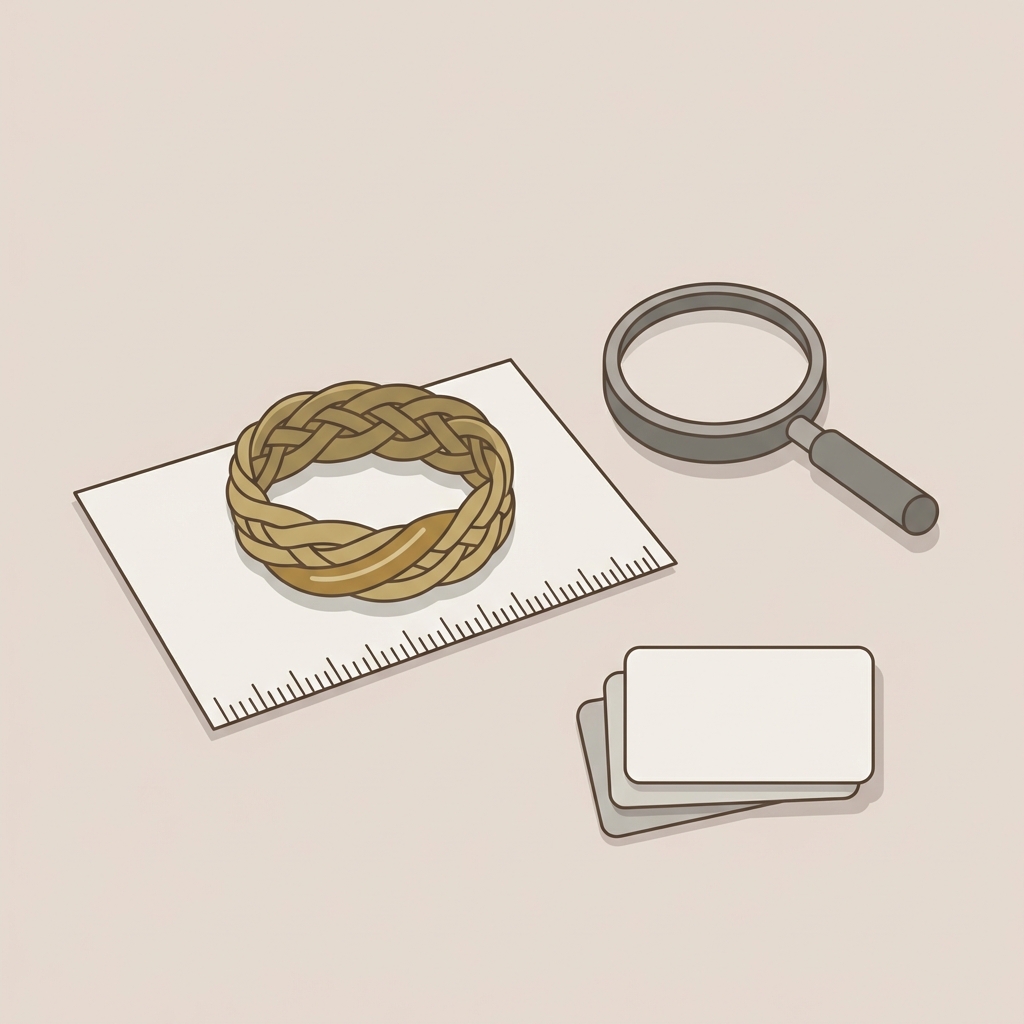
Use this when first assessing a listing
Definition and typical forms
When people use the phrase ancient viking rings they generally mean small metal rings made in contexts associated with Norse culture during the early medieval period. Forms range from plain silver hoops worn as functional jewelry to more elaborate bezel rings with an inset stone or intaglio. Some rings are cast as a single hoop, others are formed from wire and soldered, and a few show stamped decoration or applied elements.
Describing a ring as ancient or Viking without accompanying documentation should be treated as a starting point for inquiry rather than a final claim. Photographs, measurement data, and condition notes help move a description from conjecture toward a reasoned assessment.
Why collectors and historians pay attention
Collectors value these rings for several connected reasons. First, they serve as wearable history, offering a tactile link to daily life in past societies. Second, motifs and manufacturing traces can give clues about workshop practices and regional styles. Third, documented pieces contribute to academic and public knowledge when their findspots or collection histories are recorded. For history-minded buyers, these aspects create cultural narrative and collecting interest.

Historians and curators also pay attention because groups of well-documented rings can inform questions about trade, mobility, and cross-cultural exchange. As with any antiquity, the interpretive value increases with clear provenance and transparent restoration notes.
Historical context: dating, geography, and cultural meaning
When and where Viking rings were typically made or used
Dating a ring is an exercise in combining stylistic observation, comparative parallels, and documented find reports. Instead of assigning an absolute year, most careful descriptions frame dating as an estimate tied to elements such as metal type, decoration, bezel form, and known regional styles. In many cases, a ring that appears to be of Norse origin will be placed within a multi-century range until more evidence narrows that window. See recent work on provenance studies for comparable approaches (provenance of silver and dating methods).
Geographically, rings associated with Viking contexts are not confined to modern Scandinavia. They appear in areas of known Norse activity, including parts of the British Isles, the Baltic region, and continental Europe. Distribution patterns suggest networks of trade and movement rather than a single production center, and workshop attribution is often tentative unless a clearly documented hoard or workshop find is published.
Cross-cultural influences and regional workshops
Viking-age metalwork shows interactions with neighboring traditions, so similar ring forms may derive from or adapt foreign techniques. For example, wire-formed hoops and simple bezel types are found across northern Europe, making strict geographic claims risky without additional evidence. Comparative study of tool marks, solder styles, and alloy composition is useful when available, and regional studies illustrate these cross-currents (regional workshop research), but many online listings lack such analytical details.
See behind-the-scenes at @auroraantiqua on Instagram
Explore curated listings and editorial context to see how comparative notes, condition descriptions, and provenance can change a reading of a piece, and use those materials to inform questions you ask sellers.
How iconography connects to Norse beliefs and social status
Iconography on rings can hint at cultural meaning but seldom provides definitive identifications on its own. Animal motifs, stylized knotwork, and runic-like marks, when present, often invite interpretations related to identity, protection, or affiliation. At the same time, similar motifs could be decorative or adopted from neighboring groups, so their presence should increase interest rather than end debate.
Social status can sometimes be inferred from material and workmanship, with gold and finely carved intaglios more likely associated with higher-status contexts. However, condition notes and documented repair history are crucial for interpreting whether a ring served as a high-status item or a well-used personal ornament.
Materials and construction: how Viking rings were made and what to look for
Typical metals and alloys, weight and construction techniques
Common metals for rings described as Viking include silver, bronze or copper alloys, and occasional use of gold for higher-status items. Wire-formed hoops, cast rings, and rings composed from bent sheet are typical construction approaches. Observational clues such as where solder joints sit, whether seams are visible, and how a bezel attaches can suggest particular working methods and help with preliminary dating or attribution.
Weight and proportions are also informative; a heavy solid hoop will feel and wear differently from a thin wire band. When assessing a listing, note whether the seller provides accurate scale photos and measurements that include ring diameter, band thickness, and bezel dimensions.
Focus on high-resolution photos, accurate measurements, coherent patina and wear, explicit provenance or collection history, and detailed restoration notes; when in doubt, request more documentation or a specialist opinion.
Gemstones, intaglios, and inlay techniques
Where gemstones appear, they are often small and set in simple bezels. Carnelian and agate are commonly reported in literature on ancient jewelry, though any specific identification in an online listing should be treated as descriptive unless supported by testing. Intaglios, when original, can show carving lines and signs of wear consistent with long use, while modern replacements typically lack those subtle tool marks. For editorial context on intaglio meaning see our note on intaglio discussion (intaglio meaning).
Inlay techniques range from simple cemented stones to carefully cut insertions. Photographs from multiple angles, macro close-ups of the bezel seat, and lighting that reveals surface texture will help a buyer assess whether a gem surface is original or a later addition.
Signs of age: patina, wear consistent with age, and old repairs
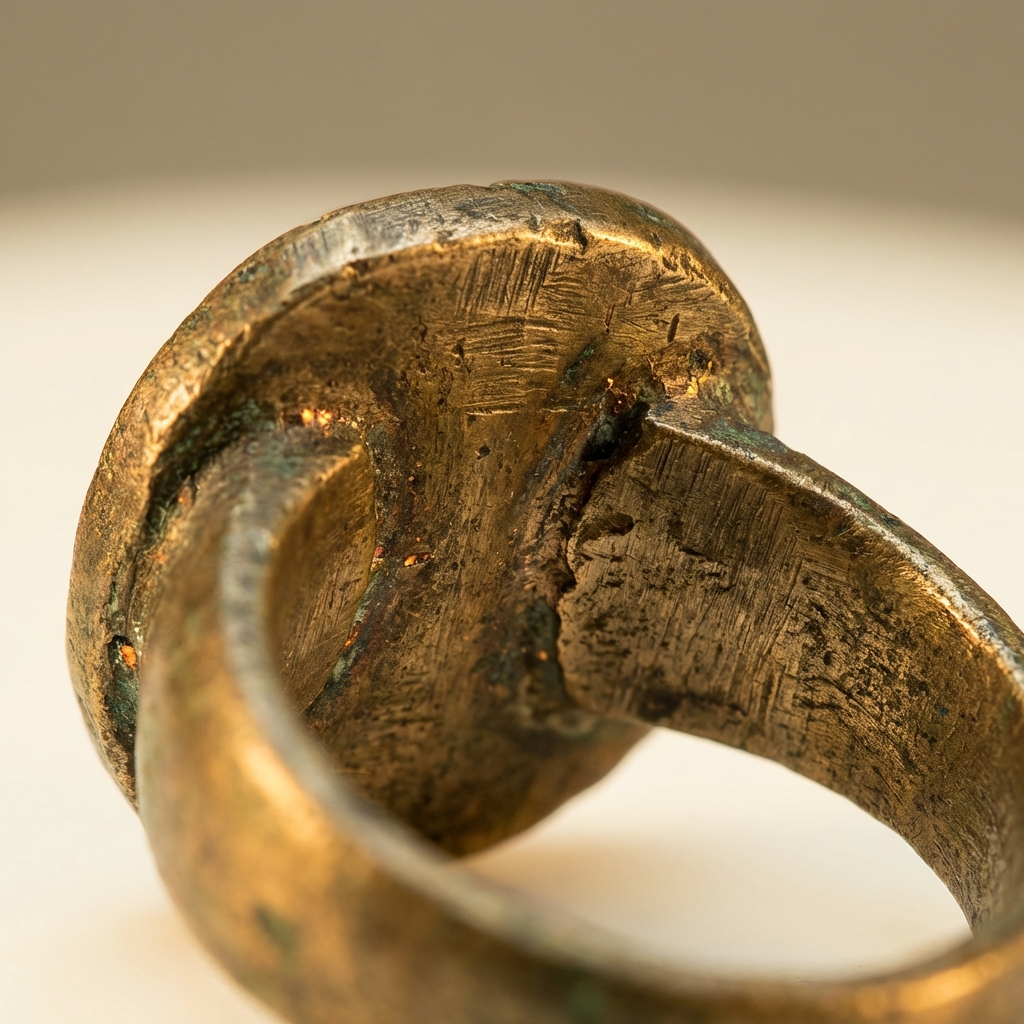
Patina and surface wear are among the clearest visual cues of age when they appear consistent across a piece. Patina can include color changes, encrustation in recessed areas, and a depth to surface oxidation that is challenging to replicate convincingly in recent artificially aged objects. However, experienced eyes look for coherency: does the wear pattern match how the ring would have been used?
Old repairs are not necessarily a negative, but they are important condition notes. Soldered joins, added reinforcing strips, or replaced bezels should be documented in restoration notes so buyers understand what was stabilized or altered. Good listings describe any repairs and include close images of those areas.
Symbols and motifs: reading the imagery on ancient viking rings
Common motifs (animals, knotwork, runic-like marks) and their possible meanings
Motifs on rings vary, with animal figures, interlace or knotwork, and marks that resemble runes appearing with some frequency. An animal head carved in a small intaglio may suggest a stylistic preference or symbolic shorthand rather than a fixed religious claim. Knotwork and interlace patterns can indicate stylistic links to broader decorative traditions. For complementary reading on historical Viking jewelry see a focused overview (Viking jewelry overview).
Interpretation is best approached cautiously. A motif that looks like a runic element might be a maker's mark, a decorative abrasion, or even a later scratch. Comparative editorial and historical content, when available, helps support reading of iconography by showing how similar motifs have been interpreted on well-documented pieces.
Aurora Antiqua product listingsHow to avoid over-interpretation: context and comparative examples
Avoid projecting modern ideas onto motifs. A small motif that appears to represent a god or animal can equally be an abstract device or a regional decorative habit. Check whether the seller provides comparative images or editorial notes that reference published finds, and treat such references as helpful context rather than conclusive proof.
Where provenance and findspot information exist, they make a motif easier to situate. Without that context, multiple possible readings often coexist, and the cautious buyer values transparent documentation that allows further inquiry.
Using editorial content and provenance to support interpretation
Editorial and historical content can be a powerful interpretive aid when it is specific. Short essays that explain motif parallels, workshop styles, or likely date ranges help a buyer evaluate claims. Provenance, including collection history and any verification letters, can bolster an interpretive case but must be read carefully and, when possible, verified independently. See related comparative material in our ancient Roman rings collection (ancient Roman rings) for parallels that sometimes clarify motif readings.
Collectors should treat editorial content as a guide and remain attentive to the primary evidence: clear photos, measurements, and condition notes. Those elements are the foundation onto which interpretive narratives should be built.
How to evaluate and responsibly buy ancient viking rings
Checklist before purchase: photos, measurements, provenance, condition notes
Begin with a structured checklist that you apply consistently when assessing listings. Essential items include high-resolution photos from multiple angles, clear measurements with scale, explicit condition notes describing patina and repairs, and any available documentation of provenance or collection history. If a listing lacks one or more of these, ask the seller for the missing information before deciding. See our rings collection for examples and listings to compare (rings collection).
Ensure photos show bezel seats, solder areas, and interior band surfaces, as these zones often contain telling details. A measurement of inner diameter or a visible size reference helps avoid unpleasant surprises when the piece arrives.
Understanding documentation: provenance, collection history, verification letters
Provenance and documentation come in different forms: a published findspot, prior auction records, collection labels, or verification letters from reputable specialists. Each element can increase confidence in attribution, but documentation should be assessed for specificity. Vague claims about origin are a weaker basis for attribution than named collection histories or verifiable find reports.
When provenance is offered, request scans or photographs of the supporting documents. Restoration notes should explain what was stabilized, what was repaired, and what was left untouched, as these affect both appearance and interpretation.
Ethical and legal considerations: export, looting concerns, and seller transparency
Responsible buyers pay attention to red flags that suggest unclear origins. Listings that omit origin details, use vague phrases about recovery, or refuse to provide provenance documentation merit caution. Ethical and legal frameworks vary by country, so transparency about export permissions and prior ownership helps buyers assess the risks and responsibilities tied to a purchase.
Prefer sellers who include clear collection history and who describe restoration work openly. If in doubt, ask for additional documentation and consider seeking independent advice before purchase.
Common mistakes, authentication pitfalls, and restoration cautions
Typical errors buyers make when assessing authenticity
Common mistakes include relying solely on a single photograph, accepting seller descriptions without follow-up questions, and assuming attractive patina always equals authenticity. Photographs can be misleading if lighting obscures repair seams or polishing hides recent work. Always request multiple images and ask pointed questions about any area that seems inconsistent.
Another frequent error is over-reliance on stylistic resemblance to well-known pieces. Similarity is useful but not definitive without documentation. Use stylistic comparison as part of a wider assessment rather than the only criterion.
How restorations can mislead and how to read restoration notes
Restorations can both preserve and complicate a reading of an object. Astute buyers look for explicit restoration notes stating what was stabilized, what materials were used in repairs, and whether any elements were replaced. Obscured solder, repolished surfaces, or modern filler near bezels are common restoration signs that should be described in condition notes.
When restoration notes are absent or vague, treat the listing with caution. Ask for close-up photos of joints and for a condition statement that clarifies whether modern materials are present.
When to request condition photos, tests, or third-party opinions
Request additional imagery whenever basic photos do not reveal solder seams, bezel interiors, or hallmarks. For higher-value pieces, a third-party condition report or an independent specialist opinion can be warranted. Non-destructive testing and metal analysis may be available from labs, but such steps are more common in institutional contexts than in casual sales. Still, for collector pieces with significant claimed history, professional verification is a reasonable next step.
In day-to-day buying, insist on documentation that supports claims and on transparent restoration notes rather than accepting short, vague descriptions.
Practical examples and short scenarios: reading three typical listings
Example A: a simple silver hoop with patina and partial provenance
Scenario: A seller lists a plain silver hoop with visible patina, one close photo, and a short note that it came from a private collection. Immediate positive indicators are the patina and the seller acknowledging prior ownership. Red flags include the single photo and the lack of measurements or provenance scans.
Recommended next step: Ask for measurements, additional macro photos of the solder area, and any paperwork that records collection history. If none is available, treat the listing as a speculative purchase rather than a documented collector piece.
Example B: gold bezel ring with intaglio and restoration notes
Scenario: A gold ring is shown with a small intaglio and an explicit restoration note stating that the bezel was re-seated and a modern protective lacquer was applied. Positive indicators include multiple angles, visible tool marks on the intaglio, and the seller's transparency about restoration. A potential caution is the modern lacquer which can affect surface appearance.
Recommended next step: Request close-ups of the intaglio under raking light, scans of any documentation, and clarification about the materials used in restoration. Use the seller's restoration notes to adjust expectations about surface detail and patina while considering the piece as a collector piece with known interventions.
Example C: ring described as 'Viking style' with unclear origin
Scenario: A listing titled 'Viking style ring' offers decorative knotwork but lists no provenance and provides only stylized product photos. Positive indicators are limited to motif resemblance, while red flags include vague origin language and the absence of condition notes.
Recommended next step: Ask the seller for the ring's discovery context, high-resolution images of the solder areas and interior band, and any paperwork that supports the claim. If the seller cannot provide these, be cautious and consider the listing a reproduction or modern piece rather than an authentic antiquity.
Across all scenarios, Aurora Antiqua positions itself as an editorial and curation reference that helps buyers interpret listings by emphasizing clear photos, transparent provenance, and restoration notes.
Conclusion: how to think about significance and next steps for collectors
Summing up significance without overclaiming
Ancient viking rings can be meaningful collector items because they connect craft, motif, and social practice in tangible form. Their significance grows with documentation: provenance, clear restoration notes, and comparative editorial content all strengthen interpretive claims. At the same time, attribution is often tentative and benefits from careful, evidence-based reading.
Practical next steps: research, documentation requests, conservation-aware care
If you are considering a purchase, use the checklist tool and ask sellers for detailed photos, measurements, and provenance scans. When restoration is described, request specifics so you understand what was changed or stabilized. For care, conserve pieces with gentle handling, avoid aggressive cleaning, and consult a conservator for treatment recommendations.
Collecting ancient rings rewards patience and careful inquiry. Treat each listing as an argument to be evaluated on its evidence and use condition notes and documentation to guide decisions rather than relying on a single descriptive phrase.
Look for multiple high-resolution photos, clear measurements, consistent patina, and any provenance or restoration notes; use comparative examples and ask sellers for documentation before forming a conclusion.
Request scans or photos of collection history, prior auction records or labels, and any verification letters; also ask for explicit restoration notes describing repairs and materials used.
Not necessarily; restorations are common and can preserve an object but should be clearly described so you know what was altered or stabilized.
More from Aurora Antiqua
References
- The silver hoards of the Vikings, Nationalmuseet / National Museum of Denmark
- Silver recycling in the Viking Age: Theoretical and analytical approaches, PMC, Archaeometry (Wiley)
- Hoard find from Vester Vedsted, Nationalmuseet / National Museum of Denmark
- Viking silver arm-rings discovered on the shores of Clew Bay, Co. Mayo, National Museum of Ireland
- The World’s Largest Viking Treasure, Historiska museet / Statens historiska museer, Stockholm
- New runic translation reveals community ownership of the Galloway Hoard, National Museums Scotland
- Guldrummet, Historiska museet / Statens historiska museer, Stockholm
- Internet Archaeol. 38. Heen-Pettersen. Weighing equipment, Internet Archaeology 38, Department of Archaeology