


Looking for the real thing? Browse our Medieval ring collection, each piece one of one, individually authenticated, with documented provenance. For the background, see the guide to medieval jewelry.
Quick summary of scholarly consensus
Short answer: there is no single, universally accepted title for a woman in Viking-age sources that directly maps to modern expectations. Scholars combine literary terms, runic evidence and archaeological context to reach qualified conclusions, and readers should treat labels as interpretive, not definitive. For collectors evaluating listings, careful wording and documentation matter when a seller links an object to female roles or to martial imagery; always request provenance and clear condition notes when you see claims related to gender or social role National Museum of Denmark summary.
One concrete result that shaped recent discussion is the genomic and osteological analysis of the Birka warrior burial, which showed the individual was biologically female; this demonstrates that at least some people buried with weapons were female, but it does not by itself prove a widespread, institutionalised female warrior class The Swedish History Museum press release. See the genomic study A female Viking warrior confirmed by genomics for the published analysis.
Finally, saga narratives and poetic sources remain invaluable for understanding ideas and ideals, but they are not straightforward reportage. Interpretations should be built case by case, combining texts, inscriptions and grave assemblages rather than transferring saga labels directly onto archaeological finds British Museum research and collection pages.
Old Norse terms and what they actually mean
Old Norse uses a range of terms that later readers and popular culture have compressed into a few catchy labels. Valkyrja, for example, is primarily a mythic or poetic figure in the corpus: valkyries choose the slain and carry them to the afterlife in poetic and mythic contexts. When writers or sellers use valkyrja-language about a material object, they are usually invoking an association rather than claiming a literal occupational title for an individual in life British Museum research and collection pages.
Skjaldmær and skjaldmær-like descriptors appear in some saga passages and are commonly translated as shield-maiden. Scholars debate how often such descriptors referred to real-life roles, dramatic poetic characterization, or literary stock figures, and they caution against assuming a regular, institutional role simply from a few literary occurrences Oxford Research overview of Old Norse sources.

Translators and popular culture often shift meanings by compressing several Old Norse ideas into a single modern image. That can be useful for evocative storytelling, but it becomes misleading in provenance statements if the listing implies the label is a literal occupational title attested in the material record. Practical listings should therefore explain whether terms are mythic, literary, or tied to a particular local context.
Runic inscriptions and material culture: what the evidence shows
Runic inscriptions and other non-literary textual traces tend to record names, relationships and short memorial formulas rather than occupational titles for women. In many cases runic texts help confirm identity or family ties but do not offer a neat label equivalent to modern occupational categories National Museum of Denmark summary.
Archaeological material culture varies substantially across regions and time. Weapon burials are present in a number of contexts, but the accompanying grave assemblage and local mortuary practice determine how we should read that evidence. A grave that pairs weapons with typically feminine-associated items in one region cannot be assumed to mean the same social role in another; archaeologists caution that interpretation must be local and contextual Antiquity review on gender, weapons and identity.
Archaeological evidence and the Birka warrior case
The Birka burial is central to recent public discussion: genomic and osteological work published since 2017 confirmed that the individual in the so-called Birka warrior grave was biologically female, and the burial included weapons and other items traditionally associated with martial role interpretations. This finding demonstrated that at least some people buried with weapons were female rather than invalidating other interpretive approaches The Swedish History Museum press release. For contemporary media coverage see the New York Times article A Female Viking Warrior? Tomb Study Yields Clues.
Interpreters quickly emphasised limits: one well-documented burial does not by itself establish a widespread, institutionalised class of female warriors. The Birka case prompted careful re-examination of other weapon burials and encouraged researchers to combine genetic, osteological and material data in each case rather than making broad generalisations; see a reassessment of Birka Viking warrior women? Reassessing Birka for more on methodological limits.

Across Scandinavia and nearby regions the record remains mixed: many graves with weapons are attributed to men in older catalogues, some are ambiguous, and a subset include female-associated objects or osteological indicators that require careful, local interpretation. This regional and chronological variability is why sellers and collectors must avoid single-cause readings and instead document how a particular find was dated and studied Antiquity review on gender, weapons and identity.
How scholars combine literary, runic and material data
Methodologically, contemporary researchers favour a triangulated approach: they read saga and poetic texts as sources for ideas and ideals, use runic and inscriptional material to anchor names and relationships where possible, and examine grave assemblages and osteology for physical evidence. No single strand is usually decisive on its own; the weight of evidence grows when multiple independent lines point in the same direction British Museum research and collection pages.
Common interpretive pitfalls include treating saga narratives as literal history, assuming weapon graves always indicate the same social role, and ignoring regional mortuary patterns. Good practice is to present labelling as an interpretation and to attach provenance and condition information that allows a buyer or reader to see what the assessment is based on National Museum of Denmark summary.
quick evaluation of a listing for an ancient ring
Use this before asking a seller for more documentation
When researchers publish synthesis work they stress clarity in labels: report whether a term comes from literature, inscriptional practice, or an archaeological interpretation, and explain the confidence level. That same clarity is practical for sellers and collectors who need to know which part of the evidence supports a descriptive claim.
What this means for collectors and for listings of ancient viking rings for sale
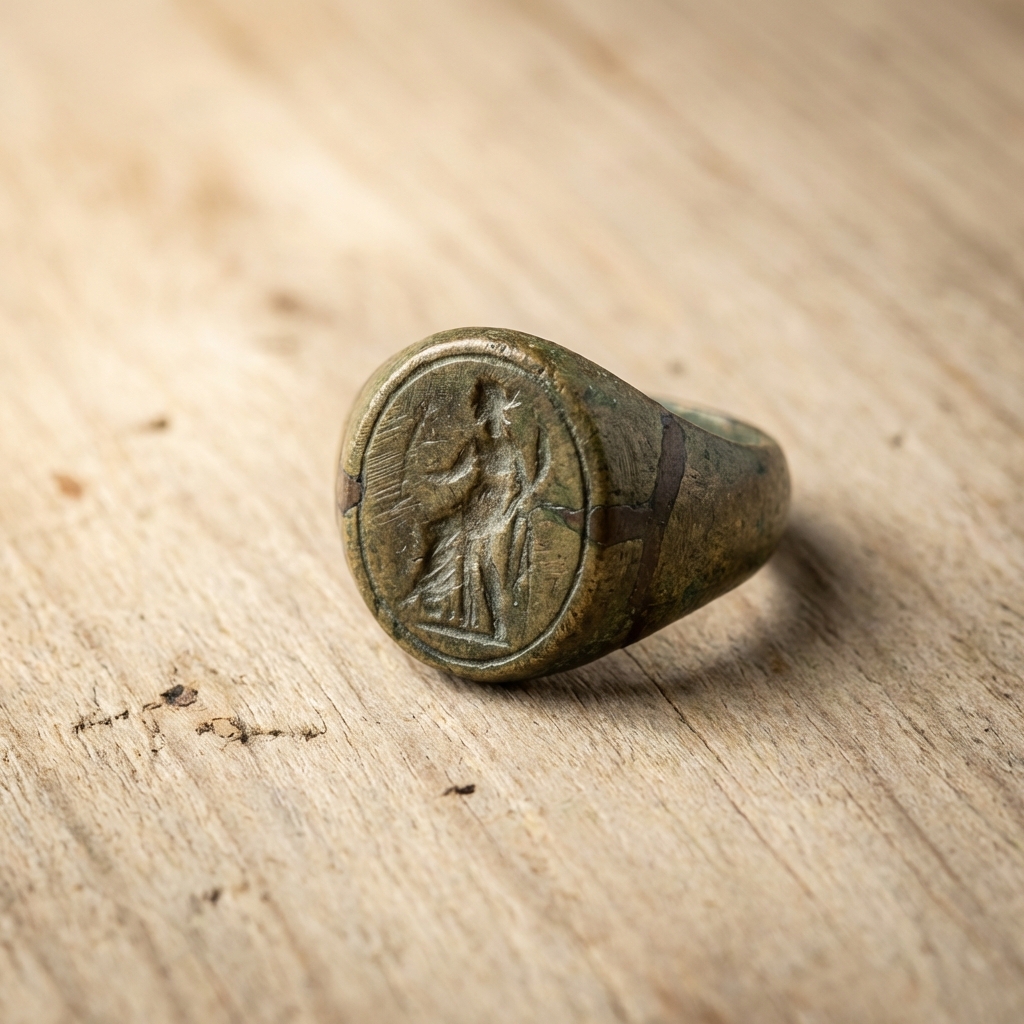
When a listing links a ring to female roles or to mythic figures, it is important to read the language carefully. Use of evocative terms such as valkyrja or shield-maiden should be accompanied by a short explanation: is the phrase offered as a literary association, a decorative motif, or an interpretive claim about the original wearer? Sellers who tie objects to social roles should provide provenance and condition notes so buyers can judge the basis for that claim Research report: export licensing and provenance, GOV.UK, Department for Culture, Media and Sport (DCMS).
Prioritise provenance and restoration notes when you consider ancient viking rings for sale. Provenance should outline prior ownership and any collection history that is known; restoration notes must say what was stabilised, what was repaired, and what was left untouched. In many cases an ancient ring will be described as appearing to be a given metal or stone unless scientific testing is provided. See our rings collection for examples of how items and descriptions are presented on a specialist site.
Recommended phrasing for sellers is concise and conditional: for example, describe a motif as "a decorative motif associated in some texts with valkyrja imagery" rather than asserting a literal occupational title. Treat claims like shield-maiden connections as interpretive unless the seller provides clear archaeological or inscriptional evidence to support them. For context, sellers can link to the store's medieval crusader rings collection when showing comparable cataloguing language.
Evaluating an ancient viking ring for sale: a practical checklist
Request high-quality, in-focus photos from multiple angles including inside and outside of the hoop, any intaglio or bezel details, and scale reference. Ask for precise measurements, weight and any readable hallmarks or maker marks. Photographs should show patina and surface texture so you can assess wear consistent with age.
Documentation to request: a written provenance summary, any previous sale or auction records, restoration notes that detail stabilisation or repairs, and any third-party letters that document attribution or dating. If material or gemstone identification is stated, prefer language such as "described as carnelian" or "appears to be agate" unless testing certificates are provided National Museum of Denmark summary.
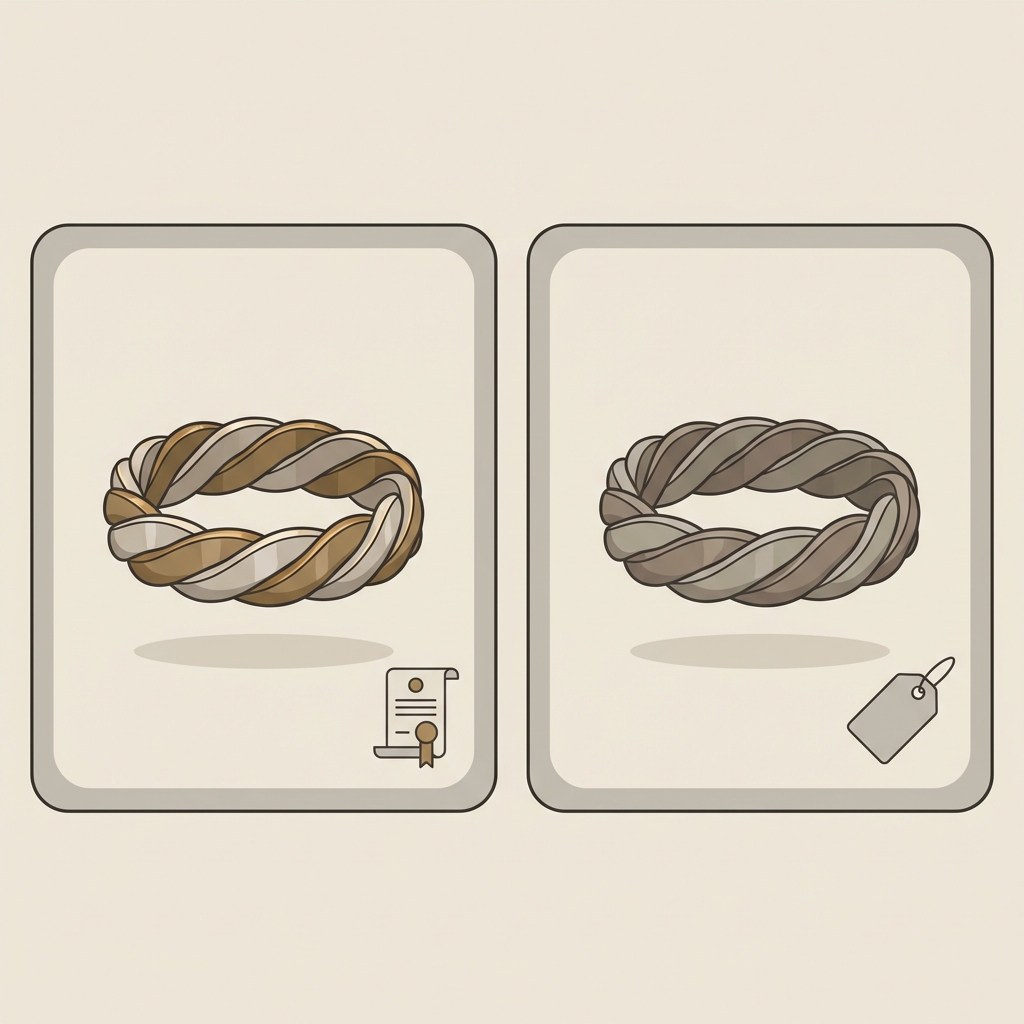
Condition and restoration red flags include modern tool marks near joins or bezels, re-cut intaglios that remove original surfaces, inconsistent patina on areas that should have uniform exposure, or undocumented modern soldering. Stabilised repairs are common and acceptable when disclosed; undocumented or hidden work should be treated with caution.
When you cannot obtain clear documentation, consider requesting a short independent assessment from a qualified conservator. For higher-value pieces, laboratory testing for metal composition or gemstone identification can reduce uncertainty, though such testing may require specialist handling. If you need help, use the contact page to request guidance.
Condition, dating and attribution: what sellers and buyers should know
Dating is often an estimate based on typology, find context if known, and comparison with securely dated examples. Sellers should present dating as an estimate tied to the listing description or referenced literature and avoid absolute phrasing. Where available, cite the reference literature that supports a period assignment.
Material and gemstone identifications should use conditional language unless testing is provided. For example, write "bezel contains a stone described as carnelian" or "metal appears to be bronze" rather than definitive statements. Restoration actions must be clearly described: list what was cleaned, what was stabilised, what was repaired, and any materials used in conservation.
Common mistakes and misleading claims to watch for
Typical misleading phrasing includes calling an object "Valkyrie owned" or labeling it a "shield-maiden ring" without qualification. Such terms evoke powerful images but can mislead buyers when not anchored to specific evidence. Ask sellers to clarify whether the term references a motif, a literary association, or an archaeological attribution British Museum research and collection pages.
Other pitfalls are accepting absolute authenticity claims without documentation, assuming grave goods automatically indicate a single social role, or treating marketing language as scholarship. Good listings present provenance, condition notes and any relevant restoration notes so the purchaser can evaluate the basis for claims.
Short case studies: how to read three typical listings or scenarios
Scenario A: a ring described as "shield-maiden associated" with vague provenance. Apply the checklist: ask for photos, measurements, a provenance summary, and any conservation notes. If the seller cannot provide documentation beyond a general statement, redraft the claim for clarity or decline the purchase.
Scenario B: a ring with clear provenance but a restored bezel. Confirm what work was done and whether the restoration is stabilising or reconstructive. Request close photographs of the restoration area and a written restoration note that lists materials and methods used. Restoration is acceptable when transparent, but undocumented work reduces confidence.
Scenario C: a ring advertised with mythic associations such as "Valkyrie motif". This can be an accurate description of iconography, but it should be phrased as a cultural association. Prefer seller language such as "motif has parallels in mythic imagery" and ask for references that show similar motifs in dated contexts Viking Art Styles in the East Midlands: Borre · Vikings in the East Midlands.
Mini glossary for sellers and buyers
Preferred terms and short definitions to reuse in listings: ancient ring (wearable antiquity), provenance (collection history), condition notes (observed wear, corrosion, patina), restoration notes (what was stabilised or repaired), patina (surface oxidation that indicates age), intaglio (carved gemstone), carnelian, agate, amethyst, iconography, motif.
Phrases to use when uncertain: appears to be, described as, estimated dating, provenance unclear, restoration stabilised. Phrases to avoid as blanket claims: guaranteed authenticity, museum grade, guaranteed investment, perfect condition. These avoidable terms create false expectations.
Conclusion: careful language, careful buying
Terms such as valkyrja and skjaldmær are rooted in literary and mythic traditions and should be used with explanation in commercial contexts. The Birka DNA and osteological result shows that some individuals buried with weapons were biologically female, but that evidence needs to be placed in regional and contextual perspective rather than read as proof of a single social class The Swedish History Museum press release.
For buyers of ancient viking rings for sale, the practical steps are consistent: prioritise provenance, request clear condition and restoration notes, and treat evocative labels as interpretive unless the listing provides supporting documentation.
Use period terms only with explanation: specify whether a label is literary, motif-based or an archaeological interpretation, and back claims with provenance and condition documentation.
The Birka genomic and osteological analysis confirmed one individual buried with weapons was biologically female, showing some women were buried with martial items; it does not by itself prove a widespread institutional class of female warriors.
Sellers can use these terms as literary or motif associations but should explain their basis and provide provenance and condition notes rather than presenting the label as a factual occupational title.
Ask for multiple high-quality photos, measurements, a provenance summary, and clear restoration and condition notes; request scientific testing or third-party assessments for high-value or contested attributions.
More from Aurora Antiqua
References
- Research report: export licensing and provenance, GOV.UK, Department for Culture, Media and Sport (DCMS)
- Viking Art Styles in the East Midlands: Borre · Vikings in the East Midlands
- Auction Terminology, Christie's
- Publication 561 (12/2025), Determining the Value of Donated Property, Internal Revenue Service (IRS), USA
- Report treasure, GOV.UK, UK Government
- Danefæ og andre løsfund, Slots- og Kulturstyrelsen (Danish Agency for Culture and Palaces)
- Vikingtid, Kulturhistorisk museum, Universitetet i Oslo
- The Viking Age, National Museum of Denmark, Copenhagen
- | Antiquity Journal
- Viking warrior women? Reassessing Birka chamber grave Bj.581, Cambridge University Press