


Looking for the real thing? Browse authentic Medieval & Crusader rings, each piece one of one, individually authenticated, with documented provenance. For the background, see the guide to medieval jewelry.
What an antique Viking ring is: definition and historical context
Brief definition and common uses (antique viking ring)
An antique viking ring, for the purposes of collectors and non-specialists, can be described as wearable metalwork or personal ornament that originates from Scandinavian or closely connected contexts and is dated by archaeological methods to the Viking Age. This working definition is intentionally cautious: dating is usually given as an estimated range derived from excavation context, typology and catalogue entries rather than a single year, and many pieces enter the market with condition notes and varying levels of documentation. To recognise an antique viking ring in a listing, focus first on construction, patina and any referenced find context.
Construction details, consistent patina and wear, clear provenance or documentation, and, for higher value items, non-destructive laboratory testing such as XRF combined with typological comparison.
Rings appear in the same archaeological contexts where other personal items are found, including individual graves, hoards, settlement middens and stray finds recorded by fieldwork and metal-detecting surveys. Museum collections catalogue rings alongside associated objects and context records, which is why comparing a listing to museum entries is a useful first step when assessing an item for purchase. For a broad overview of find contexts and cataloguing, museum collections provide accessible examples that illustrate how rings are discovered and recorded British Museum collection.
Historically, rings served several related functions. Many were personal ornaments and visible markers of identity or status. In some contexts, larger arm rings or penannular objects could function as storeable metal wealth, used in gift exchange or as pledges; these roles are best understood as complementary rather than mutually exclusive, and specific use is inferred from size, context and contemporary accounts when they exist. Where written sources exist, they are brief and must be read alongside archaeological evidence.

Materials and dating: what metals and dating estimates tell us
Typical metals used
Most Viking Age rings encountered in collections are made of silver or copper alloy, often described in catalogues as silver or bronze alloy, with gold used less frequently and typically reserved for high-status items or objects from special contexts. Visual identification can suggest the likely metal but is not definitive; museum records typically report the material category used in catalogue entries, which reflects both visual study and, in some cases, analytical confirmation National Museum of Denmark overview.
How dating is estimated and reported
Dating for rings in museum catalogues is normally presented as a range tied to typology and find context rather than a single year. Curators rely on typological sequences, associated grave goods or hoard assemblages and stratigraphic information to give an approximate century or half-century span. Visual dating from photos alone is limited; listings that reference museum comparanda or catalogue entry give a stronger basis for assessing a proposed date since those resources show how similar types are dated in secure contexts.
How Viking rings were made: key manufacturing techniques
Casting, hammering and forging
Common production methods included casting for larger or decorated elements, and hammering or forging for hoops and thinner rings. Cast blanks could be finished by filing and chasing, while forged hoops are frequently differentiated by even hammer marks and a consistent cross-section. Understanding which technique was used helps when evaluating a listing photo because seams, casting sprues or consistent hammer texture are visible clues to manufacture that can be compared with museum examples metalworking techniques study.
Twisted-wire construction and joining methods
Twisted-wire construction is characteristic of many Scandinavian arm rings and penannular types; the pattern results from twisting two or more wires together and securing the ends with a join or terminal. Small finger rings might use a simple hoop made from a hammered strip, or a cast bezel set into a hoop. Visible seams, solder lines and how the terminal is finished are telling details: a clean join consistent with period methods suggests traditional manufacture, while modern soldering or uniform machine marks can indicate later repair or reproduction. Photographs that show the ring interior and join area are particularly informative for these checks British Museum collection.
Common ring types and forms you will see in collections
Penannular rings, simple hoops and arm rings
Comparing a listed ring to museum examples of each form helps narrow likely type and approximate date exhibition catalogue.
Signet and intaglio rings
Small signet or intaglio rings are less common in rural finds but appear in higher-status graves and trade centres; they can contain engraved motifs or set stones such as carnelian, agate or amethyst. Where a bezel or intaglio is present, catalogue entries frequently discuss whether the stone is original or a later repair. Photographs that show the profile and bezel area allow comparison with securely dated museum pieces and help assess whether a stone could be intrusive or part of the original object Catalogue of the Engraved Gems and Finger-Rings in the Ashmolean Museum, II: Roman, BAR Publishing, via Fulcrum.
Decoration and motifs: knots, animals, runes and geometry
Common decorative themes
Decoration on Viking rings ranges from simple punched geometric patterns to complex interlace knotwork and stylised animal ornament, including serpents and the so called gripping beast motif. Runic inscriptions also occur, most often as short names or marks engraved on metal, and these features can provide clues to cultural connections and likely regional tastes. Stylistic descriptions in museum catalogues remain a primary reference for matching motifs and narrowing attributions Viking Art Styles in the East Midlands: Borre · Vikings in the East Midlands.

Regional and chronological shifts in style
Motifs change over time and space: knotwork and animal styles evolve in complexity from the earlier 8th century to later Viking Age forms, and runic texts vary in formula and letter shapes. This stylistic shift means that a well described motif can help narrow a date range or regional attribution, but attributions should be treated as probabilistic and ideally supported by provenance or scientific data. Exhibition catalogues and comparative plates are useful resources for readers wanting to follow motif chronologies across the 8th to 11th centuries exhibition catalogue.
Regional variation and cross-cultural influences
Scandinavian core types
In Scandinavian contexts, twisted-wire arm rings and penannular types are particularly characteristic, reflecting local workshop traditions and tastes that emphasise certain joins and terminal styles. Museum overviews distinguish regional variants within Norway, Sweden and Denmark, and these distinctions appear in published catalogues where fine details of twist pattern or terminal form are recorded for comparison National Museum of Denmark overview.
Influence from Anglo-Saxon, Baltic and eastern workshops
Finds from the British Isles and eastern Baltic regions sometimes show stylistic or technical influences from Anglo-Saxon or Baltic workshops, for instance different casting traditions or decorative treatments that reflect exchange and local adaptation. Because these influences overlap geographically and chronologically, workshop attributions remain probabilistic and are strengthened by close comparison with catalogue entries and securely dated assemblages rather than by stylistic claims alone British Museum collection.
Practical identification checklist for buyers
Visual construction checks
When evaluating a listing, begin with construction: look for twist patterns, seams, solder or filing marks, and examine the terminal and interior for consistent wear. Photographs that include close ups of joins, the inner face and any terminals increase confidence in visual assessment. If the listing cites a museum comparison or catalogue entry, use that as a structured starting point for checking similar features in the piece offered for sale exhibition catalogue.
Documentation and provenance checks
Documentation should include clear photos, measurements, condition notes and any provenance or collection history. For higher value items, ask for written specialist reports or laboratory results. A lack of measurements, vague condition statements or blurred images are common red flags and deserve further enquiry before purchase. Where a seller references a museum catalogue number, verify the citation and compare the illustrated example to the listing images Oval Brooch, Viking, 900 to 1000, Acc. 1982.323.1, The Metropolitan Museum of Art, New York.
Buyer worksheet to tick off visual and documentation checks
Use photos and measurements when available
Condition, patina and restoration notes: what to expect and ask about
Common wear and corrosion patterns
Rings recovered from burial or hoard contexts typically show pitting, burial corrosion, and polished contact areas where handling smoothed the surface. These patterns, when consistent across the object and interior, support an interpretation of long term age and use. Museum condition notes often describe such features in detail, and comparable language in a sale listing can be a useful signal that the seller has examined the object closely British Museum collection.
What restoration notes should say
Restoration notes should be explicit about what was stabilised, repaired or left untouched. A clear statement might specify that loose corrosion was stabilised, a modern fill was used and documented, or that no intrusive cleaning was performed. Vague or absent restoration notes are a concern; transparent descriptions enable buyers to assess how interventions affect identification and value without implying certainty about provenance or age exhibition catalogue.
Scientific and non-destructive tests explained for collectors
What XRF, metallography and isotopic analysis tell us
Non-destructive elemental scanning such as XRF provides a rapid indication of elemental composition and can flag modern alloys or unexpected elements, while metallography and isotopic analysis provide more detailed information about microstructure and possible provenancing. These tests are best considered part of a package including typology and provenance: a science result that contradicts visual expectations should prompt further investigation rather than immediate dismissal. For an accessible account of methods and limitations, heritage science literature outlines common protocols and interpretive boundaries Microstructure and chemical composition of Roman orichalcum coins emitted after, Scientific Reports, Springer.
When to request laboratory reports
Request laboratory reports or scans for high value or contested items, or when construction and patina leave significant doubt. A written XRF report or third-party laboratory summary helps build a case for authenticity or later alteration, but remember that testing rarely produces an absolute answer on its own and should be used alongside documented provenance and museum comparisons Hallmarking, The Assay Office Birmingham.
How to read provenance and catalogue entries
Types of provenance notes
Provenance notes range from detailed collection history and prior ownership records to brief statements of acquisition. Clear provenance includes dates, prior owners or accession numbers; vague language such as unspecified long possession is less helpful. Listings that include provenance documents or verification letters provide stronger context, but those documents should be examined for completeness and comparability with known museum records exhibition catalogue.
What to look for in museum catalogue references
Museum catalogue entries often give typology, material assessment and a date range, plus find context when known. Use catalogue photographs or plates to compare motif styles, terminal forms and construction details. If a seller cites a catalogue, follow the reference and compare the images and description; matching a motif or terminal form is useful but should be combined with material and condition evidence for a robust assessment British Museum collection.
Typical errors, pitfalls and red flags to avoid
Common misidentifications
A frequent error is treating modern reproductions with artificially aged surfaces as genuine finds, especially when buyers rely on patina alone. Modern tooling marks, uniform filing or machine-made finishes are telling signs of recent manufacture. Be cautious when a listing emphasises broad stylistic claims but lacks close-up images of joins, interior faces or terminals that would allow a construction check; such omissions are common in problematic attributions heritage science methods paper.
Suspicious listing practices
Red flags include missing measurements, blurry photos, vague condition notes and provenance described in non-specific terms. Sellers who decline reasonable requests for additional images or refuse to provide measurements create legitimate cause for caution. When in doubt, ask for close-up photographs of joins, the interior and any stones or bezels, and consider delaying purchase until a specialist opinion or lab report can be obtained exhibition catalogue.
Practical scenarios: evaluating three typical listing types
Small signet listed with minimal provenance
Start by requesting high-resolution photos of the bezel, interior and any marks. Compare the bezel form and mounting to illustrated signet examples in museum catalogues; if the stone or intaglio appears intrusive or poorly fitted, that suggests a later addition. If construction checks are inconclusive and the asking price is significant, request a written specialist opinion or an XRF scan to clarify composition Catalogue of the Engraved Gems and Finger-Rings in the Ashmolean Museum, II: Roman, BAR Publishing, via Fulcrum.
Twisted-wire arm ring offered with museum citation
Verify the museum citation and compare twist pattern, terminal form and reported weight. Twisted-wire patterns can be distinctive to workshops, but attribution should be treated as probable, not certain. Ask for detailed photos of the join and any catalogue number referenced, and consider a third-party report if the provenance chain is incomplete or the price suggests high collector interest National Museum of Denmark overview.
Hoop ring with visible tooling marks
If a hoop shows clear internal toolmarks, seams or filing consistent with historic manufacture that matches museum parallels, that supports the listing claim. Also compare the surface patina and contact-polish patterns to those described in museum condition notes. If any modern machining is visible, treat the listing cautiously and ask for a materials scan or specialist comment before deciding British Museum collection.
How museums and recent studies shape identification practice
Role of museum catalogues and exhibitions

Museum catalogues and exhibition plates are primary comparative resources for typology, dating and motifs. They provide catalogued examples with context notes and typical date ranges that practitioners and buyers use to check proposed attributions. Comparing a listing to multiple museum records reduces the chance of a single misattribution and helps place a ring within a broader typological sequence exhibition catalogue.
How heritage science papers inform testing protocols
Recent heritage science studies outline standard non-destructive protocols and interpretive cautions, showing how XRF, metallography and isotope techniques contribute to a balanced identification approach. These studies emphasise that laboratory tests are most powerful when combined with clear provenance and typological comparison, and they also flag ongoing research needs such as better workshop-level provenancing and standardized condition reporting Sources of early Islamic silver: lead isotope analysis of dirhams, Antiquity (Antiquity Publications /).
Summary and responsible next steps for collectors
Quick takeaways
Most Viking rings are silver or copper alloy, made by casting, forging or twisted-wire techniques, and decorated with knotwork, animal ornament and occasional runic marks. When assessing a listing, prioritise clear photographs, measurements and explicit condition and restoration notes, then compare the object to museum catalogue examples for typology and dating guidance exhibition catalogue.
Request third-party reports, XRF scans or specialist commentary for high-value items or when construction and patina raise doubts. Use museum catalogues and heritage science literature as comparative anchors, and treat attributions as probabilistic unless supported by strong provenance or testing. Responsible buying emphasises transparency and documentation rather than certainty, and clear condition and provenance statements are the single most useful features to request from a seller The Past Polluted: A Pigovian Approach to the Black Market in Antiquities, International Journal of Cultural.
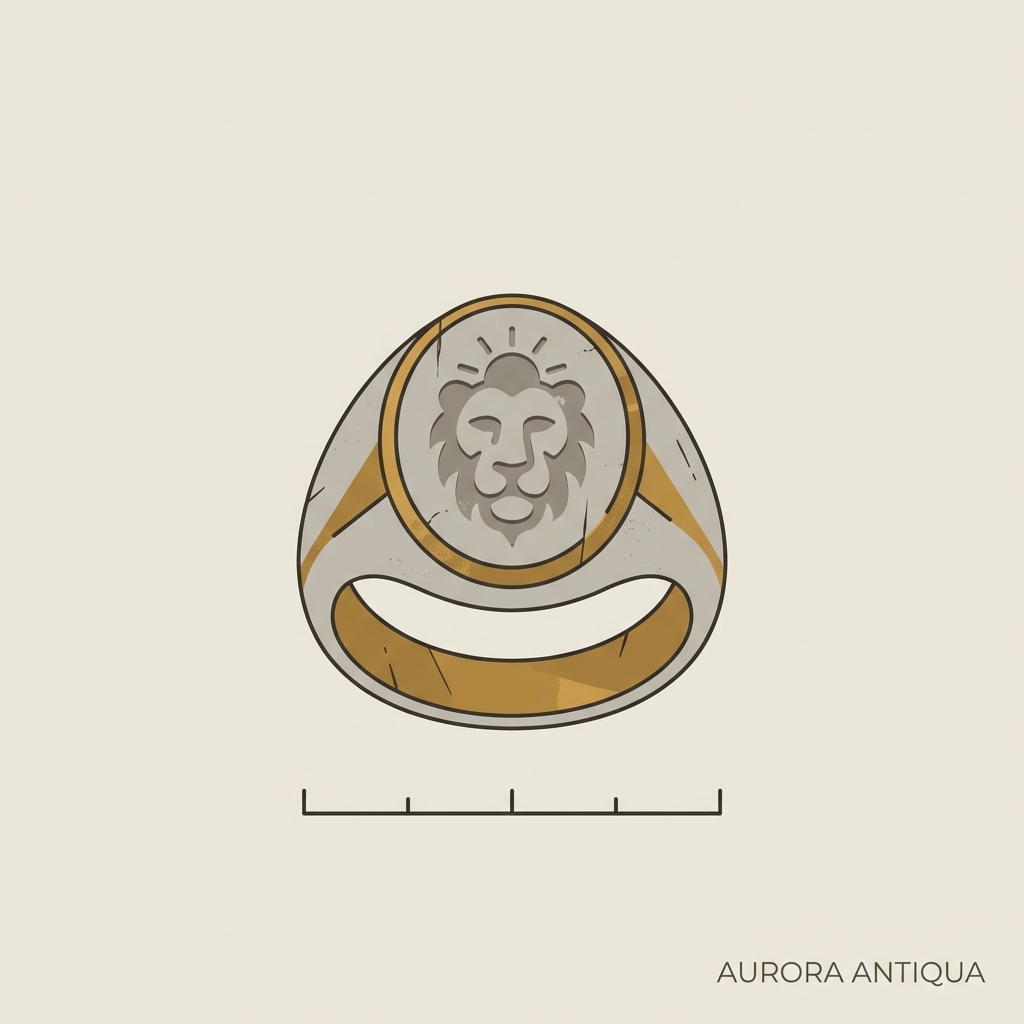
Look for construction details like twisted-wire patterns or period joins, consistent patina and wear, clear measurements and provenance. For valuable items, request XRF or a third-party report to support visual evidence.
Runic marks can be helpful but are not definitive alone; combine runic evidence with construction, patina and provenance and seek specialist input if the claim is important to purchase decisions.
They should state precisely what was stabilised, any repairs made, and whether cleaning or intrusive work was done, so buyers can assess how interventions affect identification.
More from Aurora Antiqua
References
- Catalogue of the Engraved Gems and Finger-Rings in the Ashmolean Museum, II: Roman, BAR Publishing, via Fulcrum
- Viking Art Styles in the East Midlands: Borre · Vikings in the East Midlands
- Oval Brooch, Viking, 900 to 1000, Acc. 1982.323.1, The Metropolitan Museum of Art, New York
- Microstructure and chemical composition of Roman orichalcum coins emitted after, Scientific Reports, Springer
- Hallmarking, The Assay Office Birmingham
- Sources of early Islamic silver: lead isotope analysis of dirhams, Antiquity (Antiquity Publications /)
- The Past Polluted: A Pigovian Approach to the Black Market in Antiquities, International Journal of Cultural
- Runer og runemagi, vikingernes skriftsprog, Nationalmuseet, Copenhagen
- Silver Arm-Ring (NLM-1B89B2) · Vikings in the East Midlands, Centre for the Study