


Looking for the real thing? Browse our Medieval ring collection, each piece one of one, individually authenticated, with documented provenance. For the background, see the guide to medieval jewelry.
What archaeologists mean by old viking jewelry: terms, time and scope
The phrase old viking jewelry refers to metalwork and personal ornaments dated broadly to the Viking Age, c. 8th to 11th centuries, found in contexts such as hoards, graves and stray finds; understanding that time frame helps set expectations about form and function when you read a listing for an ancient ring or mount. The Portable Antiquities Scheme and related hoard records provide a practical overview of the kinds of deposits that shape those expectations and why scholars treat hoards differently from single finds Portable Antiquities Scheme hoards overview.
Typical items described under old viking jewelry include cut-up silver fragments often called hack-silver, coinage used as bullion, ingots or weights, bands and finger-rings, and occasional gold mounts or set gemstones used on clothing or high-status jewelry. These different object types carry different archaeological signatures: cut silver and coins are often interpreted as a medium of exchange, while gold finds more frequently appear in burial or display contexts National Museum of Denmark overview of the Viking Age.
Follow @auroraantiqua for provenance and condition insights
Browse curated listings that include condition notes and provenance descriptions to see how specialists present old pieces.
When researchers summarise broad patterns they typically note that silver is archaeologically dominant in many hoards, while gold tends to appear in smaller numbers and in elite or decorative contexts; synthesis work by museum and academic teams frames this distinction as one of use rather than absolute value Antiquity review on silver, gold and social value.
For collectors this means the label old viking jewelry can cover both functional bullion items and high-status ornaments, so the same phrase can imply different things for dating, condition and intended use. When a listing groups items as hoard material, expect fragments and weight-based descriptions; when it presents single rings or mounts, expect discussion of symbolism and wear consistent with age.

In many Viking-age contexts silver functioned primarily as a bullion-currency measured by weight rather than as face-value coin circulation; this practice helps explain why large quantities of cut silver show up in hoards across northern Europe Portable Antiquities Scheme hoards overview.
How silver worked as money and metal in Viking societies
Hack-silver is the technical term for cut or fragmented silver items and coins that circulated by weight; archaeologists interpret widely distributed hack-silver finds as evidence that people used silver in a flexible, divisible way for payments, savings and trade rather than relying on intact coins alone The silver hoards of the Vikings, Nationalmuseet / National Museum of Denmark.
Archaeological evidence indicates Vikings used silver more widely as a medium of exchange and store of value in many regions, while gold tended to be used selectively for display and elite signaling; the two metals served complementary roles that varied by place and period.
Another important signal in the distribution of silver is the presence of Islamic dirhams in many northern hoards, which demonstrates long-distance flows of silver into Viking-age Britain, Ireland and Scandinavia and helps explain the sheer quantity of silver in some deposits The silver hoard from Terslev, Nationalmuseet / National Museum of Denmark.
Weight standards and local conventions mattered: communities could accept cut pieces of silver in standard ranges, and regional practices shaped how people judged value during exchange. For collectors, descriptions that mention weight, accepted cut sizes or the presence of dirhams help signal a metal that circulated as bullion rather than an ornamental piece.
Gold in Viking contexts: display, status and selective use
Gold tends to appear in the archaeological record as elements of high-status display rather than in large quantities across hoards; find-patterns and exhibition catalogues commonly associate gold mounts, set gemstones and ornate personal items with elite burials or prestige contexts British Museum Vikings collection overview.
Decorative uses of gold include small mounts for clothing, filigree settings, inlaid gemstones and occasional jewelry pieces that would have been visible markers of status. Because these items are fewer in number, they are archaeologically less prominent in hoard assemblages even though they conveyed social meaning in life and death Antiquity review on silver, gold and social value.
Regional variation matters: some inland Scandinavian burials show proportionally more gold objects, while coastal hoards in the British Isles and Ireland remain dominated by silver. That contrast suggests different social roles and networks rather than a simple preference for one metal over another University of York research on Viking silver hoards.
Archaeological evidence: hoard distributions, museum collections and research syntheses
Hoard databases and portable finds recording make the numerical dominance of silver visible: many published hoards contain far larger quantities of silver coins, hacksilver and ingots than gold, and those patterns shape interpretations about everyday exchange and savings practices Portable Antiquities Scheme hoards overview.
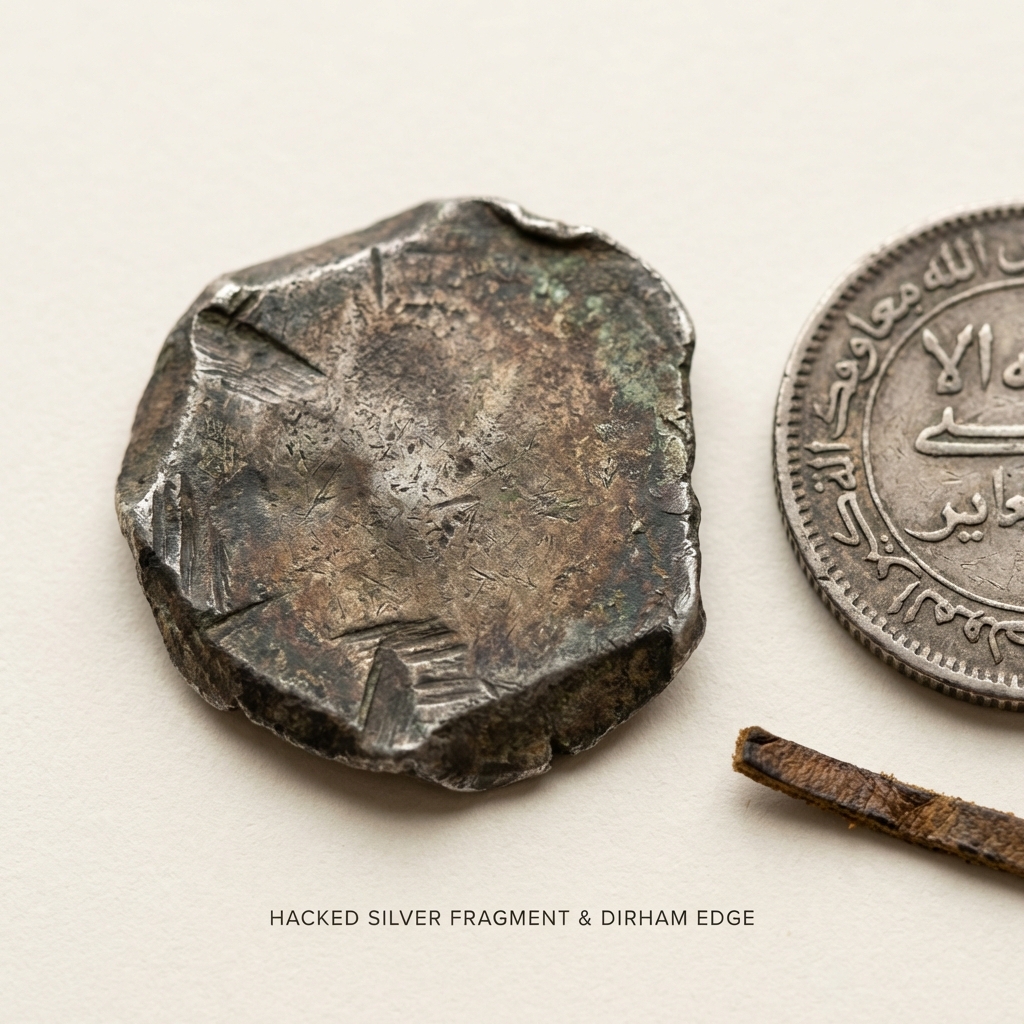
Museum displays and collection overviews help translate those find-patterns for the public, showing both the raw hack-silver pieces and the rarer gold ornaments in curated context; exhibition narratives often emphasise how function and status produce different archaeological signals British Museum Vikings collection overview.
Recent syntheses bring together hoard evidence, numismatic work and burial studies to caution against simple binaries: silver and gold fulfilled complementary roles, and unresolved questions remain about regional weight-standards and symbolic practices that need more compositional and contextual study Antiquity review on silver, gold and social value.
How to read an old viking jewelry listing: provenance, condition and restoration notes
When you evaluate a listing for old viking jewelry, start by checking how the seller describes provenance; a useful entry will separate collection history or prior ownership notes from absolute authenticity claims and will reference any documentation or verification letters if available. Museum and collection descriptions illustrate how provenance language should be framed for archaeological material British Museum Vikings collection overview.
Condition statements should be precise: look for words like stabilised, repaired or left untouched, and expect honest notes about wear consistent with age, patina, and any restoration work performed. Clear restoration notes help you understand whether visible repairs are historic or modern and how they affect interpretation of the piece.

Practical checklist items to expect on a trustworthy listing include high-resolution images showing obverse and reverse, clear measurements, metal described using conditional language such as appears to be or described as, documentation or collection history where available, and transparent restoration notes that state what was done and why. Treat claims that lack supporting documentation as provisional until you can request verification.
Common mistakes and pitfalls when interpreting metal and significance
One common error is to read hack-silver as modern damage or scrap; contextual information, careful recording, and weight-based indicators usually help differentiate purposeful cutting for bullion from later breaking or corrosion Portable Antiquities Scheme hoards overview.
Another frequent mistake is assuming that gold automatically functioned as circulating currency. In many Viking contexts gold seems to have operated more as a visible status material, especially in burials and elite assemblages, rather than as a routine medium of exchange Antiquity review on silver, gold and social value.
A further pitfall is overstating provenance or precise dating from photographs alone. Photographic evidence can be compelling for condition and form, but confident attributions about collection history, workshop attribution or period should be linked to documentation or specialist reports.
Practical examples and short case studies: reading real finds
Consider a coastal hoard that contains many hacked silver fragments and several Islamic dirhams; archaeologists read that pattern as evidence of bullion use and long-distance silver flows rather than purely local wealth display, and dirham presence is a strong indicator of wider trade connections Sources of early Islamic silver: lead isotope analysis of dirhams, Antiquity (Antiquity Publications /). See also related reporting.
An inland Scandinavian burial that contains multiple gold ornaments and decorative mounts is typically interpreted as a high-status assemblage where gold served display and symbolic functions; comparison with contemporary hoards clarifies that the same social groups often used different media for different purposes British Museum Vikings collection overview.
a short checklist to ask sellers about provenance and condition
use when requesting documentation
For a single ring listing, ask for condition photographs from multiple angles, any available documentation of prior ownership, an explicit restoration note, and a clear metal description that uses conditional phrasing; these steps help reduce ambiguity when a solitary artifact could be either a curated antiquity or a later object in antiquarian style About us, International Association of Dealers in Ancient Art.
Conclusion: balanced takeaways and where to read more
In short, the archaeological record shows that silver was the dominant medium in many Viking-age hoards and everyday exchange by weight, while gold appears selectively in high-status and display contexts; both metals are part of a shared economic and social system whose details vary by region and period National Museum of Denmark overview of the Viking Age.
For further reading consult hoard databases, museum collection pages and recent synthesis articles that bring together burial and numismatic evidence; these sources explain the open questions scholars still discuss, such as the specifics of weight-standards and symbolic practice Antiquity review on silver, gold and social value.

Responsible curators and sellers present provenance, condition and restoration notes clearly and avoid absolute authenticity claims; when those elements are transparent, collectors can make informed decisions about acquisition and stewardship.
Silver is far more common in many Viking-age hoards and hoard records, where cut silver, coins and ingots appear in larger quantities; gold is less frequent and more often associated with elite display.
Not necessarily; gold in Viking contexts is frequently interpreted as a marker of status or display rather than routine circulating currency, so context and associated finds are critical for interpretation.
Request clear photographs, measurements, conditional metal descriptions, documented provenance or collection history if available, and explicit restoration notes describing any stabilisation or repairs.
More from Aurora Antiqua
References
- The silver hoards of the Vikings, Nationalmuseet / National Museum of Denmark
- The silver hoard from Terslev, Nationalmuseet / National Museum of Denmark
- Sources of early Islamic silver: lead isotope analysis of dirhams, Antiquity (Antiquity Publications /)
- Silver recycling in the Viking Age: Theoretical and analytical approaches, PMC, Archaeometry (Wiley)
- VIKING HOARD DECLARED TREASURE ON THE ISLE OF MAN, Manx National Heritage
- Guldrummet, Historiska museet / Statens historiska museer, Stockholm
- The Viking Gold Treasure from Hiddensee, Staatliche Museen zu Berlin, Museum für Vor- und Frühgeschichte
- About us, International Association of Dealers in Ancient Art
- Historical knowledge, National Museum of Denmark, Copenhagen
- | Antiquity Journal