


Looking for the real thing? Browse our Medieval ring collection — each piece one-of-one, individually authenticated, with provenance.
What is old viking jewelry? Definition and historical context
The phrase old viking jewelry refers to personal metalwork and bead assemblages produced and used in Scandinavia and the British Isles during roughly the 8th to the 11th centuries, often recovered in hoards, burials and settlement deposits. This material range includes arm-rings, brooches, rings, pendants and strings of beads that appear in museum typologies and public collection overviews and which help set the geographical and chronological scope for collectors and researchers, especially when compared with catalogued parallels in national collections like the National Museum of Denmark and the British Museum. National Museum of Denmark
Typical find contexts are hoards, graves and domestic deposits; these contexts provide the strongest evidence for relative dating and original use because they preserve associations between objects that isolated surface finds often lack. Where possible, collectors should prefer items with clear findspot information or published hoard reports, since context can change how a piece is interpreted and dated. British Museum

Condition varies: many pieces show wear consistent with age such as smoothing of details, surface corrosion and patina. For collectors those visible traits are important signals but should be explained in condition notes and supported by restoration notes when any stabilisation or repair has been carried out. When an object is offered without documentation of its condition history and find context, treat claims about dating or use with caution.
Common types of old viking jewelry: arm-rings, brooches, rings, pendants and beads
Arm-rings and bracelets
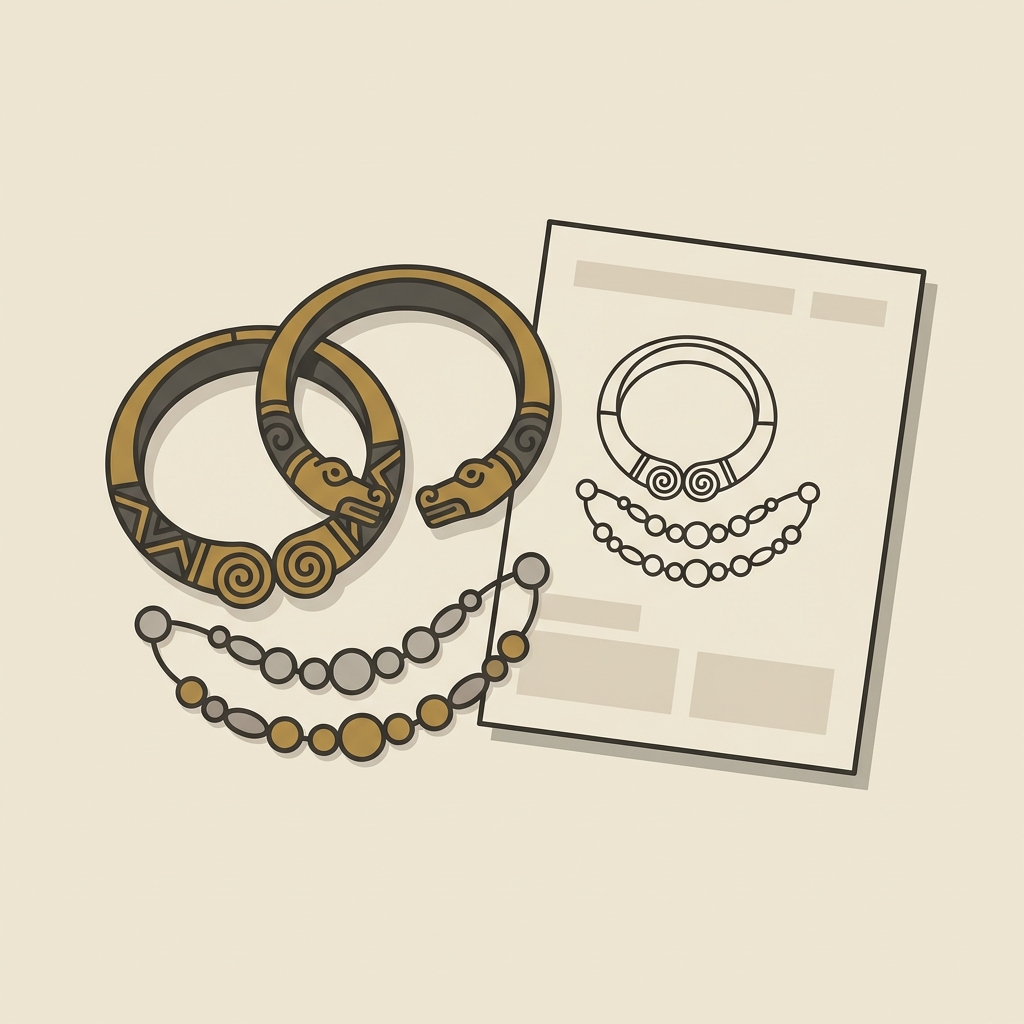
Arm-rings and bracelets were common personal ornaments and sometimes served as portable wealth, paid as rewards or deposited in hoards. They range from simple twisted-wire types to cast bands with terminals and decorative panels; silver and copper-alloy examples are widespread in museum collections and hoard assemblages. When present in a hoard, arm-rings can also appear cut or used as hacksilver rather than intact prestige pieces. British Museum
Brooches: penannular and disc types
Brooches are among the most diagnostic items for dating and regional attribution. Penannular brooches have a gap and pin and are often associated with dress fastening, while disc brooches are flat and decorated, appearing in a wide range of styles across Scandinavia and the British Isles. The difference in form and decorative programme often links a brooch to a narrower date range or local workshop tradition, making brooch type a core attribute in typological comparison. National Museum of Denmark
Rings and finger-rings
Finger-rings range from plain hoops to signet-style rings with simple intaglio or impressed motifs. Silver rings are common; gold rings occur more rarely and are typically associated with higher-status contexts. Rings may show repair or alteration through time and are often discovered in grave contexts or as single surface finds, which complicates confident dating without comparative parallels. British Museum
Pendants, amulets and bead assemblages
Pendants include small crosses, amuletic forms and zoomorphic motifs. Bead strings of glass, amber and faience are frequent in assemblages and point to extensive trade networks, with imported beads often found alongside locally-made metal pendants. Bead assemblages may survive as large numbers in hoards or as part of burial goods, and their presence can indicate trade connections and dated fashions within wider assemblages. National Museums Scotland
Materials and techniques in old viking jewelry
Silver and copper-alloys are the dominant metals for everyday and prestige items, with gold used more rarely for elite pieces and for inlay or small decorative elements. Silver appears not only as worked objects but also as hacksilver and ingots, reflecting a bullion economy where metal functioned as both ornament and portable wealth. British Museum
Ask for three simple checks before purchase
Use these as a minimum request
Gem materials include glass, amber and occasionally imported stones such as carnelian or rock crystal in high-status mounts. Organic materials rarely survive, but where preserved they can give valuable context for use and dating. Beads were often produced locally from glass or imported as finished items, contributing to the visual and economic complexity of many assemblages. The Metropolitan Museum of Art
Manufacturing techniques recorded in museum catalogues and technical studies include lost-wax and open-mould casting, cut-and-file finishing, basic granulation and inlay work. These techniques leave characteristic traces such as casting seams, tool marks from filing and evidence of granulation under magnification. Observing these marks in clear photographs and asking for technical reports where needed helps collectors recognise likely manufacturing methods without assuming provenance or workshop attribution. Cambridge synthesis

Motifs, iconography and how they help date and attribute old viking jewelry
Common motifs: animal interlace, spirals and runic or Christian symbols
Decorative programmes frequently include animal-interlace, geometric spirals and later mixed Christian or insular symbols; these motifs change in popularity and execution over time and across regions. Noting the motif type, how it is executed and how it sits on a given object can provide relative dating clues when compared with well-dated parallels. The Metropolitan Museum of Art
How motifs combine with typology to narrow dating and region
Motifs are most useful when combined with typology and manufacturing traits. For example, a disc brooch with late Christian iconography and a specific construction method can be narrowed to a later phase of the Viking Age, while a simple geometric pattern on a penannular brooch might point to an earlier or different regional tradition. Motif-based identifications should therefore be cross-checked with typological comparison and, when possible, technical analysis. Cambridge synthesis
How experts identify and date old viking jewelry
Best practice for identification and dating combines contextual evidence such as hoard association, findspot and stratigraphy with typological comparison to museum-held parallels. Analysts and curators rely on hoard reports and collection catalogues to place objects within a relative chronology, and collectors should use the same comparative approach when evaluating a listing. National Museums Scotland
Check provenance and condition before you buy at @auroraantiqua
Download a printable checklist to help document findspot, condition and any available lab reports before you buy; clear documentation reduces uncertainty and supports further research.
Scientific and non-destructive analyses are useful where available: portable XRF can indicate alloy composition and help distinguish silver-rich objects from copper-alloy items, while metallographic examinations offer deeper insights when performed by accredited labs. Collectors should request reports from independent laboratories or third-party examiners rather than relying solely on seller descriptions. Portable Antiquities Scheme
Isolated surface finds lack the secure contextual anchors that hoards and graves provide, which means dating such items is inherently less certain. When a listing describes a single piece without findspot information or scientific testing, treat typological attributions as provisional and seek additional documentation or comparative images from national collections. British Museum
Practical guidance for collectors buying old viking jewelry
What to look for in listings and photos
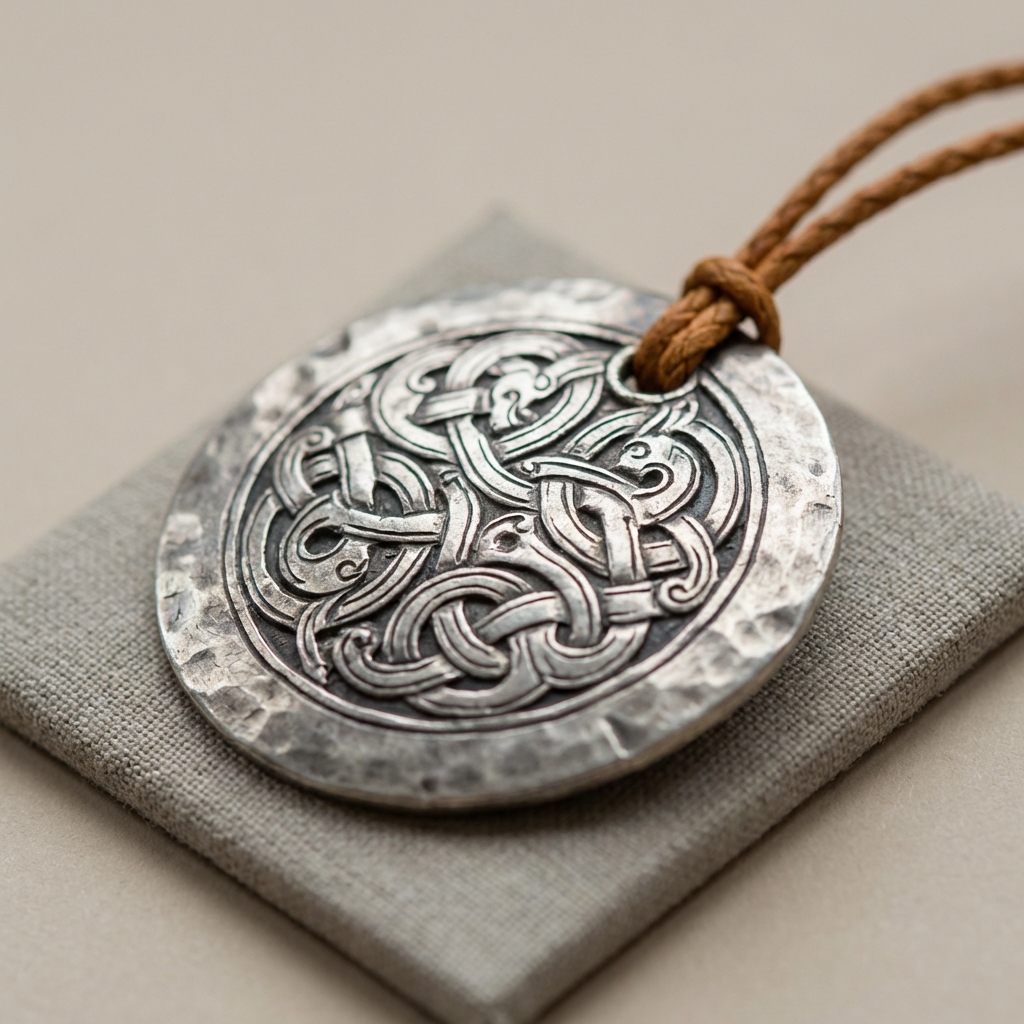
Ask for high-resolution images that show both sides, details of terminals and mounts, and areas where metal joins or repairs might be visible. Look for consistent surface characteristics such as patina and micro-corrosion that match the stated age, and request scale photos to verify size and weight claims. If photographs show obvious modern tool marks or inconsistent metal joins, ask for clarification and a documented restoration history. Portable Antiquities Scheme
Essential provenance, condition and restoration notes to request
Require explicit provenance information and condition notes: a findspot, previous collection history or publication reference increases the confidence in a listing. Restoration notes should specify what was stabilised, repaired or cleaned; even careful conservation changes the appearance of a piece and should be documented. When a seller provides third-party reports, check the issuing body and whether tests such as XRF were performed and reported in full. National Museum of Denmark
Where to cross-check parallels and records
Use museum collection catalogues and PAS-style databases to find close parallels and support or challenge a proposed date or attribution. A published hoard report or museum object entry that matches your piece in form and decoration can significantly strengthen an attribution, although parallels do not replace provenance or scientific testing. National Museums Scotland
Typical mistakes, fakes and common pitfalls with old viking jewelry
A common error is relying on motifs alone to assign a date or origin; motifs are informative but not definitive and are strongest when used with typology and technical traits. Other frequent problems include vague findspot claims, unreported modern repairs and sellers who provide incomplete restoration notes. Portable Antiquities Scheme
Modern repairs, recasting or added mounts can significantly alter how a piece reads; explicit restoration notes that describe the work performed allow buyers to judge how much of the original fabric remains. Where restoration is undocumented, ask for condition reports and, if necessary, independent assessment. British Museum
A collector should request clear findspot or provenance information, detailed condition and restoration notes, close photographs, and any available non-destructive scientific reports such as XRF before deciding.
Red flags include listings with no findspot, no condition notes, or claims of precise dating without comparative references; such gaps should prompt further enquiry and, where appropriate, refusal to buy until documentation or testing is provided. Portable Antiquities Scheme
Examples and museum parallels: hoards and notable finds
The Galloway Hoard is a recent and instructive example of a complex assemblage that includes jewellery, ecclesiastical objects and imported beads; published hoard reports and museum catalogues allow collectors to compare specific forms and decorative motifs with objects on the market. Studying hoard catalogues helps illustrate how objects that appear similar can have quite different dates or origins when considered in their original association. National Museums Scotland
National collections and online museum catalogues remain the most accessible starting point for finding parallels. When a seller cites a museum object as a close match, verify the comparison yourself in the museum catalogue entry and check whether the museum's dating or contextual notes match the seller's claims. Parallels help build confidence but do not replace provenance or scientific checks. British Museum
Conclusion and a practical checklist for buying old viking jewelry
Brief checklist: request findspot or provenance documentation, clear condition and restoration notes, comparative references to museum catalogues, and third-party scientific reports such as XRF where available. These steps reduce uncertainty and help you make an informed decision when considering an ancient object for your collection. Portable Antiquities Scheme
Start your research with national museum typologies and PAS-style databases, and treat sellers who provide transparent documentation and condition notes as more reliable sources for comparative study. Aurora Antiqua presents curated ancient rings and small artefacts with condition notes and provenance style documentation when available to help collectors understand what they are buying.
Look for clear findspot or hoard provenance, comparable museum parallels in typology, consistent surface patina and, where possible, independent scientific reports such as XRF; isolated finds without documentation should be treated as provisional.
Request non-destructive alloy analysis like portable XRF and any available conservation or metallography reports; also ask for detailed condition and restoration notes and the chain of ownership.
Yes, bead materials such as glass, amber and faience often reflect trade networks and imported components, but their presence should be interpreted alongside context and typology.
References
- https://en.natmus.dk/historical-knowledge/denmark/prehistoric-period-until-1050-ad/the-viking-age/
- https://www.britishmuseum.org/collection/galleries/vikings
- https://auroraantiqua.com/products/authentic-medieval-crusader-era-bronze-cross-orbis-10th-14th-century-ce-christian-pendant-medieval-cross-pendant
- https://auroraantiqua.com/collections/medieval-pendants
- https://www.nms.ac.uk/explore-our-collections/stories/scottish-history-and-archaeology/galloway-hoard/
- https://pmc.ncbi.nlm.nih.gov/articles/PMC9292865/
- https://www.metmuseum.org/toah/hd/viki/hd_viki.htm
- https://www.cambridge.org/core/books/viking-age/metalwork-typology-and-technology/EXAMPLE
- https://journals.socantscot.org/index.php/psas/article/download/9442/9409
- https://finds.org.uk/learning/vikings/
- https://auroraantiqua.com/
- https://auroraantiqua.com/collections/rings
- https://onlinelibrary.wiley.com/doi/10.1111/arcm.70031