


Looking for the real thing? Browse genuine crusader rings for sale, each piece one of one, individually authenticated, with documented provenance. For the background, see the guide to medieval jewelry.
What we mean by old viking jewelry: definition and sources
Terminology and why wording matters
When a seller or catalogue uses the term old viking jewelry, it functions as an umbrella phrase that links archaeological attribution to an object offered for sale. Use such wording as a descriptive tag rather than a definitive statement: an item described as old viking jewelry may be archaeologically attributed, appears to be from a historical period, or is styled after pieces recorded in finds. Read listings with conditional language in mind and ask for the documentation and dating basis when the listing matters to your collecting goals.
At the level of practice, the phrase also shapes expectations about materials, workmanship and the kinds of wear you might see. Collectors should expect to find patina, uneven surfaces and repairs described in condition notes. Where possible, rely on documented collection history rather than advertising labels alone.
Request detailed condition notes, collection history or provenance, multiple unretouched photos with scale, and any restoration documentation; if attribution is critical, ask about testing or third-party reports.
Primary sources: graves, hoards, settlement finds, and written accounts
Knowledge about female dress and jewelry in the Viking-age arises from a combination of contexts rather than a single definitive source. Burial assemblages often preserve personal items that were interred with a person, hoards can show patterns of deposition and reuse, and settlement finds reveal everyday wear and breakage. Written accounts and later antiquarian observations can add context but tend to be uneven and regionally biased. Treat each type of evidence with critical attention to context and to the limits that the find context places on interpretation.
For a collector reading a listing, this means asking whether an item comes from a documented grave, a hoard with record of discovery, or a collection with published history. Language that simply asserts origin without collection history or documentation should prompt further questions.
Core components of female Viking dress: the jewelry that appears in the record
Brooches and fasteners
Brooches and paired fasteners are often the most visually prominent elements associated with women in the archaeological record. On garments they served to hold cloak edges and tunics in place, and surviving examples range in scale and form. When evaluating a brooch listed as a period piece, look for evidence of mounting points, wear consistent with age along hinge or pin areas, and the kind of fastening style described in condition notes. Sellers who include clear photos of joins and backside elements allow a better assessment of function and repair history.
Variation in brooch types can reflect regional dress practices, thread or cloth thickness, and whether the piece was a daily item or a more formal adornment. Avoid relying on single typological labels in a listing without accompanying measurements and photographs of both front and reverse.

Beads, necklaces and stringed assemblages
Layered bead necklaces and stringed assemblages are commonly noted in descriptions of female dress and are frequently recorded as fragments in graves and settlements. Beads can be glass, metal, or organic materials that survive differently depending on soil chemistry and burial conditions. In listings, beadwork often appears as loose beads, partial strands, or as impressions that suggest former arrangements. Photographs that show beads on a neutral background with scale and a descriptive note about context help buyers understand completeness and potential reconstruction challenges.
Collectors should expect that many bead assemblages are fragmentary. When necklace reconstructions are offered, ask for the basis of the reconstruction, whether any modern stringing has been done, and what was done to stabilize fragile beads as part of restoration notes. For background on common bead finds and glass beads in graves see related reports.
Rings, arm-rings and pendants
Smaller personal items such as rings, arm-rings and simple pendants functioned as personal tokens and practical adornments. Arm-rings in particular can show evidence of resizing, cutting, or repeated bending, which are meaningful for understanding use history. Intaglio style decorations and bezel settings can indicate where a gemstone or glass inlay once sat, and those settings are often described carefully in listings using terms such as bezel or hoop.
When assessing these items, look for clear condition notes that explain visible repairs, missing inlays, or replaced mounts. Small items can be reworked across generations, so a piece described as old viking jewelry may include later adjustments or repairs that are part of its documented life.
Materials, techniques and motifs: what the objects can tell us
Common materials and how they behave over time
Metals, glass and organic components each age differently and leave distinct traces that collectors can learn to read. Copper alloys develop patina and can flake or show green corrosion products in places where burial conditions were aggressive. Silver typically darkens and can show signs of surface plating, while glass beads may survive intact but suffer surface iridescence or pitting depending on burial chemistry. Descriptions that note patina and specific material observations in condition notes give a starting point for judging how much conservation may be required.
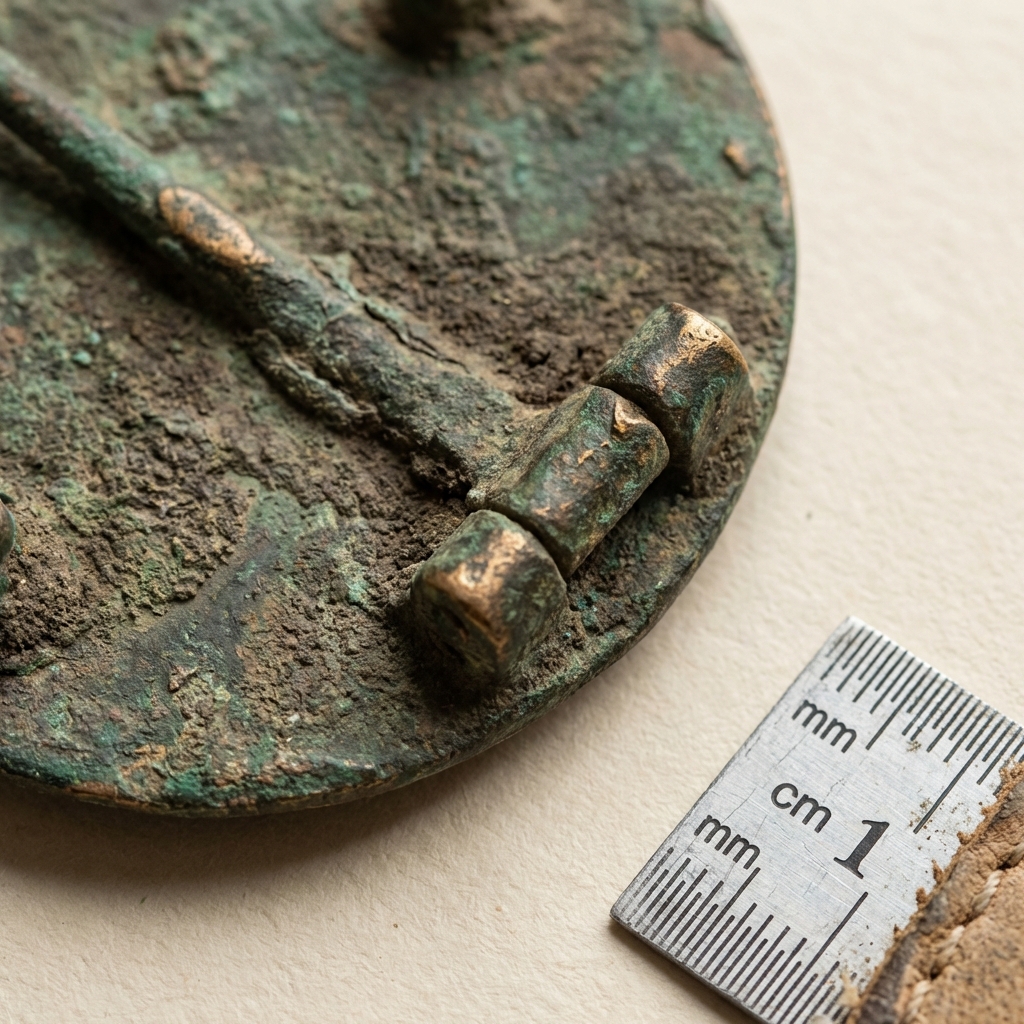
Because visual inspection cannot always determine alloy or stone identity, treat material descriptions as provisional unless the seller includes documentation from testing or a provenance trail that supports a specific attribution. Ask whether any metallurgical or compositional testing has been done before taking material claims at face value.
Decoration and iconography: motifs and their possible meanings
Motifs range from simple geometric ornament to more complex zoomorphic or abstract elements, and modern readers often want to connect imagery to specific beliefs or identities. Interpretations of iconography are usually speculative without strong contextual evidence, so approach symbolic claims with caution. A motif described in a listing as runic-inspired or zoomorphic may reflect a workshop tradition, a decorative trope, or later reinterpretation rather than a firm statement of meaning.
Visually inspect decorations for manufacture marks such as casting seams, lost wax details, or hammered finishing. Those cues can point toward likely workshop practices or levels of hand finishing, but they rarely prove a cultural or symbolic intent on their own. When listings include close images of edges and casting marks, they become much more useful for assessment and potential attributions.
See condition notes and provenance on @auroraantiqua
Before deciding, review any available condition notes and provenance statements closely; these often tell you more than a short listing title.
How jewelry signaled identity: status, regional style and life stage
Regional and chronological variation
Assemblages of jewelry can show regional differences in style and manufacture, but caution is essential. Workshop attribution and regional labels may be tentative and are best treated as working hypotheses rather than fixed facts. Sellers who provide collection history or links to published comparanda support more confident reading of regional style cues, while items offered without such context require a more skeptical approach.
Dating based on style alone can be helpful as an initial guide but rarely yields precise years. Collate stylistic observations with condition notes and collection history to form a more robust picture of likely origin and approximate dating when purchasing or studying an item.
Social signals and funerary associations
Combinations of items, the wear they show, and their placement within graves have been used to suggest status, occupation, or life-stage in archaeological literature. For a buyer, these interpretations are interesting but probabilistic. A richly furnished grave may indicate higher social standing, but single items found outside secure contexts are much harder to read. Treat any strong status claim in a listing as interpretive and request supporting contextual evidence if it matters for your collecting decision.
Where sellers responsibly include collection history or references to published burial contexts, that information strengthens the claim; where it is absent, ask for photographs of find records, excavation reports, or other provenance material before accepting interpretive statements about status or role.
How pieces were worn together: assemblages, layering and practical fit
Typical groupings and what survives archaeologically
Layering and assemblage patterns are often reconstructed from grave finds where multiple items were deposited together. Common arrangements include paired fasteners with layered necklaces and a combination of brooches with pendants. Fragmentary survival means that reconstructions are sometimes speculative, so good listings will present surviving elements plainly and avoid over-elaborate reconstructions without evidence.
When you see a listing suggesting a reconstructed arrangement, check whether the seller explains which pieces were found together and which are inferred. Clear photos showing every component with a scale help you judge how plausible the proposed assemblage is and whether additional missing parts are reconstructed from comparable finds.
Practical considerations for wearing ancient rings and arm-rings today
Ancient rings and arm-rings can be worn, but there are practical constraints. Bands may have been resized historically, and some hoops may be brittle from corrosion or previous repairs. If you plan to wear a piece, ask detailed questions about current fit, whether any modern soldering was used, and what the restoration notes say about structural stability. A listing that includes measurements, weight, and clear images of joins is more trustworthy for a buyer who intends to wear an item occasionally.
For display, consider conservation mounts or padded stands that avoid applying stress to fragile joins. If a seller or conservator has performed stabilization, request the restoration notes so you understand what was done and what remains original. These notes should describe materials used in repair and any alteration of original joins.
Photo and measurement checklist for assessing listings
Use clear photos under daylight
Assessing authenticity and provenance for old viking jewelry: practical decision criteria
Key documents and verification steps
When evaluating a listing that uses the phrase old viking jewelry, prioritize documentation. Important elements include a clear collection history, condition notes that describe stabilizations or repairs, and any third-party reports or references to published finds. Even where formal reports are absent, a seller who provides prior ownership details, acquisition dates, or correspondence that traces the item into a collection gives useful leads for verification.
Ask for full photographic documentation of key features including joins, reverse surfaces, and any tool marks. Good listings will include both overall shots and detail images that reveal casting seams, solder lines, and the condition of bezels or inlays. If testing has been performed, request the report or a description of methods used; if testing has not been done, ask whether the seller will allow or facilitate it before purchase when provenance is critical.
Red flags and trustworthy listing elements
Watch for vague provenance phrases, inconsistent patina across surfaces, and photos that obscure edges, backs, or join areas. Listings that omit measurements, fail to describe condition, or present only stylized studio shots without scale should be treated with caution. Conversely, listings that include detailed condition notes, a clear chain of custody, and multiple unretouched images are more likely to allow a reasoned judgment about attribution and condition.
Aurora Antiqua sample listing
Condition, restoration and care: what collectors should expect and ask about
Common conservation terms in listings
Listings often use conservation terms such as stabilized, consolidated, or cleaned. Restoration notes should clarify what was done and why, for example whether fragile joins were stabilized with reversible materials or whether modern solder was used in a repair. Condition notes should describe missing inlays, losses to bezels, or surface corrosion without implying that repairs are invisible or that the piece is in original condition.
Ask for the exact language used in restoration notes and whether the seller or a conservator can provide a short statement describing materials and methods used. Where documentation exists, include a copy in your purchase record so future owners understand what was altered and what remains original.
Long-term care and display recommendations
To preserve surface patina and avoid further damage, minimize handling and avoid exposure to chemicals, perfumes or chlorinated water. For display, use inert mount materials and avoid prolonged direct sunlight which can affect fragile organic elements. If planning to wear a piece occasionally, choose light use and remove it for activities that could apply leverage to joins or settings.
Keep condition notes and receipts with the object and document any further conservation work. Those records form an important part of an artifact's collection history for future study and resale.
Common myths and mistakes when interpreting female Viking dress
Popular misconceptions in media and listings
Popular narratives often present a single, uniform image of how women dressed in the Viking-age, but archaeological evidence suggests diverse practices. Beware of listings that simplify dress into a small set of icons or that present symbolic claims about status without supporting context. Treat sweeping statements about identity or meaning as hypotheses rather than settled facts.
Also be wary of evocative but vague language such as romanticized role descriptions; prefer listings that explain the basis for claims and that provide images and condition notes to support them.
How to avoid translation and dating traps
Translations of older find reports and nineteenth century catalogues can introduce errors. Dating based on typology alone can be misleading if not supported by context or scientific testing. When a listing relies on old literature or unverified translation, ask for scans of the original report or for expert commentary that ties the object to a documented context.
If a listing mixes modern revival elements with purported antiquity, request a close-up of joins and any suspicions areas. Modern repairs or additions often show different tool marks or cleaner metal surfaces compared to areas with consistent age wear.
Practical examples, buyer checklist and ideas for wearing or displaying old viking jewelry
Sample buyer checklist for evaluating a listing
Use a short checklist when you first view a listing: clear overall and detail photos, measurements, weight, explicit condition notes, a documented collection history, and a stated return or examination policy. If any of these elements are missing, request them before committing. Keep written records of seller responses and include them with the object if you buy it.
When uncertain, ask for additional angles, a video showing the piece with scale, or independent verification from a qualified adviser. Collecting responsibly means keeping a critical but pragmatic approach to available evidence.
Everyday wearing, occasional use and curated display suggestions
Decide before purchase how you intend to use the piece. For occasional wearing choose items with clear structural integrity and documented restoration notes. For display, create mounts that avoid point loading on fragile joins and use archival materials. In all cases, follow the restoration notes to ensure that previously repaired or stabilized areas are not exposed to unexpected stress.
For provenance language, request scans of any acquisition paperwork and note any gaps in collection history. A short written chain of custody, even if informal, increases confidence and serves as a helpful record for conservation and future study.
Conclusion: reading old viking jewelry with curiosity and care
Reading old viking jewelry requires balancing curiosity about the past with careful scrutiny of documentation and condition notes. Treat attributions and symbolic readings as interpretive and seek collection history and clear photographic evidence when an item is important to your collection.
Aurora Antiqua presents items with condition notes and provenance descriptions to help collectors make informed choices; use those resources, ask for further documentation when needed, and keep records of purchases and restoration notes to preserve the object and its story for the future.
Look for clear collection history, condition notes that describe consistent age wear, multiple detailed photos including joins and reverse surfaces, and any supporting documentation. When in doubt, request additional images or provenance records and consult an expert.
Wearing is possible but should be occasional. Check restoration notes, ask about modern repairs, and avoid activities that stress joins or settings; fragile or heavily corroded items are better reserved for display.
A responsible listing should offer condition notes, measurements, multiple unretouched photos with scale, a clear collection history or ownership trail when available, and transparent restoration notes describing any stabilizations or repairs.
More from Aurora Antiqua
References
- Oval Brooch, Viking, 900 to 1000, Acc. 1982.323.1, The Metropolitan Museum of Art, New York
- Round Box Brooch, Viking, 1000 to 1100, Gotland, Acc. 1982.323.2, The Metropolitan Museum of Art, New York
- Hoard find from Vester Vedsted, Nationalmuseet / National Museum of Denmark
- The Viking Gold Treasure from Hiddensee, Staatliche Museen zu Berlin, Museum für Vor- und Frühgeschichte
- Standards: Konservatorische Behandlung von archäologischen Funden (conservation of archaeological finds), Bundesdenkmalamt Österreich
- Guldrummet, Historiska museet / Statens historiska museer, Stockholm
- Viking Art Styles in the East Midlands: Borre · Vikings in the East Midlands
- Runer og runemagi, vikingernes skriftsprog, Nationalmuseet, Copenhagen
- Metal Detectorists Discover 1,200-Year-Old Graves That May Have Belonged, Smithsonian Magazine
- News, Viking Women’s Graves Excavated in Western Norway, Archaeology Magazine