


Looking for the real thing? Browse our Medieval ring collection, each piece one of one, individually authenticated, with documented provenance. For the background, see the guide to medieval jewelry.
Overview: defining the Viking bride's outfit and archaeological context
Scholars use the phrase bride or bridal dress as an interpretive label for sets of grave goods and textile remains that commonly appear with adult female burials in Viking-age Norway and Denmark. One clear pattern is the apron-dress held by paired brooches and many bead strands, a feature discussed in museum catalogues and syntheses of Viking female dress, which helps define the ensemble in archaeological terms, including references to metal brooches, layered textiles and beads National Museum of Denmark.
Quick checklist to compare a grave assemblage with documented bridal finds
Use as a starting assessment
The label bridal dress does not imply we have a written wedding inventory or ceremony description in most cases. Instead researchers compare recurring patterns in grave assemblages and high-status burials such as Oseberg to argue that certain combinations of clothing and jewellery likely communicated adult female and married identity. For summaries and object records that illustrate these recurring combinations, museum collection pages provide accessible documentation University of Oslo, Oseberg collection.
What archaeologists mean by 'bridal dress'
When archaeologists say bridal dress they are typically referring to a reconstructed outfit based on a group of items that appear together in burials: a layered set of garments with a pair of brooches, multiple bead strands and additional personal objects. That interpretation is comparative and contextual rather than a direct contemporary description of a ceremony.
Because the argument rests on assemblage patterns, single finds are treated cautiously; for example, a ring or single brooch in isolation has limited power to indicate ceremonial or marital status without the rest of the assemblage and burial context.
Sources of evidence: graves, ship burials, and museum collections
Primary evidence for the ensemble comes from excavated female graves and a few high-status deposits, including ship burials and chamber graves where preservation is better, and from curated museum records that document textile fragments and metalwork with provenance notes British Museum research notes on Viking clothing.
Museum catalogues, conservation reports and recent textile science refine what can be said with confidence, for example about the combination of linen and wool layers or the frequent presence of bead strands between brooches. These resources help turn fragmentary finds into testable reconstructions, while keeping clear where interpretation remains provisional.

Across well-published Norwegian and Danish cemeteries a repeated pattern emerges: paired brooches, bead strands and layered garments appear often enough to be treated as a meaningful cultural pattern rather than isolated oddities, and national collections have framed this pattern in object records and public research pages National Museum of Denmark.
High-quality finds such as those from Oseberg illustrate how a full outfit can be present in a single burial, but the larger dataset of ordinary graves shows the same elements in simpler sets that likely reflect social differences rather than a different basic system of dress.
How museums document dress and jewellery
Museum documentation usually combines textile identifications, typologies for brooches and beads, and contextual notes that relate objects to the burial or hoard. These combined records are essential for dating and for comparing regional patterns across Scandinavia, as recent museum studies explain when connecting clothing evidence to broader cultural questions British Museum research notes on Viking clothing.
Curatorial catalogues seldom present a single binding interpretation; rather they offer the primary data and measured commentary that allow researchers and informed collectors to assess how typical a particular assemblage is for a given time and place.
Core components: the apron-dress and paired oval brooches
The apron-dress, held up by two large oval brooches at the shoulders and often seen with chains and many bead strands, is a central reconstructive element for many Viking-age female burials. This construction appears regularly in Norwegian and Danish contexts and remains a central interpretive model in recent dress studies National Museum of Denmark.
See restoration details and behind the scenes at @auroraantiqua
Compare brooch arrangement and bead strands in published catalogues before attempting a reconstruction or a display.
The apron-dress typically reconstructs as a layered outfit with an under-tunic of linen and an outer kirtle or apron of wool, fastened at the shoulders by two brooches, which sometimes have short chains or long linking chains that could carry pendants or additional beads. Brooch typology varies by region and period, so reproductions should be chosen to match the documented form in a target area rather than a generic shape Round Box Brooch, Viking, 1000 to 1100, Gotland, Acc. 1982.323.2, The Metropolitan Museum of Art, New York.
Structure and function of the apron-dress
Practically, the paired brooches pin outer layers at the shoulders while allowing the front panels of the apron to fall over the body, and the bead strands sit naturally between the two brooches or are strung on chains to span the chest. This arrangement can be seen as a functional way to wear layered garments and as a visual marker of adult female identity in many burials.
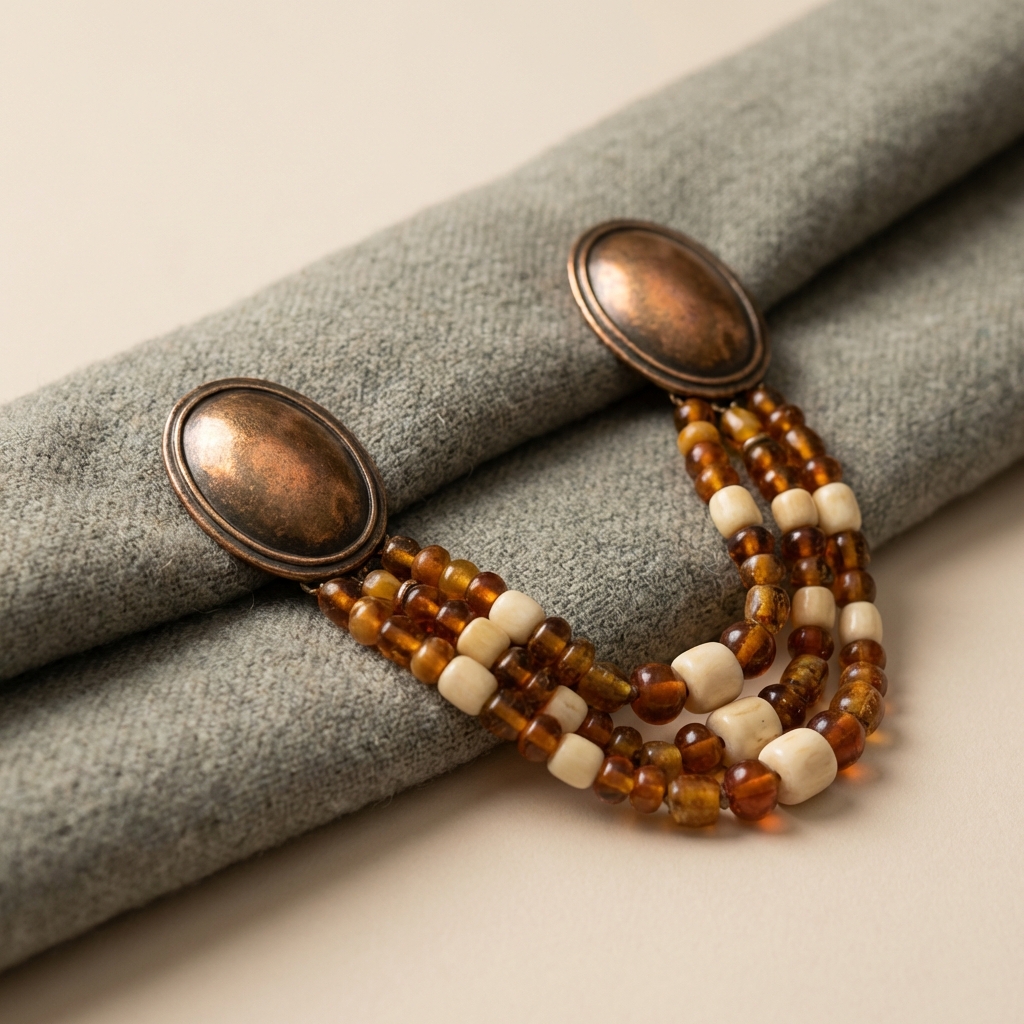
Because the archaeological signal combines metal fittings with surviving textile fragments, reconstructing the apron-dress requires attention to how brooches would contact and compress cloth, how bead strands hang, and how linen and wool behave differently when folded or layered.
Brooch types, chains and how they were worn
Oval brooches appear in several distinct typologies with regional preferences; some are simple cast forms, others are decorated with inlay or filigree where preservation allows attribution. Museum typologies catalogue these differences and show that specific brooch forms are more common in some cemeteries than in others, which helps tie dress reconstructions to place University of Oslo, Oseberg collection.
When brooches are found with short linking chains or with bead strands threaded through loops, the combined evidence indicates a coherent way of wearing and presenting multiple ornaments as part of a layered ensemble rather than as isolated accessories.
Jewellery and small metal items: beads, rings and identity markers
Bead necklaces: glass, amber, and metal
Bead strands of glass, amber and occasional metal beads are among the most consistent features in female burials, often found between paired brooches and recorded in museum object entries as part of a dress ensemble National Museum of Denmark.
The material mix of beads varies with trade networks and local resources: amber is abundant in certain coastal finds while glass beads, sometimes of imported manufacture, indicate wider exchange. Where chains accompany brooches, beads may be worn on the chain or in multiple separate strands across the chest.
Rings and small jewellery: frequency and limits of interpretation
Rings and other small metal jewellery are frequent in grave assemblages, but their presence shows regional and chronological variation so that a ring on its own is not a definitive bridal marker. For discussion of jewellery and identity in graves, see measured studies that explore distribution and social signals The silver hoards of the Vikings, Nationalmuseet / National Museum of Denmark and related analyses Viking Apron Panel study.
For collectors and reconstructors this means treating collectors and reconstructors as stakeholders: paired brooches plus bead strands provide the stronger signal for adult female or married identity, while rings can help refine dating and personalisation but rarely determine status alone.
Textiles, layers and dyes: reconstructing garments from fragments
Common textile layers: under-tunic and outer kirtle
Textile fragments preserved in graves indicate a repeated layering system, commonly a linen under-tunic with a wool outer kirtle or apron, an arrangement that experimental reconstructions and textile analyses support when preservation permits identification NTNU University Museum textile report.
These layers interact with brooches and beads; for instance, linen underlayers may be fine-woven and sit next to the body while woolen outer garments provide warmth and visible color. The combination matches the functional needs and climatic realities of northern Europe in the period.
Archaeological evidence shows many Viking-age female burials included an apron-dress fastened by paired oval brooches, bead strands and layered linen and wool garments, but specific colours and ceremonial uses remain interpretive and vary by region and time.
Dye evidence and limits
Dye analyses show that when residues survive they are often plant or insect derived, producing a palette that is narrower than modern dye ranges; recent reports stress both what we can learn about colour and the limits imposed by preservation NTNU University Museum textile report.
Because taphonomic processes erase much of the original hue, reconstructions should avoid asserting precise shades unless a secure residue analysis supports the claim. Experimental work helps indicate likely combinations of shades and contrasts but does not restore exact original pigments in most cases.
Regional and chronological variation: Norway, Denmark and beyond
How brooch types and bead materials change by region
Brooch shapes, bead material mixes and supplementary items such as keys or knives show clear regional patterns, so a dress typical of one cemetery or coast may look different elsewhere; studies that compare regional typologies are essential for accurate reconstructions National Museum of Denmark.
Recording regional variation prevents overgeneralisation and helps explain why museum catalogues emphasise provenance and findspot when describing female dress items.
Early versus late Viking-age differences and Christian influence
Across the 8th to 11th centuries some changes in jewellery styles and grave goods correspond with increased trade and religious change; late coastal contexts sometimes show Christian-associated objects or different funerary choices that alter the assemblage, but the relationship is complex and requires integrated study to draw firm conclusions University of Oslo, Oseberg collection.
These chronological shifts matter for anyone attempting a reconstruction: the right brooch type, bead mix and accessory choice should match the date range and place being represented rather than assuming a single Viking template.
How to reconstruct a historically informed Viking bridal outfit
Start with the basic evidence-backed elements: layered linen and wool garments, a pair of reproduction oval brooches appropriate to the target region, and bead-strand necklaces that reflect local materials such as amber or glass where those occur in the record Journal of Archaeological Science: Reports on reconstructing dress.

Document every choice and cite the typology or textile report that supports it. For example, select a brooch reproduction that matches an identified local form in museum catalogues, and choose bead types that reflect the archaeological material mix; keep a clear record of sources and conserve any original items with professional advice.
Choosing materials and layers
Practical choices should prioritise period-appropriate materials: linen for underlayers, moderately dense wool for outer garments and natural sewing techniques that reproduce seam placement and fastenings. Where colour is uncertain, choose muted or plausibly natural shades and note the uncertainty in accompanying documentation NTNU University Museum textile report.
When incorporating any genuine artefact such as an ancient ring or bead, record condition and restoration notes and separate the conservation history from reproduction elements to prevent conflating original and modern work.
Making or sourcing brooches, beads and appropriate rings
Brooch reproductions should be matched by shape and likely fastening method, not only by decorative appearance; consult museum typologies and images to choose forms that align with a region and date range. Typology guides and object records in major collections assist these decisions Oval Brooch, Viking, 900 to 1000, Acc. 1982.323.1, The Metropolitan Museum of Art, New York.
Bead strands can be recreated with amber or glass in sizes and arrangements comparable to those shown in grave catalogues. For collectors using genuine ancient beads, maintain clear provenance and display documentation to distinguish original components from modern additions.
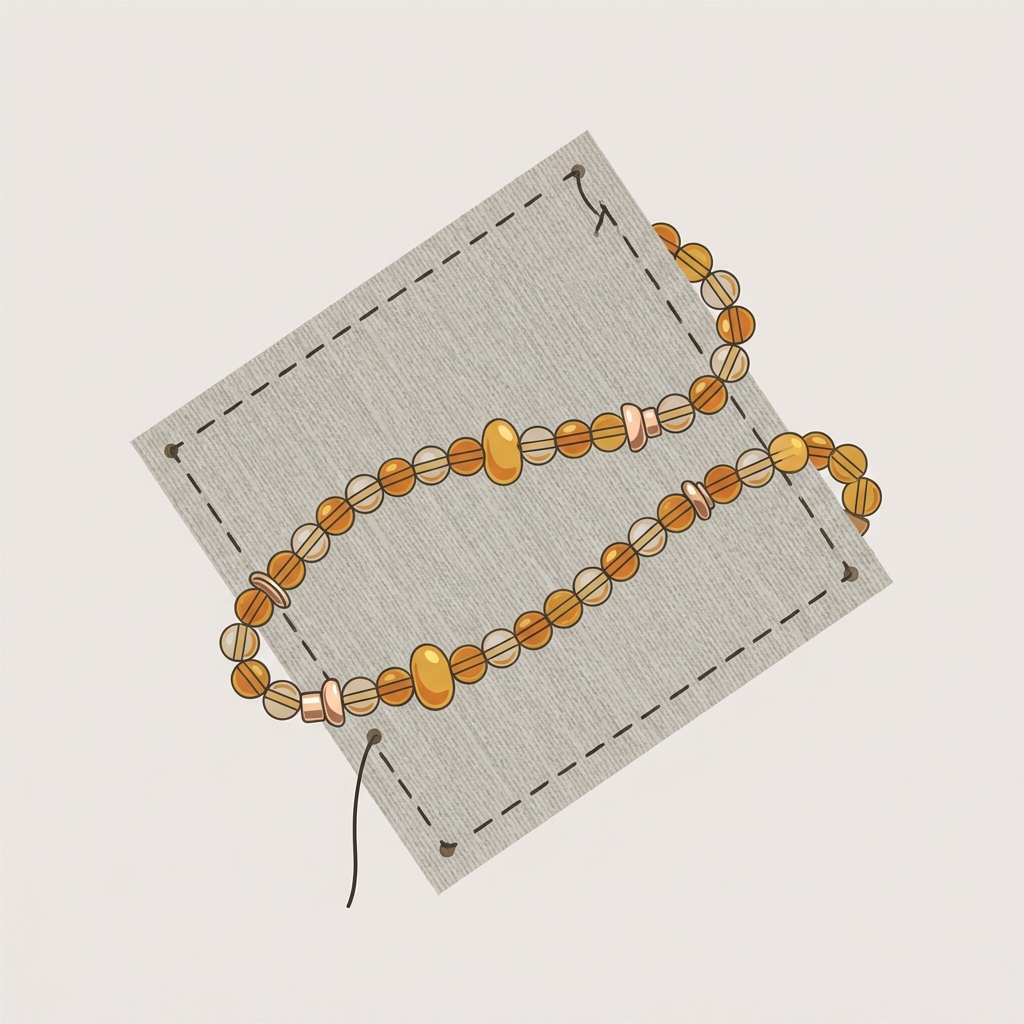
Practical steps for collectors: assessing provenance, condition and documentation
What to look for in listings and museum notes
Ask for collection history, prior ownership notes, any verification letters and condition or restoration statements; a credible listing will include measurements, photographs showing details of patina and join evidence, and clear language about what was conserved or stabilised.
Consulting museum catalogues and published typologies can help verify that a ring shape or brooch type fits the stated date and region, and curatorial records are often the best comparative resource for assessing plausibility ICOM-CC, International Council of Museums, Committee for Conservation.
Questions to ask sellers or curators
Useful questions include whether the item has documented findspot information, what conservation was performed and whether any laboratory tests such as metallurgical analysis or textile fibre identification were done. Clear answers help separate well-documented pieces from those with uncertain histories.
For items described as part of a bridal assemblage, request the object inventory or catalogue entry that supports that interpretation, rather than relying on a seller's label alone.
Common mistakes and interpretive pitfalls
Overreading single items such as rings
A common error is to infer bridal status from an isolated ring or single decorative object; as typology studies show, rings appear frequently across contexts and need the broader assemblage for socio-cultural interpretation L'anneau sigillaire d'Arégonde, femme de Clotaire Ier, découvert à Saint-Denis, Bulletin de la Societe.
Interpreting personal objects requires attention to burial context, associated items and site-specific patterns rather than applying a romantic modern script to fragmentary evidence.
Assuming modern ceremonial practices match medieval ones
Be careful about projecting contemporary wedding rituals onto the past. The archaeological record rarely records a single event labeled as a wedding, and many practices that appear in burials may reflect status, age or other social roles rather than a single ceremony.
When presenting reconstructions, make interpretive choices explicit and label them as hypotheses rooted in pattern-based comparisons, not as direct reproductions of a historically observed ritual.
Reconstruction scenarios and real-world examples
A high-status Oseberg-style reconstruction
A reconstruction inspired by Oseberg and comparable high-status burials uses fine linen underlayers, richly woven wool outer garments and elaborated paired brooches with multiple bead strands arranged between them, reflecting assemblages preserved in a chamber grave context and discussed in museum records University of Oslo, Oseberg collection.
Such a display or wearable ensemble should include detailed documentation that separates original finds from modern reproductions, and should avoid implying the entire outfit is original when only some elements are ancient or directly comparable to Oseberg materials.
A modest rural ensemble based on common grave finds
A modest reconstruction draws on the far more numerous ordinary graves: a simple linen under-tunic, a plain wool kirtle or apron, a pair of unadorned oval brooches and a small number of glass or amber beads. This template reflects the typical material mix seen in many cemetery catalogues and studies of common graves National Museum of Denmark.
Choice of materials in modest reconstructions should emphasise historically plausible techniques and restraint in ornament rather than attempting to imitate a high-status grave across the board.
What ancient rings can tell us, and what they cannot
Typologies and dating of rings
Ring forms appear in typologies that help date and sometimes localise finds; curatorial records and published typologies are the primary sources for such attributions and should be consulted when a ring is part of a proposed bridal assemblage Viking Art Styles in the East Midlands: Borre · Vikings in the East Midlands.
Because ring shapes change over time and across regions, matching a ring to a typology can narrow date estimates, but it does not by itself indicate whether the object was a wedding ring in the modern sense.
Limits on inferring social status or bridal use from rings alone
As a single item, a ring rarely conveys marital status decisively; the stronger archaeological signal for adult female identity in many Viking-age contexts comes from paired brooches and bead strands, which are more consistently associated with female burials in museum catalogues and cemetery reports National Museum of Denmark.
Collectors should therefore view rings as diagnostic contributors rather than standalone evidence for bridal association, and should always consider the wider assemblage and published comparative material when forming conclusions.
Caring for ancient jewellery and reconstructed garments
Storage and handling for metal and organic materials
Store metal jewellery in stable, low-humidity conditions with inert cushioning and avoid abrasive contact; textile reproductions should be kept away from direct light and stored flat or gently rolled with acid-free materials to minimise stress on fibres. For authoritative guidance, follow conservators recommendations and institutional conservation summaries Conserve O Gram 4/16: Creating A Microclimate Box for Metal Storage, National Park Service, US Department.
If you own genuine ancient beads or rings, record condition notes and restoration history and avoid amateur cleaning, which can remove patina and archaeological information.
When to seek professional conservation
Consult a trained conservator for any cleaning, stabilisation or repair that affects structure or surfaces, and keep documentation of interventions as part of the object's provenance and condition record. Professional records preserve the chain of care and help future researchers and collectors interpret the object correctly.
Ethical considerations also include whether an item should be worn; some collectors choose to display originals and use reproductions for wear to reduce risk to fragile materials.
Open questions and current research directions
Distinguishing daily wear from ceremony
One open research question is how to separate daily clothing choices from garments or accessories used only on special occasions, since grave contexts may reflect a final outfit rather than routine dress, and integrated textile and contextual analyses are needed to approach the distinction Journal of Archaeological Science: Reports.
Answering this will require collaborations between textile scientists, archaeologists and isotopic analysts to connect wear patterns, fibre preparation and life histories of garments.
Provenance, isotopes and future textile science
Newer approaches such as isotope sourcing of organic materials and more sensitive dye residue analyses are promising for refining where materials came from and what colours may have been used, but fuller datasets and comparative frameworks are still developing NTNU University Museum textile report.
Future work that integrates findspot provenance, laboratory analysis and careful museum record comparison should make reconstructions more firmly grounded and reduce interpretive gaps.
Conclusion: what we can say reliably and what remains interpretive
In reliable terms, many Viking-age female burials in Norway and Denmark show a combination of paired oval brooches, bead strands and layered linen and wool garments that scholars interpret as a common ensemble; these elements form the core of historically informed reconstructions National Museum of Denmark.
At the same time, regional and chronological variation and the limits of textile preservation mean that specific colour choices, the exact ceremonial function and any direct mapping to a modern wedding ritual remain interpretive. For collectors and reenactors the best practice is to document sources, respect conservation guidance and base reconstructions on the closest fitting typology and textile evidence.
Further reading and resources
Museum catalogues and the listed textile science reports provide the primary references that underpin the statements in this guide and are the recommended next step for anyone wishing to move from overview to detailed reconstruction or collecting.
Rings appear frequently in female burials but are variable in form and context. A ring alone rarely proves a wedding ritual; paired brooches and bead strands provide a stronger archaeological signal for adult female identity.
Common materials include linen for underlayers and wool for outer garments, with beads of glass or amber and metal brooches. Dye residues where present usually reflect plant or insect sources.
Wearing genuine ancient jewellery carries conservation risk. Many collectors display originals and use careful reproductions for wear, and any intervention should be documented and guided by a conservator.
More from Aurora Antiqua
References
- Round Box Brooch, Viking, 1000 to 1100, Gotland, Acc. 1982.323.2, The Metropolitan Museum of Art, New York
- Oval Brooch, Viking, 900 to 1000, Acc. 1982.323.1, The Metropolitan Museum of Art, New York
- The silver hoards of the Vikings, Nationalmuseet / National Museum of Denmark
- ICOM-CC, International Council of Museums, Committee for Conservation
- L'anneau sigillaire d'Arégonde, femme de Clotaire Ier, découvert à Saint-Denis, Bulletin de la Societe
- Viking Art Styles in the East Midlands: Borre · Vikings in the East Midlands
- Conserve O Gram 4/16: Creating A Microclimate Box for Metal Storage, National Park Service, US Department
- Standards: Konservatorische Behandlung von archäologischen Funden (conservation of archaeological finds), Bundesdenkmalamt Österreich
- The Viking Age, National Museum of Denmark, Copenhagen