


Looking for the real thing? Browse genuine ancient rings for sale — each piece one-of-one, individually authenticated, with provenance.
eye of horus jewelry: quick answer and why orientation matters
Short answer for collectors
Both left- and right-facing representations of the Eye of Horus appear across ancient material, and orientation is best treated as a descriptive attribute rather than a proof of date or authenticity; the conventional reading that links the right eye to the sun and the left eye to the moon and healing is a widely cited interpretive layer in reference sources Encyclopaedia Britannica.
For anyone describing or buying eye of horus jewelry, orientation can help convey symbolic emphasis and assist searchability in a catalogue, but it should sit alongside provenance, condition notes, restoration statements, and clear photography when forming a judgement about an object’s history and significance The British Museum collection term for the wedjat.

How this article will help you evaluate pieces
This article sets out a concise explanation of the wedjat, summarizes relevant museum evidence on facing and variation, outlines the mythic symbolism that informs common readings, and then gives a practical checklist and wording samples you can use when cataloguing or buying eye of horus jewelry Heilbrunn Timeline of Art History at The Metropolitan Museum of Art and the Art Institute of Chicago's digital publication.
Read on to understand why orientation matters for description, why it rarely determines authenticity on its own, and how to prioritise documentation and images when you evaluate an ancient amulet or intaglio.
Definition and context: what the wedjat is in ancient Egyptian jewelry
Origins of the symbol and common terms
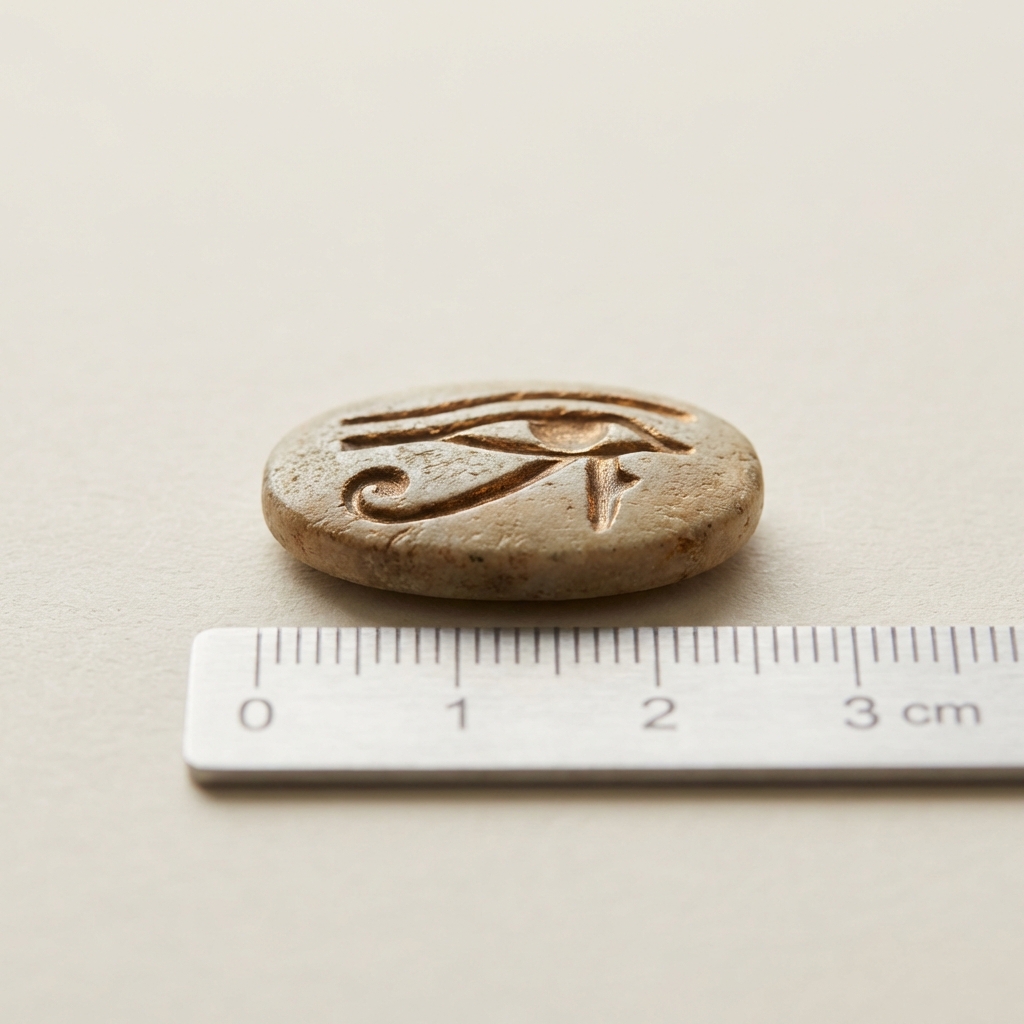
The term wedjat refers to the Eye of Horus motif familiar from ancient Egyptian religion and funerary practice; in jewelry contexts it typically appears as an intaglio, a small bezel-mounted inlay, or a flat amulet worn for protection. Reference overviews describe the wedjat both as a religious emblem and as a practical design element in personal ornamentation Encyclopaedia Britannica.
Writers and cataloguers commonly use neutral, descriptive terms such as ancient ring, intaglio, bezel, amulet, and inlay to identify how an Eye motif is incorporated into a piece; using those terms helps collectors compare listings and condition notes across different vendors and museum records.

Where the Eye appears on rings, amulets and inlay
In ancient rings the wedjat often appears as a carved ancient rings intaglio set into a bezel, on pendants as a pierced amulet, and in larger objects as inlaid motifs; the same graphic components recur across formats even when the Eye faces left or right Heilbrunn Timeline of Art History.
When you review a catalogue entry or a listing for eye of horus jewelry, note whether the description specifies type (for example intaglio, pendant, or bead), material, and mounting method, since those features affect how an Eye motif was made and how wear or later restoration may alter its appearance.
Myth and meaning: right eye, left eye and symbolic associations
The Horus-Set myth and Thoth's role
In the mythological tradition Horus loses an eye during conflict with Set and the god Thoth restores the eye; that narrative underpins the Eye’s association with healing and protection in many reference accounts Heilbrunn Timeline of Art History.
The restored eye becomes a symbolic focus for amuletic use, and many museum and scholarly sources discuss this origin when explaining the hedjat’s protective function in personal ornaments and funerary contexts Reference overview by Wilkinson.
See provenance and restoration notes on @auroraantiqua
The Aurora Antiqua editorial and catalogue notes aim to show condition, provenance, and any restoration history so collectors can understand an object's context without relying on orientation alone.
How museums and references interpret right/left symbolism
Major reference works often give a conventional symbolic reading: the right eye is associated with the sun and power while the left eye, described as the mended or restored eye, is associated with the moon and healing; this interpretation is widely repeated in museum literature and encyclopedic entries Encyclopaedia Britannica.
That symbolic layer is useful for descriptive cataloguing and for explaining probable emphasis in an amulet’s intended meaning, but it is not a strict rule that determines attribution; museums present the right/left reading as an interpretive framework rather than a hard diagnostic that by itself proves date, origin, or authenticity Heilbrunn Timeline of Art History.
What museum catalogues and object records show about orientation
Evidence from major collections
Catalog records and collection entries at institutions such as the British Museum and the Metropolitan Museum of Art document wedjat examples facing both left and right, across object types and across a long time span, demonstrating that orientation varies in practice The British Museum collection term for the wedjat.
Individual object pages frequently include photographs showing both the motif and surrounding mounting, and these records show that variations in facing are not uncommon in amulets, inlays, and intaglios in museum holdings Heilbrunn Timeline of Art History (see, for example, the Cleveland Museum of Art's Eye of Horus Amulet).
Why orientation differs by object type, region, and period
Orientation can reflect workshop convention, the available space on a bezel or plaque, regional stylistic choices, or the symbolic emphasis the maker intended; museum cataloguers typically note orientation as a descriptive element rather than as an attributional certainty Encyclopaedia Britannica.
Because public catalogues rarely publish comprehensive frequency statistics by workshop or site, broad claims about which orientation was 'more common' in a specific period require targeted database analysis of dated assemblages and are therefore described in the literature as an open research question Academic discussion of the Eye-of-Horus fractions and related studies.
Graphic components and the Eye-of-Horus fractions
How recurring elements explain similar motifs regardless of facing
The wedjat is composed of repeated graphic subelements such as an arched brow or eyebrow, a stylised teardrop or marking beneath the eye, and the distinctive line elements that in scholarship have been linked to a system of fractions; these visual units can appear whether the Eye faces left or right Discussion of the Eye-of-Horus fractions.
Both orientations are attested; the right-eye/left-eye solar and lunar symbolism is a conventional interpretive framework but not a definitive test for provenance or authenticity.
Why metrological elements do not determine direction
Scholarly accounts explain that the fraction-based readings illuminate why certain marks recur consistently, but those metrological elements do not prescribe direction; artisans could arrange the same components to face left or right depending on space, orientation of the object, or symbolic preference Reference overview by Wilkinson.
Understanding these graphic building blocks helps collectors recognise the motif across media and avoid overreading facing as a unique identifying feature; look instead for the combination of subelements and how they are executed in the bezel or intaglio.
How to evaluate eye of horus jewelry when buying or cataloguing
Checklist: images, measurements, condition and restoration notes
Start with basic, verifiable evidence: high-resolution images from multiple angles, clear macro shots of the bezel or intaglio, accurate measurements, and explicit condition notes that state what was conserved or repaired; museum-style object records are a useful model for what to request and record Encyclopaedia Britannica.
Priority checklist items for assessing a piece should include provenance documentation, photographs with scale, a written condition and restoration note, material description that is described as or appears to be rather than asserted, and any third-party or collection-history references that accompany the object Oxford Research Encyclopedias overview.
Using provenance and documentation effectively
Treat provenance notes as the most informative element in a listing: documented collection history, prior ownership notes, and verification letters provide context that orientation alone cannot supply; museum catalogues and reputable dealers typically make provenance statements prominent for this reason Encyclopaedia Britannica.
If documentation is limited, consider seeking further information such as detailed photos of the mount and wear patterns, a short condition report from a qualified conservator, or an examination of restoration notes that explain what was stabilized or replaced before purchase Heilbrunn Timeline of Art History.
Decision criteria and common mistakes collectors make
A concise evaluation checklist collectors can follow
Use this checklist before purchase
Typical misreadings of orientation
A common mistake is assuming that a left-facing or right-facing Eye proves a specific origin or date; in practice orientation is one descriptive attribute among many and should be qualified in a listing rather than used as a standalone claim Encyclopaedia Britannica.
Another frequent error is ignoring the effect of modern remounting or conservation work that can change how a motif is presented; clear restoration notes can reveal whether an Eye’s apparent facing reflects later intervention rather than original execution The British Museum collection term for the wedjat.
How restoration, wear and modern mounting complicate facing
Wear consistent with age, patina, and old repairs can all alter how an Eye appears in photographs; descriptions that include condition notes and restoration details allow buyers to assess whether facing is original or the result of later changes Heilbrunn Timeline of Art History.
Decision rules to use in catalogue text: note orientation as observed, qualify it with conditional language when provenance or restoration is unclear, and always prioritise provenance and condition documentation over facing when stating probable date or origin.
Practical examples and a visual checklist for listings
Example descriptions for left- and right-facing pieces
Example listing, left-facing: "Ancient intaglio bezel set with a left-facing wedjat, described as carnelian intaglio on a restored silver hoop; condition notes document old repairs to the bezel and a partial provenance linking the piece to a mid-20th century private collection; orientation noted for descriptive purposes only." This phrasing keeps orientation descriptive and links claims to condition and provenance statements.
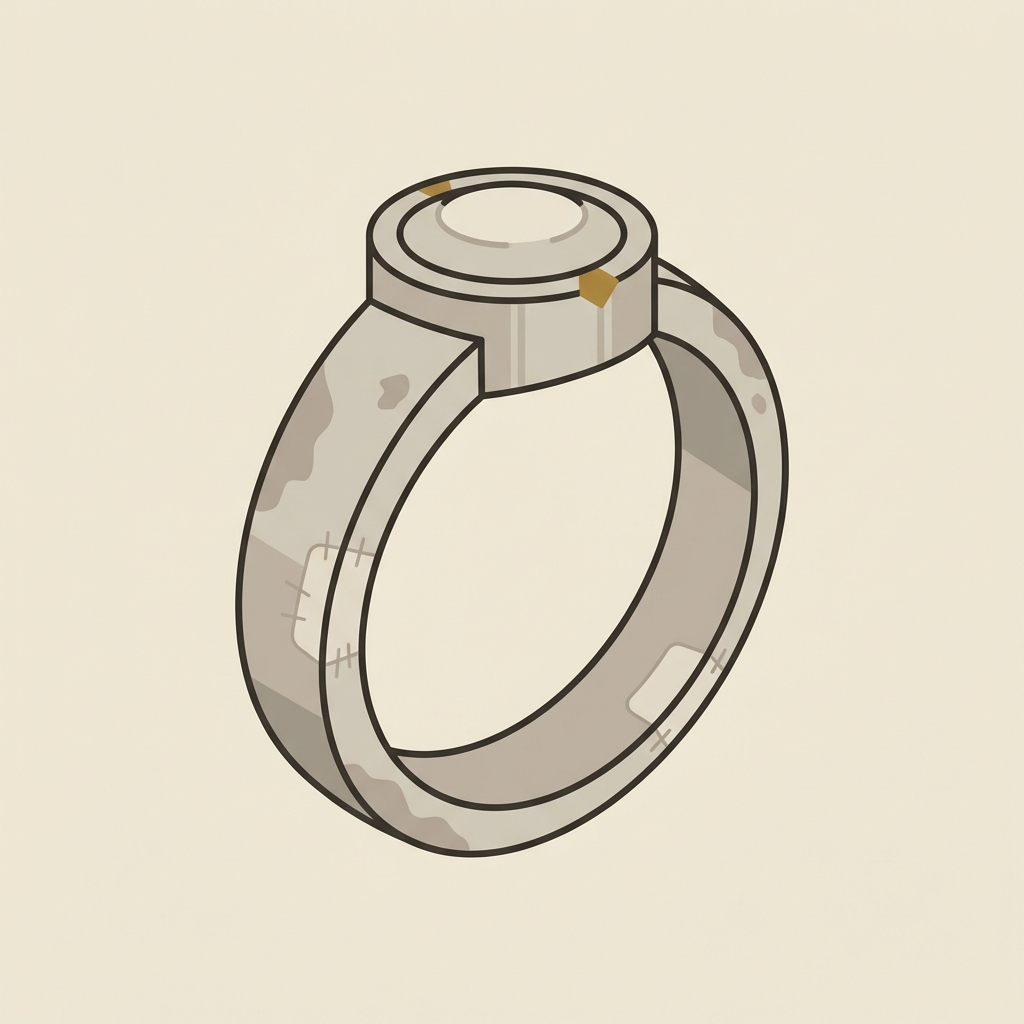
Example listing, right-facing: "Bezel-mounted Eye motif appearing right-facing, described as an ancient amulet inlaid in an intaglio style; measurement and macro photos supplied; provenance notes pending further documentation. Orientation provided as symbolic context, not as proof of origin." Use conditional language and cite restoration notes when available.
Visual checklist for photographs and measurements
Photographic checklist: full-object shot with scale, three-quarter angle, direct face-on of the bezel, macro of any tool marks or signatures, and detail images of worn areas or repairs; include a ruler or scale marker in at least one image.
Measurement checklist: overall dimensions, bezel diameter, ring size or hole diameter for a pendant, and weight when known; provide measurements in both metric and imperial for clarity and include an explicit note when sizes are estimates due to wear or damage Encyclopaedia Britannica.
Conclusion: orientation is informative but not definitive
Final takeaways for collectors
Both left- and right-facing wedjat examples are attested in museum collections, and the common right-eye/left-eye solar-lunar reading is a valuable interpretive guide but is not a deterministic test for authenticity or provenance; use orientation as part of a wider assessment that prioritises provenance, condition notes, and clear photography Heilbrunn Timeline of Art History and specific object records such as the Wedjat Eye Amulet entry at the Metropolitan Museum of Art https://www.metmuseum.org/art/collection/search/561047.
When in doubt, ask for clearer documentation, a conservator’s condition note, or additional provenance information before making purchase decisions, and treat orientation as a descriptive detail that helps tell an object's story rather than as a deciding factor.
No. Facing is a descriptive trait and may reflect workshop convention or the object's format; provenance and condition notes are more reliable for dating or attributing an object.
Request high-resolution macro images of the bezel and the mounting, measurements, and a written condition note describing any repairs or restorations.
The fraction-related elements explain recurring marks, but they do not by themselves determine purpose; contextual evidence and provenance matter more for interpreting use.
References
- https://www.britannica.com/topic/Eye-of-Horus
- https://www.britishmuseum.org/collection/term/wedjat-eye
- https://auroraantiqua.com/products/roman-silver-ring-auriga-red-jasper-intaglio-of-cock-drawing-a-chariot-driven-by-a-mouse-1st-3rd-century-ad-eu-57-us-7-5
- https://www.metmuseum.org/toah/hd/horu/hd_horu.htm
- https://www.artic.edu/digital-publications/42/ancient-egyptian-art-at-the-art-institute-of-chicago/content
- https://auroraantiqua.com/collections/ancient-roman-rings
- https://www.metmuseum.org/toah/hd/horu/hd_horu.htm
- https://www.routledge.com/The-Complete-Gods-and-Goddesses-of-Ancient-Egypt/Wilkinson/p/book/9780500051208
- https://www.clevelandart.org/art/1914.759
- https://www.jstor.org/stable/10.2307/10.0
- https://oxfordre.com/religion/view/10.1093/acrefore/9780199340378.001.0001/acrefore-9780199340378-e-373
- https://auroraantiqua.com/collections/rings
- https://www.metmuseum.org/art/collection/search/561047