


Looking for the real thing? Browse our full ring collection, each piece one of one, individually authenticated, with documented provenance. For the background, see the guide to ancient jewelry.
Why people wear an eye of horus gold ring: history and protective meaning
The Eye of Horus, often called the wedjat, is best understood as an ancient Egyptian protective image used in funerary and domestic contexts to symbolically restore wholeness and guard against danger, and this explanation is supported by encyclopaedic and museum descriptions Encyclopædia Britannica - Eye of Horus.
Across the Mediterranean and Near East a related set of beliefs about a harmful or envious gaze developed, and in many communities amulets and ritual responses were used to mitigate that perceived power; the broader concept of the evil eye sits alongside but is not identical to the Egyptian wedjat Encyclopædia Britannica - Evil eye.
Explore curated ancient rings with documented condition notes
Explore curated listings that include clear condition notes and historical context if you are considering a wearable antiquity; understanding documentation helps set expectations for care and display.
The wedjat as an object often appears in materials such as metal, stone, and faience, set into jewellery or kept as small amulets, and collectors should look for readable iconography and patina that match the description rather than assuming a single uniform use across all objects.
When we speak about dating and function it is appropriate to use cautious language: museums and catalogues provide estimates and contextual attributions that guide how we read these objects, rather than definitive statements about every individual ring or amulet British Museum collection entry - Wedjat amulet. For another museum example see the Wedjat ring entry at the National Museum of Asian Art Wedjat ring - National Museum of Asian Art.
Evil eye versus Eye of Horus: how the symbols differ and overlap
The terms 'evil eye' and 'Eye of Horus' are sometimes used together in popular writing, but they refer to different historical and cultural phenomena: the wedjat is a specifically Egyptian iconography with its own visual vocabulary, while the evil eye refers to an interdiciplinary belief that an envious gaze can cause harm Encyclopædia Britannica - Eye of Horus. A modern guide to Eye of Horus rings and how people use the motif is available in contemporary jewellery writing Eye of Horus Rings: Styles, Symbolism & Wearing Guide.
Visually, the Eye of Horus often includes stylised anatomical elements associated with the falcon god Horus and is frequently depicted in amulets and intaglios, whereas later Mediterranean 'evil eye' motifs are commonly rendered as concentric circles or stylised eyes as protective talismans; recognising these differences helps avoid conflation of distinct traditions.
Geographically the wedjat is rooted in Egyptian religion and funerary practice, while the evil-eye belief is cross-cultural across the Mediterranean and Near East and took many local forms; museum essays and encyclopaedia entries underline the separate origins even where use as protection overlaps Encyclopædia Britannica - Evil eye.
Practical etiquette: when and where to wear an eye of horus gold ring
Practical rules of thumb for wearing amuletic jewellery begin with awareness: placement, visibility, and local religious or cultural norms can affect whether a piece is appropriate to wear in certain settings, and it is wise to check community expectations before wearing or gifting such items The Met - Amulets in the collection. Museum etiquette resources also outline how visitors and owners can help preserve objects Do not touch artifacts - museum etiquette.
There is no single rule; follow local cultural and religious norms, prioritise provenance and condition notes, treat amulets with respect, and follow museum-style conservation practices when wearing or gifting an Eye of Horus gold ring.
In public spaces a visible eye of horus gold ring can be read as ornament, a cultural symbol, or a talisman depending on the observer's background; in many conservative or sacred settings it may be better to wear the ring with discretion or to avoid displaying it during worship or formal religious events.
Common placement norms are straightforward: rings and pendants are the most frequent forms, while some traditions favour sewing amulets into clothing or wearing them as brooches; visibility changes how the object is perceived, so choose placement with respect for local etiquette Encyclopædia Britannica - Evil eye.
When in doubt ask a local cleric or cultural contact about norms for talismanic objects; gifting or publicly wearing amuletic pieces without checking can create awkwardness or unintended offense in some communities Penn Museum - The Evil Eye: history and material culture.
How to wear an eye of horus gold ring day to day: styling and layering advice

Deciding between visible display and private talisman use is often a matter of personal intent and conservation considerations: a ring worn every day will accumulate wear, so follow condition notes and conservation guidance when planning frequent use British Museum collection entry - Wedjat amulet.
If you favour visible styling, pair an ancient ring with minimal modern pieces to let the intaglio or iconography read clearly; consider the ring's hoop, shoulders, and bezel when choosing complementary items so settings do not rub or abrade the piece during wear.
For private or symbolic wear, keeping the ring on a rotation protects its patina and structure; intermittent use combined with careful storage reduces the need for intervention and helps preserve the ring's historic surface and any original gemstones or carnelian intaglio.
When mixing ancient and modern jewellery avoid tight stacking on the same finger and choose softer metals or fabric between pieces if friction could create micro-abrasion; small changes to how you style the ring can make a big difference in long-term preservation V&A - How to care for your jewellery.
Choosing and buying an eye of horus gold ring: what to look for
When evaluating listings for an eye of horus gold ring prioritise verifiable provenance, clear condition notes, and readable iconography; museum-style documentation and collection history entries substantially reduce risk when assessing an antiquity British Museum collection entry - Wedjat amulet.
Ask sellers for provenance statements, prior ownership notes, and any verification letters; these documents help situate the object in collection history and provide context for dating and attribution. See our questions and answers hub for common buyer queries Questions and answers.
Check condition and restoration flags carefully: a readable intaglio, stable patina consistent with age, and explicit restoration notes describing what was stabilised or left untouched are positive indicators that a seller has considered conservation V&A - How to care for your jewellery.

A responsible listing will include high-resolution images of the ring from multiple angles, measurements, and weight, plus explicit restoration notes; if those elements are missing, request them before making a decision. For related shopping see our ancient Roman rings collection ancient Roman rings.
Favor sellers who present clear condition notes and documented restoration or conservation work when available, and be cautious of listings that rely solely on appealing photography without accompanying documentation British Museum collection entry - Wedjat amulet.
Conservation and care for an eye of horus gold ring
Museum conservation guidance recommends gentle cleaning, minimal polishing, and secure storage rather than aggressive restoration; this approach protects patina and the subtle surface details that carry historical information V&A - How to care for your jewellery.
Handle the ring with clean hands and avoid wearing it during chores involving chemicals, salt water, or abrasive tasks; small precautions reduce the likelihood of surface loss or discolouration.
Quick condition and fit checklist for buyers and owners
Use as a starting guide, not a substitute for specialist report
For storage use padded boxes, acid-free tissue, and stable humidity; prolonged exposure to fluctuating environmental conditions can accelerate metal degradation or cause gemstones to loosen, so controlled storage is recommended for long-term preservation V&A - How to care for your jewellery.
Document condition on acquisition: clear photographs, written notes on patina and any repairs, and recorded measurements create a baseline that helps conservators or future owners make informed choices about intervention or display.
Gifting an amuletic object like an eye of horus gold ring can carry cultural or religious implications, so it is courteous to ask the recipient about beliefs and preferences before presenting such a gift; ethnographic and museum commentary notes the potential for recipients to decline talismanic items Penn Museum - The Evil Eye: history and material culture.
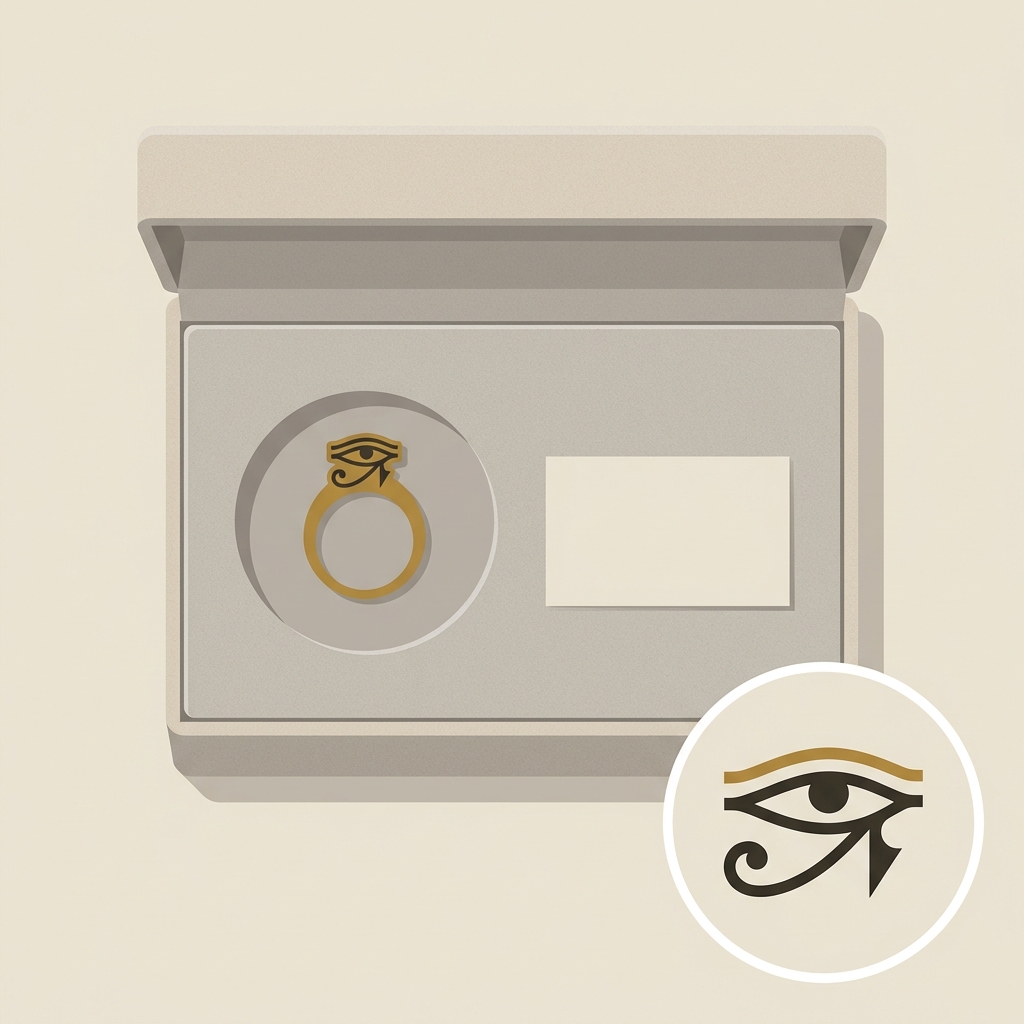
Frame the gift with provenance and condition notes when possible so the recipient understands the object's history and care needs; including this documentation demonstrates respect for the piece and for the recipient's right to make an informed choice.
If you are unsure whether a talismanic object is appropriate, consider offering a voucher or a neutral piece instead, or discuss the meaning and origins of the symbol before gifting to avoid misunderstanding.
Legal, ethical and provenance questions for buyers of ancient rings
Provenance matters because verifiable collection history and documentation reduce the risk of misattributed or illicit objects; museum cataloguing practices emphasise clear ownership records and collection notes as central to responsible acquisition British Museum collection entry - Wedjat amulet.
When provenance is incomplete seek specialist advice or request third-party verification; an expert opinion can clarify dating, workshop attribution, or raise caution if documentation is inconsistent.
Avoid assuming provenance without documentation: favour listings that include prior ownership notes, verification letters, or clear collection history to support a responsible purchase decision.
Common mistakes and pitfalls when wearing or buying amuletic jewelry
Typical errors include conflating different symbols, over-cleaning or polishing an ancient surface, and ignoring restoration notes; such mistakes can obscure iconography or remove historically informative patina V&A - How to care for your jewellery.
For each mistake have a corrective action: consult condition notes rather than polish immediately; request provenance documents rather than rely on photographs; ask for conservation reports if restoration is suspected.
Practical scenarios: three ways collectors wear an eye of horus gold ring
Collector on rotation: an owner who wears an eye of horus gold ring occasionally for ceremonial or public-facing events stores it in padded, labelled boxes between uses, limits exposure to chemicals, and follows condition notes to schedule gentle cleaning only when needed V&A - How to care for your jewellery.
Daily wearer who follows conservation notes: this collector uses the ring regularly but selects tasks and environments to minimize wear, wears the ring on fingers less exposed to impact, and keeps a photographic condition log to detect early changes.
Private talisman kept for personal use: here the ring is mainly private and symbolic; it may be carried in a soft pouch and only worn in informal settings, reducing stress on metal and any inset stone while retaining the object's personal meaning and historic character.
How to verify documentation and ask the right questions about an eye of horus gold ring
Checklist for provenance and verification should include: provenance statements, prior ownership notes, condition and restoration details, and any supporting verification letters or expert reports; request these items before purchase British Museum collection entry - Wedjat amulet.
Ask sellers direct questions such as When was the item first documented in a collection, Do you have conservation reports, and Can you provide additional high-resolution images of the intaglio and bezel; cautious answers or missing documents are reasons to pause.
Favor listings with museum-style condition notes and transparent restoration descriptions; such practices align with provenance for antiquities standards and help buyers make responsible decisions.
Short primer on cultural appropriation questions and respectful collecting
Symbolic imagery can feel sensitive when it is divorced from context or used as a fashion trend; consider how the object’s cultural meaning may be perceived and avoid treating amuletic symbols as mere costume pieces Penn Museum - The Evil Eye: history and material culture.
Collect responsibly by seeking documentation, learning cultural context, and favouring sellers who provide clear collection history and condition notes; when uncertain ask community representatives or clerical figures for guidance.
Concluding guidance: a short checklist before you wear or gift an eye of horus gold ring
Check provenance and documentation first, read condition and restoration notes, ask recipients about beliefs, avoid aggressive cleaning, store the ring carefully, and respect community norms when wearing or gifting amuletic objects V&A - How to care for your jewellery.
Use the verification checklist earlier in this article before any purchase and treat museum and conservation guidance as the baseline for long-term care and responsible collecting.
Further reading and trustworthy sources
Consult museum collection entries, encyclopaedia articles, and conservation guidance pages for reliable background and practical care recommendations; these institutional resources are widely cited and form the basis for the advice here Encyclopædia Britannica - Eye of Horus.
Prefer institutional pages when seeking authoritative overviews on history, iconography, and practical conservation best practices V&A - How to care for your jewellery.
Respect depends on the local community; ask a local cleric or cultural contact and avoid displaying talismanic items in sacred rituals if advised otherwise.
Follow gentle cleaning, minimal polishing, padded storage, and consult the seller's condition notes before any intervention.
Request provenance statements, prior ownership notes, condition and restoration details, and any verification letters or expert reports.
More from Aurora Antiqua
References
- Eye of Horus (Wedjat) Amulet, Egypt, Ptolemaic Period, Art Institute of Chicago
- Amulet with the wedjateye of the god Horus, Victoria and Albert Museum, London
- Garment, Cleveland Museum of Art
- Amulette contre le mauvais oeil, Persée, Echos d'Orient, later Revue des etudes byzantines
- How to Care For Your Jewellery: The Ultimate Guide by the National Association
- https://www.assayofficelondon.co.uk/hallmarking/what-is-a-hallmark#convention, Goldsmiths' Company Assay Office
- About us, International Association of Dealers in Ancient Art
- Federal Register, U.S. Customs and Border Protection, Department of Homeland Security