


Looking for the real thing? Browse genuine ancient rings for sale, each piece one of one, individually authenticated, with documented provenance. For the background, see the guide to buying ancient artifacts.
What black onyx means and why it matters for a Roman soldier ring
Collectors often ask whether a dark intaglio is genuine chalcedony; for a black onyx roman soldier ring this question matters because the stone and the setting together shape any historical claim and condition assessment. Visually, black onyx is a banded form of chalcedony that typically shows sub-parallel banding or layering and an opaque to slightly translucent appearance, and that visual trait is the primary field triage collectors use when examining a dark stone GIA onyx guide.
See behind-the-scenes identification and condition notes on Instagram
Save a clear checklist of the visual cues and condition notes to use when comparing a stone and its setting, and keep photos organized for any later lab report.
At a basic gemological level, chalcedony species including onyx share diagnostic ranges for hardness and optical measures that collectors should know: Mohs hardness around 6.5 to 7, refractive index near 1.53 to 1.55, and specific gravity typically in the range of about 2.58 to 2.64; these values are the standards laboratories use when confirming identity GIA chalcedony overview.
For Roman rings, the metalwork and how the stone is integrated into the mount are often as informative as the stone itself; bezel style, patina and tool marks can suggest whether a stone has been historically assembled or moved into a later modern setting, and these contextual observations should always accompany any material assessment British Museum notes on engraved gems.
Visual triage: what to look for on the stone itself
Banding and translucency checks, black onyx roman soldier ring
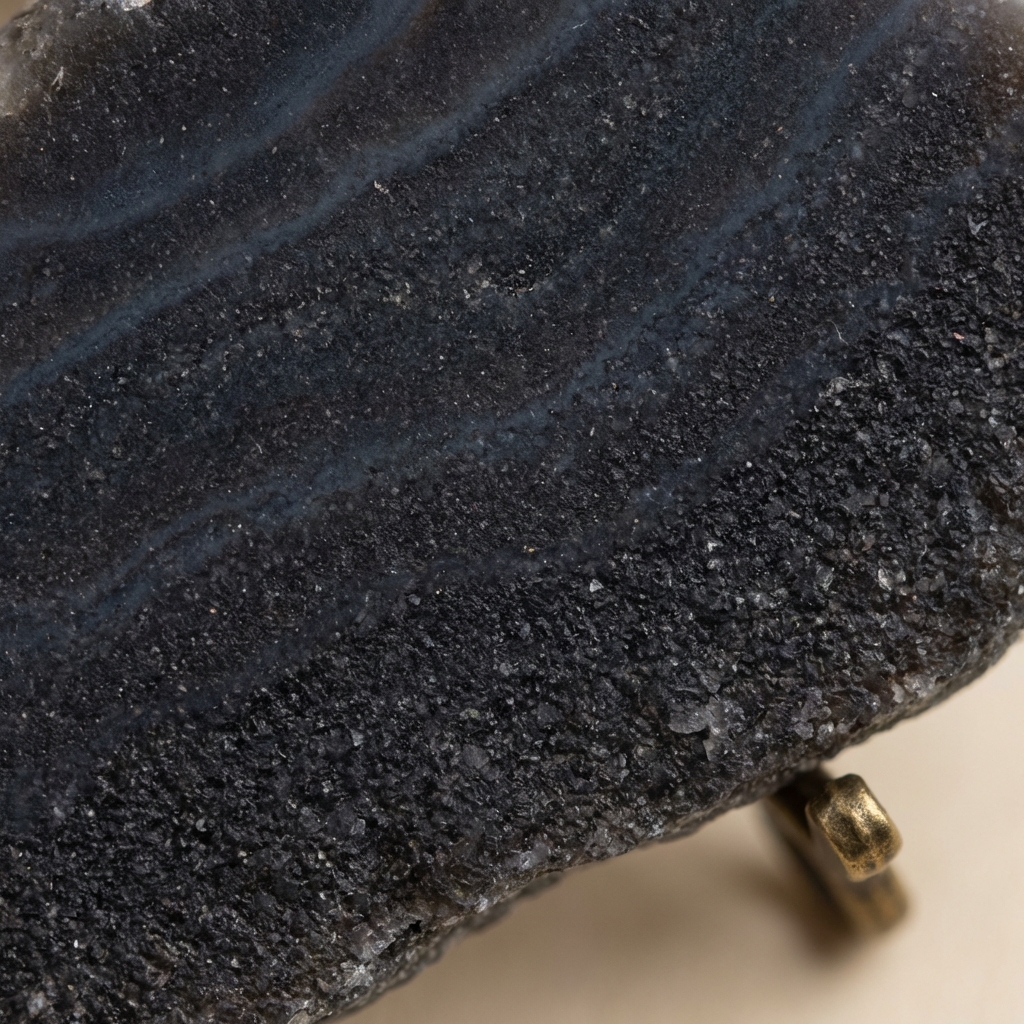
Begin with unobtrusive, non-contact observations. Look for sub-parallel bands or layering within the stone under good raking light; true black onyx is a banded chalcedony and often shows subtle layering rather than a perfectly uniform black field, which is an initial sign that the material may be natural IGS onyx article.
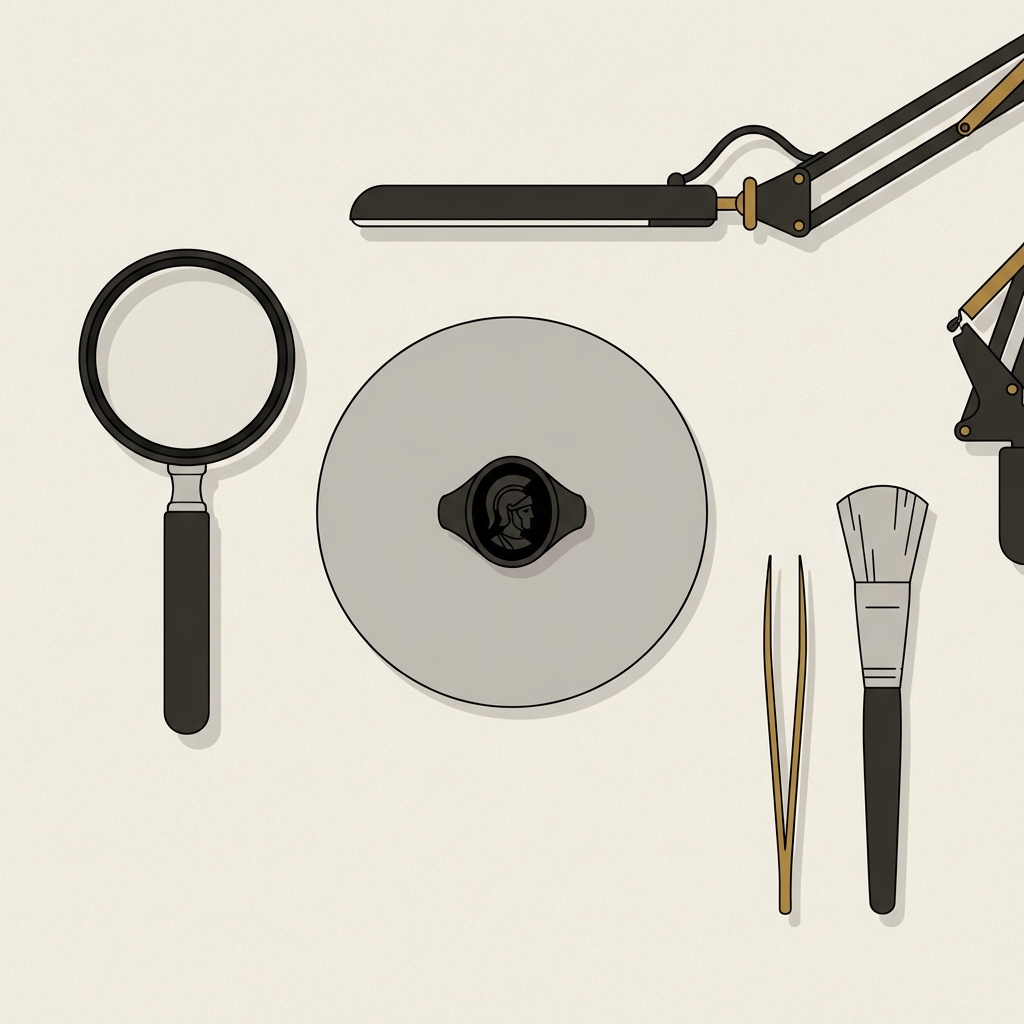
Next, use a strong lamp to check light transmission and translucency; chalcedony tends to be opaque to slightly translucent at edges when held to bright light, while many glass or resin simulants transmit light differently and may appear glassy or uniformly bright in ways inconsistent with chalcedony observations IGS onyx article.
Magnified inspection with a 10x loupe helps reveal telltale signs of modern manufacture: bubbles, flow lines or mold marks indicate glass or resin, while a natural chalcedony surface will typically show a more granular texture and wear patterns consistent with age rather than casting artifacts IGS onyx article.
Inspecting the mount: what a Roman soldier ring's setting can tell you
The mounting and bezel integration often provide strong contextual evidence for a ring's history; for Roman engraved gems and intaglios, bezel style, how the stone sits in the seat, and patina continuity between stone edges and metal can indicate an historical assembly British Museum notes on engraved gems.
Start with non-destructive visual checks for banding and translucency, inspect the bezel and patina, document condition and provenance, and commission non-destructive lab tests such as RI, SG and Raman spectroscopy when the piece has significant value or unclear documentation.
Check for matching wear on the bezel and shoulders: original settings frequently show consistent wear and patina where metal and stone interface, while a later re-setting may show sharp tool marks, fresh solder, or a gap where the stone is seated differently from the surrounding metal British Museum notes on engraved gems.
When a stone appears to be an older gem but the mount looks modern, treat the assembly as inconclusive until more documentation or lab tests are obtained; modern re-setting of older stones is a common occurrence and alters how you should read provenance and age claims British Museum notes on engraved gems.
Safe at-home checks you can try and what they can actually tell you
Prioritize non-destructive observations: clear, well-lit photos, loupe inspection, and lamp translucency checks can triage likely natural stone versus obvious simulant without risking damage IGS onyx article.
quick loupe inspection guide for collectors
Use non-contact methods first
A streak test or hardness scratch can be diagnostic in principle because chalcedony is around 6.5 to 7 on the Mohs scale, but performing scratches on a mounted or historically important stone risks irreversible damage and should be avoided unless the stone is loose and you accept the risk GIA chalcedony overview.
If any quick checks suggest inconsistencies-uniform color without banding, visible bubbles, or an obviously modern bezel-stop further at-home testing and document your findings with photos and condition notes before seeking professional advice AGS guidance on when to send to a lab.
When lab tests are necessary and which methods experts use
When a ring is significant for provenance or value, laboratories use non-destructive methods that reliably confirm chalcedony: refractive index near 1.53 to 1.55 and specific gravity around 2.58 to 2.64 are standard ranges labs report when identifying onyx GIA onyx guide. See also GIA challenges paper.
Spectroscopic approaches such as Raman and other non-destructive spectroscopy can detect species, dyes and assembled stones without removing the gem from its setting, and these techniques are commonly reported in formal lab reports that collectors rely on for attribution Journal of Gemmology article on Raman identification.

Consider accredited or widely respected reporting bodies for meaningful certainty, and request a formal written report that lists the tests performed and the ranges observed; a laboratory report is the document that most reliably distinguishes chalcedony onyx from glass, resin or assembled doublets AGS guidance on lab testing.
Common simulants and how they differ from real onyx
Glass, dyed agate and modern plastics are common market simulants; they can mimic color and surface polish yet usually differ in internal structure and physical properties, differences that show up under magnification or instrument testing IGS onyx article.
Assembled stones and doublets combine different materials to present a convincing face while concealing a different core; these constructions can appear correct visually but will typically produce conflicting refractive index and specific gravity measurements compared to a single-piece chalcedony specimen IGS onyx article.
Because many simulants look convincing to the unaided eye, if you see signs such as bubbles, mold lines or an exact uniformity of color, treat the piece as likely a simulant for practical decision making unless a lab report says otherwise AGS guidance on spotting fakes.
Provenance, documentation and why the ring's history matters
Provenance and collection history provide the narrative context that supports or weakens an attribution; useful documentation commonly includes prior ownership notes, collection history, and any verification letters that reference physical checks or past examinations British Museum notes on engraved gems.
Documentation does not replace material testing: provenance can suggest a plausible history but confirming the species of the stone, treatments or assembly usually requires lab analysis, so provenance and lab work are complementary parts of a careful authentication process AGS guidance on when to send to a lab.
When evaluating seller-provided documentation, look for clear, dated statements that describe testing performed, the laboratory or expert, and what was found, and treat vague phrases without supporting tests as useful but not definitive British Museum notes on engraved gems.
Decision checklist: accept a field ID or send the ring to a lab
Use a ranked checklist to decide next steps: first assess the stone visually for banding and translucency, second inspect bezel integration and patina, third review provenance and condition notes, and fourth weigh monetary or historical significance as a trigger for lab testing GIA onyx guide.
Triggers that should push you toward professional, non-destructive lab tests include unclear or absent provenance for a high-value piece, visible signs of assembly or modern re-setting, or any conflict between stone appearance and mount wear AGS guidance on lab referral.
Practical next steps: photograph the ring in natural and raking light, note condition and any visible restoration notes, keep original packaging or labels, and contact a lab or specialist with clear questions about RI, SG and spectroscopic analysis to request a formal report Journal of Gemmology article on Raman identification. You can also compare market examples in our rings collection.
Typical mistakes and preservation pitfalls to avoid
Avoid destructive tests on mounted stones such as hardness scratches or aggressive streaking; these can irreversibly damage an ancient intaglio and erase trace wear that is important for dating and assessment AGS guidance on spotting fakes.
Do not over-clean or use harsh chemicals; amateur restoration can remove patina or tool marks and compromise the very evidence you need to judge a ring's history, so preservation-first practices are essential when working with antiquities British Museum notes on engraved gems.
Watch confirmation bias: want of a desirable attribution can lead to overlooking contradictory signs; document what you see, state uncertainties, and prefer verifiable tests and reports to confident-sounding but unsupported claims AGS guidance on lab referral.
Practical scenarios: three short, realistic examples
Scenario A: In a low-value costume ring, banding is absent and magnified inspection shows bubbles and mold lines; the sensible course is to treat it as a simulant and not pursue costly lab work, documenting your visual findings IGS onyx article.
Scenario B: A stone shows subtle banding and translucency consistent with chalcedony, but the bezel and shoulders appear modern and lack consistent patina; in that case provenance checks and optional lab tests depending on the purchase price are reasonable next steps British Museum notes on engraved gems.
Scenario C: A historically important soldier ring has ambiguous stone appearance and incomplete provenance; here non-destructive lab work such as RI and Raman spectroscopy, paired with provenance research, is the appropriate route before making attribution claims Journal of Gemmology article on Raman identification.
Summary: next steps, resources and how Aurora Antiqua approaches material and provenance
Quick action steps: run a careful visual triage for banding and translucency, inspect the mount and patina, photograph and record condition notes, and commission lab tests if the piece has high value or unclear documentation GIA onyx guide.
Aurora Antiqua presents curated ancient rings with condition notes, restoration notes and provenance references when available to help collectors weigh evidence; these materials are offered as a trust layer that supports informed decisions rather than as absolute statements of authenticity.
When you request documentation from a seller, ask specifically for collection history, prior ownership notes, any verification letters, and past lab reports where they exist; together these pieces and, where needed, non-destructive lab tests form the responsible path to attribution British Museum notes on engraved gems.
Look for sub-parallel banding, slight translucency at edges under strong light, and a granular surface texture under magnification; these are initial indicators but not conclusive without lab testing.
Non-destructive checks like loupe inspection, lamp translucency, and detailed photographs are safe; hardness or streak tests on a mounted historic stone risk damage and should be avoided.
Commission lab testing when the ring has high monetary or historical significance, when provenance is unclear, or when visual checks reveal conflicting signs such as possible assembly or modern re-setting.
More from Aurora Antiqua
References
- The Gemstone Book, CIBJO Blue Book, Coloured Stone Commission, CIBJO, The World Jewellery Confederation
- Chart of Commercially Available Gem Treatments (Gems & Gemology, Winter 2002), Gemological Institute of America
- Quartz, Handbook of Mineralogy, Mineral Data Publishing / Mineralogical Society of America, USA
- Similarities and differences among selected gemmological varieties, Mineralogical Society of Great Britain
- 16 CFR Part 23, Guides for the Jewelry, Precious Metals, and Pewter Industries, Federal Trade Commission, eCFR
- Kunststoffe als Imitationen für Edelsteine und organische Substanzen (plastic imitations of gems), Deutsche Gemmologische Gesellschaft
- Intaglio: Victory in a Chariot, The Cleveland Museum of Art, USA
- Gemstones from Roman Britain: Recorded in the Portable Antiquities Scheme, University Debrecen, Hungary
- International Gem Society, gemsociety.org