


Looking for the real thing? Browse our full ring collection, each piece one of one, individually authenticated, with documented provenance. For the background, see the guide to buying ancient artifacts.
Why this guide matters for buyers of coin jewelry
Buying wearable antiquities, such as necklaces made with historic coins, brings distinct opportunities and risks. For anyone trying to verify an authentic roman coin necklace, a methodical approach helps separate quick screening steps from specialist analysis and reduces the chance of costly mistakes.
Collectors commonly face three overlapping concerns: whether the coin is genuine, whether it has clear collection history or provenance, and whether mounting or cleaning has altered diagnostic features. Start with condition notes and visible surface features rather than attempting any cleaning that might remove evidence, because conservation guidance cautions against invasive surface treatment when identification is still uncertain Portable Antiquities Scheme guidance.
Who this is for
This piece is written for history minded buyers and collectors considering ancient coin jewelry, especially Roman coin necklaces, who want a practical, evidence based checklist to screen items before purchase. It assumes readers can take photos, make simple measurements, and ask sellers for documentation.
This guide outlines screening steps that can reduce uncertainty but does not replace accredited lab testing or a specialist report. When visual checks and metrology leave significant doubt, combined stylistic and material analysis is the recommended next step rather than relying on any single test or the patina alone Conservation guidance from ANS.
Definition and context: what counts as an authentic ancient coin in jewelry
In collecting terms an "ancient coin" is an object struck or cast during the coin's original period of issue and used for exchange or official purposes in antiquity. For Roman coin necklaces this typically includes denarii of the early empire, antoniniani and various late Roman types that appear in wearable contexts, and later provincial issues described by typology rather than precise dating.
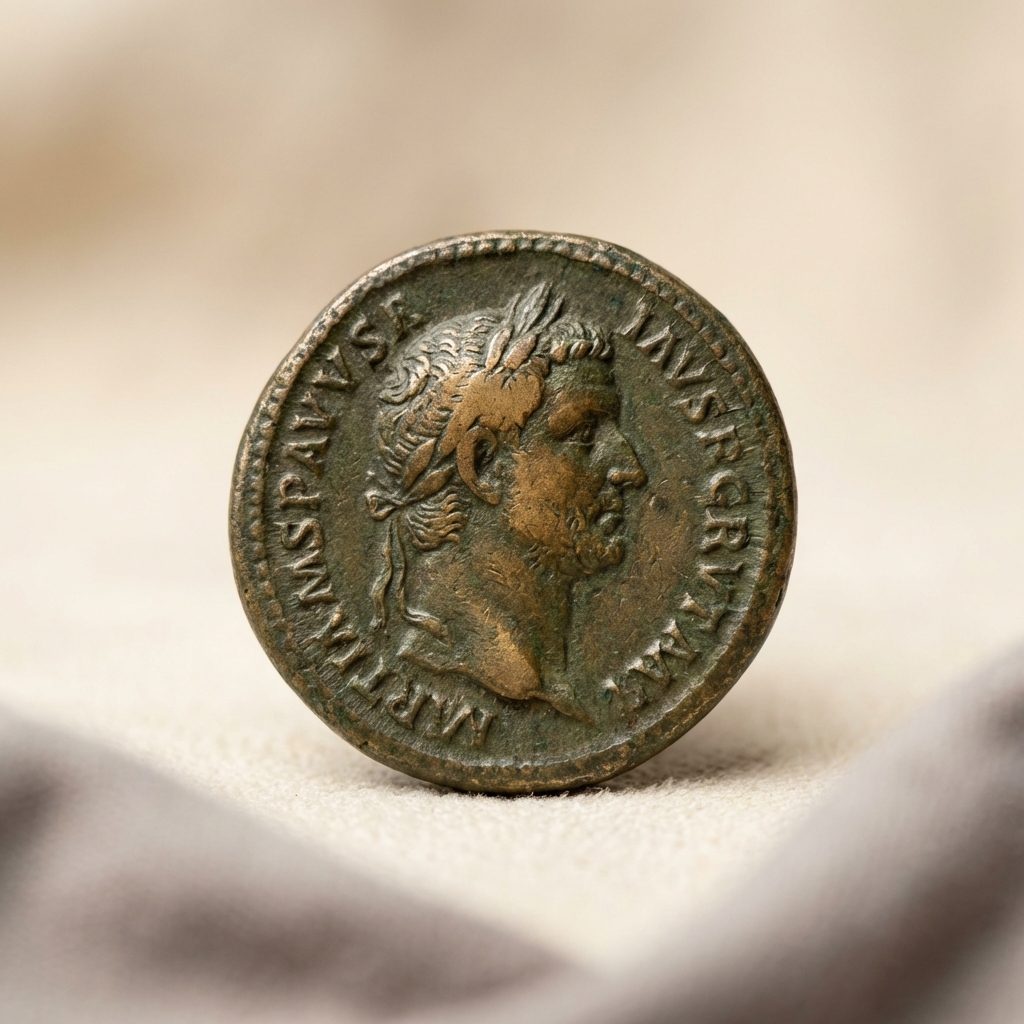
Common coin types used in necklaces vary by era and region and may include denarius, antoninianus, and late Roman folles; dating should be treated as an estimate tied to typology and comparative study rather than an absolute statement unless supported by testing or documentation Portable Antiquities Scheme guidance.
A buyer can reduce uncertainty by combining careful visual inspection, precise measurements, calibrated non destructive screening and provenance checks, and by referring to accredited specialists for laboratory analysis when doubt remains.
Condition conventions matter: a stable, undisturbed patina, documented repairs and transparent restoration notes are part of the object record and often more informative than a superficially bright surface. When sellers provide condition notes and collection history, use them to understand past treatments and likely origin, while remembering that provenance reduces but does not eliminate uncertainty about the object's dating or collecting legality UNESCO guidance on due diligence.
Dating, workshop attributions and condition conventions
Dating is typically expressed as a range and linked to die types, legend forms and iconography rather than a single year. Workshop attribution for debased alloys and stylistic variants can be uncertain; when alloy composition is central to attribution, that conclusion is best treated as provisional unless supported by calibrated analysis Portable XRF for paintings and metals authentication, npj Heritage Science (Springer Nature), DOI.
First check: systematic visual inspection
Begin with a careful, step by step visual inspection. Look for consistent wear across high points, a natural patina that follows fields and recesses, crisp or worn die details that match expected strike patterns, and absence of modern tooling marks. In many cases the patina texture and undisturbed surface deposits are among the most diagnostic indicators prior to any testing Portable Antiquities Scheme guidance.
Patina and surface texture
Patina should appear integrated with surface detail, settling into grooves and legend letters rather than floating as a single uniform layer. Be cautious of artificially applied coatings that sit on top of details or show brush marks. Avoid any cleaning that would remove or alter that surface evidence, because conservators advise stabilising rather than stripping patina when identification is ongoing AIC conservation notes.
Die detail, legend and strike
Compare die detail, letter forms and portrait style to reference images from reputable databases or auction catalogues. Genuine coins typically show consistent letter spacing and strike weaknesses where dies were worn; modern cast or struck reproductions often have irregular lettering or an unusual softness of relief that does not match known dies Smithsonian curatorial notes. For step by step examples and comparative images see our guide on how to tell if a Roman coin is real how to tell if a Roman coin is real.
Edges, casting seams and repair signs
Check the rim for casting seams, a telltale sign of modern cast fakes, and inspect any holes drilled for necklace mounting. Modern drilling can leave bright metal inside the hole and sharp edges, whereas ancient holes or historic mounts often show wear consistent with use. Look also for solder traces or recent repairs near the bezel, which should be documented in condition notes Portable Antiquities Scheme guidance.
Measurements and metrology: weight, diameter and thickness checks
Objective measurements reduce uncertainty by comparing an object's mass and size to published typologies for the issue. Use a small precision scale and digital calipers to record weight, diameter and thickness and note any missing fragments; discrepancies of more than a few percent compared to published standards are a common indicator of modern alteration or forgery ANS conservation guidance.
Take measurements carefully: weigh coins on a tared precision scale that reads to at least 0.01 grams and measure diameter across the broadest plane with calipers. Record the measurement method and ambient conditions, and log the numbers for later comparison with reference tables or a specialist.
basic measurement kit for marketplace screening
Calibrate tools before use
When comparing to typologies, account for wear and corrosion which can reduce mass and diameter. Published references and auction records often include ranges rather than single values; use the parallels that most closely match portrait type and metal to set an acceptable tolerance range.
How to measure accurately

Using published typologies and acceptable variance
Match your measurements to reference values in specialised catalogues, museum entries or reputable auction archives. A few percent variance can be acceptable depending on wear and corrosion; larger gaps should prompt suspicion and further screening such as portable alloy analysis or expert referral Smithsonian curatorial notes.
Non destructive screening tools: what they do and their limits
Non destructive tools are useful for screening but require context and calibration. Portable XRF can indicate alloy composition and trace elements, while simple magnet tests and specific gravity can flag base metal imitations; each method has interpretive limits and should be seen as part of a workflow rather than a definitive test statistical methods for pXRF and case studies on hand held XRF.
Portable XRF and alloy reading
Portable XRF instruments report surface composition and can identify elemental patterns consistent with certain alloy recipes, but results need calibration against standards and awareness of corrosion products that may bias readings. Use XRF data together with die study and metrology rather than as the sole basis for authentication; manufacturers and labs discuss micro-XRF applications for origin studies Bruker micro-XRF origin study.
Magnet tests, specific gravity and practical screening
A simple magnet test can quickly detect ferrous or heavily magnetic modern alloys. Specific gravity testing can be more informative for separating solid precious metal copies from plated or base metal fakes, but it requires a precise scale and careful procedure and may be impractical for mounted or pierced coins used in necklaces AIC conservation notes.
Limits and interpretive caution
All non destructive screens have limitations. Surface corrosion can alter XRF results, and small differences in composition may reflect regional alloy variation rather than forgery. For that reason, stewardship bodies and numismatic specialists recommend treating these tests as indicators that guide further study by experts when results are ambiguous ANS conservation guidance.
Provenance and documentation: records, find entries and due diligence
Provenance checks are central both for assessing authenticity and for legal and ethical risk. Request find records, prior auction or catalogue entries, and any verification letters; a clear collection history helps contextualise an object and may reduce but not remove uncertainty UNESCO due diligence guidance.
What documentation to request
Ask sellers for collection history, dates and locations of acquisition, prior sale catalogues or auction lot references, and any written condition or verification letters. Documentation that ties a coin to a recorded find or reputable sale is more useful than generic statements; inconsistent or missing provenance is a practical red flag.
Using public find records and auction catalogues
Search public registers and find recording schemes for matches to the coin type, and compare auction images and descriptions to the item you are evaluating. Public records can help place a coin in context and identify prior attributions, but absence from records is not definitive proof of modern manufacture Portable Antiquities Scheme guidance.
Red flags in documentation
Be cautious if documentation is vague, contradictory or withheld. A seller who refuses reasonable provenance questions, or a record that appears tampered with, should prompt either further testing or a decision to avoid the purchase until the matter is resolved UNESCO due diligence guidance.
When to consult experts and what to expect from lab analysis
If screening steps still leave doubt, seek accredited numismatic experts, museum curators or conservation laboratories. Multidisciplinary referral combining stylistic study and materials analysis is the recommended route when uncertainty remains about origin or forgery, because combined methods reduce interpretive gaps International Association of Professional Numismatists (IAPN), IBSCC.
Typical specialists include experienced numismatists who can match die work and iconography, conservation scientists who can run calibrated non destructive tests, and labs that offer metallography or isotope analysis when needed. Expect an expert referral to produce a reasoned report rather than an absolute verdict, and to include condition notes and recommended handling or conservation steps.

Types of lab reports and plausible outcomes
Laboratory reports may include calibrated XRF results, metallographic descriptions, microstructure imaging, and in some cases isotope ratios. These reports typically describe methods, limitations and confidence levels; they are most useful when paired with a numismatic assessment that places the physical data against die studies and typologies Application of multi-modal 2D and 3D imaging and analytical techniques, npj Heritage Science (Springer Nature).
Common mistakes, quick checklist and next steps
Some errors are common and avoidable: never rely only on patina or appearance, avoid invasive cleaning, do not skip metrology, and do not buy when provenance is unanswered. These mistakes reduce the ability to verify an object later and can destroy key evidence about the coin's history and manufacture AIC conservation notes.
Typical errors to avoid
Avoid sellers who pressure you to decide without documentation, transactions that lack clear photographs of both sides, and any offer that requires you to accept unknown restoration or undisclosed drilling. Record restoration notes and any visible repairs before purchase.
Final buyer checklist before purchase
Use this short ordered checklist before you buy: 1) Visual inspection and condition notes; 2) Measure weight and diameter and compare to typologies; 3) Perform basic non destructive screens where practical; 4) Request provenance records and prior sale references; 5) If doubt remains, refer to a qualified numismatist or conservation laboratory Portable Antiquities Scheme guidance.
After acquisition, record condition notes, any documentation provided, and the exact measurements and photographs. Store the object in stable conditions and avoid chemical cleaning; good records make later specialist referral easier and protect both the object's history and the buyer's due diligence record ANS conservation guidance.
See authentication in action on @auroraantiqua
Document the coin, keep clear photographs and provenance notes, and seek specialist input if anything seems inconsistent.
A quick visual and magnet test combined with weight and diameter checks can identify many obvious modern imitations within minutes, but uncertain cases need further screening or expert input.
No, invasive cleaning can remove diagnostic surface evidence; stabilise and document condition and consult conservation guidance before any treatment.
Request collection history, prior sale or catalogue references, and any written condition or verification notes; clear provenance reduces but does not eliminate uncertainty.
More from Aurora Antiqua
References
- Online Coins of the Roman Empire, American Numismatic Society and Institute for the Study of the Ancient World
- American Numismatic Society: Silver Quinarius of Augustus, Emerita, 25 BCE
- Investigating Ancient “Bronzes”, J. Paul Getty Museum and Getty Conservation Institute, Los Angeles
- Portable XRF for paintings and metals authentication, npj Heritage Science (Springer Nature), DOI
- Testing and Retesting Alexander the Great, J. Paul Getty Museum and Getty Conservation Institute, Los Angeles
- Application of multi-modal 2D and 3D imaging and analytical techniques, npj Heritage Science (Springer Nature)
- International Association of Professional Numismatists (IAPN), IBSCC
- Object ID, International Council of Museums
- NPS Museum Handbook, Part I, Appendix O: Curatorial Care of Metal Objects, National Park Service, US Department
- Fighting the illicit trafficking of cultural property, UNESCO