


Looking for the real thing? Browse our Medieval ring collection, each piece one of one, individually authenticated, with documented provenance. For the background, see the guide to medieval jewelry.
What is an ouroboros snake ring? Definition and historical origins
Basic description of the motif and the ouroboros snake ring
The ouroboros is a depiction of a snake or dragon biting its own tail, a compact image that has served as a visual shorthand for cycles, unity, and renewal in many cultures. On an ancient ring the motif can appear as an intaglio cut into a stone, as a cast bezel scene, or as a decorative loop rolling around the hoop, and these forms influence how visible the symbol is in everyday wear.
The symbol first appears in ancient Egyptian iconography and then moves into Greek and Hellenistic artistic vocabularies, where it becomes part of a wider set of cosmological and time related motifs; this transmission into Mediterranean visual culture is well documented by collection histories and museum scholarship Encyclopaedia Britannica.
No single historical or contemporary authority declares the ouroboros intrinsically anti Christian; interpretation depends on intent, context, and local pastoral guidance.
On rings, the ouroboros rarely indicates a single religion or cult, and in many instances was used as compact symbolic imagery rather than a devotional object. Materials vary, but typical ancient ring elements to note include a bezel that carries an intaglio, a worn hoop with patina, and any repair or restoration work that affects how the motif reads at a glance.
Collectors evaluating an ancient ouroboros snake ring should pay attention to how the motif is executed, whether it is a separate pendant element or integrated into the ring face, and whether any catalog or provenance notes explain the symbol's cultural context.
How museums and scholars interpret the ouroboros motif
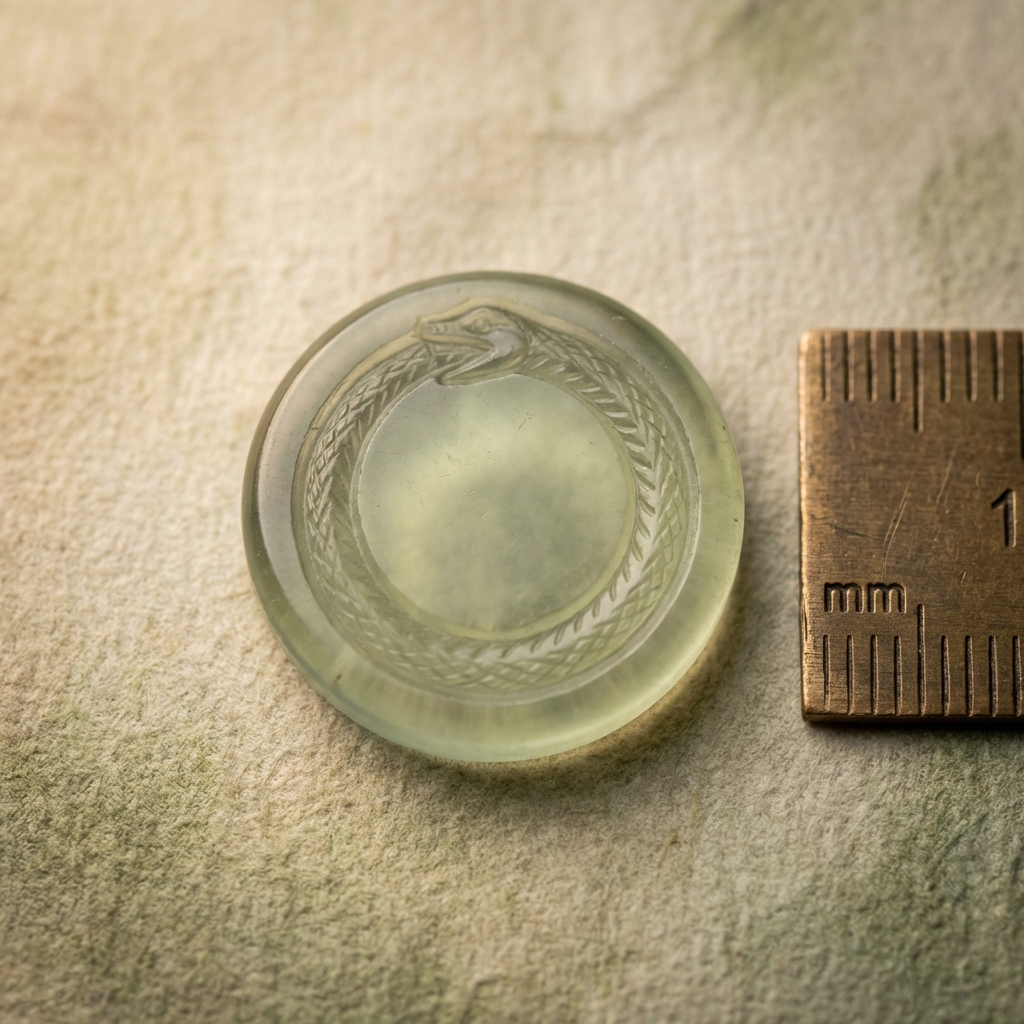
Museums and curators tend to treat the ouroboros as a cultural historical motif that can signify a range of ideas, for example cyclical time, cosmological wholeness, or renewal, rather than as a single religious emblem. Institutional descriptions often situate an object within a collection history that clarifies period, origin, and possible meanings The Metropolitan Museum of Art collection insights.
Scholarly treatments emphasize that interpretation depends on context, such as where an object was found, accompanying motifs on the same object, and known textual associations from the period. For example, museum catalog notes frequently cross reference similar motifs in other objects to show a range of meanings rather than asserting one fixed reading.
When you read a museum label or catalog entry about an ouroboros depiction, look for language about cosmology, regeneration, or symbolic programs, because these categories are commonly applied by curators and researchers to explain the motif.
Ouroboros in late antiquity and alchemical traditions
In late antiquity and the alchemical tradition, the ouroboros became a favored image for conveying philosophical ideas such as unity of opposites, cyclical renewal, and self reference. Alchemical authors and illustrators used the snake eating its tail to signal processes that loop back on themselves, a symbolic vocabulary that later medieval commentators also engaged with The Metropolitan Museum of Art collection insights.
These alchemical meanings are interpretive and philosophical, not evidence that every object carrying the motif was used devotionaly. The appearance of the ouroboros in manuscripts and small objects shows a continuity of metaphor, where the image stands for conceptual ideas rather than formal cult practice, and this lineage helps explain why the motif occurs in late antique and medieval symbolic repertoires Encyclopaedia Britannica.
Watch Jakob's behind the scenes, part personal journal and part antique dealer desk, on @auroraantiqua
The decision framework later in this article offers three practical questions collectors can use to evaluate an ouroboros ring, focused on intent, provenance, and community standards.
As a motif that crossed genres, the ouroboros could appear in alchemical diagrams, philosophical texts, and personal objects at once; on jewelry its scale and finish often point to whether it was meant to be read as a learned emblem or a decorative motif carried for personal meaning.
For collectors thinking about an ouroboros snake ring, understanding the alchemical and philosophical background can clarify why a dealer or catalog might describe the piece using terms like renewal, cyclical, or self reference, and why those descriptions do not automatically imply any devotional use.
Early Christian responses and medieval attitudes
Early Christian writers did not settle on a single ruling for pre Christian motifs, and responses ranged from reinterpretation and appropriation to broader warnings against pagan cultic practices; this variety appears in historical overview literature that examines patristic and medieval reactions to pagan symbols A review in the International Journal of Early Christian Studies.
Patristic sources often targeted active pagan worship and rites rather than neutral or decorative imagery, so a motif on a personal object could be treated differently depending on its use. In some medieval contexts, symbolic images with cosmological associations were adapted into Christian visual language, while in others similar images were avoided or explicitly rejected.
Because treatment of images varied by time and place, historians advise caution in assuming that a single motif carried an identical meaning across Christian communities in late antiquity and the medieval period; local devotional practices and theological emphases shaped what was acceptable.
Modern Christian perspectives and denominational guidance
Today there is no single churchwide prohibition that specifically names the ouroboros as forbidden, and contemporary denominational guidance commonly evaluates imagery by the wearer’s intent and the object’s context rather than by motif alone; summaries of recent pastoral guidance describe this evaluative approach Denominational pastoral guidance summary.
Most pastoral resources draw a practical distinction between objects used devotionally, which can raise concerns about idolatry, and objects worn for historical interest, aesthetic reasons, or personal meaning. That distinction is the primary filter many clergy and pastoral advisers apply when counseling parishioners.

If you are uncertain how a particular community will receive an ouroboros snake ring, the safest step is to raise the question with local leaders and be prepared to explain provenance and the reason you wear the piece, because local pastoral judgment can differ.
Scholars and museum professionals generally frame the ouroboros as a cultural and historical symbol rather than intrinsically anti Christian, while pastoral responses emphasize conscience and community standards, so both perspectives can be useful when deciding what to wear.
Is the ouroboros snake ring considered anti Christian? A practical framework
There is no uniform answer, and the most helpful approach is to assess three practical dimensions: intent, context, and provenance. These help determine whether an object functions as a devotional focus or as an item of historical or aesthetic interest Denominational pastoral guidance summary.
First, ask whether the ring is being used devotionally, for liturgical practice, or in a manner that elevates the symbol to an object of worship. Second, examine the context and documentation: does the catalog description, provenance note, or scholarly commentary present the motif as a cultural or philosophical image? Third, consult community standards and your own conscience to see whether wearing the object would create real pastoral difficulty.
When a symbol functions as idolatry rather than ornament, it is the use and intention that determines the pastoral concern. Discussing specifics with clergy, and explaining the provenance and the reasons you value the piece, usually clarifies whether it can be worn without upsetting local norms.
Use the three assessment questions below as a quick checklist before deciding: is it used devotionally, what does provenance indicate about context, and how would the object be perceived by your community.
Short printable checklist for assessing a ring
Keep answers brief and factual
Decision checklist for Christian buyers: provenance, symbolism, and care
When considering an ouroboros snake ring, request clear provenance and documentation that explain where the object was found, prior ownership if known, and any catalog citations. Provenance for antique jewelry helps place an object in its historical context and can reduce uncertainty about meaning and use. For examples of available pieces, see our rings collection.
Read condition notes and restoration notes carefully. Restoration work can obscure original details that help identify the motif or its intended reading, so ask whether repairs were documented and whether any stabilization changed the original appearance of the bezel or intaglio.
Ask the seller specific questions, for example: is the motif described in any catalog or publication, are there photographs of the ring before restoration, and is there a record of prior ownership? These questions give you evidence to share with clergy or trusted advisers if you need a pastoral opinion.
When uncertain, conservative options include preferring explicitly Christian motifs for devotional wear, or treating an ouroboros ring as part of wearable ancient symbolism for occasional or private use rather than public devotional display.
Common mistakes and pitfalls when interpreting ancient symbols on jewelry
A common error is assuming that any pre Christian motif represents active pagan worship; many symbols circulated as cosmological or philosophical images and were used decoratively. Avoid equating age with devotion without corroborating provenance or textual evidence.
Another pitfall is projecting modern esoteric meanings onto ancient pieces without supporting documentation. Modern symbolic systems sometimes read new ideas into old imagery, and that can produce misleading judgments about what an original wearer intended.
Finally, ignoring provenance and restoration history can lead to misreading an object. If restoration altered the bezel or an intaglio was recut, the current appearance may not reflect historical usage, so always request condition and restoration notes before drawing conclusions.
Practical scenarios: wearing, gifting, or buying an ouroboros snake ring
Scenario A, wearing as ornament in secular settings: if you wear an ouroboros snake ring for historical interest or aesthetic reasons and it is not used devotionally, many communities will treat it as personal adornment; nevertheless, knowing provenance and having documentation on hand can prevent misunderstandings The Metropolitan Museum of Art collection insights.
Scenario B, wearing with devotional intent: if the wearer treats the ring as an object of devout practice, clergy may view it through the lens of idolatry concerns, and some denominations will advise against such use. In that case a different, explicitly Christian symbol may be suggested for liturgical wear.
Scenario C, gifting to a religious community member: before gifting, ask about the recipient’s community standards, and share provenance and symbolism notes so the recipient can make an informed choice. An informed gift reduces the risk of creating pastoral or communal difficulty.
How Aurora Antiqua presents ancient rings and what to look for when buying
Aurora Antiqua acts as an expert curation reference and trust layer for buying ancient jewelry online, presenting pieces with condition notes and historical context to help buyers understand what they are purchasing. The brand keeps descriptions factual and uses conditional language about dating and materials. Explore our curated rings at Aurora Antiqua rings for examples.
Listings typically include the following capabilities exactly as framed: curated ancient rings spanning Roman, Greek, Byzantine, Islamic, Celtic, medieval, and post medieval periods; select small artifacts and relic objects offered alongside jewelry; restoration and preservation notes that describe what was stabilized, repaired, or left untouched; provenance and documentation references when available, for example collection history, prior ownership notes, and verification letters; and editorial and historical content that explains cultural context, symbolism, and historical background tied to pieces.

Use those listing elements to evaluate an ouroboros snake ring: provenance and documentation references indicate collection history, restoration and preservation notes reveal what was changed, and editorial historical content explains likely meanings, so combine those with your own pastoral conversations if guidance is needed. See our editorial updates in the news section.
Conclusion: balancing history, faith, and personal meaning
The ouroboros has a long and varied history, and modern scholarship treats it primarily as a cultural and philosophical symbol rather than something intrinsically opposed to Christianity; that scholarly framing helps explain why the motif appears across periods and contexts Encyclopaedia Britannica.
For binding pastoral direction, consult denominational leaders and present provenance and symbolism explanations, because community standards and conscience matter when an object might be perceived as devotional. Balancing historical interest with respect for local norms lets collectors enjoy wearable ancient symbolism while attending to pastoral concerns.
Many denominations assess such jewelry by intent and context, so wearing an ouroboros ring as decoration is often treated differently from using it devotionally; consult local clergy for binding guidance.
No, scholars view the ouroboros as a cultural historical symbol that can mean cyclical renewal or unity, and its presence alone does not prove cultic use.
Ask for provenance notes, condition and restoration reports, catalog citations if any, and clear photos from before restoration where available.
More from Aurora Antiqua
References
- Talismans, Visitatori salutem, Szepmuveszeti Muzeum, Museum of Fine Arts Budapest
- About us, International Association of Dealers in Ancient Art
- Stolen Works of Art Database, INTERPOL
- Research report: export licensing and provenance, GOV.UK, Department for Culture, Media and Sport (DCMS)
- Archaeological materials, Icon, The Institute of Conservation (UK)