


Looking for the real thing? Browse genuine Roman rings for sale, each piece one of one, individually authenticated, with documented provenance. For the background, see the guide to buying ancient artifacts.
What people mean by roman empire jewelry and why the name can be misleading
Difference between a maker named Roman and Roman-period antiquities
When you see the phrase roman empire jewelry in a listing, it can mean two very different things: a modern maker called Roman or a piece that was made in the Roman period. Confusing those meanings leads to very different verification needs, because a contemporary maker name does not tell you anything about composition, while an actual antiquity raises questions about dating, restoration and provenance.
For a modern branded item, metal content is a merchant claim that should be backed by marks or lab testing rather than by the brand name alone. In many cases buyers rely on visible karat stamps or seller labels, but those are not a substitute for assay reports when certainty matters.
Why brand names and period labels get confused in listings
Listings frequently use period language to describe style, motif or inspiration, and some makers choose names that echo historical eras. That overlap can lead to ambiguous titles where roman empire jewelry appears alongside a maker name. Treat the phrase as a prompt to look closer at the listing language rather than as a definitive statement about age or metal.

What buyers should expect from listings that use period language
Good listings for either modern or ancient pieces include explicit dating language, clear provenance or collection history when available, and condition notes explaining restoration or conservation work. If a seller calls a ring roman empire jewelry but provides no documentation or clear condition notes, that is a signal to ask follow up questions before assuming the metal is solid gold.
Look for phrases such as one of a kind, condition notes, and provenance or restoration notes, and ask the seller to clarify whether roman refers to a brand, a style, or a period attribution.
How gold purity, karats and hallmarks work in practice
Karat and fineness explained

Gold purity is usually expressed in karats or fineness; for example 18K is approximately 75 percent gold by mass, a conversion explained by industry authorities and assay offices World Gold Council gold jewellery guidance.
Knowing the conversion between karats and fineness helps when you read marks such as 9K, 14K or 18K. Those marks describe the declared alloy composition but they do not by themselves prove the current composition of any specific item without verification.
What an official hallmark means in jurisdictions with assay offices
In jurisdictions with assay offices, a hallmark applied by an official assay body is a regulated indicator of the declared fineness and carries relatively high confidence when present. If a seller provides a recognized assay hallmark, that is a meaningful piece of evidence to weigh when evaluating an item described as roman empire jewelry GOV.UK hallmarking guidance.
Assay offices typically confirm the fineness, apply a mark and keep records. If a listing shows an assay hallmark, ask for clear images of the mark and, if possible, any assay paperwork or certificate that accompanied the assay. See also the Assay Office London FAQs for practical details.
Seller stamps and FTC guidance in markets without national hallmarking
In markets such as the United States, karat stamps and seller markings are governed by trade rules and the Federal Trade Commission guidance, but there is no single national hallmarking office that independently assays and stamps pieces. That means a visible 14K or 18K stamp alone is not definitive proof of composition and should be combined with other evidence for higher value purchases FTC jewelry guidance.
When buying from a seller in a country without state assay marks, request invoices and any lab reports the seller can share, and consider independent testing if the item is valuable or claimed to be an ancient work.
Practical tests buyers can use at home and what professionals do
Simple non-invasive checks any buyer can try
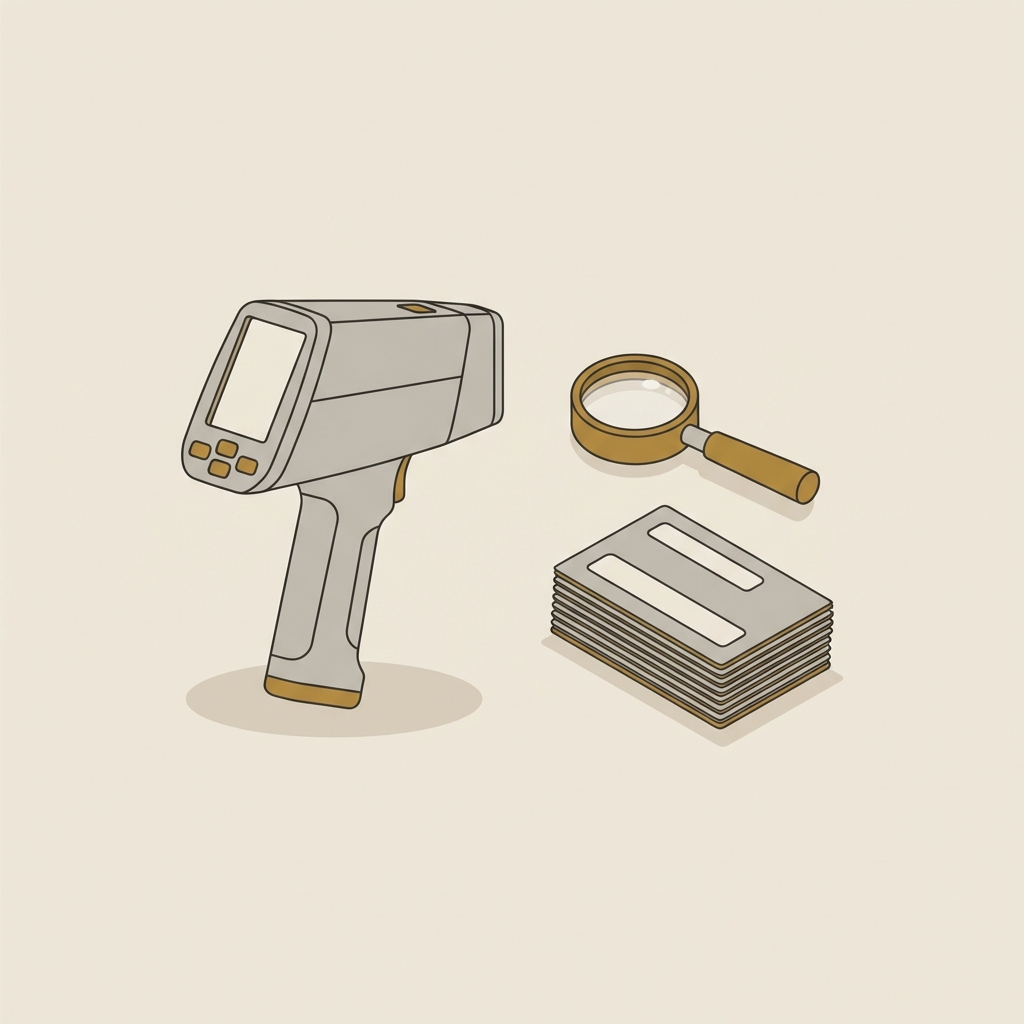
Start with noninvasive checks that give quick clues: a magnet test can reveal magnetic base metals, a loupe can show edge wear or exposed base metal, and a weight check compared to known dimensions can flag a heavy or light alloy for its size. These simple checks are useful first steps for assessing a listing described as roman empire jewelry.
Mind that none of these checks alone prove purity. They act as red flags or initial indicators that should prompt further inquiry, not as final evidence.
Recommend simple handheld checks and when to seek lab services
Use non-destructive checks first
Home tests that are damaging or limited and when to avoid them
Touchstone acid tests can indicate karat range but remove a small amount of surface metal and are less reliable when items are plated or have been reworked. Because these tests are partially destructive, many collectors prefer to avoid them unless they accept the trade off for a lower cost test GIA guidance on gold testing.
Acid testing can give misleading results on plated pieces because it samples a tiny surface area. If a metal is gold plated over a base metal, an acid spot can show the surface gold but not the substrate, so use caution and prefer non-destructive verification when possible.
Professional methods: XRF, fire assay and laboratory reports
Portable X ray fluorescence or XRF is widely used in the trade as a rapid, non destructive way to estimate alloy composition, but it measures surface composition and can be misled by plating or surface enrichment; for nuanced cases the result should be interpreted by an experienced analyst Investigating Ancient “Bronzes”, J. Paul Getty Museum and Getty Conservation Institute, Los Angeles.
For the highest certainty, laboratory fire assay or a certified assay report provides a well understood benchmark, though that service is more costly and typically requires professional lab handling. If a listing claims ancient origin and solid gold, plan for the possibility of independent lab verification for high value items.
How to read and interpret XRF and assay reports for jewelry
What XRF reports show and common misreads
An XRF report will list measured elements and their percentages at the analyzed location, and often include detection limits and measurement notes. The numbers are useful but must be read with the sampling context in mind; an XRF reading taken on a polished surface can differ from a core sample if the item was plated or surface treated Portable XRF for paintings and metals authentication, npj Heritage Science (Springer Nature), DOI.
When you receive an XRF report, check whether the report states where the reading was taken and whether multiple spots were sampled. A single surface reading is helpful but not definitive for plated or reworked pieces.
Why surface enrichment and plating can mislead XRF
Surface enrichment occurs when a surface layer has been altered, cleaned, or deliberately enriched, and that can make a surface XRF read richer in gold than the bulk material. Plating is a more obvious case where surface readings will not reveal the underlying alloy or base metal. If either is suspected, ask for additional sampling or a lab method that penetrates the surface.
For items with patina, corrosion or visible repair, request a report that describes sample locations and any potential effects of surface treatments on results. When in doubt, escalate to a fire assay or laboratory certificate that states its sampling method.
Key terms to look for on a lab report
Helpful terms on a certificate include measured elements with percent composition, stated detection limits, notes on sampling method and whether results are reported as karat or percent mass. A clear report will make it easy to compare the stated karat to the measured fineness, and to see whether the lab flagged any limitations in sampling.
If a seller shares a report, confirm the lab name and accreditation and ask for clarification on any technical notes you do not understand. For collectors buying items described as roman empire jewelry, the combination of a clear report and visible marks or provenance increases confidence.
What to ask for when buying from a maker called Roman or a similarly named brand
Documentation and return rights to request before purchase
When a listing comes from a maker called Roman or a brand with an ambiguous historical name, ask the seller for clear photos of any hallmarks or karat stamps, a copy of the invoice, and any assay or XRF certificate that exists. Those documents help separate a branding choice from a claim about composition or age FTC guidance for jewelry sellers.
Also request written return rights and a reasonable refund window that allows for independent testing if you plan to verify composition after purchase. This approach protects buyers while enabling sellers to show confidence in their items.
See behind the listing: request marks, documents and test reports via @auroraantiqua
Please download the checklist or contact the seller for clear images of marks and any available test reports before you commit to a purchase.
Sample wording for asking about marks, invoices and test reports
Use short, clear messages when you request verification. For example: Can you provide close up photos of any hallmarks on the item, a scan of the invoice or provenance notes, and any XRF or assay certificate you have? This asks for a package of evidence rather than relying on a single claim.
Keep the tone polite and factual. If a seller resists providing these baseline documents, consider that resistance a reason to pause or to negotiate a return right before purchase.
How to weigh price against verification costs
Small, low cost modern branded pieces often do not justify laboratory testing. For higher value items or pieces that claim Roman period provenance, factor independent verification into your budget and decision making. Pay attention to the difference between a maker stamp and an assay hallmark when comparing price and verification needs GOV.UK hallmarking guidance.
If you anticipate paying for a full lab certificate, get written acceptance from the seller that the purchase can be returned should independent testing contradict the claimed composition. That preserves buyer protection while enabling an evidence based purchase.
Common red flags and mistakes shoppers make with branded or antique-labeled gold jewelry
Overreliance on stamped karat marks alone
One typical mistake is to treat visible karat marks as definitive. In jurisdictions without national assay stamps, karat stamps can be seller applied and need corroboration by testing or paperwork. If a listing relies mainly on a stamped karat without images of assay marks or a lab report, pause and request more evidence FTC guidance.
Stamps are a useful data point but not the whole story for items described as roman empire jewelry or for higher value antiquities.
Misreading plated edges and reworked surfaces
Look for seams, flaking or exposed base metal at edges and inside bezels. Those signs commonly indicate plating or a repaired area and are why visual inspection with a loupe is valuable as a first step. Consumer guides emphasize careful inspection as a practical buyer tool Consumer Reports practical guidance.
If you see clear evidence of plating, follow up with the seller about whether tests were done and consider independent verification if the item is described as solid gold.
Trusting seller language about authenticity without documentation
Sellers sometimes use phrases like ancient inspired or wearable history that imply historical association. Those terms are legitimate descriptors when used accurately, but they should not replace documented provenance or condition notes. Ask for provenance and restoration notes when age or origin is part of the value proposition.
If no documentation is available and the seller cannot offer reasonable verification pathways, treat the listing as higher risk and adjust your willingness to pay or to seek independent checks.
Short buying scenarios and a printable checklist for verifying roman empire jewelry claims
Scenario A: low-cost modern branded piece with karat stamp
Situation: A contemporary ring sold under a maker name that echoes Roman style and stamped 14K. Action: Run non destructive checks first, request close up photos of the stamp and any invoice, and decide whether the purchase size justifies independent testing. For small purchases, visual checks and documented return rights often suffice.
In this scenario, ask the seller to confirm return rights and to show the invoice date and origin, which helps separate a maker label from a claim about composition.
Check for documented hallmarks or assay certificates, run non destructive home checks as initial screening, request XRF or lab reports when needed, and plan for independent verification for high value or ambiguously attributed pieces.
Scenario B: higher-value item claiming Roman provenance
Situation: A higher value listing claims Roman period origin and states solid gold. Action: Request provenance and condition notes, ask for any existing XRF or assay reports, and budget for independent lab verification if documentation or marks are incomplete. If the item is truly an antiquity, documentation and sampling history matter for both authenticity and legal considerations.
Pause before purchase if the seller cannot provide clear marks, paperwork or a willingness to accommodate independent testing, since those items carry substantially more verification risk.
Printable buyer checklist to download or copy
Quick checklist to copy: inspect marks and get close up photos, request invoice or provenance notes, ask for any XRF or assay certificate, confirm written return rights with a reasonable window, plan for independent lab testing for high value or ambiguous pieces.
Use the checklist as a decision framework: more documentation reduces the need for immediate lab testing; absence of documentation increases the need to pause or budget for verification.
How Aurora Antiqua frames authenticity, condition and documentation for ancient rings
What to expect in a curated listing from a specialist seller
Aurora Antiqua presents curated ancient rings with condition notes, provenance references when available, and restoration notes that describe what was stabilized or repaired. The goal is to offer context so collectors understand the item they are considering rather than to assert absolute certainty about composition or future value.
Expect clear photos, measurements, and an explanation of any restoration work. Use those details together with marks and any provided laboratory reports when assessing an item described as roman empire jewelry.
How restoration and provenance notes appear in responsible listings
Responsible listings explain what was conserved and what remains unrestored, and provide provenance or collection history when available. Treat those notes as part of the verification package, and ask further questions if documentation is vague or absent.
If independent testing is important for your purchase, request written permission to have the piece examined and confirm a return pathway if testing contradicts the seller materials.
Conclusion: a simple decision checklist before you buy
Three decisive questions to ask before checkout
Ask yourself: Are marks documented with photos or official hallmarks? Is there verifiable provenance or a recent assay or XRF report? Is there a clear return and verification pathway if I need independent testing? If you cannot answer yes to at least two of these prompts for a high value item, pause and request more evidence.
These three prompts help you weigh price against verification risk and avoid rushed decisions when roman empire jewelry or similar wording introduces ambiguity.
Next steps if you need further verification
If documentation is incomplete for a significant purchase, seek an independent lab that provides certified assay reports or a trusted conservator who can advise on sampling. For lower value pieces, rely on non destructive checks and documented return rights instead of costly lab work.
Careful, evidence based choices and written agreements about returns minimize the risk of costly misunderstandings and help you buy in line with your collecting priorities.
Karat stamps are useful indicators but in many markets they are seller applied and should be corroborated by hallmarks, invoices or independent testing for high value items.
XRF is a non destructive and widely used method but it measures surface composition and can be misleading on plated or reworked pieces; expert interpretation or further lab testing may be needed.
Ask for clear photos of marks, any invoice or provenance notes, any available XRF or assay reports, and written return rights that allow independent verification.
More from Aurora Antiqua
References
- Hallmarking, The Assay Office Birmingham
- Investigating Ancient “Bronzes”, J. Paul Getty Museum and Getty Conservation Institute, Los Angeles
- Portable XRF for paintings and metals authentication, npj Heritage Science (Springer Nature), DOI
- 16 CFR 23.3, Misrepresentation as to gold content, Federal Trade Commission, eCFR
- 16 CFR 23.4, Misuse of the word vermeil, Federal Trade Commission, eCFR
- Hallmarking Act 1973, The National Archives / legislation.gov.uk, UK
- https://www.assayofficelondon.co.uk/hallmarking/what-is-a-hallmark#convention, Goldsmiths' Company Assay Office
- Hallmarking in the UK: consumer protection, GOV.UK, British Hallmarking Council / GOV.UK