


Looking for the real thing? Browse genuine Roman rings for sale, each piece one of one, individually authenticated, with documented provenance. For the background, see the guide to buying ancient artifacts.
What collectors mean by a Roman gold ring: definition and context
Terminology: ring, antiquity, period dating
Collectors and museums typically use the phrase roman gold ring to mean an ancient ring attributed to the Roman period and described as gold by the seller or catalogue, with dating based on style, find context, or documented collection history. A practical definition used by dealers and curators emphasises that dating is an estimate that rests on stylistic features, comparanda in museum records, and any available provenance or excavation context.
When a listing calls a piece a roman gold ring it usually signals both an expected age range and that the metal was reported as gold by the source; for many high status rings the metal is in fact gold, though composition and fineness vary by period and region. The Metropolitan Museum of Art’s overview of Roman jewellery helps set expectations about common ring forms and functions in collections, which dealers and collectors reference when describing pieces Metropolitan Museum of Art overview on Roman jewellery.
Why defining 'Roman' and 'gold' matters for buyers
Clear language matters because the terms affect legal, conservation, and valuation considerations. Buyers should look for condition notes, restoration notes, and any stated provenance or collection history when a listing calls something a roman gold ring, since those elements materially affect how the object should be assessed and treated in transit and ownership.

A careful listing will present photos, measurements, and transparent condition notes that describe patina, wear consistent with age, and any conservation interventions. Where available, provenance or documentation references add a further layer of confidence for the potential buyer (for example, see the 'Minerva' listing on Aurora Antiqua).
Why gold was used in Roman rings and how makers worked
Social and symbolic role of gold in Roman society
Gold was a high status material in Roman culture often reserved for signet rings, ceremonial dress, and personal display; it conveyed wealth, rank, and sometimes civic or religious identity. The use of gold for signet and decorative rings makes it unsurprising that many high status rings from the period were made in gold or gold-rich alloys.
Craft techniques relevant to authentication
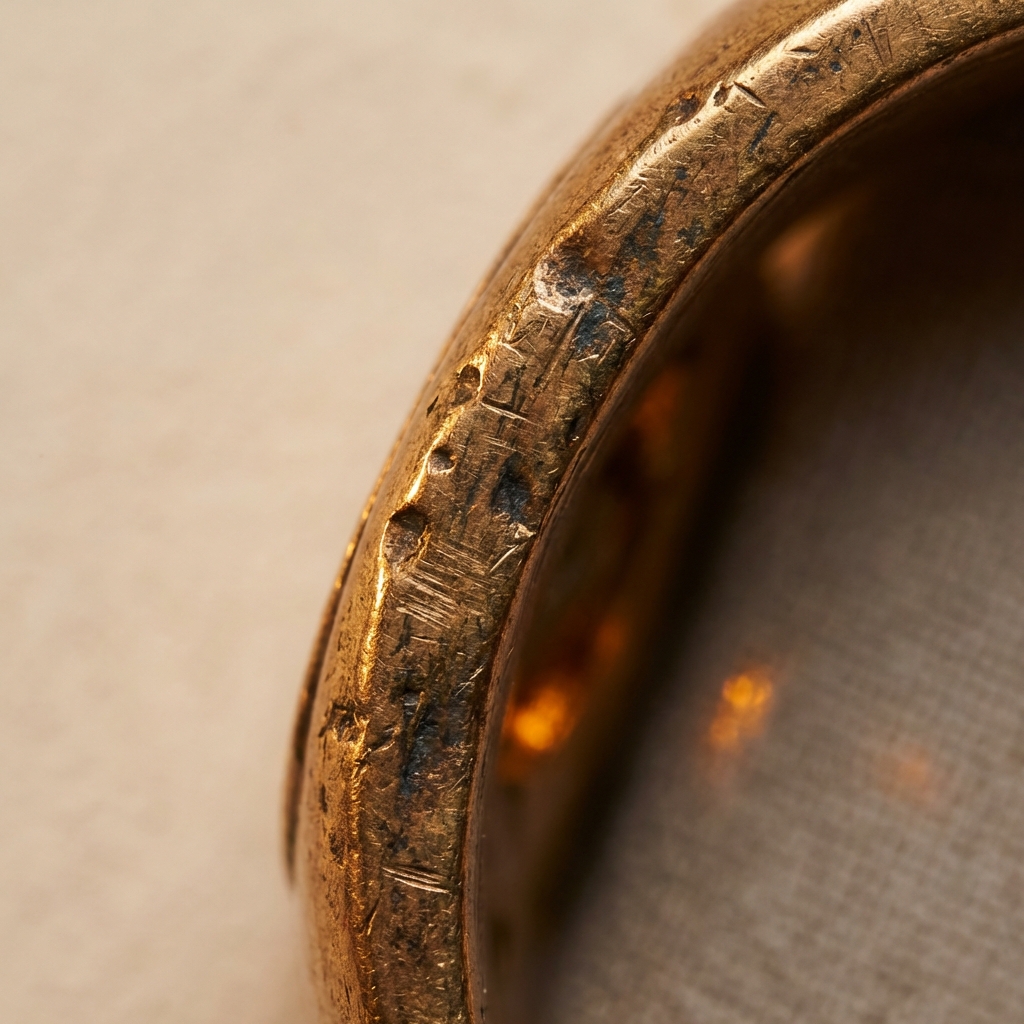
Roman goldsmiths employed techniques that leave diagnostic traces. Common workshop methods included casting for the hoop and bezel, hand cutting of intaglios in hardstones such as carnelian or agate, and careful finishing of shoulders and shoulders joins. Close study of bezel construction, tool marks, and intaglio cutting can indicate whether a ring was made with ancient workshop practice or altered later.
Stylistic and tool mark analysis is a corroborating line of evidence for authentication, but it is rarely definitive on its own; experts combine microscopic examination, metallurgical data, and provenance documentation for robust attribution. Comparative museum literature and collection notes provide helpful reference points when examining these workshop traces British Museum collection notes on Roman adornment.
What analyses show about Roman gold purity and regional variation
Reported purity ranges in museum and archaeometric studies
Published studies and museum analyses commonly report that many Roman high status rings were made from real gold, with fineness often ranging from roughly 75 percent gold, about 18 carat, up to values exceeding 90 percent, in some cases approaching 22 to 24 carat purity for certain high status pieces. Those ranges reflect surviving, published datasets and the kinds of materials most often studied.
Regional and chronological factors influence alloy recipes, so a single percentage does not apply to all Roman rings. Archaeometric research and museum publications make this variability clear, and they are the best available sources for understanding rough expected ranges for different workshop traditions and eras Paper on pXRF capabilities and limitations in heritage science.
It is also important to note that remounting and later repairs can alter the metal visible for analysis; if a ring was reworked in a later period the apparent composition might reflect that work rather than the original alloy. This is why combined evidence from microscopy, compositional testing, and documented restoration notes is essential when attribution or metal purity is central to a decision.
See behind the scenes on @auroraantiqua for condition notes and fresh finds
Review condition notes and any available analytical reports on a listing before assuming the stated metal or purity, and ask the seller for documentation if it is not supplied.
Visual indicators: what wear, patina and style can tell you
Wear consistent with age versus recent artificially aged surfaces
Visual inspection remains a vital first step. Authentic wear often shows as consistent edge rounding, subtle flattening on high contact areas of the hoop, and a patina that matches surrounding surfaces. These signs, taken together with clear high resolution images and condition notes, can help assess whether a piece has been handled and worn over long periods.
What to look for in photographs and condition notes
Look for clear photos of the bezel underside, the shoulders, and any hallmarks on adjoining metal. Red flags include fresh tool marks inconsistent with surface wear, solder seams that look new compared to the rest of the ring, or patchy colour differences that suggest later additions. Cross checking seller-supplied restoration notes with visible evidence in photos is a practical way to judge what was done and whether a piece may have been remounted.
Where condition notes are provided, prioritize those that specify what was stabilised, repaired, or intentionally left untouched. Good condition notes improve a buyer’s ability to weigh visual, documentary, and scientific evidence together.
How scientific testing works: pXRF, ICP-MS and LA-ICP-MS explained
Non destructive screening with portable XRF
Portable XRF or pXRF is the standard non destructive screening tool used by museums, dealers, and conservators in the field and in sale contexts, as it provides rapid elemental information without taking samples. Practically, pXRF is useful for initial checks on whether a metal surface contains significant gold and approximate alloying elements such as silver and copper (see a portable XRF quantitative study on mobile XRF systems).
Users should remain aware that pXRF results are indicative because surface enrichment, corrosion layers, and calibration differences can bias readings; guidance for practitioners stresses these limitations and recommends using pXRF as a first line rather than a definitive test Investigating Ancient “Bronzes”, J. Paul Getty Museum and Getty Conservation Institute, Los Angeles (see also a non-destructive handheld XRF study on handheld XRF).
buyer focused screening steps to pair pXRF with documentation
Use pXRF only as a screening tool
Laboratory confirmatory techniques and when they are used
When greater precision is needed, laboratory micro sampling followed by ICP-MS or LA-ICP-MS gives definitive compositional and trace element results that can distinguish ancient alloy recipes from later additions or modern treatments. These laboratory methods require a small sample or micro-drilling but provide the level of precision that practitioners rely on for publication and conservation decisions Review coverage on laboratory archaeometallurgy methods.
In practice, screening with pXRF and then, when indicated, requesting a laboratory report is the accepted sequence for many collectors and institutions: quick non destructive checks first, and targeted micro sampling only when the outcome affects attribution or legal and conservation choices.
Interpreting test results: common pitfalls and decision criteria
Surface effects and calibration errors with pXRF
One common pitfall is to treat pXRF percentages as absolute. Surface enrichment or corrosion can make a surface appear richer in gold than the bulk metal beneath, and instrument calibration or operator settings can introduce further variance. For these reasons, pXRF percentages should be treated as indicative and considered alongside visual and documentary evidence.
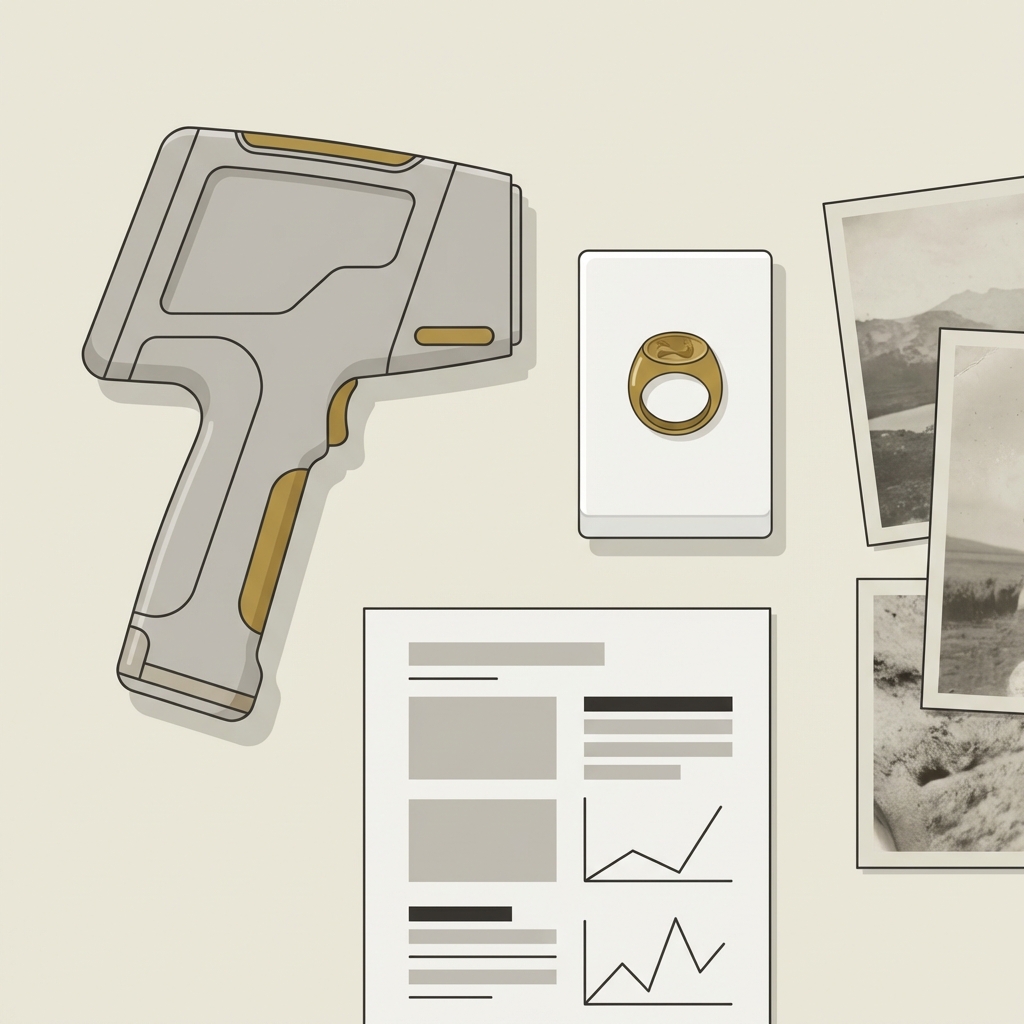
If a pXRF result is ambiguous, or if the stakes are high because of value or legal complexity, a buyer should ask for laboratory confirmation. Historic England guidance for practitioners outlines how to interpret and qualify pXRF data in conservation contexts and why additional tests are often required Historic England guidance on using pXRF.
When lab tests are necessary to resolve doubts
Consider requesting lab analysis when pXRF gives contradictory readings, when remounting or visible repairs are present, or when provenance is incomplete for a high value item. Practical decision criteria include the cost of testing relative to the purchase price and the degree of uncertainty that a pXRF result leaves in place.
Actionable next steps a buyer can request are vendor pXRF reports with raw readings, independent third party condition reports, or a seller-facilitated lab analysis that specifies the sampling method and reporting standards. These steps help align expectations and reduce the risk of misattribution.
When to seek confirmatory lab analysis and what to expect
Typical lab workflows and sample requirements
Laboratory workflows vary, but confirmatory approaches such as ICP-MS and LA-ICP-MS typically require micro sampling, which is invasive at a small scale. Labs will report elemental percentages with higher precision and may provide trace element patterns that can indicate recycling or geographic source material.
Deciding to accept sampling depends on how central metal composition is to the purchase. For some collectors, strong provenance and consistent condition notes may reduce the need for invasive tests, while for high value items or scholarly publication a lab report may be essential. See a multi-technique coin study on gold solids for an example of laboratory reporting and precision.
Many Roman high status rings were made of gold, but alloy fineness varies and can be affected by later interventions. Combine visual inspection, provenance and condition notes, pXRF screening, and targeted laboratory analysis when necessary to make an informed decision.
Expect a lab report to include methodological notes, detection limits, and an interpretation that situates the compositional data within known archaeometallurgical references. Ask labs how they handle surface effects and whether they combine micrography or microscopy with compositional work to match composition to metal microstructure Review coverage on laboratory archaeometallurgy methods.
Turnaround, reporting and what trace elements can reveal
Turnaround times and reporting formats vary by provider, but reputable reports clarify sample provenance, the sampling method used, and any limitations. Trace elements and lead isotope data, where provided, can sometimes suggest recycling, workshop practice, or a likely regional source when compared with published datasets, though interpretation requires specialist context and comparison.
Provenance, legal and ethical considerations for buyers
Why provenance and collection history matter
Provenance and documented collection history materially increase confidence in both authenticity and legal standing. Well documented ownership chains, prior publication, or letters of verification can make a meaningful difference in how a piece is perceived and legally transferred.
Where provenance is lacking, buyers should apply extra due diligence, request any archival information the seller can provide, and be mindful of legal frameworks that may restrict import or sale. The British Museum and other institutions emphasise the importance of collection history in understanding Roman personal adornment and its context British Museum discussion on Roman adornment.
Legal frameworks and responsible acquisition
International conventions and national laws affect how cultural property may be bought and sold. The UNESCO convention and related legal frameworks encourage careful checks on ownership chains and prohibit trafficking in unlawfully exported objects. Responsible acquisition practices ask buyers to seek documentation and be cautious when ownership history is incomplete UNESCO convention on illicit traffic in cultural property.
Typical deceptive practices and how they mimic authenticity
Remounting, modern plating and deceptive repairs
Modern interventions that mimic age include remounting ancient stones in newer gold, electroplating to adjust colour, and modern soldering that can be carefully disguised. These treatments can change the composition visible to pXRF or visual inspection and thus complicate attribution.
How combined approaches detect interventions
Microscopy, compositional analysis, and thorough provenance checks together form the most reliable approach to spotting post antique interventions. When a surface composition conflicts with expected alloy signatures for a given style, or when tool marks do not match period practice, those discrepancies should prompt deeper investigation with lab techniques or specialist reports Review coverage on laboratory archaeometallurgy methods.
A practical buying checklist for the collector
Pre purchase questions to ask
Before purchasing, request high resolution photos from multiple angles, measurements, and clear condition notes that describe any restoration. Ask whether the seller has pXRF or lab reports and request copies of any provenance documentation or verification letters (compare similar items in our rings collection).
How to read listings and condition reports
Use a checklist approach: confirm the presence of condition notes and restoration notes, check for collection history or prior ownership mentions, and look for any pXRF report attached to the listing. If a pXRF report is supplied, ask about operator details and calibration, and treat the numbers as initial guidance rather than a final statement.
If doubts remain, request third party condition reports or a lab analysis supported by matched microscopy. When the seller cannot provide reasonable documentation for a high value piece, consider pausing the purchase until further evidence is available.
How reputable sellers should present an ancient ring listing
Minimum documentation and condition reporting
Reputable sellers present clear condition notes, specify any restoration work, and include provenance or collection history when available. They avoid absolute language about authenticity unless backed by documentation or specialist reports, and they welcome reasonable buyer questions about testing and provenance.
How to read seller statements responsibly
Read seller phrasing carefully. Phrases like appears to be or described as gold are different from definitive statements. Aurora Antiqua frames listings as a trust layer, offering curated context, condition notes, and provenance-style references where available (see the Ancient Roman Rings collection), while encouraging buyers to request further documentation when needed.
Short case studies and buying scenarios
Scenario A: a high value signet with pXRF report
Imagine a signet ring with an attached pXRF report showing high gold percentages on the bezel surface but no provenance beyond a private sale. Because surface enrichment can bias pXRF, the prudent next step is to request lab confirmation or at least independent pXRF readings from different spots and a seller statement about any remounting or repairs Portable XRF for paintings and metals authentication, npj Heritage Science (Springer Nature), DOI.
Scenario B: a visually convincing ring with no provenance
A ring may look convincing with consistent wear and an intaglio cut in an expected style, yet lack documented history. Strong condition notes and prior collection references can reduce the need for invasive testing, but absence of provenance should prompt cautious negotiation and requests for third party inspection before a high value purchase.
In both scenarios, balancing visual evidence, seller documentation, and scientific screening helps a buyer decide whether to proceed or seek further independent verification.
Conclusion: responsible steps for collecting Roman gold rings
Summary of core takeaways
Many Roman high status rings were made in real gold, although alloy recipes vary by region and period and require careful assessment. Visual inspection, provenance and condition notes, pXRF screening, and targeted laboratory analysis together form a robust approach to assessing a roman gold ring.
A balanced approach to confidence and uncertainty
Collectors should combine visual, documentary, and scientific evidence when evaluating a purchase, and accept that some uncertainty may remain unless matched microscopy and sampling-based laboratory techniques are available. When provenance is incomplete or tests conflict, pause and request further documentation or specialist reports.
Many high status Roman rings were made of gold, but published analyses show that alloy fineness varies by region and period, so each piece should be assessed with context, condition notes, and testing where needed.
No. pXRF is a valuable non destructive screening tool but can be affected by surface enrichment and corrosion; ambiguous or high value cases should be confirmed with laboratory micro sampling.
Request high resolution photos, condition and restoration notes, collection history or provenance references, and any available pXRF or laboratory reports before completing a purchase.
More from Aurora Antiqua
References
- Investigating Ancient “Bronzes”, J. Paul Getty Museum and Getty Conservation Institute, Los Angeles
- Portable XRF for paintings and metals authentication, npj Heritage Science (Springer Nature), DOI
- Characterization of Castellani nineteenth-century gold jewellery by in situ, Scientific Reports
- Pliny the Elder, The Natural History, BOOK XXXIII, Perseus Digital Library, Tufts University (edition Bostock)
- Internet Archaeol. 40. Atkinson and Preston. Objects of personal adornment, Internet Archaeology, Council
- Gold ring, Roman, Imperial period, 2nd to 3rd century CE, Acc. 41.160.450, The Metropolitan Museum of Art, New York
- A Roman jeweller's hoard from Snettisham, Norfolk, Antiquity 60, no. 229 (July 1986), pp. 137 to 139
- Roman gold finger ring with intaglio, Collections Online, Amgueddfa Cymru, Museum Wales
- journals.openedition.org
- Client Challenge, Springer
Going deeper? See the ancient Roman rings buyer’s guide.