


Looking for the real thing? Browse genuine signet rings for sale, each piece one of one, individually authenticated, with documented provenance. For the background, see the guide to ancient jewelry.
What is a signet ring? Definition and historical context
A signet ring ancient is best understood as a wearable device whose engraved face could act as a personal identifier and, when pressed into soft media, leave a seal impression used for securing documents or goods. The basic role of sealing and identity links the object across time and space, but how a ring looks and how it was used vary widely by region and period. For a concise, museum-oriented definition that frames both practical and symbolic uses, see the Encyclopaedia Britannica overview on signet rings Encyclopaedia Britannica signet ring and the Gem Society overview History of Signet Rings.
In practice collectors and scholars label a range of objects as signet or seal rings: small engraved intaglio gems set into metal bezels, carved scarabs used as ring faces, and in some Near Eastern contexts, small stamp seals or rings that function alongside larger administrative seals. Materials commonly include semi-precious stones such as carnelian and agate, metals like gold, silver and bronze, and organic forms that were later mounted; these material choices often help with dating and attribution according to museum typologies Metropolitan Museum of Art timeline of rings.
It is also important to note a typological difference: East Asian practice frequently used larger carved seals for documents rather than small finger-worn signets, so personal signets in literati or imperial contexts are a distinct category from Mediterranean and Near Eastern signets Ashmolean overview of Chinese seals.
Regional overview: which cultures used signet ring ancient traditions
Map of major regions and time ranges
Signet and seal traditions appear across the ancient Near East, Egypt, the Mediterranean, South Asia, parts of the Islamic world, and in selective East Asian contexts; the emphases differ by region, from administrative cylinder seals in Mesopotamia to intaglio rings in the Roman world. This broad distribution means a collector looking at an object should begin with a regional hypothesis and then test details of material, carving technique, and iconography against dated examples Penn Museum overview on seals and sealing practices. See a concise industry history at Victor Mayer's overview The History of Signet Rings.
See behind the curator's desk on Instagram
Explore curated ancient rings with clear condition notes and provenance context to better understand examples across regions.
Shared functions and divergent forms
In the ancient Near East, small seals and cylinders primarily served administrative and identity functions from the 3rd millennium BCE onward, whereas in Mediterranean contexts these objects often combined personal amulet value with sealing utility. Comparative typologies, such as bezel shape and carving style, can point to likely regions of production but rarely provide a single conclusive answer without provenance or comparative cataloguing Encyclopaedia Britannica signet ring.
Ancient Egypt produced scarab and signet rings used as both amulets and practical sealing devices from the Middle Kingdom onward; the scarab form and its iconography are useful regional markers when present British Museum on Egyptian seals and scarabs.
Classical Greece and the Hellenistic world show a strong tradition of bronze and gemstone signet rings decorated with mythological motifs; these stylistic choices often help narrow a date range within a few centuries when used alongside typological features Metropolitan Museum of Art timeline of rings.
Hellenistic tastes introduced a wider use of intaglio carving and more elaborate gem cutting, and collectors should compare subjects and carving technique to dated examples rather than relying on a single stylistic match Metropolitan Museum of Art timeline of rings.
Signet and seal traditions were widespread across the ancient Near East, Egypt, the Mediterranean, South Asia and parts of the Islamic world, with East Asian practice often using larger carved seals; collectors identify likely origin through material and technique, iconography or script, and careful review of condition, restoration notes and provenance.
Roman intaglio rings, materials and dating markers
In the Roman world, engraved intaglio rings appear across gold, silver and bronze mounts and play a dual role as seals and markers of social status; bezel shape, intaglio subject and mounting style are standard clues in attributions for this region Encyclopaedia Britannica signet ring.
When assessing a Roman intaglio, collectors should be cautious about later remounting or repair. Well-documented restoration notes and condition reports that explain what was stabilized or left untouched are essential for evaluating how much of the present object reflects original crafting versus later interventions Portable Antiquities Scheme annual report.
The ancient Near East and Egypt: seals, scarabs and cylinder traditions
Cylinder seals and administrative sealing
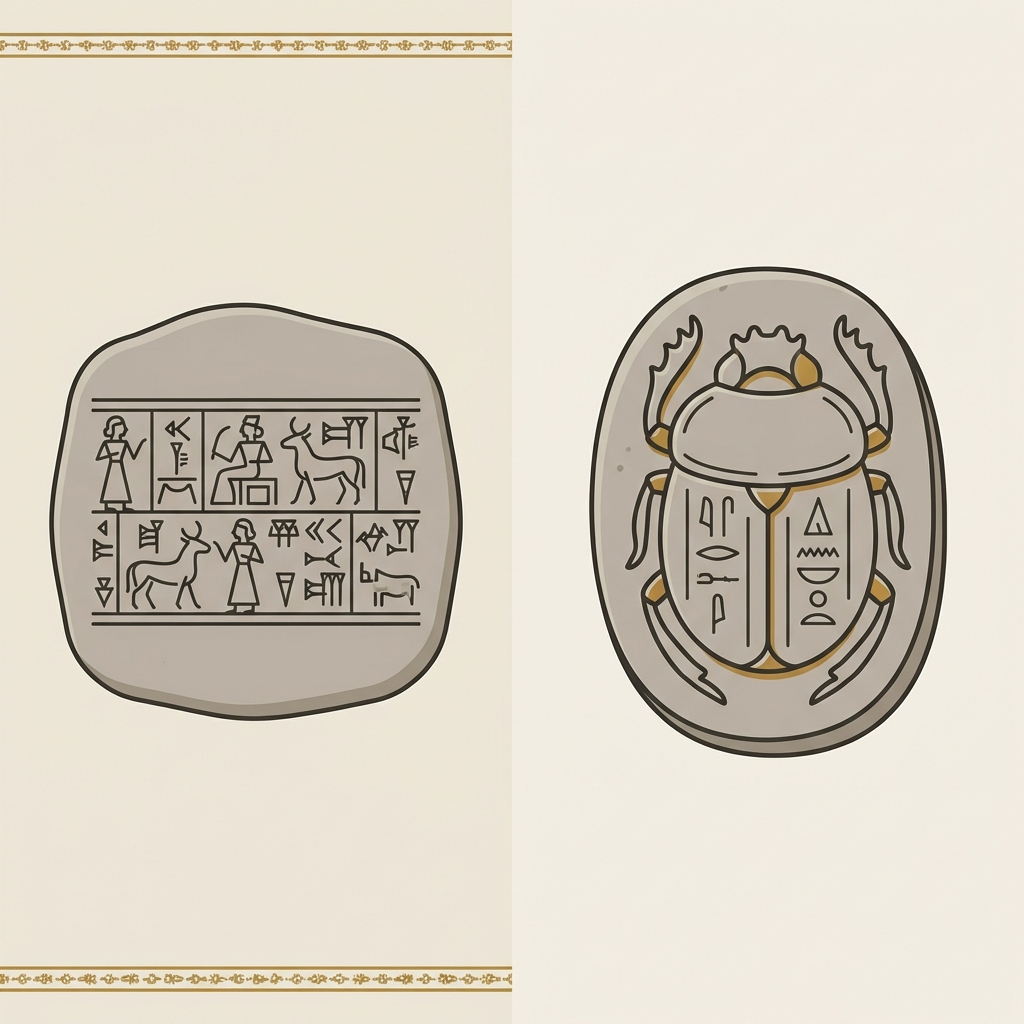
In Mesopotamia and the broader ancient Near East, cylinder seals and small seal rings were vital tools of administration and identity from as early as the 3rd millennium BCE; impressions in clay document transactions and official acts and are a primary basis for understanding how these objects functioned in life Penn Museum overview on seals and sealing practices.
As a research approach, looking for matching clay impressions, documented findspots, and comparable iconography in museum catalogues provides stronger attribution than relying solely on stylistic comparison of a single ring. The presence of a preserved patina and tool marks consistent with ancient production are the kinds of physical clues scholars use to separate genuine ancient workmanship from later additions or modern interference Portable Antiquities Scheme annual report.
Quick research checklist for initial seal and cylinder comparison
Start with published catalogues
Egyptian scarabs, amuletic rings and sealing functions
In Egypt, scarab forms set into rings functioned as personal amulets and as practical seals; their iconography and material choices are useful markers for relative dating and cultural attribution when compared to securely dated examples in collections British Museum on Egyptian seals and scarabs.
Collectors should note that scarab rings in the market can range from securely provenanced antiquities to modern reproductions. Clear condition notes, measurements, and any collection history or documentation significantly improve the reliability of an attribution and help place the object within broader scarab typologies Portable Antiquities Scheme annual report.
Greece and Rome: intaglios, engraved gemstones and typologies
Greek mythological motifs and Hellenistic forms
Greek signet types from the Classical through Hellenistic periods include bronze rings and engraved gemstones bearing mythological scenes; these motifs and the style of incision are important clues used in dating and workshop attribution Metropolitan Museum of Art timeline of rings.
Hellenistic tastes introduced a wider use of intaglio carving and more elaborate gem cutting, and collectors should compare subjects and carving technique to dated examples rather than relying on a single stylistic match Metropolitan Museum of Art timeline of rings.
Roman intaglio rings, materials and dating markers
In the Roman world, engraved intaglio rings appear in gold, silver and bronze and perform both sealing and social functions; typological markers such as bezel outline, the iconography of the intaglio, and the relationship between bezel and hoop are commonly used to infer likely dates and regional workshops Encyclopaedia Britannica signet ring.
When assessing a Roman intaglio, collectors should be cautious about later remounting or repair. Well-documented restoration notes and condition reports that explain what was stabilized or left untouched are essential for evaluating how much of the present object reflects original crafting versus later interventions Portable Antiquities Scheme annual report.
South Asia and the Islamic world: script, titulature and epigraphic cues
South Asian and Islamic signet traditions frequently use engraved script, royal titulature, or religious phrases on gemstones or metal surfaces, and these inscriptions are often the most direct route to dating and localization when they can be read and compared to dated epigraphic corpora Portable Antiquities Scheme annual report.
Because precise attribution in these regions depends heavily on epigraphic and stylistic comparison, collectors should prefer items accompanied by clear photographs of the inscription, high-resolution closeups of carving, and any supporting documentation that traces the object’s collection history Encyclopaedia Britannica signet ring.
Calligraphic style, letter forms and the presence of titulature rather than purely decorative motifs usually have greater weight than an isolated stylistic resemblance; where inscriptions are ambiguous, independent epigraphic opinion is advisable.
East Asia and other contexts: larger seals and occasional personal signets
East Asian practice generally favored larger carved seals for use on documents, and these objects are often catalogued and dated by seal-cutting style and the literati tradition. Personal signet-type rings occur in imperial or literati settings but should be treated as a distinct category from Mediterranean signets when comparing typologies Ashmolean overview of Chinese seals.

Collectors encountering East Asian seals or small personal seals should ask whether the object was intended for document sealing, personal wearing, or display within a literati collection, since each use has different implications for typology, wear patterns and likely date ranges.
How to read a signet ring ancient: a practical attribution framework
A three-step framework helps structure an initial assessment: first examine materials and manufacturing technique, next evaluate iconography or script, and finally review condition, restoration notes and provenance. Starting with materials often rules out entire regional hypotheses quickly; for instance, cylinder-seal impressions and certain stone types are strongly associated with the ancient Near East Penn Museum overview on seals and sealing practices.
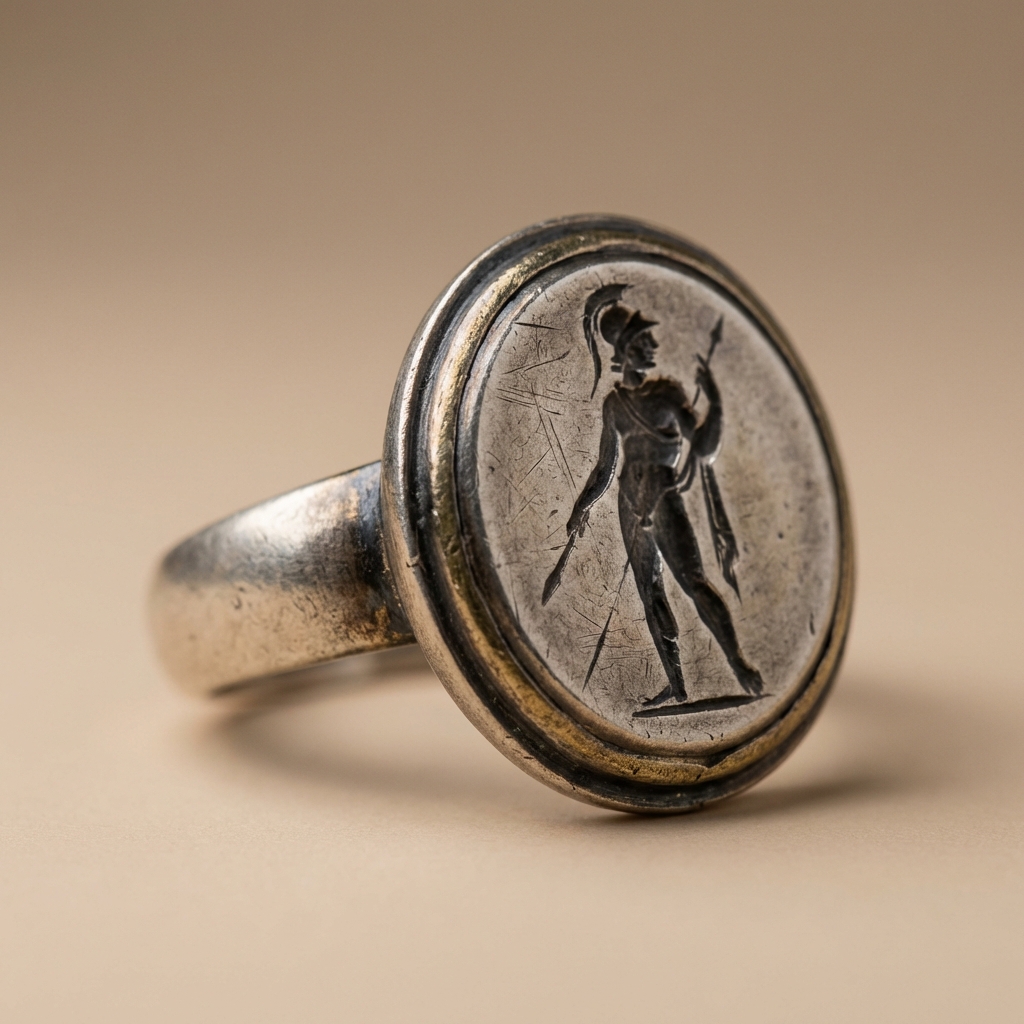
Step 1, materials and technique: check the stone or metal type, look for tool marks and signs of lapidary technique consistent with known periods, and compare to dated workshop examples. Step 2, iconography and script: match mythological subjects, titulature or calligraphic style to reference corpora; where inscriptions exist, epigraphic reading is often decisive Metropolitan Museum of Art timeline of rings.
Step 3, condition, restoration and provenance: prioritize items with clear condition notes and a record of any restoration; seek documented collection history or finds reporting where available. When provenance is thin or absent, proceed with caution and request additional comparanda or scientific study if necessary Portable Antiquities Scheme annual report.
Collecting and buying: decision criteria, condition notes and red flags
Core decision criteria for buyers are straightforward: high-quality photographs, precise measurements, detailed condition notes, transparent restoration notes describing what was stabilized or repaired, and any available provenance or documentation. Aurora Antiqua presents curated ancient rings spanning Roman, Greek, Byzantine, Islamic, Celtic, medieval, and post medieval periods with restoration and provenance notes to help interpret pieces in a market that includes varied reporting standards.
Common restoration descriptions to watch for include whether an item was stabilized, repaired, or left untouched, and those exact phrases are useful when comparing listings. Be cautious with vague terminology such as restored without specification; responsible sellers will specify what was done and why.
Red flags include a lack of provenance or collection history, inconsistent patina across different parts of the object, obvious modern machining marks, and modern mounts that do not match the expected construction of the proposed date. Reporting and cataloguing initiatives have repeatedly shown that market finds without documentary context require extra scrutiny Portable Antiquities Scheme annual report.
Typical mistakes, spot cases and short examples
A common error is over-reliance on a visual style match without considering restoration history; a Roman intaglio set into a modern mount can look convincing until you inspect the bezel joining and patina under magnification Encyclopaedia Britannica signet ring. For a brief public-facing history that outlines common narratives, see a short overview at The History Press A brief history of signet rings.
Another frequent pitfall is conflating East Asian carved seals with Mediterranean signets; their typologies, intended media and wear patterns differ and demand different comparanda when attributing an object Ashmolean overview of Chinese seals.
Three short scenarios a collector might encounter: a Roman intaglio with an ill-fitting modern mount where you should request restoration notes; a scarab ring with no collection history where you should ask for provenance and findspot information; and an engraved Islamic seal with ambiguous script where independent epigraphic assessment is recommended Portable Antiquities Scheme annual report.
Checklist to request from sellers: high-resolution images of the intaglio or inscription, explicit condition notes, any restoration reports, measurements and weight, and any collection history or documentation that can be shared.
Wrap-up: responsible collecting and next steps
Signet rings were used across many cultures for sealing, identity and symbolic display; the primary features that help attribution are material and technique, motif or script, and clear condition and provenance notes. Broad museum timelines and encyclopedic overviews remain a sound starting point when comparing suspect pieces Metropolitan Museum of Art timeline of rings.
For further research consult museum catalogues, academic timelines and finds reports that document comparable objects, and prioritize listings accompanied by clear provenance and restoration notes. Aurora Antiqua aims to serve as a curator-style reference for collectors by presenting one of a kind ancient rings with contextual information and documented condition notes, while encouraging buyers to seek independent comparanda and epigraphic input when inscriptions are present our blog on Roman jewelry.
Historically, signet rings served as personal identifiers and were used to make seal impressions for documents or goods; they also often had amuletic or status functions.
Look for consistent patina, tool marks matching historical lapidary techniques, clear condition and restoration notes, and any provenance or cataloguing; inscriptions should be compared to epigraphic references when available.
No. East Asian practice favored larger carved seals for documents, and personal seals from literati or imperial contexts are typologically distinct from Mediterranean signet rings.
More from Aurora Antiqua
References
- A Corpus of Roman Engraved Gemstones from British Sites, University of Michigan Press / BAR Publishing
- Fund des Monats August 2019 (Find of the Month), Landesamt für Denkmalpflege und Archäologie Sachsen-Anhalt
- Signet Ring, Victoria and Albert Museum, London
- William Wytlesey's ring, Victoria and Albert Museum, London
- Finger Ring with Frog, The Cleveland Museum of Art
- Ring, Victoria and Albert Museum, London
- Aegean and Cypro-Aegean Non-Sphragistic Decorated Gold Finger Rings, American Journal of Archaeology
- Thumb Ring, The Cleveland Museum of Art
- Catalogue of the Engraved Gems and Finger-Rings in the Ashmolean Museum, II: Roman, BAR Publishing, via Fulcrum
- History of Signet Rings, International Gem Society, gemsociety.org