


Looking for the real thing? Browse authentic ancient signet rings, each piece one of one, individually authenticated, with documented provenance. For the background, see the guide to ancient jewelry.
What an ancient signet ring is and why it mattered
Definition and basic parts of a signet ring, ancient signet ring
An ancient signet ring is typically a ring with an engraved or carved face designed to make an impression in soft wax or clay, used to seal documents and to signal identity or affiliation; museum overviews emphasise this dual function in many classical contexts, especially by the Classical period Encyclopaedia Britannica signet ring overview. Additional historical overviews appear in Berganza's intaglio history Intaglio rings: A History of Gemstone Engraving.
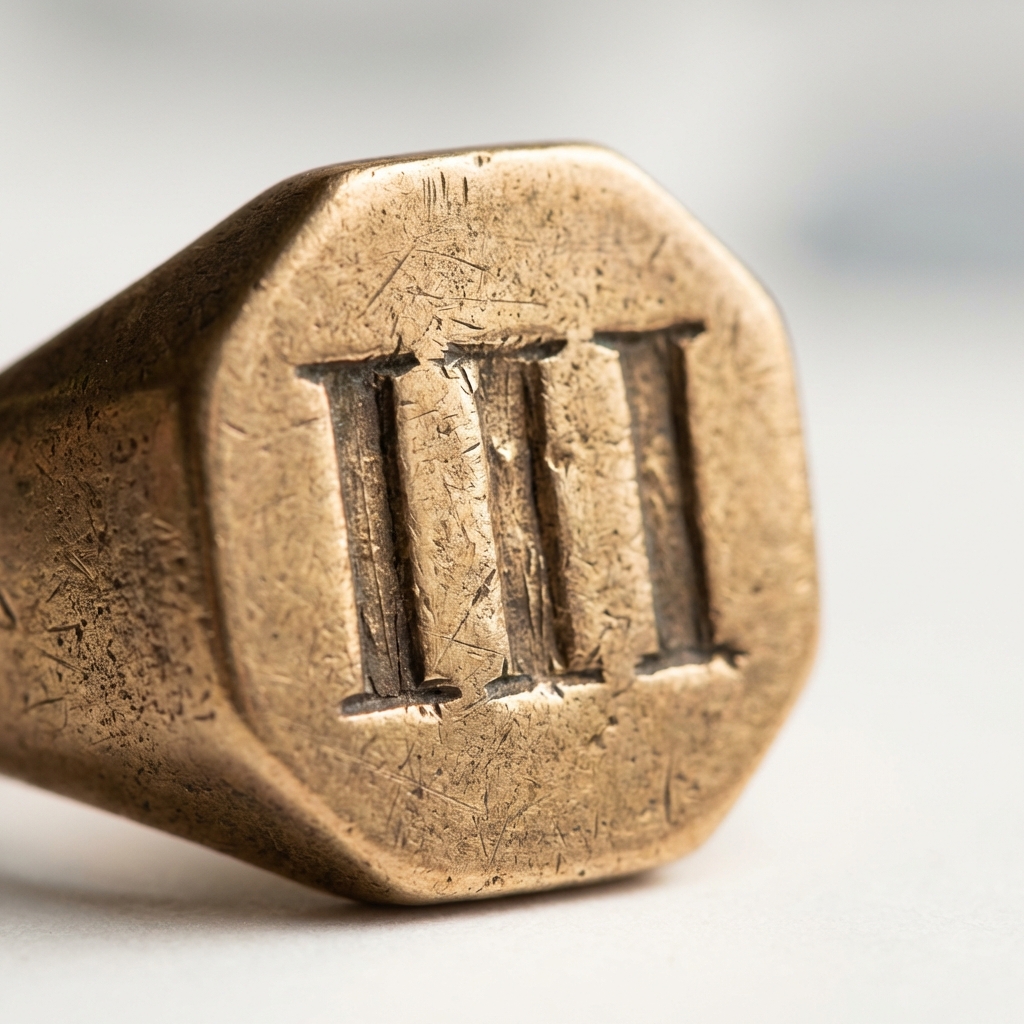
Physically, the elements to recognise are the bezel, the intaglio or engraved face, the hoop that encircles the finger and the shoulders that connect bezel and hoop; the bezel holds the design that creates the seal impression and its form can affect how easily a ring was used for sealing.

A brief timeline and geography shows signet and seal-rings in the ancient Near East, Greece and Rome with medieval continuities; museum collections and research note long traditions of both sealing practice and symbolic use across these regions British Museum research on seals and signets, and you can view related items in our ancient Roman rings collection.
Who wore signet rings: elites, officials and everyday people
Elite users and official roles
In many museum records, fine gold rings with carved carnelian or other gem intaglios most often correlate with elite ownership or with official positions, where the ring functioned as a personal or administrative seal Journal of Roman Archaeology review on materials and identity.
Evidence for non-elite and everyday use
At the same time, finds-data programmes show that simpler bronze or copper-alloy seal-rings appear frequently in non-elite contexts, which suggests broader social use beyond elites and indicates pragmatic ownership for sealing everyday items Portable Antiquities Scheme finds summary.
Regional and chronological differences
Regional differences matter: materials, workshop traditions and the social meaning of motifs shifted across time and place, so a bronze seal in one area can reflect local customs rather than low status per se; contextual information like dating and findspot is essential to interpret such variation The Metropolitan Museum of Art collection notes on rings, and one V&A example is available in the museum record Signet Ring | V&A.

How signet rings were used in practice: sealing, law and identity
Sealing mechanics and how impressions were produced
Sealing works by pressing an intaglio into soft material to leave a raised impression; where preserved, impressions and paired documents or closures illustrate how impressions functioned as proof of identity or authority in administrative and private contexts Encyclopaedia Britannica signet ring overview. For more on intaglio meaning see our blog post why intaglio meaning matters.
Ancient signet rings could belong to elite officials, family heads or everyday pragmatic users; to infer a likely wearer, combine evidence from material and craftsmanship, bezel iconography and inscriptions, wear patterns and reliable provenance or lab tests.
Administrative or legal uses could include authenticating correspondence, sealing legal documents, or marking property, while personal and religious uses included amuletic wear or family identification; by the Classical period many rings fulfilled both sealing and social signalling roles, making context crucial for interpretation Encyclopaedia Britannica signet ring overview.
Materials and craftsmanship: what metals, gems and carving reveal about the wearer
Metals and gemstones as status indicators
Carving quality, bezel form and workshop signatures
Carving quality and bezel form, including octagonal, round or rectangular shapes, can reflect workshop conventions or a workshop 2s clientele; close study of cut, tool marks and stylistic parallels in dated collections helps attribute probable production contexts, although such attributions often remain probable rather than certain.
When material may not equal status
Material alone does not settle status: local fashions, reuse, repair and the economics of gemstone trade mean that a gem or a gold mount can sometimes be repurposed or traded, so provenance and dating must accompany material readings The Metropolitan Museum of Art collection notes on rings.
Reading bezel iconography and inscriptions: clues to office, family and belief
Common motifs and their likely meanings
Bezel iconography, such as deity figures, personifications or numerological marks, provides strong clues toward office, family identity or religious affiliation when read alongside dating and findspot, though individual motifs can be ambiguous without corroborating context Encyclopaedia Britannica signet ring overview.
Interpreting a motif starts with cataloguing the image and comparing it to dated examples in museum collections; repeated workshop designs or regional themes may reflect common symbolic languages rather than exclusive elite insignia.
Ask for documentation and clear photos
Check listings for clear provenance and condition notes before using iconography alone to infer status; when available, ask sellers for documentation and measured photographs.
Inscriptions, monograms or letters can be particularly useful for identifying owners or offices when they survive and are legible, but they must be considered alongside the ring 2s date and documented findspot to avoid over-reading popular or workshop-used monograms Journal of Roman Archaeology review on materials and identity.
Wear patterns, damage and restoration notes: signals of use
Distinguishing sealing wear from ornamental wear
Wear on the intaglio face and corresponding reversal impressions can show repeated contact with sealing material, which is a strong indicator of active sealing use rather than purely decorative wear Journal of Archaeological Science review of sealing indicators.
Ornamental wear typically shows smoothing on high points consistent with finger contact, while sealing wear often appears as surface abrasion or polish in the areas that contact soft media; careful photography at multiple angles helps reveal these patterns.
Signs of intentional damage or defacement linked to function
Intentional damage, such as partial flattening of an intaglio or deliberate abrading of identifying marks, may indicate decommissioning, changes in ownership or attempts to prevent further sealing; such alterations must be recorded and interpreted with caution Journal of Roman Archaeology review on motifs and functions.
Interpreting restoration and conservation notes
Restoration and conservation notes are practical documents: they indicate what was stabilised, what was repaired and what was left as original, and these notes should be read literally to understand how much the current object reflects its ancient form E.C.C.O. Professional Guidelines (II): Code of Ethics, European Confederation of Conservator-Restorers'.
Provenance, testing and documentation: increasing confidence in who wore the ring
Types of provenance notes and what they show
Clear provenance and collection history materially increase confidence when attributing likely wearer profiles; documentation such as prior ownership records, collection labels or verification letters provides context that material and motif alone cannot supply Journal of Archaeological Science review on identification and provenance.
A short checklist to evaluate provenance and specialist reports
Use as a starting point when requesting documentation
Useful tests include gemstone identification and metallurgical analysis; these scientific checks clarify what a stone actually is and the alloy composition of a metal, which helps narrow dating and workshops when combined with stylistic study Journal of Archaeological Science review on identification and provenance. See Getty's survey of ancient gems Ancient gems and finger rings.
When assessing a listing, weigh lab results alongside iconography, wear and documented findspot rather than treating tests as definitive by themselves; the best conclusions come from combining these lines of evidence.
A practical identification checklist for buyers
Photos, measurements and condition details to request
Ask for high-resolution photos of the bezel, intaglio face, reversal, shoulders and the interior of the hoop, plus measurements and weight; clear images and exact dimensions let you cross-check descriptions and spot restoration work or inconsistent claims Journal of Archaeological Science review on identification and provenance.
Request focused views under raking light and a scale in the image to evaluate surface wear and tool marks properly.
Key red flags and plausible signals
Red flags include vague provenance statements, absent condition notes, images that hide critical views and sellers who decline requests for specialist reports; plausible positive signals include detailed collection history, restoration notes and recent laboratory checks where appropriate.
How to prioritise documentation before purchase
Prioritise provenance, condition and specialist reports in that order for interpretive confidence; if documentation is incomplete, treat status claims as provisional and consider independent checks before purchasing Portable Antiquities Scheme finds summary.
Typical mistakes collectors make and how to avoid them
Over-interpreting material without context
Assuming that gold or a gemstone automatically marks elite status ignores workshop reuse, trade in stones and local variations; always seek supporting provenance and dating before drawing social conclusions Journal of Roman Archaeology review on materials and identity.
Trusting appearance over documentation
Photographs can be flattering or deceptive; a clean-looking bezel is not a substitute for documented restoration notes and provenance, so ask for explicit conservation records when an item 2s history is central to your purchase decision.
Ignoring legal and ethical questions
Undocumented export histories or unclear findspot information introduce legal and ethical risks; prefer pieces with clear collection history or ask sellers to supply export documentation when relevant Portable Antiquities Scheme finds summary.
Scenarios and examples: three typical signet-ring profiles to read
Case A: Gold with carved carnelian intaglio, likely high-status user
Imagine a gold ring with a finely carved carnelian intaglio depicting a deity, accompanied by a clear prior-collection label and a dated museum comparison; combined, these features point toward an owner of higher social standing or an official user, though testing and provenance matter for confidence The Metropolitan Museum of Art collection notes on rings.
Case B: Bronze engraved bezel recovered in a field find, likely wider social use
A bronze ring with a simple engraved numeral motif recovered in a field and recorded through a finds scheme is consistent with non-elite or practical ownership; public recording data show such rings are common in non-elite contexts Portable Antiquities Scheme finds summary.
Case C: Ambiguous or altered pieces needing specialist tests
When a ring shows patched repairs, unclear inscriptions or suspiciously modern tool marks, treat the piece as indeterminate until gemstone identification and alloy testing clarify materials and restoration notes explain recent interventions Journal of Archaeological Science review on identification and provenance.
Conservation and care: reading restoration notes and handling an ancient ring
Common conservation treatments and what they mean for use
Conservators commonly stabilise fragile metal, consolidate loose stones or reverse harmful corrosion; these treatments are recorded in restoration notes to indicate what has been changed to preserve the object 2s present state Journal of Archaeological Science review on identification and provenance.
Stabilisation does not imply improved function for sealing and should be read as a preservation step rather than a value claim.
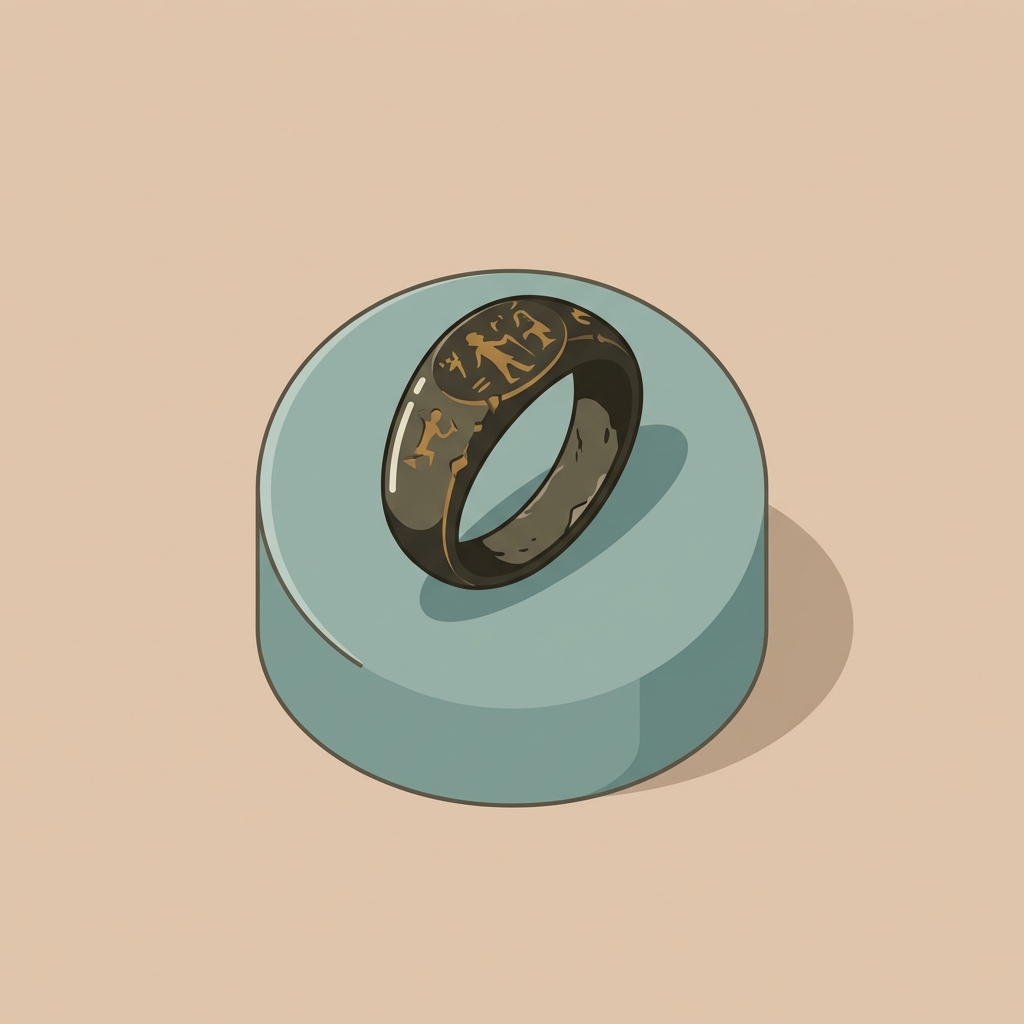
Stabilisation does not imply improved function for sealing and should be read as a preservation step rather than a value claim.
Interpreting restoration notes in listings
Good listings use precise language to describe repairs, saying what was stabilised and what remains original; ambiguous language merits follow-up questions about the conservator and methods used.
Safe handling, wear and display advice
Handle ancient rings with gloves for inspection, avoid wearing pieces with fragile mounts, and display them on soft supports away from direct sunlight and fluctuating humidity to limit further deterioration.
Buying and legal considerations: provenance, export and ethical sourcing
Why provenance matters for both scholarship and legal risk
Provenance reduces legal and ethical risk by documenting prior ownership and clarifying whether lawful export and transfer procedures were followed; absence of such documentation raises questions collectors should avoid ignoring Portable Antiquities Scheme finds summary.
Common legal restrictions and export issues to check
Check for export licenses or collection history that shows lawful transfer; different jurisdictions have varying rules, so seek clear statements rather than assuming compliance.
Ethical collecting practices and due diligence steps
Ask for collection history, prior ownership names, and any available documentation before purchasing; prefer sellers who provide transparent condition notes and provenance statements.
When to consult specialists: reports, laboratories and independent checks
Types of specialist reports and what questions they answer
Common useful analyses include gemstone identification, which clarifies a stone 2s nature, and metallurgical analysis, which defines alloy composition; both materially aid dating and attribution when paired with stylistic study Journal of Archaeological Science review on identification and provenance.
How to commission gemstone ID and metallurgical analysis
Ask the seller if recent analyses exist or request condition-based tests from an accredited laboratory; discuss sample requirements and whether testing is non-destructive before proceeding.
Reading and using lab reports when assessing wearer profiles
Use lab reports to narrow possible dates or workshops but combine their findings with wear, iconography and provenance; a multi-evidence approach yields the most cautious and supportable conclusions Encyclopaedia Britannica signet ring overview.
Conclusion: who wears an ancient signet ring today
Short checklist to take away
Top indicators for reading wearer profile include material and workmanship, bezel iconography and inscriptions, wear patterns and reversal impressions, and a clear provenance or lab reports; treat any single indicator as suggestive rather than decisive Journal of Roman Archaeology review on materials and identity.
For collectors, a documentation-first approach that prioritises provenance, condition notes and specialist reports is the most reliable way to assess who likely wore an ancient signet ring and why.
Look for abrasion or polish on the intaglio face and a corresponding reversed wear pattern; these signs, combined with impressions or documentation, suggest active sealing use.
Not always. While gold and fine intaglios often correlate with higher-status owners in museum records, reuse, trade and local variations mean provenance and testing are needed before concluding status.
Request clear collection history, condition and restoration notes, high-resolution photographs, measurements, and any available lab reports or provenance letters.
More from Aurora Antiqua
References
- Ring, Victoria and Albert Museum, London
- Roman gold finger ring with intaglio, Collections Online, Amgueddfa Cymru, Museum Wales
- Signet Ring, Victoria and Albert Museum, London
- Philip Kiernan and Klaus-Peter Henz, Rings from the Forbidden Forest, Cambridge University Press
- L'anneau sigillaire d'Arégonde, femme de Clotaire Ier, découvert à Saint-Denis, Bulletin de la Societe
- Object ID, International Council of Museums
- ICOM-CC, International Council of Museums, Committee for Conservation
- E.C.C.O. Professional Guidelines (II): Code of Ethics, European Confederation of Conservator-Restorers'
- Testing and Retesting Alexander the Great, J. Paul Getty Museum and Getty Conservation Institute, Los Angeles
- Signet Ring, Victoria and Albert Museum