


Looking for the real thing? Browse genuine ancient artifacts for sale, each piece one of one, individually authenticated, with documented provenance. For the background, see the guide to ancient jewelry.
ankh ring meaning: quick answer and what this article will cover
The short answer is that the canonical books of the Bible do not mention the Egyptian ankh, and claims that the symbol appears in scripture reflect interpretation of images rather than a textual link. This assessment follows standard reference works and museum summaries that treat the ankh as an Egyptian iconographic element rather than a biblical term, for example Encyclopaedia Britannica on the ankh Encyclopaedia Britannica.
No; the canonical Bible does not explicitly mention the Egyptian ankh. Visual reuse in late antique and Coptic art reflects regional continuity in imagery rather than textual or doctrinal inclusion in scripture.
Readers seeking clarity will get a compact verdict, a plain history of the ankh and the related term crux ansata, a look at late antique and Coptic reuse, an overview of modern Christian responses, and practical buying and presentation guidance for collectors and wearers. The tone is evidence based and cautious, relying on museum and art history sources rather than theological speculation.
Use the quick roadmap below to jump to the part you need: definition and original meanings, the textual verdict about the Bible, late antique art history, scholarly interpretation of reuse, pastoral perspectives, a buyer checklist, and short model phrases for listings and conversations.
What is the ankh? Origins and primary meanings
The ankh is a looped cross shape that was a visible and persistent emblem in pharaonic Egypt, often described in modern scholarship with the Latin term crux ansata for convenience. Museum and reference entries explain the symbol as an icon of life, vital breath, and divine blessing in Egyptian religious contexts rather than a theological term that maps directly onto New Testament vocabulary, for example the Grove Art overview of the ankh and its reception Oxford Art Online / Grove Art.
In Egyptian reliefs and painted scenes the ankh is frequently carried by deities, held to the nose of a ruler to signify giving or sustaining life, or placed in funerary contexts as a marker of wellbeing in the afterlife. Objects from daily use to formal temple reliefs show the sign repeatedly, emphasizing its role in ritual and royal ideology rather than as a written doctrine.
As an object in the archaeological record, the ankh appears in many materials and finishes; collectors and curators often note patina and wear consistent with age when discussing ancient rings or small amulets that incorporate the motif. Understanding the ankh first as an Egyptian religious and cultural symbol helps avoid conflating its later visual reuse with direct scriptural endorsement.
Does the Bible mention the ankh? The short textual verdict
No canonical biblical book names or describes the Egyptian ankh, and authoritative encyclopedic references underscore this lexical absence. Scholarly summaries and museum keyword pages make clear that the ankh belongs to Egyptian vocabulary and iconography, a separate textual tradition from Hebrew and Greek biblical lexicons, for example The Metropolitan Museum of Art keyword overview The Metropolitan Museum of Art.
It is important to separate visual parallels from textual evidence. When commentators point to crosslike forms or life imagery in the Bible, those are interpretive parallels and not citations or descriptions of the ankh. Translation choices and ancient lexical ranges differ across Egyptian, Hebrew, and Greek, so similarity of theme does not equal direct textual mention.
ankh ring meaning in late antiquity: art history and Coptic contexts
Art historical documentation shows that ankh forms and related motifs continued to appear into late antiquity and sometimes surfaced in Coptic Christian art as a result of visual continuity or appropriation rather than textual adoption. Major collections catalogue entries and term pages trace this ongoing visual presence, for example the British Museum collection term page on the ankh and its later echoes British Museum, and a case study of related material culture A Late Antique Textile from the Harvard Art Museums in Context.
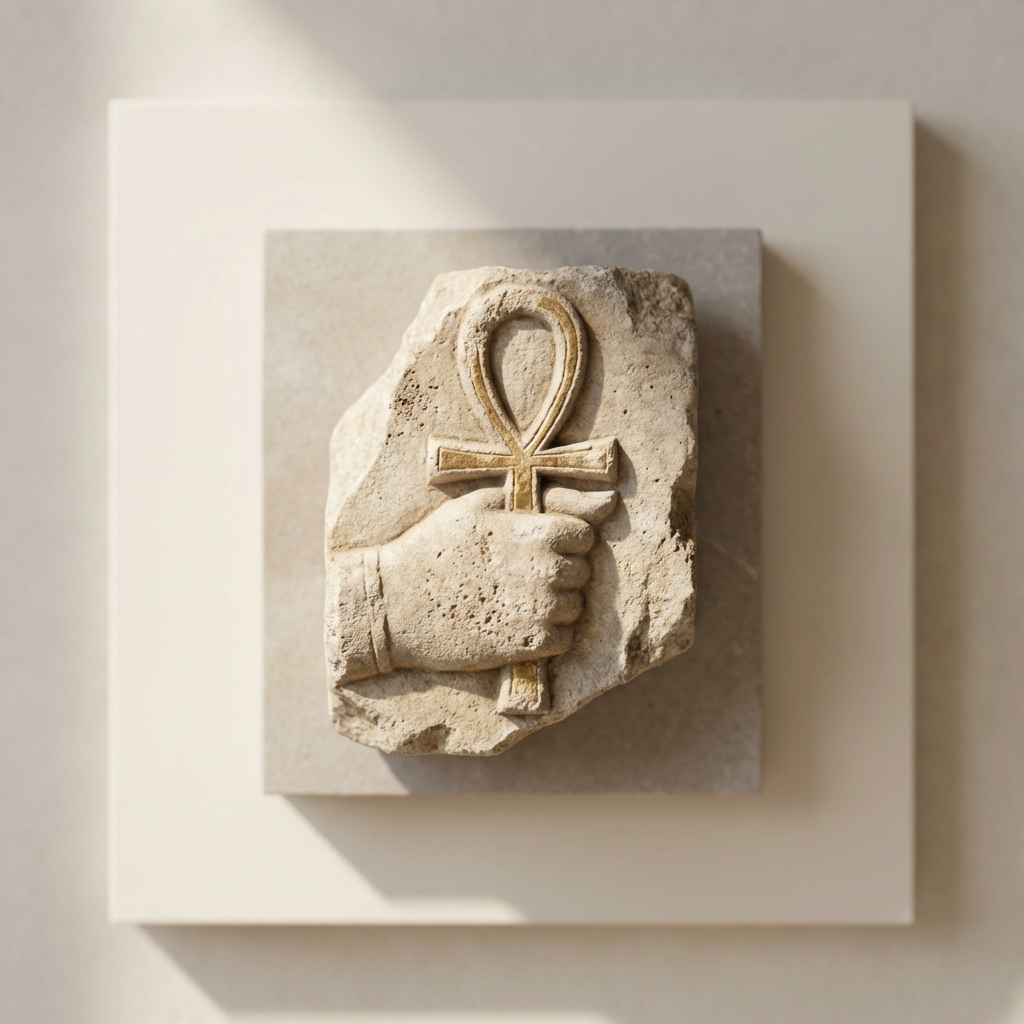
In Egypt and adjacent regions craftsmen and workshops often reused familiar shapes, adapting iconography to new contexts. In a few Coptic funerary items and pieces of small jewelry an ankh like loop or crux ansata variant can be detected; curators typically describe these as cultural reuse and syncretic visual language rather than proof of scriptural acceptance.
When museums and catalogues discuss Coptic works that echo Egyptian signs they emphasize context: objects in Christian households or cemeteries show blended aesthetics typical of long lived material traditions, so the presence of an ankh form in art history is best read as continuity of craft and imagery.
How scholars interpret late antique reuse of the ankh
Scholars frame the late antique reappearance of ankh forms as a reception phenomenon: continuity, local adaptation, and workshop practice all play a role in how an Egyptian sign can persist in new visual languages. Reference works that survey reception caution against equating reuse with doctrinal meaning, for example Grove Art discussions of the crux ansata and late antique reception Oxford Art Online / Grove Art, and further studies consider the crux ansata in early Christian iconography The Crux Ansata in Early Christian Iconography.
Academic discussion typically distinguishes decorative reuse from devotional adoption. In some cases reuse likely represents habit, craft vocabulary, or symbolic shorthand familiar to local populations; in other contexts, appropriation may carry a transformed meaning in new religious settings. The surviving evidence rarely allows firm conclusions about private devotional intent, so scholars recommend cautious interpretation. See also work on the sign of the cross in late antiquity The Sign of the Cross in Late Antiquity.
Where scholars can be more confident, they point to patterns in workshop attribution, motif frequencies, and archaeological context to explain why ankh forms persist. These are art historical arguments about visual culture and transmission rather than proposals that the biblical text incorporates the symbol.
Modern Christian responses: pastoral perspectives and practical advice
Contemporary Christian writers and pastoral advisers offer mixed responses about wearing symbols with pre Christian origins. Some accounts treat historic motifs as permissible when worn for their antiquarian or decorative value, while others recommend caution if the symbol might be interpreted as representing beliefs at odds with a community's doctrine. Practical pastoral guidance appears in modern Q and A and apologetics resources that discuss wearing non Christian symbols Catholic Answers.
Where local identity or public worship is concerned, many clergy suggest asking a faith leader if a symbol could cause confusion in the congregation. The practical emphasis in pastoral advice is on clarity of intent and sensitivity to communal norms rather than on a single universal prohibition.
Practical guidance for collectors considering an ankh ring
Collectors who are interested in an ankh ring should prioritize transparent documentation: condition notes, provenance or collection history, and any restoration notes that clarify what was stabilized or altered. Museum guides and curatorial practice stress that provenance and context are the key tools for understanding an ancient piece, for example Met Museum resources on collecting and object documentation The Metropolitan Museum of Art. See related listings in the rings collection.
When presenting or listing an ankh ring, avoid asserting biblical status for the symbol. Describe the object with estimated dating language if precise analysis is not available, name materials as reported rather than as an untested certainty, and include any available verification letters or collection history in the listing. These steps help both buyers and wearing owners be honest about what the symbol represents historically.
Follow @auroraantiqua for provenance and restoration insights
The best first check is to read condition and provenance notes carefully and to request additional photographs or documentation when matters of public meaning or faith identity are important to you
If you are purchasing from a curator style seller that offers restoration notes and provenance references, use those documents as part of your buying decision and make clear public descriptions that the ankh is an Egyptian motif reused in some late antique contexts rather than a biblical symbol. Consider vetted category listings such as those in the medieval crusader rings collection when comparing documentation practices.
Decision checklist: should you wear or buy an ankh ring?
Decide in three steps: clarify your intent, verify the object, and consider public context. Intent includes whether you want the ring as a collector piece, a wearable antiquity, or a public religious sign. Verification covers the piece's condition, documented provenance, and any expert or lab notes. Public context means thinking about how congregants or colleagues will interpret a visible symbol.
A printable decision checklist to weigh intent provenance and community norms
Use this checklist when deciding to buy or wear an ankh ring
Use the checklist above to structure a short conversation with a seller and, if relevant, with a faith leader. For example, confirm whether the seller can show prior ownership records, whether restoration notes exist, and whether the object is described as a later antiquity or an original ancient ring. Our questions and answers hub may help with preparatory questions Q and A.
Typical mistakes and misunderstandings to avoid about the ankh
A common mistake is to treat visual similarity as textual proof. Because the canonical books of the Bible do not name the ankh, avoid language that claims a biblical mention or scriptural origin. Reliable reference sources make this lexical absence clear, for example Encyclopaedia Britannica on the ankh Encyclopaedia Britannica.
Another error is overstating dating or provenance without evidence. Use estimated language tied to collection descriptions and be transparent if dating is based on typology rather than laboratory testing. When a seller lists a recovery location or an ownership history, ask for documentation or verification letters rather than accepting assertions at face value.
Concrete examples and scenarios: historical cases and modern choices
Museum catalogues provide representative cases where an ankh like motif appears in later periods, and curators typically frame these as iconographic reuse. For instance, British Museum records and collection notes discuss how crux ansata forms are catalogued when they appear in late antique or Coptic contexts British Museum.
Scenario one, the collector: a history minded buyer wants an ankh ring as wearable history. Recommended wording for an online listing might read, quote, "Looped cross motif, described as ankh like; dated to late antique Egypt by typology, provenance under review; condition notes and restoration history available on request." Scenario two, the wearer concerned about public meaning: explain your intent to a faith leader and, if appropriate, avoid public worship settings where local norms discourage ambiguous iconography.
These examples model neutral, accurate language that respects both historical context and contemporary community concerns. Museum descriptions follow the same caution, presenting iconography rather than doctrinal claims.
Buying checklist for ankh rings and responsible listing language
Ask the seller for these items before you buy: high resolution photos from multiple angles, measurements and weight, a clear condition report, restoration notes describing what was stabilized or repaired, and any available provenance or verification letters. Trusted curatorial practice treats each of these elements as part of an object's documentation, for example Met Museum collecting guidelines and object records The Metropolitan Museum of Art.
Sample neutral listing phrases you can use or look for: "Antique ring with looped cross motif described as ankh like; dating estimated to late antique Egypt by typology; material described as bronze with patina; condition notes and provenance available on request." These phrases avoid asserting biblical meaning and foreground documentation instead.

Record any tests or expert reports you receive as part of the sale and store copies with the object. This helps maintain collection history and can be useful if future questions about dating or restoration arise.
Care, preservation, and restoration notes relevant to ancient rings
Restoration notes typically distinguish structural interventions from cosmetic cleaning. A responsible seller will say whether a ring was stabilized at the shank, whether any soldering was performed, and whether patina was left intact to preserve surface evidence. Museum and conservation literature recommend transparent restoration notes in listing descriptions to help buyers evaluate both stability and integrity, as discussed in curatorial practice resources The Metropolitan Museum of Art.
Basic care recommendations for wearers include avoiding harsh chemicals, removing rings for heavy manual work, and consulting a qualified conservator for any significant repair. If you plan to wear an ancient ring, ask the seller for specific restoration notes and, where possible, a short recommendation from a conservator about safe use.
How to discuss an ankh ring with your faith community
Frame conversations in neutral language: explain your interest in the piece as historical and ask about congregational norms regarding visible symbols. Offer to share the object's documentation so clergy or small group leaders can see provenance and condition notes that clarify your intent.
Questions to bring to a leader include: could this symbol cause confusion in public worship, does the congregation have guidelines on wearing historical or cross cultural symbols, and would it be appropriate to wear the ring in private but avoid it in worship settings? Pastoral advice typically emphasizes local norms and the value of clear intent rather than universal prohibitions, a position reflected in contemporary pastoral discussions and Q and A resources Catholic Answers.
Conclusion: how to think about the ankh ring meaning responsibly
In short, the Bible does not mention the ankh, and scholarly and museum literature treat the ankh's late antique presence as a matter of visual continuity and cultural reuse rather than scriptural endorsement. Readers and buyers should keep that distinction central when describing an ankh ring or discussing its meaning.
Final steps for collectors and wearers: insist on clear provenance and condition notes, use neutral listing language that avoids claiming biblical status, and consult local faith leaders if public identification with Christian symbols is a concern. For further reading, museum keyword pages and Grove Art entries offer accessible overviews of the ankh and its reception in late antiquity The Metropolitan Museum of Art.
No, canonical books of the Bible do not explicitly mention the Egyptian ankh; museums and reference works treat the ankh as part of Egyptian iconography rather than biblical vocabulary.
Many Christian advisers permit wearing historical symbols when intent is clear, but some recommend asking local clergy if public identification with a symbol could cause confusion; practice and advice vary by community.
Use neutral phrasing that notes the motif as an Egyptian looped cross or ankh like, give estimated dating if appropriate, include condition and restoration notes, and supply provenance or verification letters where available.
More from Aurora Antiqua
References
- Amulet of an Ankh, inv. no. 1894.103, Art Institute of Chicago
- Artifacts: Amulets, Mummification, Online Exhibits, Spurlock Museum of World
- The Fitzwilliam Museum, Amulet: E.281.1896, University of Cambridge
- A Newly Discovered “Bull Head Amulet” from Tell El-Farkha, Egypt, Ksiegarnia Akademicka
- Faience Technology. In: UCLA Encyclopedia of Egyptology (Paul T. Nicholson), University of California, Los
- Ring, Victoria and Albert Museum, London
- Archaeological materials, Icon, The Institute of Conservation (UK)