


Looking for the real thing? Browse genuine Greek rings for sale, each piece one of one, individually authenticated, with documented provenance. For the background, see the guide to ancient jewelry.
What are old greek wedding rings? Definition and historical context
The term old greek wedding rings refers to a range of ancient finger rings that, in many cases, were used as personal jewellery and sometimes as markers of social ties or status. Surviving market examples are often small bronze hoops from Archaic and Classical contexts, which affects how they look today in size, construction and patina; a curated product description can show those features in detail, as in the 'Chimaron' listing Aurora Antiqua 'Chimaron' listing.
When specialists periodise these rings they typically group them by broad phases. Archaic and Classical examples are more often bronze, engraved or cast with animal and mythological imagery and tend to be smaller in hoop size. Hellenistic and Roman rings increasingly appear with gold mounts and carved gemstone intaglios such as carnelian and agate, used for personal seals or as visible status marks, a pattern illustrated by Roman gold listings in curated collections Roman gold intaglio listing.

The Late Roman to Byzantine transition and later medieval material often shows a different technological vocabulary. In that span goldsmithing becomes more complex, cloisonne-style enamelling and Christian iconography appear more frequently, and construction techniques and decorative priorities shift from the simpler Classical bronze hoops to multi-part gold mounts and different bezel approaches, a contrast visible when comparing late antique and medieval catalogue entries Late Roman listing.
Terminology and what we mean by 'old greek wedding rings'
For buyers and collectors the phrase functions as a practical short-hand rather than a strict archaeological category. It covers ancient rings associated with Greek-speaking regions or cultural contexts across a wide chronological span, and it is best used with qualifiers such as approximate period, material and motif when discussing specific objects. This guide uses 'ancient ring' and period labels to keep those distinctions clear.
Overview by period: Archaic, Classical, Hellenistic, Roman, Byzantine and later medieval examples
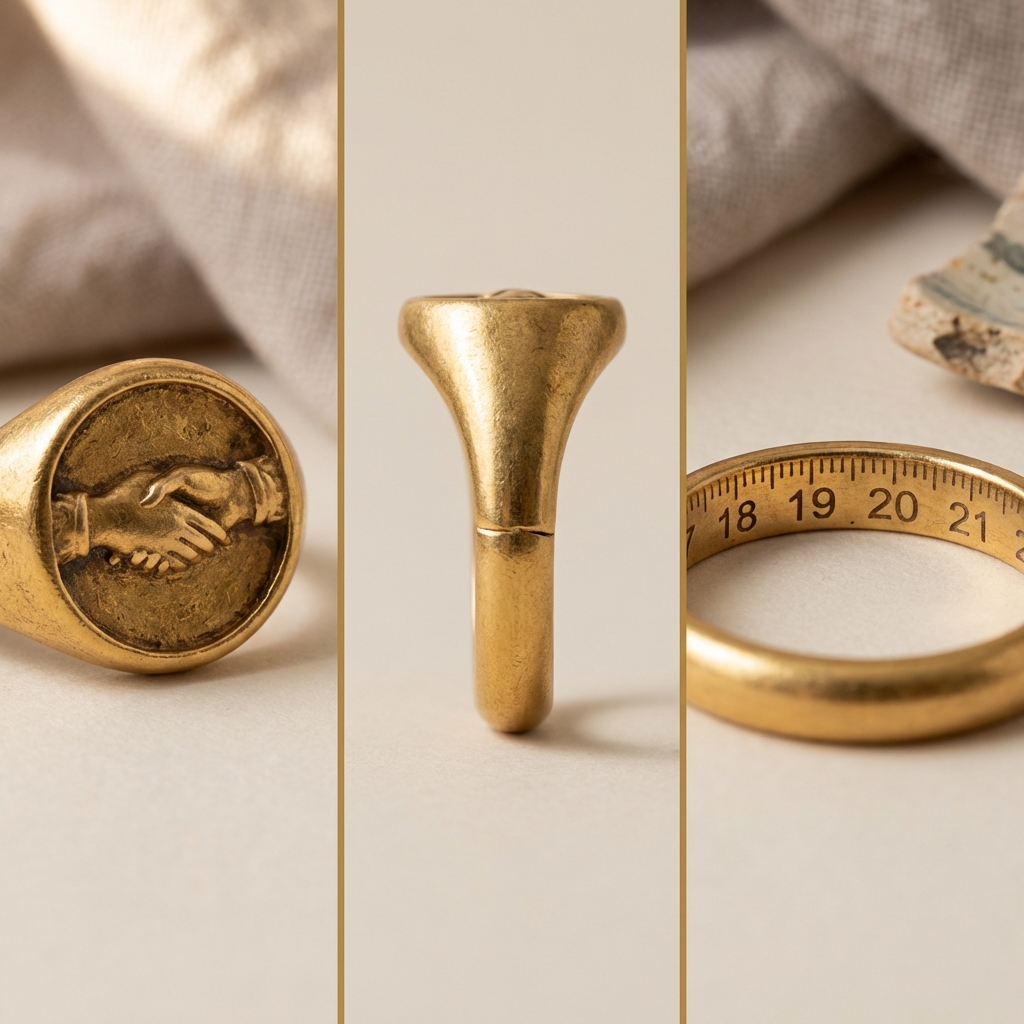
Archaic-Classical rings are frequently bronze and show engraved decoration or cast motifs. Hellenistic and Roman-period material increasingly includes gold and gemstone intaglios. Byzantine and medieval objects often incorporate more elaborate goldwork and enamel and a different set of iconographic references, so readers should expect visible differences in construction and decoration across these broad phases.
Common types, materials and motifs found in old greek wedding rings
Bronze finger-rings from Archaic and Classical contexts typically present engraved animal and mythological imagery. These motifs can be stylised quadrupeds, griffins or composite creatures and are often part of the bezel surface rather than set gems; detailed product photographs and close-ups of the bezel and hoop reveal whether a motif is engraved or later-added, as seen in curated bronze listings Iphios bronze example.
Hellenistic and Roman-period rings commonly show gold mounts and carved gemstone intaglios. Gemstones such as carnelian and agate were frequently used for personal seals and as decorative focal points, and listings that describe the gem, its cut and its intaglio composition help with intaglio ring identification; review of curated Roman rings can illustrate these features in practice Roman gold intaglio listing.
Byzantine and medieval rings differ in technical approach. Goldwork may be thicker and more complex, fine enamel or cloisonne techniques can appear, and Christian iconography becomes more common in bezel scenes. Those technical differences are visible in detailed condition notes and close-up images in responsible listings and help separate later medieval work from earlier Greek material Medieval cross pendant listing.
When examining photos look for bezel type and how the hoop meets the bezel, since bezel and hoop construction are consistent indicators of technique and period for many listings; condition descriptions that note patina and tool marks further clarify whether wear is age-consistent or the result of modern interventions.
Bronze engraved motifs and animal or mythological imagery
Bronze rings often show shallow engraving or simple relief scenes worked directly into the bezel surface. These images can be highly stylised and rely on strong silhouette and pattern rather than deep modelling; high-resolution images and angled detail shots make these features visible and are essential for visual comparison.
Gold rings with intaglios: gemstones, seals and iconography
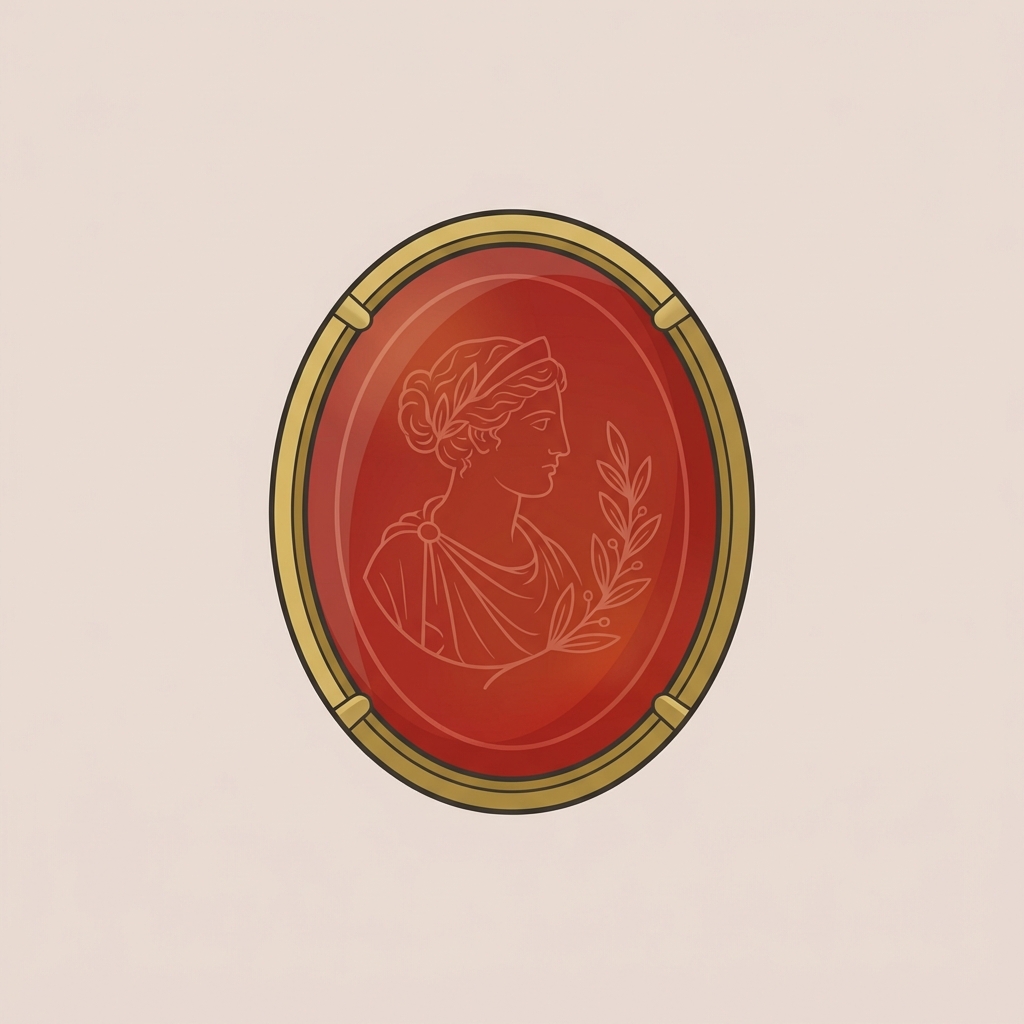
Gold mounts with carved gemstones such as carnelian are structurally different from alloy bronze hoops. Intaglio gems are carved to bear a negative image which could function as a seal or as a portrait or deity image on a finger. Listings that describe the gem type, whether the intaglio is worn, and how the gem is secured in the bezel provide practical clues for identification Roman silver intaglio listing.
Later goldwork, enamelling and religious motifs in Byzantine examples
Byzantine-period rings and pendants may incorporate iconography tied to Christian practice and can show techniques such as cloisonne enamelling that are uncommon in Classical bronze rings. Those technical differences are visible in detailed condition notes and close-up images in responsible listings and help separate later medieval work from earlier Greek material Late Roman listing.
How specialists and curators date and attribute old greek wedding rings
Market descriptions and curated catalogue notes often rely on construction cues such as bezel shape, hoop cross-section and visible tool marks to suggest dating. Observing whether a bezel is a single cast element or a separately soldered mount, and whether the hoop has signs of turning on a mandrel or distinct tool impressions, are practical first filters used in attribution descriptions; curated bronze and gold listings routinely highlight those features Aurora Antiqua 'Chimaron' listing.
Iconography and motif comparison to known workshop styles provide further context for attributions but remain comparative methods. A motif that matches a workshop repertoire or regional convention can suggest a likely period or geographic circle, though such suggestions are best treated as informed estimates unless confirmed by independent testing or specialist reports.
Where higher certainty is required buyers and curators look for laboratory analysis or independent specialist reports. Metallurgical analysis, gem testing and microscopic imaging can address composition, manufacturing technique and whether later adhesives or modern repairs are present. Listings that note the presence or absence of such reports help buyers decide whether to request testing before purchase Roman gold intaglio listing.
Bezel, hoop and tool-mark analysis as dating cues
Bezel form and hoop construction are recurring catalog descriptors because they preserve technical information about how a piece was made. Close photographs showing junctions and inner surfaces, accompanied by condition notes, are the practical starting point for many attributions in the market.
Iconography and motif comparison to workshop styles
Comparing iconographic elements to known types allows experienced observers to narrow date ranges, but this method is comparative and benefits from cross-checking with physical evidence such as metallurgy and wear patterns.
When to seek laboratory tests or specialist reports
If a listing lacks clear construction photos, precise measurements or credible provenance-style notes, or if a piece is priced as a high-value gold intaglio with unusual features, it is reasonable to request independent analysis. Tests commonly address alloy composition, gem identification and evidence for modern adhesives or reworking, and they provide an objective layer beyond visual attribution.
A practical checklist for buying old greek wedding rings online
Start with high-resolution photos from multiple angles and exact measurements. Photos should include the bezel face, a profile of the hoop, the interior of the band and clear macro detail of any carving or tool marks; a listing that provides these images reduces initial uncertainty and is a baseline requirement for remote purchase decisions Iphios bronze example.
Demand clear condition notes and restoration notes that describe what was stabilised, repaired or left untouched. Sellers who present conservator statements or photographic records of interventions help buyers understand the treatment history and the likely permanence of current condition statements Late Roman listing.
Typical identifying features include material and bezel type, age-consistent patina, visible tool marks and clear condition and provenance notes; gold intaglios and Byzantine enamelling represent later developments and require specific attention to mount and gem description.
Check provenance-style documentation and collection history carefully; ask for collection records, prior ownership notes or verification letters and treat such claims as informative but conditional. Acceptable answers usually include dated collection history, photographs from previous owners or third-party documentation that supports the chain of custody.
Ask directly about permits and export documentation if the item is offered from a jurisdiction where export is regulated. Responsible curators will either provide export paperwork or explain restrictions transparently rather than offering evasive replies.
Request any available specialist reports or laboratory results for high-value rings, especially gold intaglios with carved gems. If a listing lacks such documentation and the seller declines reasonable testing requests, that is a legitimate buyer concern and a reason to pause or seek third-party advice Roman gold intaglio listing.
Typical restoration, stabilization and condition notes you will see
Curated listings commonly state exactly what conservation work was performed and why. Typical statements note whether corrosion was stabilised, whether fragile joins were consolidated, or whether surface dirt was removed, and such condition notes let buyers judge how visible interventions are and whether they affect handling or display Late Roman listing.
Patina and surface corrosion are often described in neutral terms: collectors should expect language that explains tone, thickness and whether the patina obscures original details. Preserving patina is a frequent conservation priority because aggressive cleaning can remove diagnostic surface features that help with dating and attribution.
Recording repairs is essential. Listings that include dates of conservation work, the name or initials of the conservator, and photographic before-and-after documentation provide better traceability than vague claims. If a seller notes that a hoop was re-soldered or a bezel was reattached, request the associated conservator notes for clarity Aurora Antiqua 'Chimaron' listing.
Common conservation treatments and what they mean
Stabilisation commonly involves removing active corrosion and applying treatments that slow future deterioration. Consolidation of fragile edges or filling loss for support may be described in restoration notes and should be disclosed so buyers know what was done and why.
How patina and surface corrosion are described
Patina descriptions will typically refer to colour, texture and whether the surface shows evidence of cleaning or rubbing. Avoid listings that simply call a piece 'cleaned' without photographic evidence of before-and-after condition.
Recording repairs: what should be documented
Acceptable documentation includes the date of work, a short conservator note, and images of the object before and after treatment. If these are not available, consider asking for a conservator contact or declining the purchase until documentation can be provided.
Common mistakes and red flags when evaluating old greek wedding rings
One frequent error is relying on a single photograph or vague provenance claims. Single photos do not show inner surfaces, hoop junctions or subtle tool marks, and vague provenance statements without collection history or corroborating documentation should be treated with caution Iphios bronze example.
Another red flag is ignoring condition details and restoration records. Heavy polishing or undisclosed reworking can remove diagnostic marks and mask modern repairs; well-documented listings explicitly state what was stabilised or conserved, which helps buyers assess authenticity and condition Late Roman listing.

Misreading motifs is also common. Anachronistic iconography or inconsistent construction details can indicate later reproduction or heavy restoration; if an object mixes techniques that are not consistent with the stated period, request specialist review before purchase.
Overreliance on single photos or vague provenance claims
Ask for additional images: interior band, bezel underside, and scale references. If the seller refuses, treat that as a substantive concern and consider walking away.
Ignoring condition details or conservation records
If a listing omits restoration notes or uses vague language about repairs, ask clear questions about what was stabilised and whether any metalwork was re-soldered or replaced.
Misreading modern repairs and misattributed motifs
Look for mismatched patina, abrupt tool marks that contrast with surrounding surfaces, or adhesives around settings; these signs often point to modern interventions that should be disclosed and explained.
Practical examples and mini case studies from curated listings
Bronze Archaic example - 'Chimaron'. The listing described bezel imagery as a mythological creature and included close-up photos of the bezel, inner band and patina that illustrate how small bronze hoops present on the market; those construction and condition cues are the practical evidence readers can compare against other entries Chimaron listing.
Bronze Archaic example - 'Iphios'. This listing highlights engraved quadruped motif and notes on hoop size and wear consistent with age, showing how careful measurement and clear photos support a cautious attribution to an Archaic-Classical context Iphios listing.
Roman gold intaglio example - 'Minerva'. A Roman gold ring with a carved carnelian intaglio illustrates how gem description, intaglio subject and mount construction are presented in curated listings and why those details matter for intaglio ring identification Minerva listing.
Roman silver example - 'Diana'. A silver ring with an intaglio of a huntress highlights how silver mounts and gem settings differ from gold intaglios and how listing notes on the gem and bezel securement inform attribution and handling advice Diana listing.
Byzantine-medieval example - 'Orbis'. A medieval cross pendant and comparable enamelled or iconographic rings demonstrate the technical and iconographic shift to religious motifs and enamel work that help separate later medieval items from Classical Greek rings Orbis listing.
Care, next steps and closing guidance for buying old greek wedding rings
Simple care starts with minimal handling, avoiding abrasive polishing and keeping a record of any conservation work. Many curated listings recommend preserving patina and noting any cleaning or stabilisation that has already been performed, which supports long-term preservation and future study Late Roman listing.
Document your purchase. Retain listing images, condition notes, restoration notes and any provenance statements. If you later seek independent testing or specialist input, these records are the essential starting point and inform what further analysis will address.
record measurements, photos and provenance for a single ring
Keep this file with purchase documentation
When to consult a specialist - seek a conservator or independent archaeometallurgist if a piece shows inconsistent construction, unexpected materials, or lacks clear documentation. A short specialist report can address alloy composition, gem identification and evidence of modern repairs, and it may be the decisive factor for higher-value transactions.
Final checklist recap: prioritise clear photos and measurements, insist on condition and restoration notes, confirm provenance-style documentation and request specialist testing when necessary. Reputable curators present these items transparently and provide clear responses to reasonable buyer questions; treat absence of those elements as a substantive purchase risk.
Examine high-resolution photos of the halo and inner band for colour, corrosion patterns and tool marks; bronze often shows green-brown patina and surface corrosion, while gold retains colour and shows different join techniques. Check the listing's material description and condition notes.
Request testing if the ring is gold or features a carved gemstone and the listing lacks clear provenance or specialist reports. Tests are particularly useful for high-value pieces or when construction and motifs appear inconsistent with the stated period.
Handle minimally, avoid abrasive polishing, store in stable low-humidity conditions, and keep a file with all listing images, condition notes and any conservator records for the piece.
More from Aurora Antiqua
References
- boucle d'oreille, Louvre site des collections, Musée du Louvre, Département des Antiquités grecques
- Gold bracelets with enamel decoration, Museum of Byzantine Culture Thessaloniki
- Gold earring, Museum of Byzantine Culture Thessaloniki
- Gemstones from Roman Britain: Recorded in the Portable Antiquities Scheme, University Debrecen, Hungary
- About us, International Association of Dealers in Ancient Art
- Publication 561 (12/2025), Determining the Value of Donated Property, Internal Revenue Service (IRS), USA
- Auction Terminology, Christie's
- Research report: export licensing and provenance, GOV.UK, Department for Culture, Media and Sport (DCMS)
- Archaeological materials, Icon, The Institute of Conservation (UK)
- Ancient Gems and Finger Rings: Catalogue of the Collections, The Getty