


Looking for the real thing? Browse genuine Roman rings for sale, each piece one of one, individually authenticated, with documented provenance. For the background, see the guide to Roman jewelry.
Quick answer for a roman bronze ring: what it was made of
At its simplest, a roman bronze ring is a copper based alloy where tin is the principal alloying metal and lead and other trace elements are commonly measurable. In many cases tin levels sit in the single to low double digit percentage range, and lead can appear either as an intentional addition to ease casting or as an impurity from recycling, both of which affect how a ring looks and behaves in the long term Journal of Archaeological Science Reports compositional review
Use compositional ranges and visible signs to screen rings
Quick screening guide for listings
Why this matters for a buyer or a conservator: the mix of copper, tin and lead influences how well fine details cast, the hardness of the metal when worn, and the kind of patina or active corrosion that can form. Those practical effects are why simple compositional ranges and visible signs can be a useful first filter when viewing photos or a catalogue entry
Materials and typical alloy recipes in Roman copper alloys
Copper is the base metal in Roman bronzes and tin is usually the main alloying element that defines a bronze rather than nearly pure copper or a copper lead alloy. The tin content tends to control mechanical properties that mattered for rings and jewellery, while lead is frequently present either by deliberate addition to improve molten metal flow or through reuse of scrap metal from different sources Archaeometry pXRF study
Compositional recipes were not uniform across the Roman world. Differences reflect raw material availability, workshop preferences, and the extent to which metal was recycled. A ring produced in one province or century can show a noticeably different Cu-Sn-Pb ratio than a superficially similar ring from elsewhere, so expecting a single imperial recipe will often mislead the assessment of a piece Journal of Archaeological Science Reports compositional review
How tin and lead affect the look and behaviour of a roman bronze ring
Tin typically increases hardness and can allow for sharper casting detail when present at higher levels, so rings intended to carry intaglio designs or crisp bezels may show modestly higher tin than a plain hoop. That effect on mechanical properties can also influence how a ring responds to filing and chasing during finishing History of Metallurgy selected chapters
Lead improves fluidity of the molten alloy, helping complex shapes fill moulds cleanly, but it also alters corrosion behaviour. Lead can concentrate in certain corrosion layers and produce different patina textures and flaking patterns than low lead bronzes. Recognising these patterns is part of practical bronze corrosion identification Canadian Conservation Institute guide
Behind the scenes at @auroraantiqua
Explore curated listings with clear condition and restoration notes to learn how composition and conservation information is presented; Aurora Antiqua provides contextual notes that can help you read a listing.
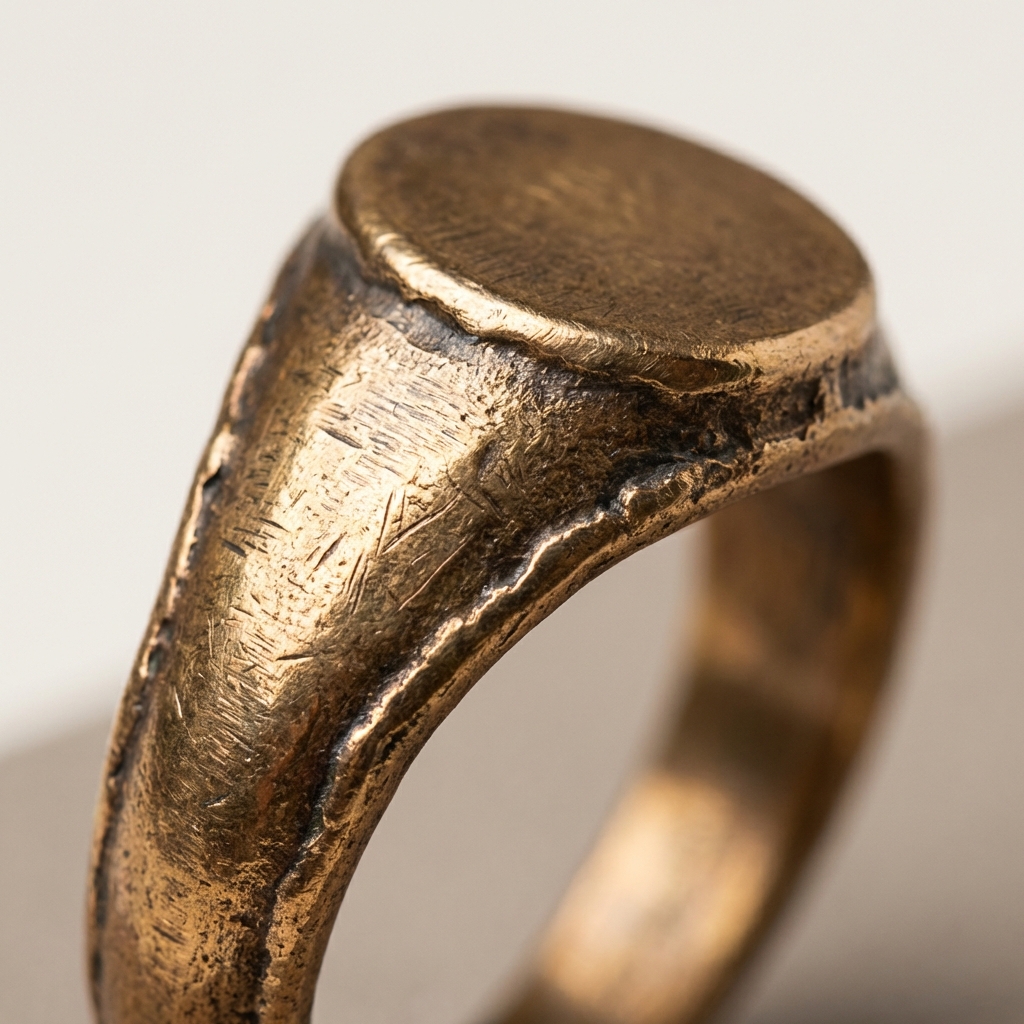
Visually, alloy differences can appear as variation in patina colour and texture, or in how fragile or stable surface crusts are. Those signs are not definitive on their own, but when combined with compositional screening they help form a clearer picture of a rings manufacture and subsequent history
Regional and chronological variation: there was no single Roman recipe
Large compositional surveys using portable XRF and lab analyses show substantial variation across regions and time periods. These studies support the view that local workshops worked with the metal available to them and that recycling was a routine part of supply, rather than an empire wide, uniform alloy formula Journal of Archaeological Science Reports compositional review
For a collector this means that an unusual Cu-Sn-Pb ratio is not by itself proof of later forgery or of a date outside the claimed period. Instead, atypical ratios should prompt follow up questions about workshop context, lab methods used, and whether repair or recycling could explain the values shown in a report Archaeometry pXRF study
How conservators and labs identify a roman bronze ring's composition and condition
Identification starts with macroscopic inspection: patina colour and texture, visible casting seams, tool marks on shoulders or bezels, and evidence of repairs or replaced elements. These cues guide whether more technical screening is useful
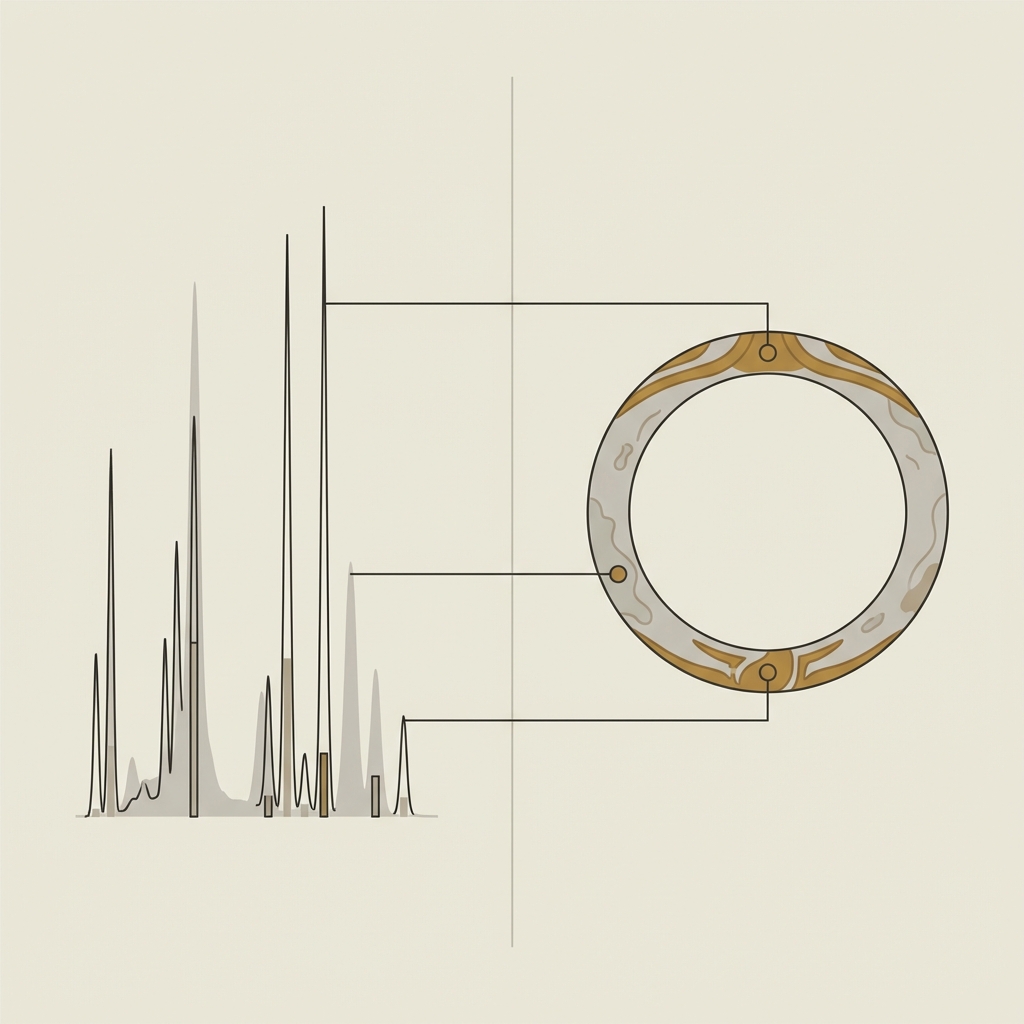
Portable XRF is the practical first step many collections and sellers use to report Cu-Sn-Pb ratios because it is non destructive and quick. For many buyer decisions a portable XRF result is informative and helps separate probable ancient alloys from clearly modern compositions Archaeometry pXRF study
Roman bronze is a copper based alloy with tin as the main alloying element and commonly measurable lead and trace elements. The specific mix affects casting detail, hardness, patina and corrosion behavior, so composition helps inform identification, conservation and buying decisions.
When results are ambiguous or when a piece has extensive restoration, more detailed laboratory tests such as metallographic analysis can reveal microstructure, casting technique and whether modern solder or repair materials are present. Isotopic work is more specialised and used mainly for research questions rather than routine sales documentation Archaeometallurgy: Guidelines for Best Practice (HEAG003), Historic England
Common production techniques for Roman rings and how they affect identification
Roman rings were made using a small range of repeatable techniques. Casting in open moulds was common for simpler shapes while lost wax was used where fine detail or undercuts were required. After casting, mechanical finishing like filing and chasing was used to refine edges and set bezels Metropolitan Museum overview
Surface treatments are recorded too: high status rings sometimes received gilding or niello inlay, and controlled patination was occasionally applied. Later mounts and repairs can obscure original signals, so describing any mounting or added material in condition notes is important for identification Combined Use of Non-Destructive Analysis Techniques to Investigate Ancient Bronze Statues, Sensors (MDPI), via PubMed Central
Reading condition notes and restoration notes for a roman bronze ring
Typical condition notes should state what was stabilised, what was repaired and what was intentionally left untouched, using terms like consolidation, structural repair or cosmetic cleaning. That clarity helps differentiate acceptable conservation from invasive change Canadian Conservation Institute guide

When a listing references active corrosion, consolidation or replacement parts, ask for photos of those areas and for a copy of any XRF or lab report. A transparent restoration note that explains what was done and why increases confidence more than vague statements
Typical identification mistakes and traps to avoid with ancient bronze rings
A common error is assuming a green patch always equals long burial age. Modern treatments, local soil chemistry and recent repairs can all produce green or black crusts that mimic age-related patina Canadian Conservation Institute guide
Another trap is relying solely on photographs or stylistic comparison without compositional screening or documentation. Visual cues are valuable but are most reliable when paired with an XRF report or a clear provenance statement Archaeometry pXRF study
A practical checklist for deciding on a roman bronze ring purchase
Request clear photos from multiple angles, exact measurements and close ups of bezels, shoulders and any repair joins. See examples in our rings collection. Ask for any provenance or collection history notes that may be available and for explicit restoration and condition statements Archaeometry pXRF study
If a listing includes an XRF report, check how the reported Cu-Sn-Pb ratios compare to the typical ranges mentioned earlier and whether the seller or lab comments on surface contamination or calamine. If no screening is provided, consider that a routine follow up question before purchase and use our contact page to request more detail Canadian Conservation Institute guide
Case example: late Roman bronze rings and what studies show
Late Roman rings from the fourth to sixth centuries often show copper with modest tin and measurable lead traces, a pattern that fits workshop level alloying and repair histories rather than a single imperial alloy. Studies using pXRF and laboratory methods report this tendency across multiple collections Archaeometry pXRF study
When a listing cites a late Roman attribution alongside compositional numbers, read the numbers as part of the case not the whole case. Combine them with stylistic notes, bezel type and any stated provenance to form a balanced judgement; see related examples in our ancient Roman rings collection British Museum technical notes
Care, storage and avoiding bronze disease for collectors
Preventive care is straightforward: keep rings in stable, low humidity conditions, avoid contact with acids or salts, and store items separately to reduce risk of abrasion and chemical transfer. These measures reduce the likelihood of active corrosion developing Canadian Conservation Institute guide
If a listing mentions bronze disease or active corrosion, treat that as a signal to seek professional conservation advice rather than attempting home treatments. Conservators can advise on consolidation or desalination that is safe for ancient alloys
When to pursue lab analysis and what each test tells you
Portable XRF is useful for rapid, non destructive screening of elemental ratios and is commonly used in sales and museum documentation. It gives a practical elemental snapshot but does not substitute for microstructural study when repairs or surface contamination are suspected Archaeometry pXRF study
Metallographic analysis reveals casting structure, grain size and evidence of cold work or repair solder, while isotopic analysis is specialised and used mainly for research questions about ore sources. Decide on tests by weighing the cost and the information needed for confidence in a purchase
Summary: how composition should shape your judgement on a roman bronze ring
Composition is one important data point but not the sole determinant of authenticity or date. Combine Cu-Sn-Pb screening, condition and restoration notes, stylistic assessment and provenance information to form a balanced view before buying Testing and Retesting Alexander the Great, J. Paul Getty Museum and Getty Conservation Institute, Los Angeles
When in doubt, request clearer documentation, ask for close up photos of suspect areas and consider a professional opinion for items with evidence of active corrosion or extensive restoration Canadian Conservation Institute guide
Further reading and resources for the collector
Conservation guidance on copper alloy corrosion is an essential practical reference for collectors, and major overviews such as the Canadian Conservation Institute notes or museum technical reports provide clear advice on recognising active corrosion and safe care Canadian Conservation Institute guide
For compositional background, recent pXRF surveys and Archaeometry papers summarise regional patterns and the limits of portable screening. Museum overviews provide accessible descriptions of production techniques used on ancient bronzes Metropolitan Museum overview
Tin in Roman bronzes typically falls in single to low double digit percent ranges, varying by period and object function.
A portable XRF report offers useful elemental ratios for screening but cannot by itself prove age; combine it with style, provenance and condition notes.
Ask for detailed photos and conservation notes and consult a professional conservator before attempting any treatment.
More from Aurora Antiqua
References
- EAP, Estonian Journal of Archaeology Publications, Estonian Academy Publishers
- Microstructure and chemical composition of Roman orichalcum coins emitted after, Scientific Reports, Springer
- A pilot study evaluating challenges using handheld XRF for provenance studies, npj Heritage Science
- The non-destructive investigation of a late antique knob bow fibula, Heritage Science (Springer Nature), Paul
- Nanostructured Silver Found in Ancient Dacian Bracelets from Cehei Hoard, Salaj, Romania, Nanomaterials (MDPI), via PubMed Central
- Combined Use of Non-Destructive Analysis Techniques to Investigate Ancient Bronze Statues, Sensors (MDPI), via PubMed Central
- Archaeometallurgy: Guidelines for Best Practice (HEAG003), Historic England
- Testing and Retesting Alexander the Great, J. Paul Getty Museum and Getty Conservation Institute, Los Angeles
- The use of Hand-Held XRF for investigating the composition and corrosion, Nature
- Investigating Ancient “Bronzes”, The Getty