


Looking for the real thing? Browse our Ancient Roman ring collection, each piece one of one, individually authenticated, with documented provenance. For the background, see the guide to Roman jewelry.
Defining Roman glass jewelry and glassware: context and terms
What counts as Roman glass and ancient ring elements
Collectors looking for authentic roman glass jewelry should start with clear terms. Roman glass covers a broad body of material produced across the Roman world from early Imperial times through the late Roman period, and it appears in many forms, including vessels, beads, insets and small cameos used in rings and settings.
In jewelry contexts, glass may appear as beads set on a hoop, as cabochon insets within a bezel, or as carved intaglios and cameos that serve as focal stones in an ancient ring. Reasoned reading of labels and descriptions relies on vocabulary such as bezel, intaglio, patina and wear consistent with age to form an initial assessment.
Common materials and terms collectors will see
Many listings use terms that describe technique rather than strict material, for example core-forming for early beads, or cameo and overlay when a thin layer of differently colored glass was worked to create relief decoration. These technique names help date pieces when combined with iconography and execution.
Dating is usually presented as an estimate, often by period or century, because secure attributions depend on technical study, documented provenance and sometimes conservation reports rather than surface claims alone.
The best known Roman glass masterpieces: Lycurgus Cup and Portland Vase
Lycurgus Cup: what makes it famous
The Lycurgus Cup is widely recognised because it shows dramatic dichroic behavior, appearing green in reflected light and red when lit from behind, a characteristic explained and interpreted by curators at the British Museum British Museum Lycurgus Cup page. See also the Wikipedia entry on the Lycurgus Cup Lycurgus Cup - Wikipedia.
The cup is a late Roman object that has become shorthand in collections and conservation literature for dichroic glass, so collectors and students often use it as a comparative example when evaluating exceptional pieces described as dichroic.
Portland Vase: why cameo glass matters
The Portland Vase is the canonical example of Roman cameo or overlay glass and is frequently cited in museum and technical overviews as a benchmark for the craft of carving and layering glass British Museum Portland Vase page.
Because cameo technique requires skilled control of layered glass and fine carving, the Portland Vase is used in literature and gallery interpretation to explain why some glass objects are considered luxury works rather than routine glassware.
The British Museum and other institutions provide images and technical summaries that are useful starting points if you want to compare a listing to an authenticated museum example; consult those pages and request documentation when comparing rare glass items.
How Roman glass was made: core methods collectors should know
Core-forming, blowing and cameo techniques explained
There are three core production techniques that collectors should recognise: core-forming, common for early beads and small vessels; glass-blowing, which became widespread in Roman workshops for many forms; and cameo or overlay work used for luxury items where multiple layers are carved to reveal contrast Corning Museum of Glass overview of Roman glass. Additional library resources at the Corning Museum provide extended technical notes Corning LibAnswers resource.

Recognising which technique was used can narrow a likely period and workshop practice, for example core-formed beads often predate blown tableware, while cameo overlay points to specialised luxury production and close carving traditions.
How technique helps with dating and attribution
Technique is one axis among several for attribution. A bead showing core remnants or a particular type of wound neck may suggest an earlier date, while the complexity of a cameo carving may indicate a high level of workshop skill and a luxury context.
Because technique alone is not proof, collectors should combine it with iconography, execution quality and, where available, conservation documentation to form a cautious attribution.
The science behind the Lycurgus Cup: why it changes color
Basic explanation of dichroism in the cup
The Lycurgus Cup's striking color change is a material phenomenon rather than a surface effect; it appears green in reflected light and red in transmitted light because of particles within the glass that interact with light.
Technical studies show that the effect results from nanoscale particles dispersed in the glass, a finding that has been replicated in conservation science literature and explains why simple surface cleaning cannot reproduce the same property Technical study on Lycurgus Cup dichroic glass. The British Museum lists related drinking-cup entries that provide comparative images and notes British Museum drinking-cup entry.

What laboratory analyses found and why it matters
Laboratory work has identified gold and silver particles at the nanoscale as the cause of dichroism in the Lycurgus Cup, a conclusion that influences how conservators and scientists treat and image such glass objects during study.
Because these analyses require specialised instruments and conservation lab access, published studies and museum reports are the best sources for understanding the limits and implications of such findings, particularly when a private object is claimed to show similar effects British Museum Lycurgus Cup page.
Practical identification: how to recognise authentic Roman glass
Visual signs and manufacturing markers to check
Start with manufacturing evidence that is visible without destructive testing: bubble patterns, seam lines, traces of a core, and tool marks are often informative about technique and period and can be photographed for comparison to museum examples.
When a listing emphasises such features, ask for close images of edges, any seams or pontil marks, and macro shots that reveal bubble size and distribution because these can align with known production methods.
Use museum comparison and a conservation checklist to evaluate glass items
Compare items to museum pages
What patina and corrosion typically look like and what they do not prove
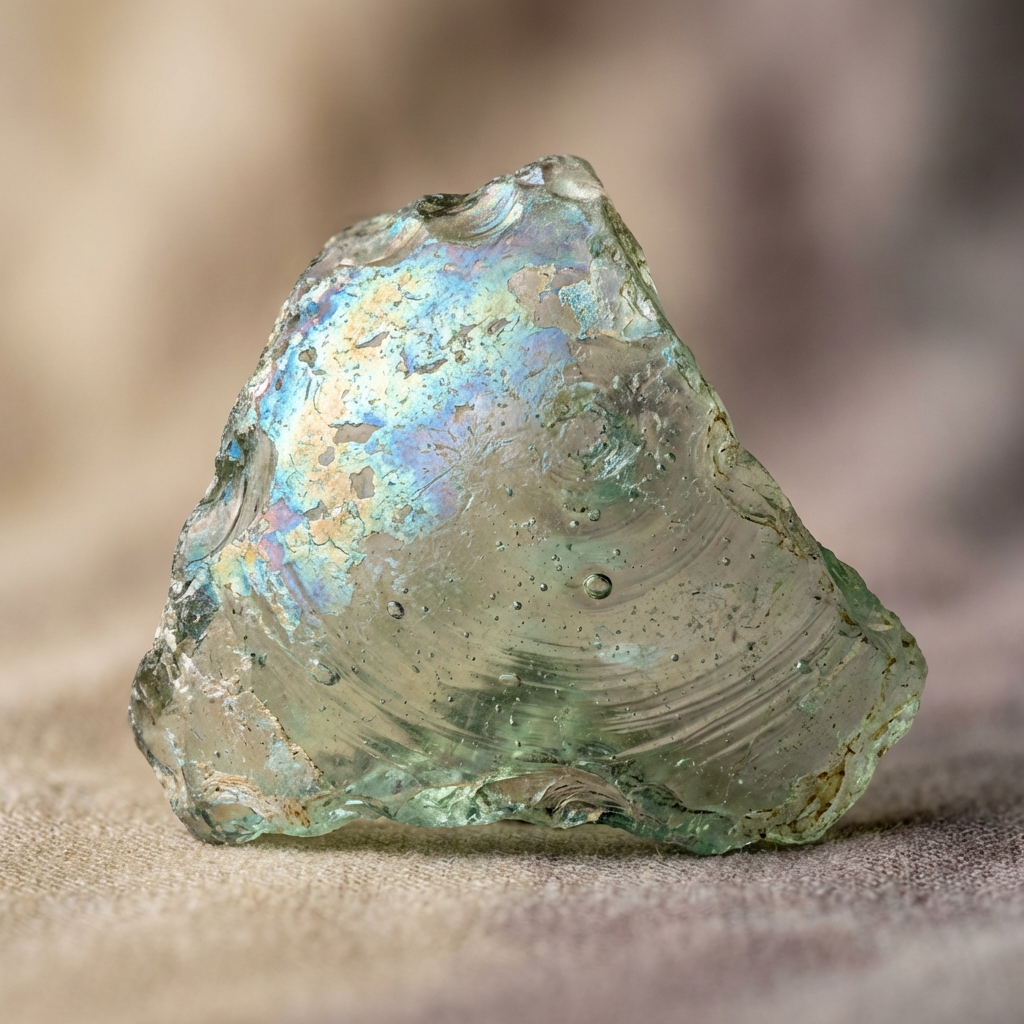
Glass corrosion often appears as iridescence, flaking or a soft weathered surface, and these signs can be consistent with long burial and chemical interaction; however, surface appearance alone does not prove ancient manufacture or provenance Getty Conservation guidance on glass care.
Modern treatments can mimic some visual effects, so use corrosion patterns alongside manufacturing marks and iconography rather than as a standalone claim of authenticity.
Condition, conservation and care: what museums advise
Common conservation treatments and when they are noted
Museums and conservation institutes describe treatments such as stabilisation, consolidation and careful fills where necessary; these interventions are sometimes essential to prevent further loss and are normally recorded in conservation reports Getty Conservation glass resources.
Sellers should disclose if an object has been stabilised, consolidated, or filled, and good listings will explain what was done to preserve structure or visual continuity rather than obscure those actions.
How condition notes should appear in listings
Clear condition notes typically specify what was stabilised, whether any losses were filled and the nature of any consolidation, ideally with before and after photos when restoration work has been carried out.
For jewelry pieces that incorporate glass, expect mention of how the glass is seated in a bezel, whether the setting was repaired, and whether the object was cleaned or left in a stable, untreated state.
Where to see originals: key museum locations and what they show
British Museum displays and interpretation
The British Museum is the primary public steward for the Lycurgus Cup and presents both the object and its scientific interpretation, making their pages a useful comparison for collectors and researchers British Museum Lycurgus Cup page.
Comparing a private listing to the museum’s photographs and technical notes can reveal whether a claimed similarity is visual only or supported by comparable manufacture details.
Corning Museum of Glass and The Met resources
The Corning Museum of Glass provides technical overviews and comparative collections that help readers place manufacturing marks and workshop practices in context Corning Museum of Glass overview.
The Metropolitan Museum’s timeline and contextual essays are also useful for understanding the broader social and stylistic frameworks that shaped Roman glass production The Met overview of glass in the ancient world.
Buying checklist for collectors: decision criteria and red flags
Essential questions to ask sellers
Ask for detailed provenance notes, high resolution images, precise measurements, and any laboratory or conservation reports; these items form the core of a defensible decision when considering authentic roman glass jewelry.
Also request clear restoration notes and documentation of prior ownership or sale history to understand how the piece has been treated and studied.
Red flags that suggest caution
Be wary of listings that rely solely on patina claims, use vague provenance language, or pressure buyers with time limited language. Such patterns often indicate a lack of transparent documentation rather than a verified history.
Another common red flag is the absence of close macro photographs of seams, edges or bubble patterns that can be critical for making a preliminary assessment.
Provenance and documentation: what to expect and how to read records
Types of provenance notes and verification letters
Typical provenance entries include prior collection history, notes of previous sales and, when available, verification letters from recognised specialists or institutions. These records can strengthen a claim but should be read critically.
Two objects are most often cited: the Lycurgus Cup for its dichroic glass and the Portland Vase as the canonical example of Roman cameo glass; both are held and interpreted by major museums and serve as comparative benchmarks for collectors and researchers.
Verification letters and collection histories vary in detail and form; a short descriptive note is less informative than a documented chain of custody that includes previous ownership and sale records.
Limits of provenance and open questions in attribution
Provenance can clarify a piece's modern history but it does not replace technical analysis. Gaps in chains of custody or unverified private claims leave open questions that only technical study and peer reviewed reports can more fully address Corning Museum of Glass overview.
When provenance is strong and is paired with appropriate technical or conservation documentation, attribution becomes more secure though not absolute.
Restoration and preservation notes: how to interpret seller disclosures
Common restoration terms and their implications
Common terms you will see in listings include stabilised, consolidated, filled and inpainted. Stabilised often means a conservator has taken measures to prevent further loss, while filled indicates material was used to replace missing fragments.
Consolidation usually refers to treatments that strengthen friable surfaces; these interventions are legitimate when recorded transparently and performed by qualified conservators.
What well documented restoration notes look like
Good restoration notes specify who performed the work, the date, materials used and include photographs that show the condition before and after treatment. Such transparency helps buyers assess the extent and nature of intervention.
Vague phrasing like professionally restored without detail should be a prompt to request more information and visual evidence.
Typical mistakes and common pitfalls collectors make
Overreliance on surface appearance
A frequent error is to treat patina or iridescence as conclusive evidence; while these signs can indicate long term burial or chemical change, they are only one element among many and can sometimes be produced or altered by modern interventions Getty Conservation guidance.
Use surface appearance as an initial cue but verify with manufacturing markers, comparative iconography and documented conservation reports before forming a definitive judgement.
Misreading provenance claims
Another common pitfall is assuming that provenance language implies an unbroken chain of custody. Phrases like former collection of and believed to be from are useful but not the same as a documented chain that includes sale records or specialist verification.
Ask specific questions about dates, prior owners and any available paperwork so you can judge whether a provenance claim materially changes the object's attribution.
Practical scenarios: example evaluations and what a good listing looks like
Scenario 1: a Roman glass intaglio ring with partial provenance
Imagine a listing for an intaglio set in a silver ring described as Roman with partial provenance stating it was in a private European collection since the 1980s. Good signs include high resolution photos of the intaglio, images of the bezel seat, and a conservation note that specifies if the setting is modern or ancient.
If the listing supplies close images showing bubble patterns and a clear carved execution consistent with Roman intaglios, and if the seller can provide details of previous ownership or a conservation report, the piece may be a reasonable candidate for further inquiry and an independent technical check.
Scenario 2: a cameo fragment described as Roman without documentation
Consider a cameo fragment offered as Roman cameo glass but with no provenance, only a single oblique photo and a short note claiming ancient origin. In that case, the prudent move is to request multiple detailed photographs, ask whether any lab tests have been performed and decline the purchase if reasonable documentation is not provided.
When a listing lacks images of manufacturing features and provides no conservation or provenance information, the correct response for many collectors is to pass until better evidence is available.
How Aurora Antiqua helps: what to expect from a curated seller
Role as a trust layer and curator
Aurora Antiqua acts as an expert curation reference and trust layer for buying ancient jewelry online, presenting pieces with contextual editorial notes and condition information to help buyers make informed choices.
The site focuses on curated ancient rings spanning Roman, Greek, Byzantine, Islamic, Celtic, medieval, and post medieval periods and offers select small artifacts and relic objects alongside jewelry, with restoration and preservation notes when relevant.
What documentation and notes Aurora Antiqua provides
Sellers associated with this approach typically include provenance and documentation references when available, such as collection history, prior ownership notes and verification letters, and will summarise restoration notes that describe what was stabilised, repaired or left untouched.
While Aurora Antiqua provides contextual editorial content, condition notes and restoration summaries, readers should understand that documentation strengthens but does not guarantee attribution, and that the brand does not claim absolute certainty about provenance or valuation.
Conclusion and further reading: trusted sources to consult
Key museum pages and conservation literature to bookmark
The Lycurgus Cup and the Portland Vase remain touchstone examples in the study of Roman glass, and museum pages and conservation reports from institutions such as the British Museum, the Corning Museum of Glass and The Met are essential starting points for comparison and study British Museum Lycurgus Cup page.
Bookmarking the Corning Museum of Glass technical overviews and published conservation guidance will help collectors use consistent criteria when evaluating listings and when requesting specialist input Corning Museum of Glass overview.
Look for manufacturing markers such as bubble patterns and seam lines, consistent corrosion patterns, clear provenance or conservation reports, and high resolution images of the bezel and edges; none of these alone prove antiquity, so use them together and request expert input when needed.
No. Iridescence and other corrosion patterns can indicate long term chemical change but can sometimes be mimicked or altered by modern treatments; treat surface appearance as one clue among several and seek comparative examples and documentation.
Request a report when provenance is incomplete, the piece is high value or unusual, or when a seller claims scientific properties such as dichroism; lab work is specialised, so it is most useful when combined with provenance and expert evaluation.
More from Aurora Antiqua
References
- Publication 561 (12/2025), Determining the Value of Donated Property, Internal Revenue Service (IRS), USA
- Auction Terminology, Christie's
- Getty Provenance Index, J. Paul Getty Trust, Getty Research Institute, Los Angeles
- New Acquisitions of Archaeological Material and Works of Ancient Art, Association of Art Museum Directors (AAMD)
- Code of Ethics, International Council of Museums (ICOM), Paris
- Stolen Works of Art Database, INTERPOL
- Lycurgus Cup, Wikipedia