


Looking for the real thing? Browse our full ring collection, each piece one of one, individually authenticated, with documented provenance. For the background, see the guide to buying ancient artifacts.
Quick answer: can this be an authentic roman ring?
authentic roman ring
Short answer, you may be able to establish that a ring is an authentic roman ring but in most cases visual checks alone are not sufficient; verification typically needs a combination of condition documentation, provenance research and laboratory identification for gem and material questions. For gemstone and treatment identification most buyers rely on formal reports from credentialed gemological laboratories that list methods used such as microscopy and spectroscopy GIA laboratory services.
Begin with clear photos, measurements and detailed condition notes: full ring shots from several angles, close ups of the bezel and any intaglio, clear scale and millimetre measurements, plus notes that describe patina, visible repairs and any hallmarks or maker marks. Those materials are essential before you send an object for formal testing or provenance queries; see our Q&A hub.
Help collectors capture consistent photos and measurements before sending items for expert review
Use a neutral background and millimetre scale
A practical first step is to compare what you see against typical period materials and motifs while keeping expectations measured: carnelian and agate were common gemstones in Roman intaglios and designs often feature chariots, animals or deities, but similar motifs are reproduced in later periods. Record what you observe, then contact a credentialed gemological laboratory or a museum reporting route if you need formal confirmation.
For finders or UK collectors, initial identification and reporting pathways exist through national schemes that can advise on next steps and legal issues related to export or collection history Portable Antiquities Scheme guidance. (see a study of finds reported under the PAS II. Finds Reported under the Portable Antiquities Scheme)
What to look for on an object level: signs that may support an authentic roman ring
Physical features and iconography to note
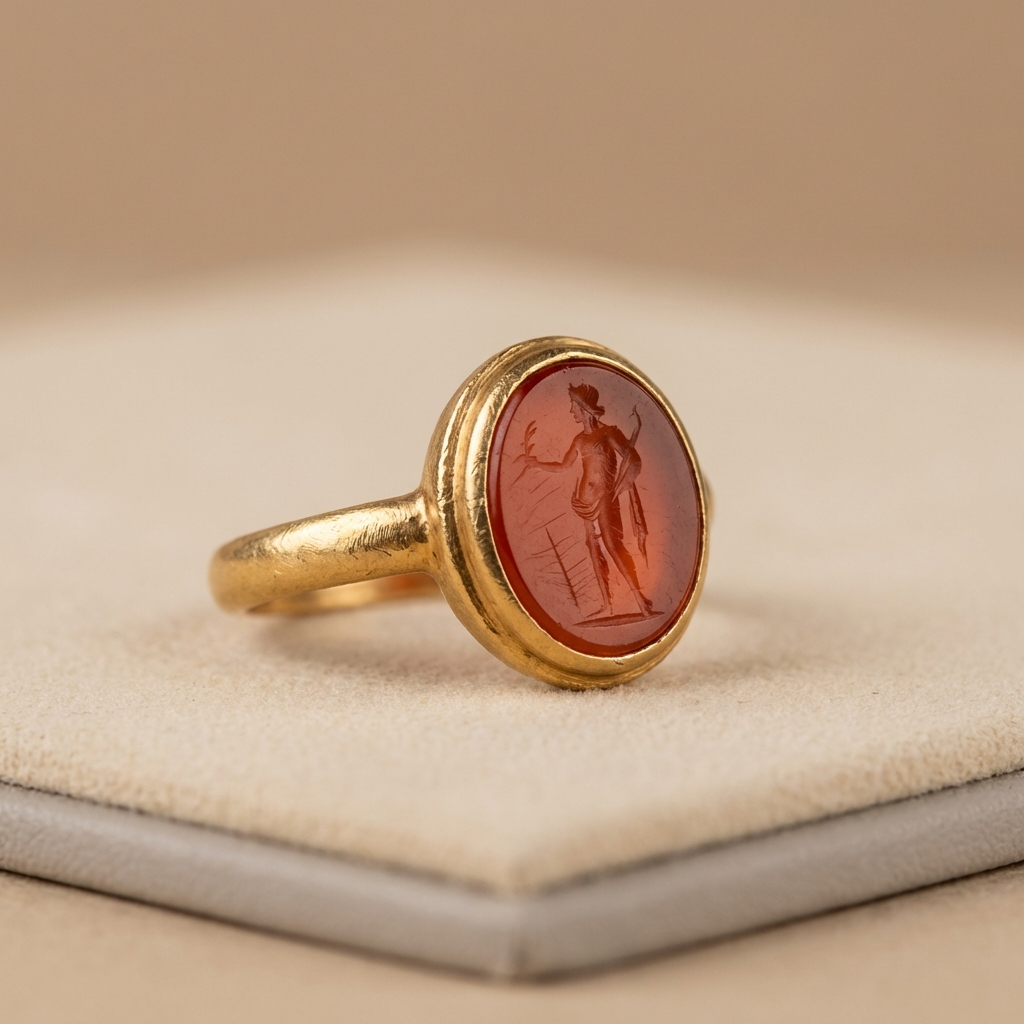
When assessing a candidate ancient ring at object level, document bezel shape, intaglio technique, and the stone type where possible. Roman intaglios often appear as carved carnelian, agate or similar chalcedony, set in simple silver or gold hoops; note whether the intaglio is cut in intaglio or cameo style and record the motif and carving technique in your notes.
Photograph the intaglio under diffuse light and capture edge views of the stone where you can see how it was seated. Take one photograph showing the ring on a millimetre scale and another that isolates toolmarks or small chips; these contextual images make later microscopic or conservation comparisons far easier for a lab or museum reviewer.
Condition, patina and restoration clues
Patina and wear consistent with age can support an antiquity claim but must be interpreted carefully. Microscopic surface features, mineral accretions and stable patina may indicate long burial or use, while sharp modern toolmarks, uniform fresh filing or recent solder lines usually suggest later modification or recreation. If restoration notes exist, keep them with your photos and describe which parts were stabilised and which were left untouched; transparent restoration notes help experts distinguish original surfaces from modern interventions.
Remember that surface appearance alone does not prove ancient origin since modern forgers may artificially age components. Use your condition notes as part of the dossier you submit for further testing or provenance checks, and highlight any areas you suspect were repaired or replaced.
Step by step: how professionals verify an authentic roman ring
Typical verification workflow
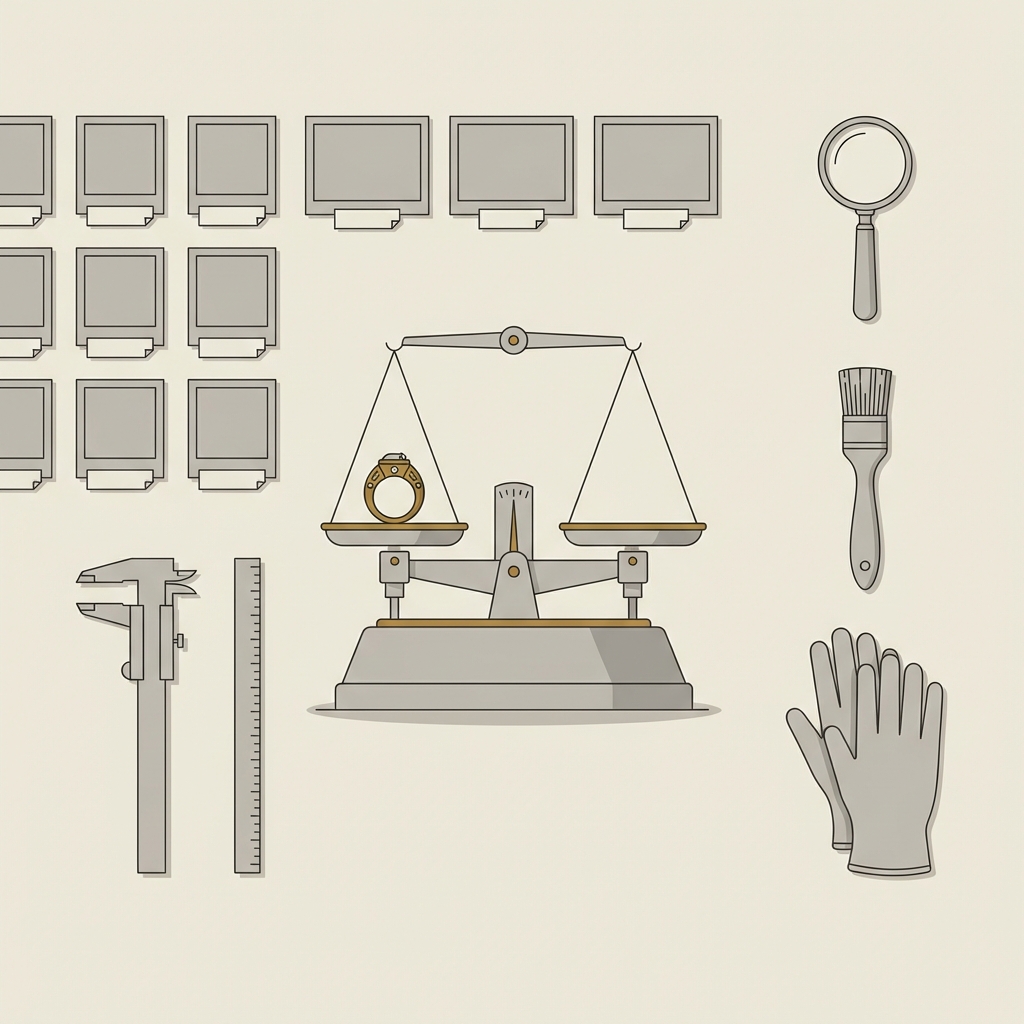
Professional verification usually follows a sequence: document and photograph the object thoroughly, consult a museum or finds reporting service for contextual or legal questions, obtain gemological identification for the stone and any treatments, and, when needed, commission targeted archaeometric analyses to assess metal composition or construction. Accredited gem laboratories are commonly used for the gemstone identification step and they make clear which methods were applied in their reports GIA laboratory services.
Contacting a museum or finds scheme early can help flag provenance gaps or legal constraints that affect marketability. Museums and provenance specialists often advise whether an object should be referred for further scientific study or academic assessment, especially when ownership history is incomplete British Museum provenance guidance.
Check a ring's likely authenticity by combining careful documentation, a gemological laboratory report for stone and treatment questions, and provenance research or museum consultation for ownership and legal clarity.
After initial documentation and any reporting to heritage services, laboratories and heritage science teams apply non destructive techniques to answer specific questions about materials and construction. These tests are chosen to avoid sampling or damage to the object while producing data that informs dating or authenticity assessments.
Non destructive scientific techniques explained
XRF, microscopy, Raman or FTIR and radiography are routine, non destructive approaches used to analyse alloys, surface treatments, organic residues and internal construction. For example XRF gives alloy composition that can be compared with expected Roman metal recipes, while microscopy reveals toolmarks, solder joints and patina structure that are relevant to manufacturing and repair histories Nuclear Techniques for Cultural Heritage Research (IAEA Radiation Technology), International Atomic Energy. See Getty Museum guidance on handheld XRF Handheld XRF in Cultural Heritage.
Raman or FTIR identify organics such as binding residues or modern treatments on stones, and radiography helps visualise how a ring was constructed, whether an inner wire was added, or how mounts relate to the bezel. These methods together create a technical dossier that, combined with provenance work, supports an overall judgement. For more on Raman use in art and archaeology see Applications of Raman spectroscopy in art and archaeology.
Turnaround and costs vary by provider and scope. Basic gem identification reports commonly start in the low hundreds for simple gem ID, while a full package that includes archaeometric analysis and provenance research can take weeks and cost substantially more; always verify the issuing lab's credentials and the methods listed on any certificate before relying on a result SSEF services overview.
Who to contact first: labs, museums and local reporting routes
When to contact a gemological lab
If the primary question is the identity of a gemstone or whether a stone has modern treatments, a credentialed gemological laboratory is the appropriate first formal contact. Those labs issue standardized reports that list the tests used and are accepted by dealers and auction houses for gem and treatment questions GIA laboratory services.
Before sending material to a lab, prepare your documentation: clear photos, an item description that includes condition and restoration notes, measurements and any provenance statements you already have. Ask the lab which report level you need and confirm sample handling, insurance and turnaround estimates.
Museum and national reporting: why provenance matters
When ownership history, export status or legal title are uncertain, museum provenance services or national guidance should be contacted early. Provenance checks can reveal gaps in collection history or restrictions on trade and they help determine whether an object can be legitimately marketed or requires further documentation British Museum provenance guidance.
For finders and private collectors in the UK, the Portable Antiquities Scheme is a practical first contact that provides identification advice and can advise on reporting routes; organisations like this often help refer items to specialists when more detailed study is needed Portable Antiquities Scheme guidance.
How to read and verify lab and provenance reports for an authentic roman ring
Key items to look for on a gem lab report
A useful gem lab report lists the issuing laboratory's full name, a unique report number, the methods used such as microscopy or spectroscopy, a signatory and laboratory contact details. Confirm these items before treating a certificate as definitive and if anything is unclear ask the issuing lab to confirm the report directly.

When a provenance file is provided, check for clear collection history, prior ownership notes and any export or legal status statements. Look for cited references, catalogue entries or verification letters that link the item to established collections; absence of these elements is a common cause for caution.
Questions to ask about provenance documentation
Ask whether collection history is continuous or if there are gaps, whether export permits or legal paperwork exist where applicable, and whether any prior conservation or restoration work is recorded in restoration notes. If a report lacks a lab contact or methods section, request clarification or seek a second opinion from another credible source.
When weighing a report, consider seeking a second opinion from a museum specialist or academic when the object has ambiguous features or when provenance documentation is incomplete; combined technical and provenance assessments are the strongest basis for a careful judgement.
Common mistakes and red flags when checking whether a ring is authentic
False reassurance from good photos
High quality photographs help but do not replace laboratory methods; photos can mask surface fills, hide modern adhesives or fail to reveal microscopic toolmarks. Do not assume that attractive images equate to a verified origin.
Be cautious when provenance claims are vague. Red flags include gaps in collection history, unsigned or anonymous provenance statements, and vague export statements without documentation. Such gaps often require museum or legal review before a confident market decision can be made UNESCO cultural property guidance.
Misreading provenance and legal status
Another common mistake is to rely solely on a seller's assertion of provenance without documentation such as collection catalogues or verification letters. If export history or ownership chains are incomplete, consult national guidance or a museum to understand potential legal constraints and reporting obligations.
Avoid overreliance on a single appraisal from an uncredentialed source; verify report identifiers, laboratory credentials and listed methods, and when in doubt obtain a second opinion from a different credentialed provider or a museum specialist GIA laboratory services.
Practical scenarios: example next steps for different situations
If you have a ring with partial documentation
1) Gather clear photographs, measurements and condition notes. 2) Submit these materials to a gemological lab if the stone or treatment is in question. 3) Parallel to technical checks, compile any provenance notes, invoices or letters and consult a provenance specialist or a museum department to fill ownership history gaps.
Basic gem identification often answers stone identity and obvious treatments, while provenance research addresses legal status and collection history. Expect different timelines for each: simple gem reports may return in days to weeks while provenance investigations and archaeometric work can take longer and require additional correspondence SSEF services overview.
See behind the scenes at @auroraantiqua for practical example videos and provenance discussions
Before you contact a lab or museum, gather labelled photos, a short provenance summary and clear condition notes to help experts triage the request efficiently.
If you found a ring or bought from a private seller
If the item is a recent find, use the local reporting scheme where you live to record it and seek provisional identification; schemes exist to guide finders and collectors toward responsible reporting. If you purchased from a private seller, request all available documentation and ask for clear restoration notes and prior ownership details before moving to formal testing.
Aurora Antiqua can act as an expert curation reference and help buyers understand typical condition notes and what provenance documentation to request. See our ancient Roman rings collection.
Checklist and responsible next steps for buying or selling an authentic roman ring
Final quick checklist
- Take clear photos from multiple angles with a millimetre scale - Record measurements, materials you can observe and detailed condition notes - Request any provenance documentation, invoices, prior conservation or verification letters - If the stone or treatment is in doubt, obtain a credentialed gem lab report that lists methods and a report number - For ownership or export questions, consult a museum provenance service or national reporting scheme
Resources and contacts
Keep copies of all reports and ask labs to confirm report identifiers and signatory contact details. When provenance is incomplete, use museum guidance to understand legal and ethical considerations and consider a second opinion if any report lacks clear methods or contact information British Museum provenance guidance.
Transparently listed restoration notes, condition descriptions and provenance information are the foundation of responsible buying and selling for collectors and history minded buyers.
Provide multiple clear photos with a millimetre scale, detailed condition notes and any provenance statements; these help experts triage the object and advise whether lab testing or museum reporting is needed.
Not always, but gem lab reports are usually required to confirm gemstone identity or modern treatments; provenance and museum checks address ownership and legal questions.
Gaps in provenance are common; consult a museum provenance service or national reporting scheme to assess legal status and consider a second opinion from an academic or heritage specialist.
More from Aurora Antiqua
References
- Nuclear Techniques for Cultural Heritage Research (IAEA Radiation Technology), International Atomic Energy
- Echtheitsuntersuchungen (authenticity testing), Curt-Engelhorn-Zentrum Archäometrie (CEZA), Mannheim
- Getty Provenance Index, J. Paul Getty Trust, Getty Research Institute, Los Angeles
- Stolen Works of Art Database, INTERPOL
- Object ID, International Council of Museums
- Publication 561 (12/2025), Determining the Value of Donated Property, Internal Revenue Service (IRS), USA
- Hallmarking, The Assay Office Birmingham
- Testing and Retesting Alexander the Great, J. Paul Getty Museum and Getty Conservation Institute, Los Angeles
- Dating of Artifacts, Smithsonian Institution, Museum Conservation Institute (MCI), Washington
- Fighting the illicit trafficking of cultural property, UNESCO