


Looking for the real thing? Browse genuine ancient artifacts for sale, each piece one of one, individually authenticated, with documented provenance. For the background, see the guide to ancient jewelry.
What the ankh is: definition and historical context
Etymology and basic form
The ankh began in ancient Egypt as a hieroglyph commonly interpreted as a sign of life, and it appears repeatedly across a range of pharaonic contexts, from temple carvings to small personal amulets, indicating a symbolic role rather than mere decoration. For a concise reference to this background see the Encyclopaedia Britannica overview on the ankh Encyclopaedia Britannica or the Wikipedia article Wikipedia.
Where the symbol appears in ancient sources
Archaeological and museum records show the ankh carved in temple reliefs, painted in tomb scenes, and set on amulets and ritual objects associated with gods and rulers. These contexts suggest the sign functioned within religious and funerary systems rather than as a casual ornament, a point supported by major museum essays and collection entries. See the World History Encyclopedia overview World History Encyclopedia.
The ankh's simple looped cross form, often held by deities or extended to a pharaoh, is visually distinctive and easy to reproduce, which helps explain its long afterlife. In many cases the form stood for life or vital force in inscriptions and imagery, and it is this ancient association that underpins most historical readings of the motif.
See documented finds and curator notes on @auroraantiqua
For documented examples of ankh rings with condition notes and collection context, consider looking for listings that include clear provenance and restoration information.
How the ankh functioned in religious and funerary practice
Association with gods and kings
Museum object records indicate the ankh was frequently shown with gods and pharaohs, reinforcing a connection between the symbol and divine or royal authority; British Museum catalogues and similar entries present this relationship in object-level detail British Museum object entry.
In iconography gods are often depicted offering the ankh to a king or to the deceased, a visual shorthand for conferring life, legitimacy, or protection. That placement within ritual scenes explains why the sign often appears on objects intended for protection in life and in death. See the Denver Art Museum lesson Nimble Symbols.
Antiquities in museum collections and tomb assemblages show the ankh appearing on protective amulets and in burial decoration, where it functions alongside other signs intended to secure safe passage or well-being in the afterlife. These uses emphasize ritual meaning over simple ornamentation.
When assessing an ankh as a historical symbol, keep in mind that its ancient role was embedded in ritual practice; understanding those contexts helps clarify why many scholars prefer careful language when discussing modern reuse of the motif.
Who wears the ankh today: modern adopters and meanings
20th century onward: Afrocentric and cultural movements
Since the 20th century the ankh has been adopted and adapted by a variety of modern groups and movements, including Afrocentric identity movements that emphasize African heritage and symbols as part of cultural reclamation, and by others who read the sign as a general emblem of life or continuity.
People who wear an ankh thoughtfully can include collectors who prioritize provenance and condition notes, spiritual practitioners who consult community perspectives, and fashion buyers who prefer modern reproductions; in all cases, respecting origin and documentation reduces ethical and legal risk.
Spiritual communities and fashion
Contemporary spiritual groups such as Kemetic practitioners have integrated the ankh into ritual practice with new layers of meaning, while neopagan communities and mainstream fashion designers have also used the motif in ways that may differ substantially from its ancient ritual uses. Scholarly analysis of modern Kemeticism and the broader reuse of Egyptian symbols discusses these varied paths of adoption and reinterpretation Journal of Contemporary Religion analysis.
Because modern uses range from sincere religious practice to identity symbolism to fashion usage, the meanings attributed to an ankh today are plural and community dependent rather than singular.
Is it appropriate to wear an ankh? Cultural sensitivity and museum guidance
Museum and commentator advice
Museum professionals and cultural commentators advise that wearing sacred symbols can be more culturally sensitive when accompanied by understanding of origin, provenance, and symbolic weight rather than used purely as a decorative trend; practical guidance along these lines appears in museum commentary and journalism on the subject Smithsonian Magazine guidance.
That guidance typically encourages researchers and buyers to learn the symbol's background, to avoid trivializing or commodifying objects that communities treat as sacred, and to seek out voices from groups who use the symbol in living practices when considering ritual use.
Wearing an ankh as a personal emblem of heritage or interest can be respectful when done with knowledge and acknowledgement of origin, and when the wearer avoids prescriptive claims about the symbol's meaning for others. Conversely, using the symbol in ways that ignore or exploit community meanings, or claiming ritual authority without consultation, can be experienced as appropriation.
If you are unsure whether your intended use might be insensitive, museum commentators recommend consulting community voices or writers who work with those traditions before presenting the symbol in a spiritual or public setting.
How to choose an ankh ring: authenticity, provenance, and condition
Differentiating ancient pieces from modern reproductions
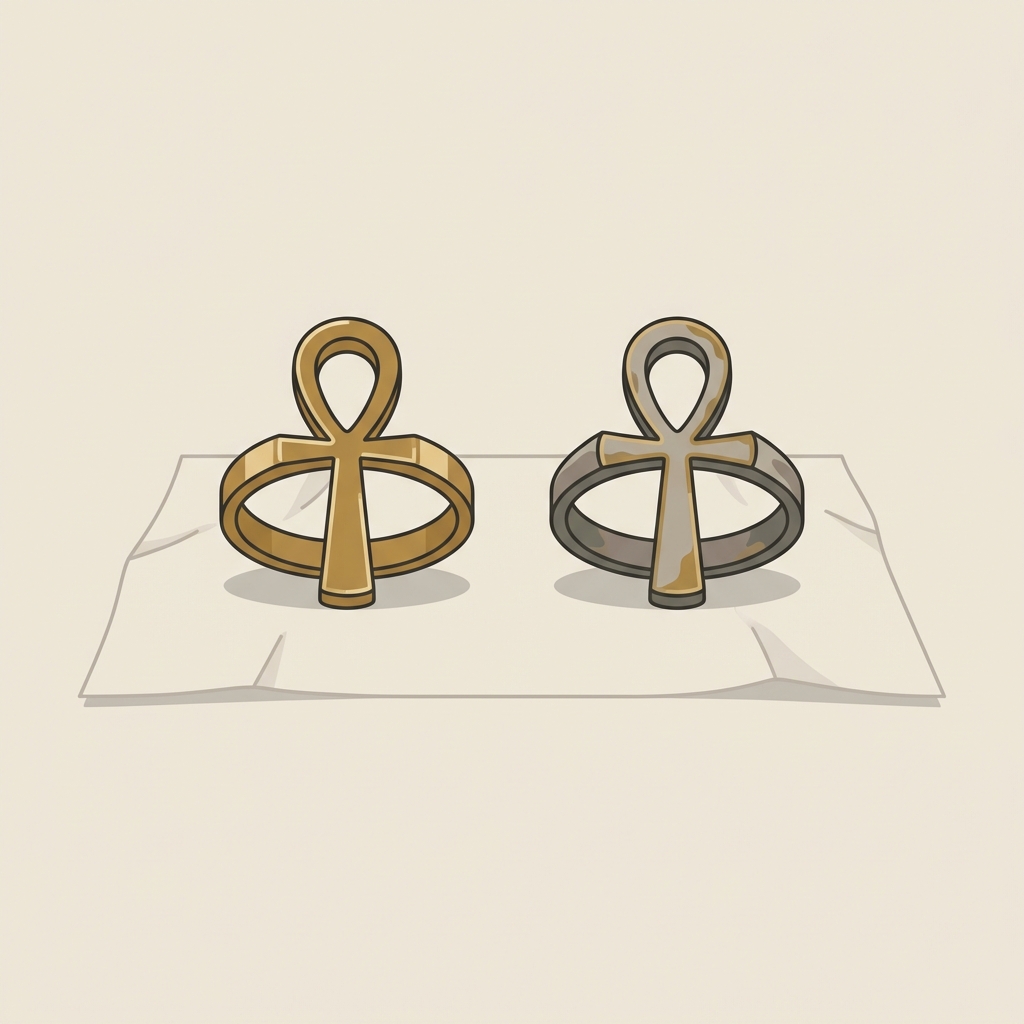
Collectors seeking ancient ankh jewelry should require clear provenance, condition notes, and documentation to reduce the risk of acquiring illicit or misattributed pieces; museum catalogues and encyclopedia summaries emphasize documentation as a primary safeguard Metropolitan Museum of Art overview.
Visual similarity alone cannot reliably prove age. Surface wear, patina consistent with the metal, tool marks, and mounting styles can provide clues, but photographic evidence and independent assessments are valuable. When in doubt, defer to sellers who provide transparent restoration notes and collection history rather than to those who offer vague statements.

What to look for in provenance and condition notes
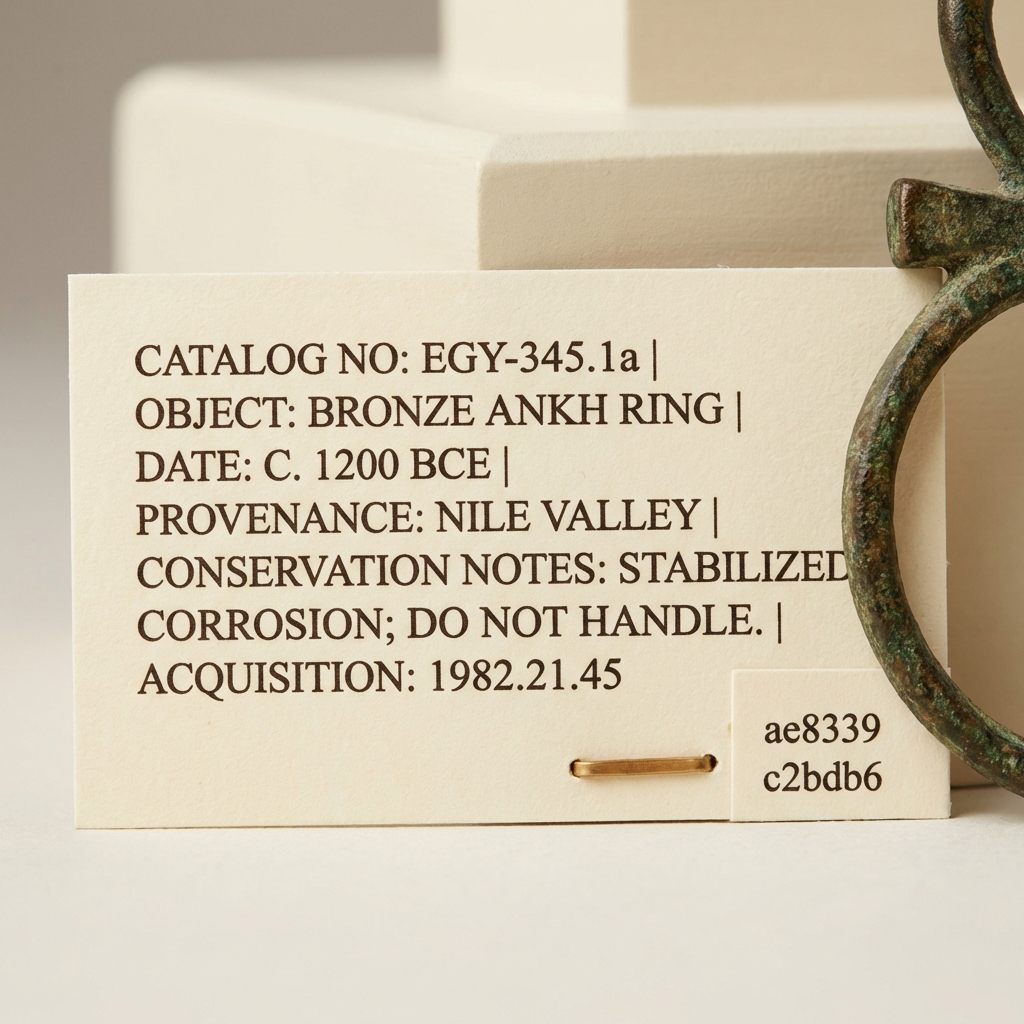
Key documents to request include clear collection history or former ownership records, condition notes describing any stabilization or repairs, and detailed photographs that show the bezel, hoop, and signs of wear consistent with age. Sellers who include restoration notes and where available verification letters help buyers assess claims.
Third party checks, laboratory testing, or a reputable museum or academic opinion can be decisive for high value purchases. Treat seller statements as a starting point and seek corroborating documentation when provenance is central to your purchase decision.
Styling an ankh ring respectfully and thoughtfully
Ways practitioners and collectors wear ankhs
Wearers often choose the ring size, placement, and metal pairing to match personal taste while acknowledging the symbol's history. Some collectors wear an ancient ring as a conversation piece that carries collection history and condition notes, while practitioners may pair the symbol with complementary ritual objects or attire in ways that reflect their community practice.
When wearing an ankh in public or at events, a short explanatory phrase about origin and context can help frame the item respectfully and invite questions rather than assume meanings for others.
Combining an ancient ankh with modern rings or chains is common, but take care to avoid presenting ancient pieces as costume items without context. If a piece has visible restoration or fragile areas described in the condition notes, reserve it for occasional wear and consider reproductions for everyday use.
For those seeking everyday use, commissioning a clearly contemporary ankh that acknowledges the motif avoids ethical ambiguity and preserves ancient artifacts for study and gentle handling. See the rings collection rings collection.
Red flags and common mistakes when buying ankh jewelry
Provenance gaps and dubious paperwork
Missing collection history, vague restoration notes, or sellers who discourage questions about export paperwork are common red flags that should prompt caution. Institutions advise a conservative approach when documentation is incomplete or inconsistent Encyclopaedia Britannica.
Quick provenance checklist for ankh ring purchases
Use this list to request documentation before purchase
Visual similarity to known ancient forms is not sufficient evidence of authenticity. Forgers and modern workshops can and do reproduce motifs convincingly, so insist on paper trails and transparent restoration notes rather than relying solely on appearance.
Overstated authenticity claims
Beware of absolute-sounding language that promises certainty without documentation. Independent verification, condition notes, and stated collection history provide a more reliable basis for assessment than marketing copy.
If legal status or export documentation is unclear, pause the purchase and seek expert consultation; erring on the side of patience protects both collectors and source communities from inadvertently supporting illicit trade.
Practical buyer scenarios: collector, spiritual practitioner, fashion buyer
How priorities differ by buyer type
A collector pathway typically prioritizes provenance, condition notes, and third party verification, with a willingness to defer acquisition if documentation is incomplete. For collectors the ankh has value as an artifact that carries collection history and context.
By contrast, a spiritual practitioner may prioritize cultural context and community consultation, seeking permission or guidance when the symbol will be used in ritual settings, and choosing modern alternatives when appropriate to avoid ethical conflicts.
Sample decision paths for each scenario
For a fashion buyer who wants everyday wear, a clearly labeled modern reproduction or commissioned piece usually reduces ethical and legal concerns while allowing respectful expression of the motif. Museums and commentators sometimes recommend reproductions for this use to prevent exploitation of antiquities in fashion contexts.
Each buyer type benefits from asking a short set of questions before purchase: What is my intent? Is the item ancient or modern? Is documentation complete? Am I prepared to consult community perspectives if the use is ritual? These simple steps align purchase behavior with the priorities of each pathway. For more, consult our questions and answers questions and answers.
Caring for an ancient ankh ring: conservation and restoration notes
What restoration notes tell you
Restoration notes typically record whether a piece was stabilized, repaired, or left largely untouched, and they indicate techniques used and visible changes. Such transparency helps buyers understand durability and whether a ring is suitable for regular wear or better kept for display.
When restoration has been conservative and aimed at stabilization, the goal is often to prevent further loss rather than to improve appearance. Condition notes that distinguish between aesthetic improvement and structural stabilization are useful for long term care decisions.
Basic care and display guidance
Handle antiquities with clean hands, avoid exposure to corrosive chemicals, and store pieces in stable humidity and temperature conditions. For rings with fragile bezels or stones described in the condition notes, limit wear and consider a padded storage box for transport.
When in doubt about cleaning or repair, consult a conservator rather than attempting home treatments that can damage surface patina or original material.
Missing or inconsistent export documentation, unclear collection dates, and gaps in ownership history can be legal red flags that suggest an item may have been trafficked; museums and legal advisors counsel buyers to require clear paperwork before acquisition Encyclopaedia Britannica.
Legal and ethical considerations: trafficking, export, and museum guidance
Illicit trade and legal red flags
Missing or inconsistent export documentation, unclear collection dates, and gaps in ownership history can be legal red flags that suggest an item may have been trafficked; museums and legal advisors counsel buyers to require clear paperwork before acquisition Encyclopaedia Britannica.
Proper export permits and collection records reduce legal risk and demonstrate respect for source countries and cultural heritage. If documentation is missing, it is prudent to pause and seek independent advice rather than proceed with purchase.
When institutions advise caution
Museum guidance and academic commentary urge caution when provenance is unclear and recommend consulting experts for questionable items. Responsible collecting practices protect both buyers and source communities, and they align with the ethical expectations of many institutions.
When acquiring antiquities, prioritize transparent documentation and be prepared to decline a purchase that lacks clear legal and ethical foundations.
When to choose a modern ankh ring instead of an ancient piece
Ethical and practical reasons to prefer reproductions
Choosing a modern ankh can avoid many ethical and legal complications while still allowing the wearer to honor the motif. Museums and commentators sometimes suggest reproductions for fashion use so that ancient objects remain in collections for study and conservation The Conversation discussion.
Commissioning contemporary work that clearly references the Egyptian form allows for creative reinterpretation without placing strain on heritage objects, and it creates opportunities to credit origin and inspiration directly in the new piece's documentation.
Commissioning new work that respects origin
When commissioning, ask the maker to include a short note on inspiration and to avoid claims that present the new work as an ancient original. That transparency helps wearers display respect for the symbol's past while using it in contemporary contexts.
For ritual users who need durable everyday items, modern pieces made with acknowledged reference to the ankh provide a practical and ethical option.
Reading ankh iconography: quick notes for conversation
Common motifs and their likely interpretations
Simple, sourced talking points about the ankh include its frequent interpretation as a sign of life, its association with protection and divine connection in ancient imagery, and its repeated appearance in amulets and temple reliefs that served ritual functions Metropolitan Museum of Art overview.
When discussing meaning, it is helpful to frame statements as likely or commonly interpreted rather than definitive, and to reference museum sources when making historical claims in public conversation.
How to discuss ankh's meaning when asked
When asked what an ankh stands for, a concise reply is that it is an ancient Egyptian sign commonly read as a symbol of life and protection, used in religious and funerary contexts. If the conversation moves to modern uses, note that communities assign different meanings today and that context matters.
Offering a museum citation or recommending reputable institutional resources helps keep the conversation grounded in documented scholarship rather than in unverified legends.
Conclusion: who should wear an ankh? a practical checklist
Decision checklist
Intent: Be clear about why you want to wear an ankh and whether your use is personal, spiritual, or purely decorative.
Provenance: Require documented collection history, condition notes, and any restoration or export paperwork before acquiring an ancient piece; when such documentation is absent, favor modern reproductions or commissioning new work.
Final respectful-use reminder
Wearing an ankh can be appropriate for collectors, practitioners, and wearers who approach the symbol with respect and knowledge of its origins, but it can be insensitive when used without such context or when it replaces the voices of the communities who use it in living practice.
Aurora Antiqua serves as a curator and reference point for select ancient rings, presenting condition notes and provenance information where available to help buyers make informed choices. This role is meant to inform and support, not to guarantee provenance in every case.
Further reading and reliable resources
Museum and encyclopedia references
For further study consult major museum object records and authoritative overviews, including entries from the British Museum and the Metropolitan Museum of Art as well as encyclopedia summaries that outline basic historical context Encyclopaedia Britannica.
For modern analysis of reuse and community contexts, academic studies and thoughtful commentary can help readers balance historical facts with contemporary perspectives.
Yes, many people wear ankh jewelry, but it is widely considered more respectful to do so with knowledge of the symbol's Egyptian origins and awareness of community perspectives when the use touches spiritual practice.
Visual cues like patina and tool marks help but are not definitive; require provenance, condition notes, restoration records, and third party checks to reduce uncertainty.
If you want everyday wear or ritual use without ethical or legal questions, a clearly labeled modern reproduction or commissioned piece is often the lower risk and more practical choice.
More from Aurora Antiqua
References
- Amulet of an Ankh, inv. no. 1894.103, Art Institute of Chicago
- Artifacts: Amulets, Mummification, Online Exhibits, Spurlock Museum of World
- Faience Technology. In: UCLA Encyclopedia of Egyptology (Paul T. Nicholson), University of California, Los
- Archaeological materials, Icon, The Institute of Conservation (UK)
- How to Care For Your Jewellery: The Ultimate Guide by the National Association
- Red Lists Database, International Council of Museums (ICOM)
- Federal Register, U.S. Customs and Border Protection, Department of Homeland Security
- About us, International Association of Dealers in Ancient Art
- Research report: export licensing and provenance, GOV.UK, Department for Culture, Media and Sport (DCMS)
- Ankh, Wikipedia