


Looking for the real thing? Browse our signet ring collection, each piece one of one, individually authenticated, with documented provenance. For the background, see the guide to ancient jewelry.
Introduction: what this article will answer
Quick summary of the question
The central question is simple to ask but layered to answer: who wore a signet ring in the Bible, and what did it mean? This article brings the narrative accounts together with archaeological and museum evidence to show how signet rings could serve as administrative tools and as symbols of authority. Readers will find a short reading guide to the key biblical passages, notes on material culture and sealing practices, and practical advice for assessing claims about ancient rings. The treatment is evidence-forward and cautious, because the textual role of a ring in a story does not always match the administrative record; for a close reading of the Joseph episode see Genesis 41 at Bible Gateway Genesis 41 at Bible Gateway
How we use biblical text and archaeology together
To answer the question we pair the narratives with the archaeological record of seals, bullae, and signet rings so readers can see where interpretation is secure and where it remains conjectural. Material-culture studies and museum syntheses reconstruct the administrative use of seals across the ancient Near East, and those reconstructions help us test symbolic readings of the texts; for an overview of seal use consult the Israel Antiquities Authority essay on seals and bullae Israel Antiquities Authority overview of seals and bullae
See behind the desk at @auroraantiqua
Continue if you want a clear, evidence-grounded explanation that separates story symbolism from administrative practice.
What is a signet ring? Definition and historical context
Technical definition: intaglio, bezel, mounting
A signet ring is, in material terms, a wearable seal: an intaglio or incised device carved into a semi-precious stone or metal is set into a bezel and mounted on a hoop so its impression can be pressed into clay or wax to authenticate an object. Typical components include the intaglio face, the bezel that secures the stone, and the hoop or shoulders that make the ring wearable. Many catalogues emphasize stones with carved images or inscriptions that serve as the impression surface; for object-centered descriptions and terminology see the British Museum's material definitions for seals and seal-impressed objects British Museum catalogue terms on seals
Geographic and chronological span in the ancient Near East
Signet rings and related seal technologies appear across Egypt, Mesopotamia, Israel, and Persia from the second and first millennia BCE into the Persian period, with regional variation in mount styles and stone types. Common intaglio gemstones include carnelian and agate, often set in gold, silver, or bronze, and these combinations are well documented in museum catalogues and essays that trace changing styles over centuries; for a synthesis of seals across periods consult the Met Museum essay on seals Seals at the Metropolitan Museum of Art
Signet rings in the Bible: Genesis 41 and Esther 3-8 examined
Genesis 41: Joseph and Pharaoh's ring
In Genesis 41 the narrative reports that Pharaoh gave Joseph his ring as a visible sign of delegated authority, along with a change of clothes and a new position in the Egyptian court. The ring in this episode functions as a token that signals that Joseph now exercises administrative power on the king's behalf, and readers should treat the story both as a narrative device and as testimony that the idea of a ring symbolizing authority was intelligible in the ancient world; the passage is preserved in standard biblical editions such as the New Revised Standard Version Genesis 41 at Bible Gateway
Biblical texts depict rulers and high officials as using signet rings to confer authority, while archaeology shows seals and ring-impressions were routine administrative tools; however, linking a specific excavated ring to a named biblical person typically requires secure provenance and publication.
Esther: royal ring, Haman, and Mordecai
The book of Esther describes the Persian king's ring being used to authorize official documents and later appearing to be transferred from Haman to Mordecai as power shifts occur; the narrative frames the ring as an instrument of royal authority and as a visible token that can be passed to indicate delegated control. Readers should note that the text emphasizes both the legal function of the king's signet and the social meaning of a ring changing hands; for the Esther episodes that show this practice see the Esther passages in standard editions Esther 3-8 at Bible Gateway
Material-culture evidence: seals, bullae, and museum collections
What seals and bullae tell us about administration
Archaeology records impressions on clay and the surviving clay sealings called bullae as the most common traces of sealing practice; bullae and seal impressions preserve names, emblems, and administrative contexts that point to routine use of seals for authenticating documents and goods. Excavated bullae and seal impressions form a substantial part of how scholars reconstruct ancient administrative practice; the Israel Antiquities Authority provides a readable synthesis of these traces and their administrative role Israel Antiquities Authority overview of seals and bullae and a complementary study of counting and sealing practices in Iran is available at PMC Counting, Sealing, Writing in Iran 10000-300 BC
Examples from museum catalogues and object studies
Museum catalogues document the variety of intagliated stones and mounting techniques found in collections, showing carnelian, agate, and other stones used as intaglios and set in metal bezels across wide geographies and periods. These object studies demonstrate how curators separate material description from speculative identifications and how typologies are built from securely recorded finds; for comparative object studies consult British Museum collection entries on seals British Museum catalogue terms on seals. A useful case discussion of a Persian period bulla is available via JSTOR A Persian Period Bulla from Tel Qedesh
Administrative function and procedure: how rings and seals were used
Sealing documents and delegating authority
Practically, a signet ring makes an impression that authenticates a document or container and signals that the item carries the authority of the seal-owner. In many administrations the impression served a legal function similar to a signature, and the visible device could also indicate rank or office. This pattern is familiar in the Persian administrative setting reflected in some biblical narratives, where the king's ring can function as the mechanism for issuing decrees and for delegating authority to others; for discussion of the Persian administrative uses reflected in narrative see the Esther passages in standard editions Esther 3-8 at Bible Gateway
Practicalities: impressions, storage, and visibility
Seals leave impressions in clay that were often attached to the mouths of containers or to document bundles, and when a ringseal was used the impression preserved the carved device image. Museums and archaeological reports describe how impressions were stored, how sets of impressions occur in archives, and how visible insignia functioned in ceremony and daily administration; for an accessible overview of seals and sealing practices see the Met Museum synthesis Seals at the Metropolitan Museum of Art and a recent study of a specific seal impression is available from Taylor and Francis A Seal Impression of 'ShemaꜤ Servant of Jeroboam'
Sealing in context
Sealing left routine administrative traces that survive in archives of impressions, and those traces help calibrate how narrative descriptions of rings might reflect administrative practice rather than purely symbolic storytelling.

Interpreting symbolism vs. bureaucracy: reading the texts with evidence
Symbolic meanings in narrative contexts
Biblical narratives use rings as powerful symbols: a ring can show that a character has been chosen, that authority has shifted, or that a social identity has changed. Readers and collectors should treat symbolic narrative uses as meaningful to the story while testing any administrative claim against the physical record and administrative studies; for a clear discussion linking narrative symbolism and administrative context see interpretive literature on rings and seals Interpretive discussion of signet rings and texts
How administrative studies inform symbolism
Administrative reconstructions help anchor symbolic readings by showing when and how a ring could plausibly have functioned as more than a story device. For example, the practice of transferring a royal ring to delegate power is attested in textual and administrative analogies, so symbolic readings that rely on an administrative basis are more robust than ones that assume novel meanings without parallels. Material and administrative syntheses show how frequently such practices occurred and where caution is warranted; for synthesis of administrative patterns consult museum essays on seals Seals at the Metropolitan Museum of Art
Who likely wore signet rings in the ancient Near East?
Royal and high officials
Royal figures and senior officials are the clearest documented ring-bearers in both texts and administrative contexts: the narratives of Joseph and Esther portray rulers or their close agents exercising authority with rings, and archaeological archives of seals and bullae show widespread use of seals by administrative elites. The combination of narrative testimony and seal evidence makes it likely that kings and high officials regularly used signet rings or similar sealing devices in governance Israel Antiquities Authority overview of seals and bullae
Quick checklist to evaluate claims linking a ring to a named person
Use this to ask informed questions
Officials, household administrators, and potential non-royal users
Beyond royalty, local officials, household administrators, and estate stewards may have used sealing devices or rings in many regions, but the prevalence of personal ring use outside elite contexts is debated and appears to vary by time and place. Archaeological caution is important here: object catalogues and regional studies show a spread of sealing technology, but direct attribution to non-royal named individuals is less secure and requires strong provenance data; for cautions about non-royal attribution see discussions of seals and identification L'anneau sigillaire d'Arégonde, femme de Clotaire Ier, découvert à Saint-Denis, Bulletin de la Societe
How to read provenance, dating, and documentation for an ancient ring
Types of provenance statements and what they mean
Provenance terms like collection history, prior ownership notes, and verification letters each convey different levels of evidence about an object's history; clear, dated collection histories and excavation records carry far more weight than undocumented claims. When evaluating a sales or catalogue entry look for explicit statements of where and when an object entered a collection and any supporting documentation, because provenance matters when assessing whether a ring can be linked to a specific time or place; for general guidance on seals and archives see the Israel Antiquities Authority overview Israel Antiquities Authority overview of seals and bullae
Dating methods and how to evaluate them
Dating often relies on stylistic and typological comparison, and where possible contextual finds from secure excavations provide the most reliable anchor. Laboratory tests may help for materials but typology and comparison with well-dated museum objects are frequently the basis for published dates; catalogues and museum essays explain these methods and why cautious language around dates is appropriate when excavation context is absent Seals at the Metropolitan Museum of Art
Common pitfalls and mistakes when linking artifacts to biblical figures
Overreliance on narrative parallels
A frequent error is to match a single isolated object to a narrative because the object seems to fit a story's description. That sort of narrative matching can mislead when the object lacks excavation context or a clear collection history; archaeology and museum practice emphasize that narrative plausibility does not replace secure provenance and published documentation, so maintain skepticism unless the chain of evidence is robust Israel Antiquities Authority overview of seals and bullae
Ignoring publication and provenance gaps
Another mistake is to treat unprovenanced objects or items lacking publication as equivalent to museum-documented finds. Publication gaps, missing excavation records, and the reality of modern forgeries make rigorous documentation essential for any confident claim that an object belonged to a named person or office; museum catalogues and essays model the standards collectors should expect before accepting such identifications Seals at the Metropolitan Museum of Art
Practical examples and museum case studies
Selected object examples from major collections
Museum catalogues include many documented examples of intagliated stones set in metal bezels that illustrate common designs and materials, from carnelian intaglios set in gold to simpler agate seals in bronze mounts. These catalogued objects show how curators record condition, typology, and dating while carefully avoiding unwarranted claims of ownership by named figures; for object-focused documentation see British Museum collection entries on seals British Museum catalogue terms on seals
How museums contextualize rings for public understanding
Museums separate material description from historical interpretation by providing labels and essays that explain what is known and what remains speculative. This practice helps visitors and collectors see the difference between a ring's materials and its possible social role, and it is the model collectors should follow when reading sales descriptions or catalogues; for methodological notes on museum presentation see the Met Museum essay on seals Seals at the Metropolitan Museum of Art
What collectors should know when considering an ancient signet ring
Checklist for buyers: documentation, condition, and context
Collectors should prioritize clear provenance statements, excavation context where available, detailed condition and restoration notes, and high-resolution photographs and measurements. Ask sellers for verifiable collection history and any publication references, and treat claims linking an object to a named biblical figure as tentative unless supported by secure provenance and published scholarship; museum-grade documentation is the best standard to seek British Museum catalogue terms on seals. Our rings collection may help illustrate common types of seal rings rings collection
Questions to ask sellers or curators
Practical questions include: What is the documented collection history? Is there excavation context or a prior catalog entry? What conservation work has been recorded? Request condition photographs and restoration notes and prefer items with transparent documentation; these steps reduce the risk of accepting overstated attributions about named historical persons Israel Antiquities Authority overview of seals and bullae
Preservation, restoration, and what to look for in condition notes
Typical stabilizations and recorded repairs
Conservation work often includes stabilization, reattachment of loose settings, careful cleaning, and recorded repairs to mounts or stones, and responsible sellers and museums list these actions in restoration notes. Such notes tell readers what was done and why, helping separate original features from later interventions; consult object catalogues for typical conservation language used by curators and conservators British Museum catalogue terms on seals
How restoration affects interpretation
Restoration can clarify an object's form and legibility but can also obscure original surfaces or introduce later materials, so transparent reporting of treatments is essential for sound interpretation. Condition notes should specify what was stabilized, what was repaired, and whether any surfaces were altered, because those details affect dating and the reading of iconography British Museum catalogue terms on seals
How Aurora Antiqua frames signet rings and documentation (what buyers can expect)
What contextual information Aurora Antiqua provides
Aurora Antiqua presents curated ancient rings spanning Roman, Greek, Byzantine, Islamic, Celtic, medieval, and post medieval periods and offers select small artifacts and relic objects alongside jewelry with restoration and preservation notes. Each listing includes provenance and documentation references when available and editorial and historical content to explain cultural context and motifs, with transparent condition descriptions to help collectors assess pieces; for general standards on seals and documentation consult museum syntheses and object catalogues Seals at the Metropolitan Museum of Art. Visit the Aurora Antiqua store for listings and editorial content Aurora Antiqua store
How to read our condition and provenance notes
Read condition notes to see what was stabilized or repaired and look for clear statements about what remains original. Use provenance statements and any verification letters to understand collection history, and treat attributions to named figures as suggestions that require further evidence; comparing a listing to museum catalogues and published essays helps clarify how strong an attribution is Israel Antiquities Authority overview of seals and bullae
Conclusion and suggested next steps for readers
Summary of main takeaways
Genesis 41 and Esther 3 through 8 describe rings used to confer authority, and archaeological studies of seals and bullae independently document the administrative uses of sealing devices across the ancient Near East. Together these sources show that rings could be both practical tools for authentication and potent symbols in narrative, while also underscoring that attaching a specific excavated ring to a named biblical individual is generally not possible without secure provenance and publication; for textual descriptions see Genesis 41 and Esther 3-8 in standard editions Genesis 41 at Bible Gateway
Where to read more and how to evaluate new claims
For readers who want to follow up, museum catalogues and synthesis essays remain the best way to see how objects are documented and dated; consult major museum essays on seals and published object catalogues when evaluating claims, and ask for excavation reports or clear collection histories when a seller links an item to a named person. Careful comparison with museum-documented examples keeps attributions realistic and grounded in evidence Seals at the Metropolitan Museum of Art

Special Image Placement
Appendix: selected further reading
Further scholarly articles and case studies are available in academic journals and museum publications; a useful journal piece on a seal impression is available from Taylor and Francis A Seal Impression of 'ShemaꜤ Servant of Jeroboam' and case studies of bullae appear in museum and journal literature such as the JSTOR PDF linked above A Persian Period Bulla from Tel Qedesh

Seals leave impressions in clay that were often attached to the mouths of containers or to document bundles, and when a ringseal was used the impression preserved the carved device image. Museums and archaeological reports describe how impressions were stored, how sets of impressions occur in archives, and how visible insignia functioned in ceremony and daily administration; for an accessible overview of seals and sealing practices see the Met Museum synthesis Seals at the Metropolitan Museum of Art
Aurora Antiqua presents curated ancient rings spanning Roman, Greek, Byzantine, Islamic, Celtic, medieval, and post medieval periods and offers select small artifacts and relic objects alongside jewelry with restoration and preservation notes. Each listing includes provenance and documentation references when available and editorial and historical content to explain cultural context and motifs, with transparent condition descriptions to help collectors assess pieces; for general standards on seals and documentation consult museum syntheses and object catalogues Seals at the Metropolitan Museum of Art
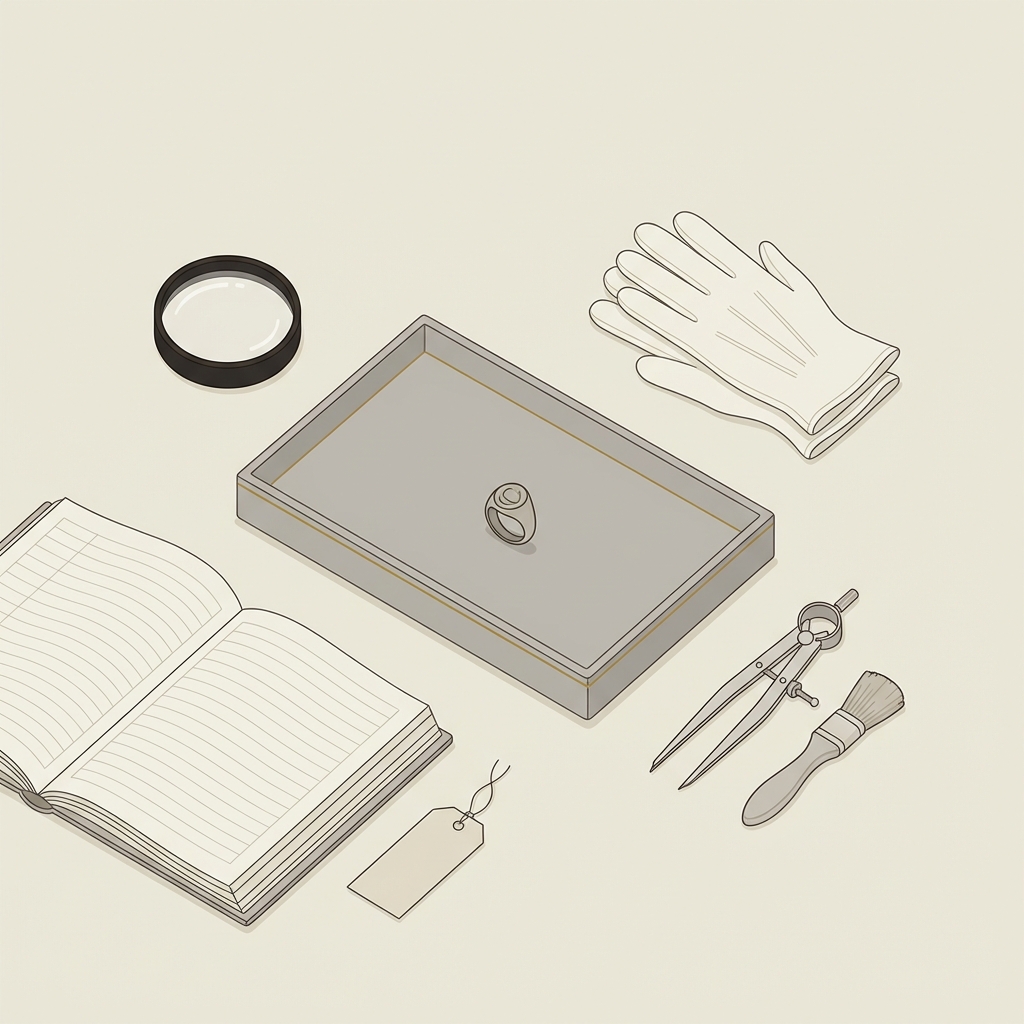
Biblical narratives describe rulers and their agents as using rings, notably Pharaoh giving Joseph a ring in Genesis 41 and the Persian king's ring in Esther 3-8.
Directly linking an excavated ring to a named biblical person is generally not possible without secure excavation context and published provenance, so such identifications should be treated as tentative.
Collectors should seek clear provenance and collection history, detailed condition and restoration notes, measurements and high-resolution photos, and prefer items with excavation context or museum documentation.
More from Aurora Antiqua
References
- OIP 118. Scarabs, Scaraboids, Seals, and Seal Impressions from Medinet Habu, Institute for the Study of Ancient
- Scarab. In: UCLA Encyclopedia of Egyptology (Kathlyn M. Cooney), University of California, Los Angeles
- Gemstones. In: UCLA Encyclopedia of Egyptology (James A. Harrell), University of California, Los Angeles
- A Corpus of Roman Engraved Gemstones from British Sites, University of Michigan Press / BAR Publishing
- Fund des Monats August 2019 (Find of the Month), Landesamt für Denkmalpflege und Archäologie Sachsen-Anhalt
- Signet Ring, Victoria and Albert Museum, London
- L'anneau sigillaire d'Arégonde, femme de Clotaire Ier, découvert à Saint-Denis, Bulletin de la Societe
- Research report: export licensing and provenance, GOV.UK, Department for Culture, Media and Sport (DCMS)
- scarabée ; amulette, Louvre site des collections, Musee du Louvre, Departement des Antiquites egyptiennes, Paris
- PubMed Central