


Looking for the real thing? Browse our Roman coin collection, each piece one of one, individually authenticated, with documented provenance. For the background, see the guide to Roman jewelry.
Why roman coin jewelry often sells cheaply
Quick answer for buyers
Many pieces described as roman coin jewelry are inexpensive because of how supply, metal composition and condition interact in the market. Large original mintages and very high modern recovery rates mean common types turn up often in dealer catalogues and online listings, and detector finds have been a major contributor to that steady supply, especially in Britain and Western Europe. Portable Antiquities Scheme
How this article will help you assess pieces
This article lays out the main reasons common Roman coins cost relatively little, shows what to inspect in photos, and offers a stepwise framework for assessing value and risk when the coin is part of wearable jewelry. Readers who want to move beyond a low-price listing to an informed purchase will find practical checks and a short checklist to use before bidding or buying.
Supply-side causes, demand-side choices and market friction together explain low prices for many items. On the supply side, large historical mintages and modern recoveries make many types plentiful, while demand concentrates on well-documented silver or gold rarities. Condition, base-metal composition and the presence of unauthenticated modern casts or restrikes tend to depress prices for common items.
Explore curated pieces with clear condition notes
When considering roman coin jewelry, prioritize clear condition notes and any available documentation; pieces with transparent condition and provenance information are easier to evaluate and compare.
Below we unpack each of these points, show how catalogues and recovery datasets inform type frequency, and give concrete questions to ask sellers when a coin is set into a ring, pendant or bezel.
How production and modern recovery shape supply
Original mintages and what RIC tells us
Reference catalogues such as Roman Imperial Coinage provide the typology and frequency baselines collectors use to understand how common specific issues are. RIC and similar type catalogues let a buyer identify a coin and see whether it belongs to a large series that originally circulated in great numbers; that background helps explain why many pieces are common on the market today. Roman Imperial Coinage (RIC) Recent corpus research on Roman coin finds offers further data on type frequencies and regional distributions. A New Corpus of Roman Coins from England and Wales
Detector finds and PAS: effect on modern supply
Modern recovery methods, including metal-detecting and the publication of finds, have substantially increased the flow of common Roman coins into trade channels. The Portable Antiquities Scheme documents detector and other finds in Britain, and the continued recording of coin finds has made many common types more visible and available to dealers and collectors. Portable Antiquities Scheme Analysis of Roman coin reporting and toolkit guidance also helps explain how detector finds enter the market. CIfA analysis of Roman coins
When large hoards or many single finds release mass quantities of the same type, market supply rises and prices for common examples generally fall. That process applies especially to worn bronze issues and late debased silver problems, which are less selective in the marketplace and therefore often appear at lower prices in online and dealer listings. Applied numismatic analyses of Roman coin data
Metal content and debasement: why intrinsic value is often low
Bronze and debased silver explained
Many Roman coins circulating in the market are base-metal bronzes or silver issues that were systematically debased in later periods, so their intrinsic metal value is usually low relative to modern bullion prices. Awareness of a coin s metal composition helps set expectations about baseline value, since a worn bronze or heavily debased silver piece will seldom command a premium based on metal alone. American Numismatic Society resources
Many Roman coins are inexpensive because original mintages were often large, modern recovery rates have increased supply, common issues are frequently bronze or debased silver with low intrinsic metal value, and condition and the prevalence of unauthenticated casts or restrikes reduce buyer confidence and price.
How bullion value differs by issue and why it matters
Even when a coin contains some silver, many later imperial issues contain reduced silver content and therefore less bullion backing than earlier, purer examples. Collectors therefore focus on grade, rarity and documented provenance rather than intrinsic metal value when assessing the worth of many Roman issues.
Condition, wear and grading: the biggest price drivers
How wear, corrosion and incomplete legends affect value
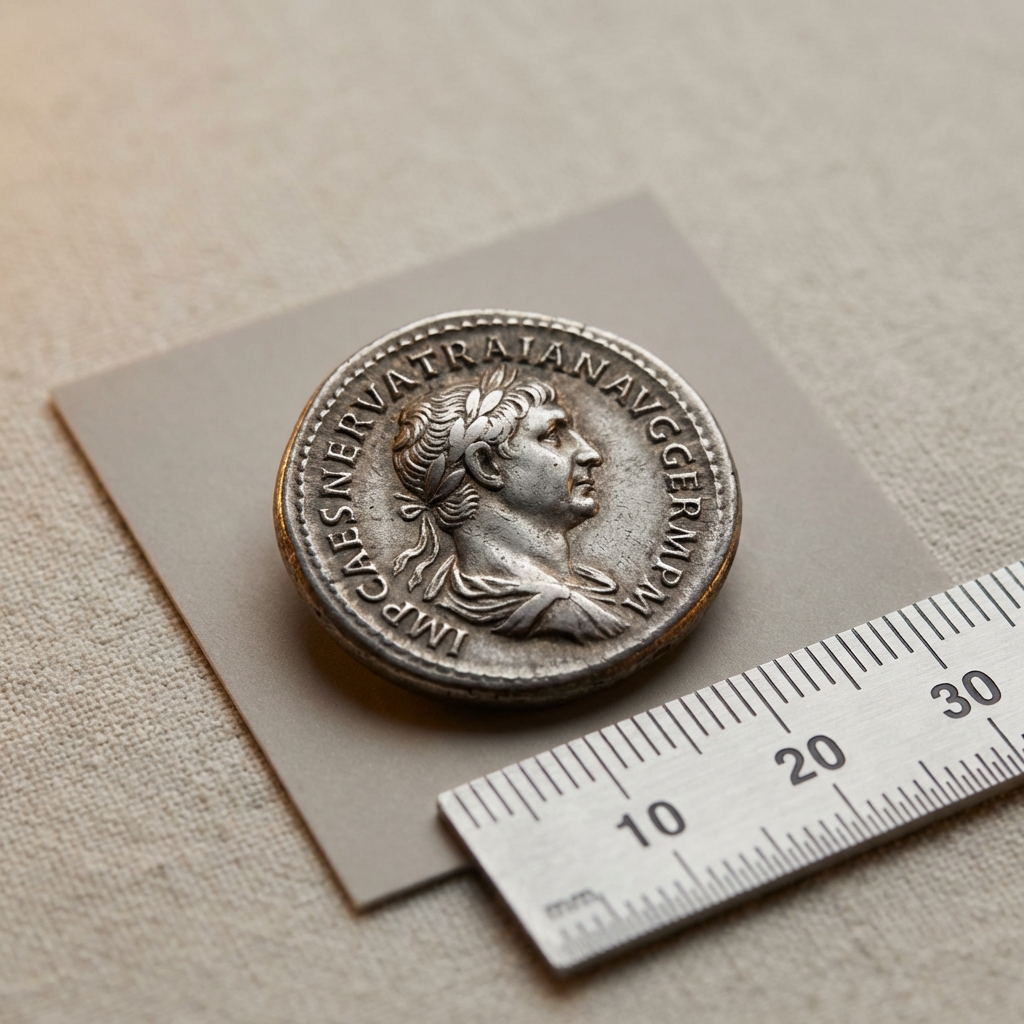
Condition is the single strongest determinant of price for common Roman coins. Wear, corrosion and the loss of legends or portrait detail sharply reduce collector interest and therefore market value, even when the type itself is common. Buyers should treat clear, close-up photos and readable legends as primary decision factors rather than the listing price alone. British Museum collection notes
Surface corrosion or encrustation can sometimes be stabilized, but cleaned or over-restored pieces may have less appeal to collectors who prefer the original patina and clear condition notes. Listings that omit condition notes or provide only distant shots make reliable judgement difficult and typically attract lower prices because buyers factor in the risk.
Grading guidance and third-party services
Third-party grading services and specialist authentication can increase buyer confidence for higher-value pieces, but many low-cost listings remain ungraded and sell at low prices because grading has not been sought or is not cost-effective. When grading or specialist reports exist they can shift market perception and lift a common coin into a better price tier if grade and provenance justify it. PCGS authentication guidance
Practical signs to check in photos include the legibility of legends, the sharpness of the portrait, reverse devices and the condition of edges and rims. If these features are poorly preserved, expect that the coin will be priced lower than a comparable, well-preserved example.
Forgeries, casts and modern restrikes: why buyer caution reduces prices
Common fakes and how they enter low-cost segments
Modern casts, deliberate restrikes and other forgeries regularly appear in lower-price segments of the market. These items can flood listings and create buyer uncertainty, which in turn depresses prices for unauthenticated commons as buyers discount listings that lack documentation or clear provenance. PCGS detecting fakes

How market perception of fakes affects pricing
Because many low-cost coins are offered without third-party verification, buyers often assume higher fraud risk and price listings accordingly. A documented provenance, a clear condition report, or an independent assessment can reduce that discount, while vague descriptions and no photos tend to push prices downward as buyers factor in uncertainty. Market note on auction and trade patterns
How the market segments: commons vs rarities
Auction headlines versus dealer listings
The ancient-coin market is bifurcated: headline auction results for rare, high-grade silver and gold issues attract attention and can reach high totals, while a steady volume of common bronze and debased silver lots trade at low prices through dealers and online platforms. This split is visible in trade reporting and auction summaries. Market note on premium sales and volumes
Why some coins fetch premiums
Coins move into the premium tier when several factors align: a rare type, high grade, preserved legends, desirable metal and clear provenance or third-party grading. Where those elements are present, even formerly common types can command higher prices, but such combinations are comparatively rare, which leaves ordinary issues widely available at modest prices.
How to assess a roman coin jewelry purchase
Step-by-step valuation framework
Begin with type identification: use RIC or type catalogues to place the coin within an established typology and to understand whether it is a common issue. For further practical tips see our blog on how to tell if a roman coin is real. Roman Imperial Coinage (RIC) How to tell if a Roman coin is real
When in doubt, ask for close-up images of legends and portrait, and request images of the coin s edge and reverse. If the seller provides restoration or condition notes, read them carefully: stabilized versus repaired states will change how you value the piece.
Quick pre-purchase checklist to assess roman coin jewelry authenticity and condition
Use alongside catalog references and grading guidance
When to seek professional grading or lab tests
Professional grading or specialist connoisseurship is most worthwhile for pieces that have potential rarity, clear signs of high grade, or when asking prices approach levels where authentication costs are justified. For many common bronze or debased silver items the cost of formal grading will exceed the likely price uplift, so buyer judgement and careful photo review remain the usual tools.
Documentation and provenance: what to look for
Types of provenance notes and documentation
Useful provenance includes clear collection history, prior ownership notes and any verification letters from trusted specialists or institutions. While documentation does not by itself guarantee authenticity, it raises buyer confidence when it links a coin to a known collection or recorded find. Portable Antiquities Scheme
How documentation changes buyer confidence
Condition notes and restoration or conservation statements help buyers understand what was stabilized or altered. Even basic provenance entries can move a piece out of the lowest price tier because they reduce uncertainty; conversely, listings with vague descriptions and no photos or paperwork typically sell for less because buyers place a risk discount on them.
Practical checklist for buyers of roman coin jewelry
Pre-purchase checks
Request clear, high-resolution photos showing obverse, reverse and edge, plus measurements and weight if available. Ask the seller for condition notes, any restoration details, and whether the coin was part of a recorded find or hoard. When possible, compare to catalogue entries or auction records before committing to buy. PCGS guidance You can also browse similar items in our ancient Roman rings collection. Ancient Roman rings
What to ask the seller and what photos to request
Ask explicitly about drilling, mounting or soldering work done to adapt the coin to jewelry, whether such work is reversible, and if any conservation work was performed. If the seller refuses to provide clear photos or measurement details, consider walking away; lack of transparency is a common warning sign that pushes price lower and increases buyer risk.
Common mistakes and pitfalls when buying
Overvaluing unprovenanced pieces
A common error is treating a low price as an automatic bargain without checking condition or provenance. Unprovenanced items can be authentic but they carry greater uncertainty and typically sell for less than comparable documented pieces. Detecting fakes guidance
Confusing restrikes with originals
Modern restrikes and casts can mimic original types but often lack period metal characteristics and surface detail. Buyers who do not request documentation or specialist advice are more likely to overpay for pieces that are modern productions or that have been significantly altered.
Case scenarios: examples of low-cost versus higher-value coins
Typical low-cost common bronze issue used in jewelry
Imagine a worn bronze coin with a smooth portrait and faded legend set into a simple bezel and sold with minimal condition notes. Because the type is common in finds and the condition is poor, buyers typically see it as a modest, wearable antiquity rather than a collectible with resale strength.
High-value example: high-grade silver or gold with provenance
By contrast, a well-preserved silver or gold issue with legible legends, strong portrait detail and a documented collection history or third-party grading can attract collector interest and sell for a premium. The combination of metal, grade and provenance places such pieces into a different market tier than common bronze examples. Market note on premium sales
How ancient coins are adapted into jewelry and what affects price
Mounting, alteration and restoration considerations
Common adaptations include drilling for a hoop, bezel mounting and soldered loops. Reversible mounting techniques preserve original metal and are preferable to invasive drilling or heavy soldering that permanently changes the piece. Listings should specify whether mounting is reversible and provide restoration notes when work has been done. British Museum guidance
For charm-style wearers, see our Roman Empire charms collection to compare mounting approaches. Roman Empire Charms
How wearable adaptation can change perceived value
Adaptation for wearable use often makes a coin more attractive to a buyer seeking wearable history, but may reduce appeal for collectors who prioritize untouched surfaces and original patina. Read restoration notes carefully and weigh the intended use against collector expectations.
Summary: making informed choices when buying roman coin jewelry
Key takeaways
Many Roman coins are inexpensive because of abundant historical mintages and modern recoveries, base-metal composition or debasement, condition issues and the market effects of unauthenticated casts and restrikes. Buyers should prioritize clear photos, condition and restoration notes, and request provenance or grading for higher-value purchases. About us, International Association of Dealers in Ancient Art
Next steps for collectors
Use RIC or type catalogues to identify a coin, compare recent auction records when available, and ask sellers for documentation and condition details. For pieces with potential rarity or high asking prices, consider specialist input or third-party assessment before purchase. Thoughtful, evidence-based buying turns a low price into an informed decision rather than a surprise.
Identify the type using standard catalogues, check metal and condition, and compare to published records; common types and worn bronze examples are typically abundant and thus lower priced.
Not always; reversible mounting and clear restoration notes preserve value better, while invasive drilling or heavy soldering that permanently alters the coin can reduce collector appeal.
Professional grading is most warranted when the coin shows signs of rarity, high grade, or the asking price makes authentication costs reasonable relative to potential value.
More from Aurora Antiqua
References
- Gold necklace with coin pendants, Inv. 17.190.1655, The Metropolitan Museum of Art
- Coin Hoards of the Roman Empire, University of Oxford
- Online Coins of the Roman Empire, American Numismatic Society and Institute for the Study of the Ancient World
- AN UNKNOWN COIN DIE OF AUGUSTUS (27 BC, 14 AD), Journal of Ancient History and Archaeology, DOI
- Minting errors in ancient Rome: double die strikes in the light of coin finds, Novensia 36, University of Warsaw
- International Association of Professional Numismatists (IAPN), IBSCC
- About us, International Association of Dealers in Ancient Art
- Auction Terminology, Christie's