


Looking for the real thing? Browse genuine Roman rings for sale, each piece one of one, individually authenticated, with documented provenance. For the background, see the guide to buying ancient artifacts.
Short answer: Is romanjewelry real?
Quick summary for collectors
Short answer: many objects offered as Roman-era jewelry can be authentic antiquities, but authenticity is a conclusion reached through converging lines of evidence rather than a single telltale sign. The most reliable approach combines close stylistic comparison, materials identification, and documentary provenance to support a Roman attribution, and collectors should expect conditional language and degrees of confidence rather than absolute certainty.
Typical Roman jewellery uses common metals and gem types that you can look for as initial indicators, including gold, silver, copper-alloys and semiprecious stones such as carnelian and agate, which are well documented in major museum collections and catalogues British Museum Roman collection.
Determine authenticity by combining stylistic comparison, non-destructive materials testing, and thorough provenance checks; use these converging lines of evidence to reach a reasoned attribution and consult specialists when indicators conflict or the item is high value.
Non-destructive tests like portable XRF or Raman spectroscopy now function as practical first-line checks and can substantially increase confidence in attributions when paired with microscopic wear and toolmark analysis, and reviews of portable Raman techniques are available Analytical Raman spectroscopy review. A favorable result alone does not prove that every component and every surface is ancient Journal of Archaeological Science study.
Why a single test is rarely enough
No single observation or instrument reading is usually decisive. Surface patina, corrosion layers and wear patterns are informative, but skilled modern work can imitate some of these features, so instrument data should be interpreted in context and with an awareness of limitations Getty Conservation Institute guidance.
What romanjewelry usually looks like: common types, materials, and condition to expect
Typical forms and motifs
When scanning listings, start by familiarising yourself with typical Roman forms: signet and intaglio rings, simple hoop earrings and decorative rings with applied ornament. Intaglio gem seals set into bezels are a distinctive form associated with Roman rings and are often a primary feature used in identifications. Museum catalogues and galleries provide useful visual references for these forms that collectors can match against listing photos and our Rings collection. The Met collection areas for Greek and Roman art.
Motifs range from figural scenes such as mythological or everyday motifs to geometric and monogram designs; the specific iconography can help narrow date ranges and cultural context, but motif alone is rarely sufficient without materials and condition context.
Materials and gemstone types
Roman jewellers commonly used gold and silver alongside copper-alloys, and they frequently set stones like carnelian and agate for intaglios and cabochons, so descriptions that list these materials align with established museum documentation British Museum Roman collection and examples in our Ancient Roman Rings collection.
Photographs that clearly show the bezel, shoulder and hoop can help you judge whether the mounting style and stone setting appear consistent with known Roman examples, though gem identification from photos is limited and benefits from spectroscopy or specialist input.
Condition, patina, and restoration notes to look for
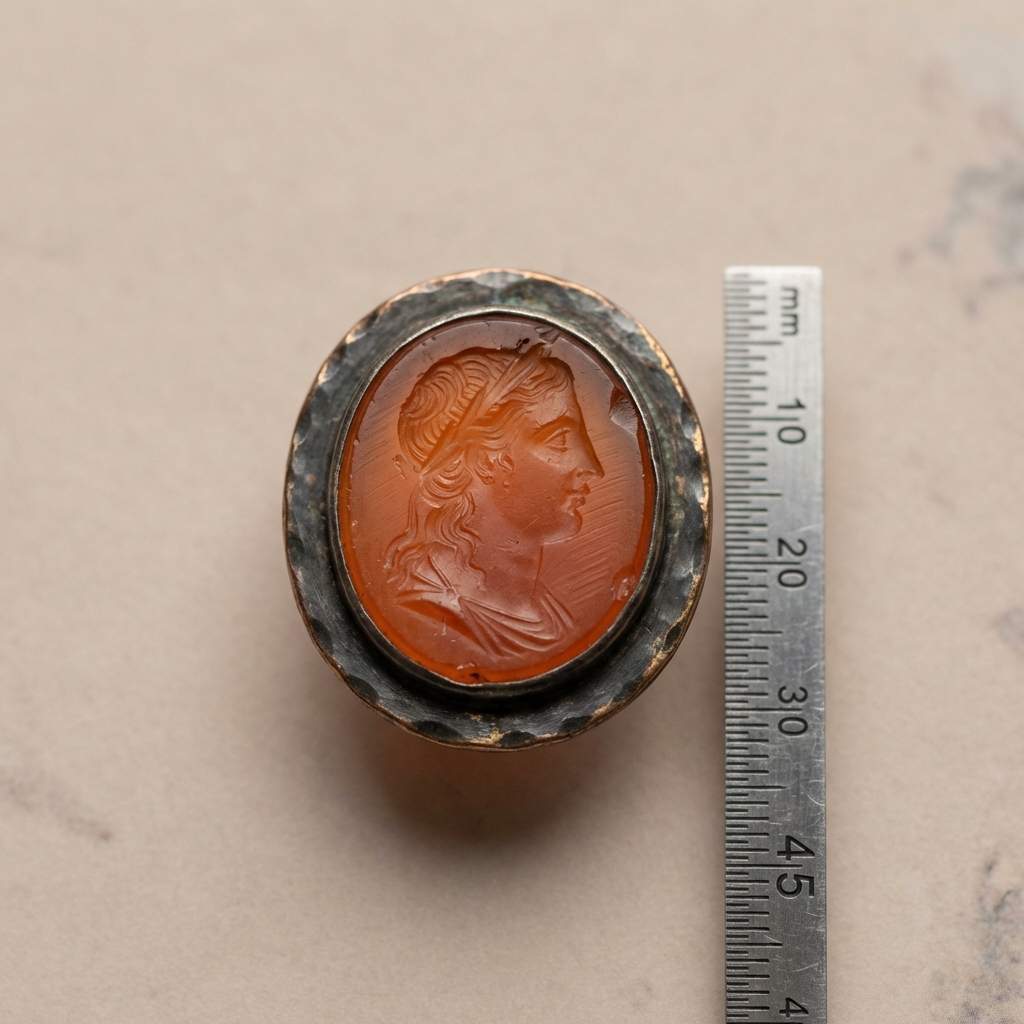
Expect wear consistent with age: surface smoothing where fingers contact an ancient ring, a stable patina on copper-alloys, and mineralized corrosion in recesses. Condition and restoration notes should describe what was stabilised, what was repaired, and what was left untouched so buyers know the extent of intervention. Conservation guidance emphasises that patina and corrosion products are informative but not definitive on their own Getty Conservation Institute guidance.
Well-documented listings will include close-up photos of any restored joins or modern solder, with clear measurement data and explicit statements about any replacement parts or remounting work, which helps place the object in context for a realistic condition assessment.
How Roman jewellery was made: techniques that help identify period manufacture
Manufacturing methods collectors should know
Knowing the historical toolkit helps screen images effectively. Casting was common for hoops and rings, while intaglio gems were typically hand-cut and then seated into bezels. Decorative techniques such as granulation and filigree appear in many authenticated pieces and are helpful visual indicators when present The Met collection areas for Greek and Roman art.
When you can, look for consistent toolwork around joins and setting edges: cast joins often have subtle flow-lines, while hand-finished surfaces show irregular hammer and file marks rather than machine-regular patterns.
Microscopic tool marks, granulation and filigree
Microscopy reveals micro-tool marks and how granulation or filigree was applied. Genuine ancient granulation and filigree show characteristic attachment features and surface corrosion behaviours that can contrast with modern reproductions, but interpreting these differences benefits from side-by-side comparison with reference material and specialist experience Getty Conservation Institute guidance.
Photographs with high magnification, or a seller-provided microscopy image, are extremely helpful when assessing fine decorative work; ask sellers for such images if the listing lacks them.
Quick non-destructive instrument output checklist for collectors
Use outputs as preliminary guidance not as a final report
Gem carving and intaglio production
Intaglio carving for gem seals was a specialised craft and often shows fine chisel or drill marks that differ from modern rotary tool patterns. When present and consistent with other indicators, hand-cut intaglios can strengthen an attribution, but a carved gem can be re-cut or re-set in later periods, requiring careful assessment of the stone and the setting together Journal of Archaeological Science study.
Where sellers provide Raman or FTIR data for stone identification, these readings can help confirm if a gem is carnelian, agate or another material consistent with Roman usage, which is valuable supporting evidence. For broader context on Raman applications see a review Applications of Raman spectroscopy in art and archaeology.
A clear framework to verify romanjewelry authenticity
Step 1: Visual and stylistic assessment
Begin with controlled visual comparisons: examine bezel shape, shoulder profiles, decoration style and intaglio carving technique against authenticated examples in museum collections. This stylistic stage narrows plausible attributions and identifies aspects needing further testing, and it is the first leg of the converging-evidence approach The Met collection areas for Greek and Roman art.
Good listing photography should include obverse, reverse and profile views, plus macro shots of joins and hallmarks where present. If photos are incomplete or low resolution, request additional detailed images before proceeding to the next steps.
Step 2: Non-destructive materials analysis
Portable XRF for metal alloy composition and Raman or FTIR for gemstone identification have become standard first-line tests since 2024 and are particularly useful because they do not require sampling; they increase attribution confidence when combined with microscopy and stylistic assessment study on non-destructive identification and Journal of Archaeological Science study.
Interpreting instrument output needs care. For example, an alloy composition compatible with Roman metallurgy is supportive but not conclusive, because modern alloys can sometimes be made to similar compositions; therefore instrument readings are strongest when they align with other evidence such as wear and proven collection history.
Step 3: Documentary provenance and legal checks
Documentary provenance is essential for legal and research trustworthiness; collection history, export paperwork and prior cataloguing are the types of documentation that museums and ethics bodies prioritise when assessing a piece's legitimacy ICOM Code of Ethics on provenance.
Use provenance to check whether an object was part of a documented collection or has export documentation; vague or absent provenance does not always mean a forgery, but it does increase the need for careful materials and stylistic checks and may raise legal and ethical questions that warrant further inquiry and caution.
When to consult a specialist lab or curator
If the object is high value, shows ambiguous or mixed indicators, or if portable instruments produce inconclusive traces, a specialist lab or curator consultation is the right next step. Labs with microscopy, metallography and comparative reference collections can address questions that portable instruments and photographs cannot Getty Conservation Institute guidance.
For many routine cases, the three-part workflow-stylistic screening, non-destructive testing and provenance checks-will suffice. Escalate to a specialist lab when results are contradictory or when the cost of testing is justified by the item's value or cultural sensitivity.
Practical buyer checklist and decision criteria for romanjewelry
What to request from sellers
Request these items from any seller before committing: high-resolution photos with scale, complete measurements, clear condition notes including restoration notes, any available provenance or collection history, and records of non-destructive tests such as portable XRF or Raman where available. A concise checklist helps ensure consistent evaluation for different listings Portable Antiquities Scheme guidance.
When a seller provides a portable XRF or Raman report, ask for the raw output or a readable image of the instrument screen and a plain-language interpretation so you can compare it against known material types; this information is especially important for ancient ring identification and gemstones.
Red flags that suggest further checks are needed
Watch for vague provenance statements, inconsistent patina across surfaces, suspiciously new solder or joins, and images that avoid close-ups of potential problem areas. Listings that decline any discussion of condition or refuse to provide additional photos warrant caution and further inquiry ICOM Code of Ethics on provenance.
Other red flags include composite objects with uncertain components, mismatched metalwork and stone wear, or a provenance history that lacks verifiable documentation; any of these should prompt either specialist consultation or a decision to walk away.

How to weigh cost of testing against item value
Testing decisions are pragmatic: for lower-cost pieces, careful photographic and stylistic checks plus clear condition and restoration notes may be adequate, whereas for high-value or legally sensitive items the cost of certified non-destructive testing and a specialist report is often justified. Consider the item's documented provenance and how conclusive portable tests are when deciding whether to invest in lab-level analysis Journal of Archaeological Science study.
When in doubt, obtain a written, signed opinion from a qualified specialist and keep a record of any reports or documentation you relied on for the purchase, which helps both legal clarity and future resale transparency.
Common forgeries and restoration pitfalls when assessing romanjewelry
Techniques for modern forgery and simulation
Modern forgery strategies can include simulated patina, artificially aged surfaces, modern tool marks disguised to look hand-made, or re-cut intaglios on older stones. These tactics can complicate attribution if assessed only by eye, which is why converging evidence and instrument data are crucial for higher-confidence decisions Getty Conservation Institute guidance.
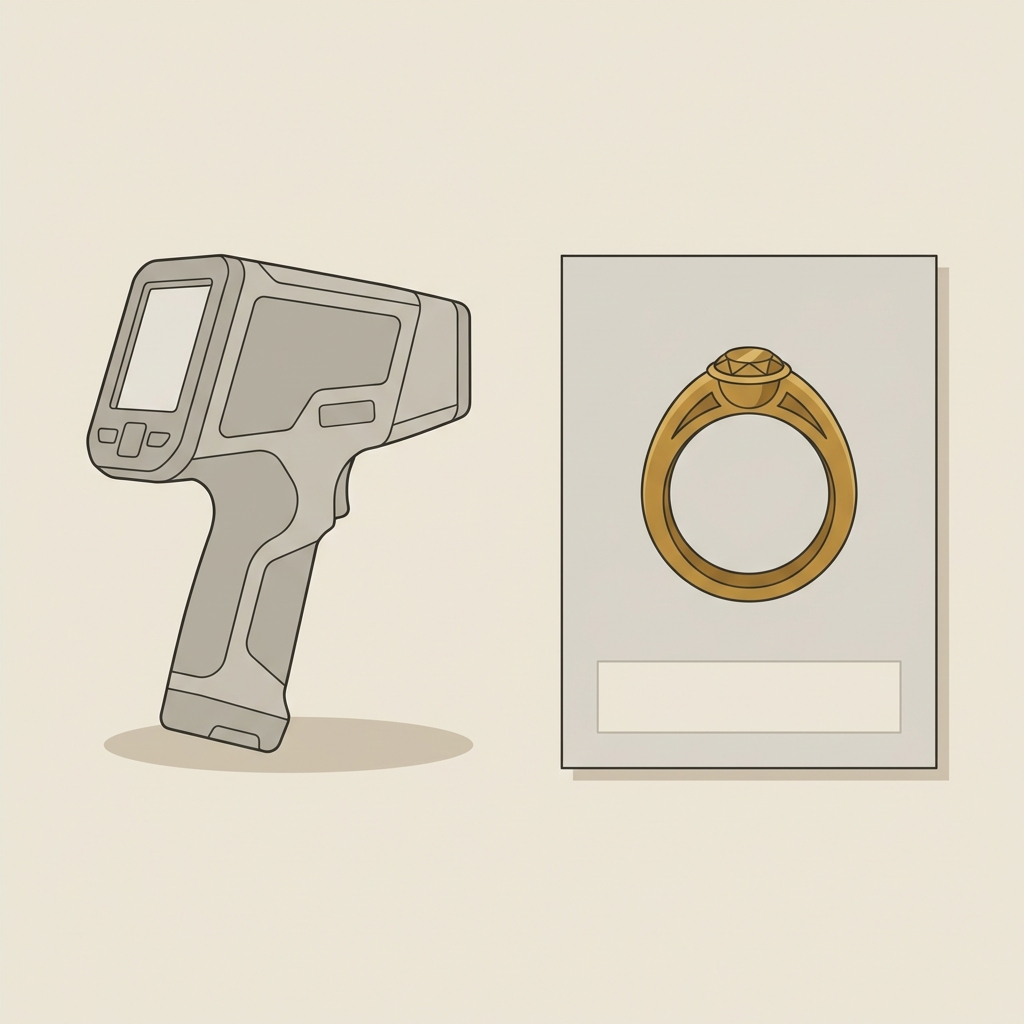
Careful comparison with documented reference pieces is one of the most effective ways to spot discrepancies in proportion, toolwork and patina behaviour that may indicate modern intervention.
Misleading restoration and remounting issues
Restoration or remounting can obscure original manufacture. For example, a modern bezel or replacement hoop can make an ancient intaglio appear to be part of an original setting; condition and restoration notes should explicitly describe any such interventions so buyers understand which parts of an object are ancient and which are later additions British Museum Roman collection.
When restoration is extensive or undocumented, pursue further testing or independent inspection, because modern repairs can alter instrument readings and visual cues that would otherwise support a Roman attribution.
When microscopy and specialist labs are needed
Microscopy can reveal micro-stratigraphy of corrosion layers, original hammer and file marks, and evidence of modern rotary tools. Specialist labs can perform comparative analyses against reference collections and provide the more nuanced interpretation that portable instruments or photographs cannot Getty Conservation Institute guidance.
Escalate to a specialist when portable testing is inconclusive, when components appear to be from different periods, or when legal provenance questions arise that require documentary verification or institution-level review.
Real-world examples, next steps and how Aurora Antiqua can help
Short annotated examples and what they teach us
Example 1: A silver ring with a worn intaglio that shows hand-cut tool marks and an alloy composition consistent with typical Roman silver supports a cautious attribution, particularly when accompanied by a clear collection history; such cases illustrate how stylistic, material and documentary lines of evidence converge to increase confidence The Met collection areas for Greek and Roman art.
Example 2: A decorative hoop with an unusually uniform surface patina and a modern-looking solder joint is a case where stylistic assessment raises suspicion and specialist microscopy or lab consultation would be a sensible next step.
Request a documentation review from Aurora Antiqua
Contact Aurora Antiqua for condition notes and documentation review if you want a second opinion; we can advise on what documentation to request and what tests typically help in similar cases.
Simple next steps for a responsible purchase
Before buying, compile the visual, material and documentary pieces of evidence: ask the seller for additional photos and measurements, request any provenance or export paperwork, and seek portable XRF or Raman reports if available. Keep communication documented, and consider a specialist opinion for ambiguous or costly items our blog on intaglio rings.
Track the decision criteria you used so you have a clear record of why you proceeded or declined; this is practical both for personal due diligence and for future provenance records.
Where to find specialist tests and further reading
Where to find specialist tests and further reading
Specialist conservation labs and university departments often offer non-destructive testing or can recommend trusted practitioners; museum publications and conservation guidance also provide useful background on expected materials and techniques that can inform your assessment ICOM Code of Ethics on provenance.
Aurora Antiqua can act as a curation reference: we describe condition, restoration notes and collection history where available, and will point buyers toward reasonable next steps without promising absolute authenticity, because final attribution typically rests on converging evidence rather than a single document or test.
romanjewelry refers to jewelry made in the Roman period; authentic examples are present on the market but verifying them requires stylistic checks, material analysis and provenance documentation.
Portable XRF and Raman can identify metal compositions and gemstone types and increase confidence, but they rarely prove age alone and are best used alongside microscopy and provenance checks.
Ask for high-resolution photos, measurements, condition and restoration notes, any provenance or collection history, and copies or images of non-destructive test reports where available.
More from Aurora Antiqua
References
- Testing and Retesting Alexander the Great, J. Paul Getty Museum and Getty Conservation Institute, Los Angeles
- Investigating Ancient “Bronzes”, J. Paul Getty Museum and Getty Conservation Institute, Los Angeles
- Reproducing bronze archaeological patinas through intentional burial, Heliyon (Elsevier, Open Access)
- Dating of Artifacts, Smithsonian Institution, Museum Conservation Institute (MCI), Washington
- Characterization of Castellani nineteenth-century gold jewellery by in situ, Scientific Reports
- Echtheitsuntersuchungen (authenticity testing), Curt-Engelhorn-Zentrum Archäometrie (CEZA), Mannheim
- About us, International Association of Dealers in Ancient Art
- Internet Archaeol. 40. Atkinson and Preston. Objects of personal adornment, Internet Archaeology, Council
- Emilie Riha, Der römische Schmuck aus Augst und Kaiseraugst (Roman jewelry from Augst and Kaiseraugst), Römermuseum Augst
- DOI
Going deeper? See the ancient Roman rings buyer’s guide · Roman intaglio rings explained.
From Aurora Antiqua
We sell authenticated ancient & medieval pieces, each individually examined before listing and backed by a Lifetime Authenticity Guarantee. One of a kind, sold once, never reproduced.
Browse Ancient Roman Rings →