


Looking for the real thing? Browse genuine ancient artifacts for sale, each piece one of one, individually authenticated, with documented provenance. For the background, see the guide to ancient jewelry.
What egyptian rings were and why they matter
Ancient egyptian rings served multiple roles in daily life, ritual practice and burial offerings; they can be read as personal ornament that often also functioned as amulets or, in some cases, as administrative seals. Museum surveys and collection essays show that scarabs, ankhs, lotuses and uraeus motifs recur across centuries and that the same object type may appear in both domestic and funerary contexts, so readers should approach a single ring as a potential hybrid of uses rather than as one clear function Metropolitan Museum.
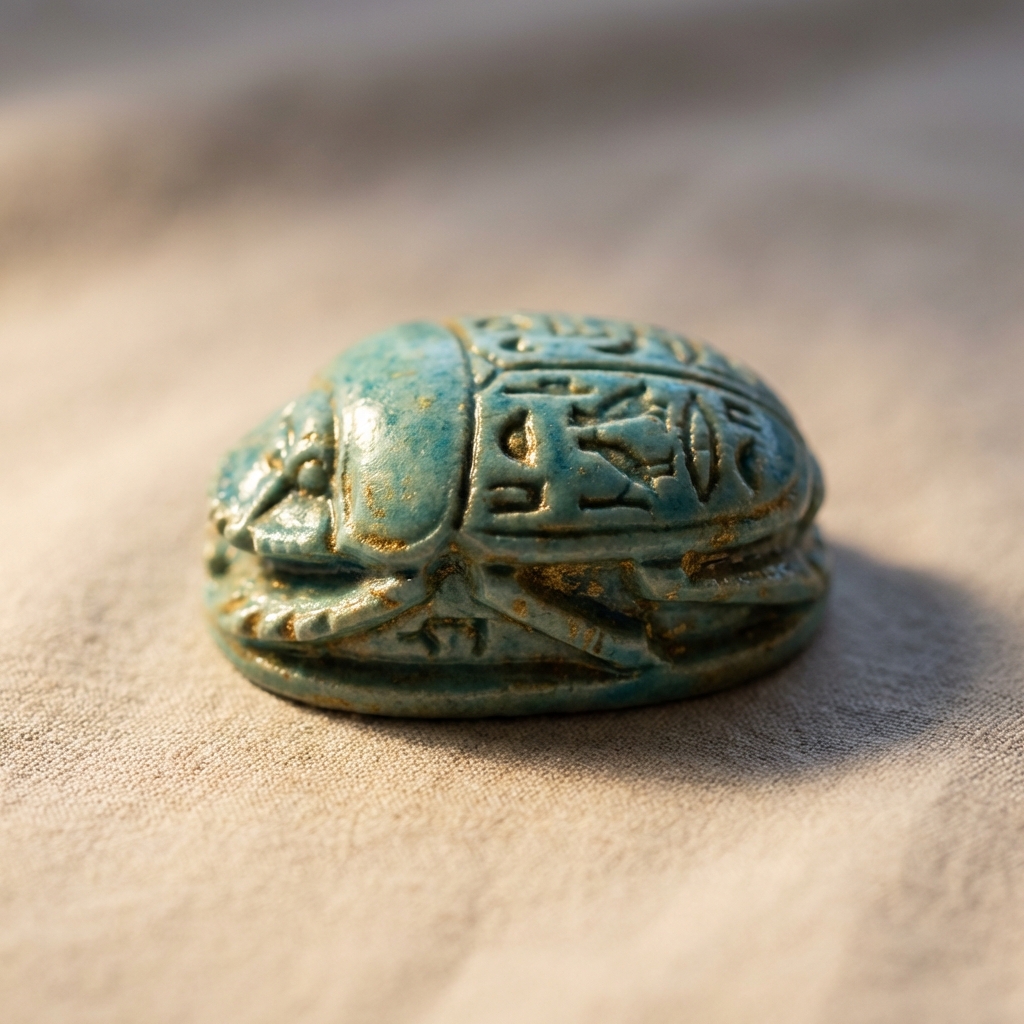
Scarabs are among the most frequent engraved motifs on rings from the Middle Kingdom through the Ptolemaic period and typically carry associations with regeneration, protection and the solar cycle; many examples also bear short inscriptions that can identify an owner or invoke a deity, which complicates simple readings of meaning but gives useful clues when inscriptions are present Penn Museum scarab-seals essay.
The ankh and the lotus appear repeatedly as decorative and amuletic motifs, where the ankh commonly relates to life or eternal life and the lotus to purity and rebirth; the uraeus, the rearing cobra, is best understood as a symbol that conveys protection and royal or divine association, and it is especially frequent on rings connected to elite or priestly contexts in curated collections British Museum collection overview.
Chronologically, objects catalogued in major public collections reveal continuities and changes: glazed steatite and faience scarabs occur early and persist, while gold and electrum settings are more common in elite contexts from later periods. These distribution patterns help frame questions about likely use and status, but they do not alone prove a single social meaning for any one ring Routledge materials chapter.
How to read motifs on egyptian rings: a practical framework
Start by identifying the primary motif and treating it as the first hypothesis about function. For example, a scarab motif often points toward regeneration or protection and may indicate use as a seal if an intaglio or inscription is present; this motif-first reading provides a working interpretation to be tested against other data Penn Museum scarab-seals essay. For further academic context see the UCLA Encyclopedia entry UCLA Encyclopedia of Egyptology.
Next, cross-check motif with inscription, material and documented context. If a scarab bears a name or an epithet, epigraphic reading can shift a likely interpretation from purely amuletic to administrative or personal identification. When inscriptions occur, ask for a clear photograph of the intaglio and, where possible, an epigraphic transcription from a specialist Metropolitan Museum.
Then examine technique and material: carved carnelian intaglios, faience scarabs and gold settings each carry different implications for date and social range. Material evidence is most useful when combined with typology and documented findspot because manufacturing choices shift over time and by workshop practice OIP 118. Scarabs, Scaraboids, Seals, and Seal Impressions from Medinet Habu, Institute for the Study of Ancient.
Patina, surface wear and traces of repair are informative but must be read cautiously. Conservation literature treats patina and wear as indicators of use and history rather than as proof of authenticity; detailed restoration notes that explain what was stabilised or repaired allow buyers to distinguish original surfaces from later interventions and to understand how much of the original fabric remains Journal of Egyptian Archaeology case studies.
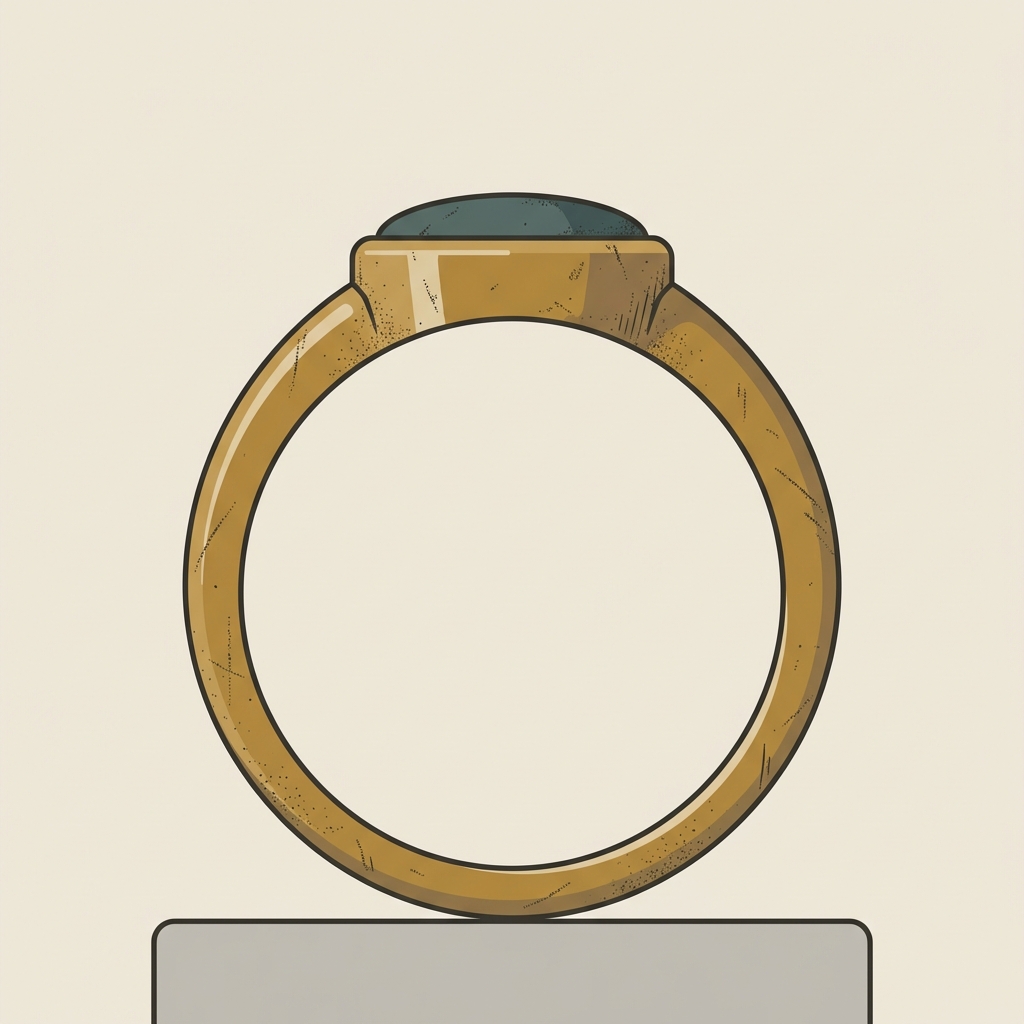
Materials and techniques help narrow date ranges and social context but rarely give absolute answers on their own; faience and glazed steatite scarabs and carnelian intaglios are common across many periods, while gold and electrum settings appear more often in elite rings, especially in the New Kingdom and later. Technical surveys and collection catalogues remain the best starting points when assessing whether a particular material suggests higher status or a later date Routledge materials chapter.
Production techniques such as mould casting for faience, hand carving for intaglios, and the quality of the bezel and hoop construction all provide useful comparative markers. Conservators and technical studies emphasise that tool marks, casting seams and glaze residues should be documented in photographs because these features are used alongside typology to support a probable date or workshop attribution Metropolitan Museum.
Provenance, documentation and condition notes: decision criteria for buyers
Good provenance records typically include a clear collection history, past ownership notes, and, when available, museum or institutional references that corroborate a chain of custody. These elements help judge whether a proposed meaning or date can be assessed with confidence, and buyers should prioritise listings that provide this information up front Journal of Egyptian Archaeology case studies.
Clear photos from multiple angles, measurements, and explicit restoration notes are essential documentation. Demand images of the intaglio or bezel, close-ups of tool marks or inscriptions, and a statement about what was conservator-stabilised; these practical items allow a more reliable reading of motif and material than a single catalogue sentence alone Metropolitan Museum. See our blog for related posts Aurora Antiqua blog.
Follow behind the scenes at @auroraantiqua
If you are reviewing a listing, compare the seller's provenance notes to the checklist in this article and ask for epigraphic transcriptions or conservation statements when inscriptions or repairs are central to the proposed meaning.
When to request specialist tests or reports. Ask for an epigraphic reading when an inscription is present and seems to contain a name, title or deity. For material questions, simple gemological tests or X-ray fluorescence can clarify composition; both kinds of specialist input add measurable confidence but require short lead time and a clear research question from the buyer EAP, Estonian Journal of Archaeology Publications, Estonian Academy Publishers.
Interpreting inscriptions and scarab seals: reading names, titles and protective formulas
Scarab seals on rings frequently carry short inscriptions, names or divine epithets and can point toward personal, administrative or protective functions. Collection essays and museum entries document cases where a scarab's inscription names an owner or invokes a protective formula, so treat any inscription as potentially decisive but verify through epigraphic assessment before making firm claims Penn Museum scarab-seals essay.
Epigraphic readings increase confidence but have limits. Weathering, incomplete impressions and hybrid motifs complicate transcription and dating, and specialist notes often describe multiple plausible readings rather than a single definitive translation. When a cartouche or royal name appears, that evidence tends to anchor dating more reliably, but non-royal inscriptions may remain ambiguous without context Metropolitan Museum.
There are open questions about social range. Current scholarship notes limited visibility of rings from non-elite households in the archaeological record, which means distributional claims about everyday use remain provisional; catalogue records and careful provenance notes are the best way to expand understanding of how widely certain motifs circulated Journal of Egyptian Archaeology case studies. Compare additional museum examples in the Van Egmond Collection Van Egmond Collection.
Common mistakes buyers and interpreters make with egyptian rings
Overreading patina and surface wear is a common error. Patina can indicate age and use, but it is not, by itself, definitive proof of date or context; conservators use patina as one line of evidence among many, and buyers should ask for restoration notes and comparative typology before accepting wear as proof of antiquity Journal of Egyptian Archaeology case studies.
Egyptian rings often combined ornament and amulet functions; interpret them by reading motif, checking inscriptions and material, and evaluating provenance and conservation notes before seeking specialist confirmation.
Ignoring restoration can lead to misattribution. Listings that do not describe repairs, replaced bezels or modern additions make it hard to evaluate motif and material accurately. Requesting condition notes and, if necessary, a conservator statement reduces the risk that a repaired or altered ring will be misread as wholly original About us, International Association of Dealers in Ancient Art.
Other red flags include vague provenance, missing measurements, inconsistent photos or claims that an object is funerary without published context. Treat such listings with caution and prioritise clear documentation and multiple supporting images before forming conclusions about meaning or date Journal of Egyptian Archaeology case studies.
Practical examples: how to read three typical listings
Example A: small scarab ring with an owner name. Reading: the scarab motif suggests protective and regenerative associations, and a readable personal name on the intaglio likely indicates personal ownership or a household administrative use. Questions to ask the seller: provide a close-up of the intaglio, an epigraphic transcription, and a provenance statement. Tests or reports to request: an epigraphic reading and clear condition notes to confirm the depth and clarity of the inscription Penn Museum scarab-seals essay.
Example B: gold bezel with uraeus motif. Reading: a uraeus typically signals royal protection or divine kingship associations and is more common in elite or priestly contexts; when combined with high-value materials such as gold, the balance of evidence leans toward a higher-status object, but documented findspot or collection history is still needed to support a firm interpretation British Museum collection overview.
Example C: ring from a documented tomb assemblage. Reading: when a ring is part of a well-documented tomb assemblage, its funerary role is supported by context and can change how we understand its function in life and afterlife practices. In such cases, catalogue notes and the publication record provide the clearest basis for attributing funerary meaning Journal of Egyptian Archaeology case studies.
Conclusions and a practical checklist for collectors
Summary checklist: identify the primary motif, request epigraphic transcription if an inscription exists, confirm material and technique, demand clear photos and measurements, review provenance and collection history, and ask for any available conservation or restoration notes before accepting a single reading of meaning Metropolitan Museum.
When to consult specialists: seek epigraphers for inscriptions, conservators for restoration questions, and materials analysts for uncertain stone or metal identification. These experts transform plausible readings into stronger, evidence-based assessments but require clear images and specific questions to be useful Archaeological materials, Icon, The Institute of Conservation (UK). See related artifacts in our artifacts collection Aurora Antiqua artifacts.

Aurora Antiqua positions itself as a curator and reference source that presents condition notes, documentation and contextual essays alongside select pieces so buyers can make informed decisions; use seller-provided documentation and independent expert readings to support any claim about an object's meaning. Visit our rings collection Aurora Antiqua rings. For further comparative examples of scarab rings see Egypt Museum.
Check the inscription and impression quality; a readable personal name or title often points to ownership or administrative use, while uninscribed scarabs may act primarily as amulets. Request an epigraphic transcription and clear images before concluding.
Patina and wear support a history of use but are not definitive proof of age. Combine patina observations with condition and restoration notes, material analysis and provenance records for a stronger assessment.
Ask for detailed provenance or collection history, multiple high-resolution photos, measurements, restoration notes and, if present, an epigraphic transcription or specialist report.
More from Aurora Antiqua
References
- OIP 118. Scarabs, Scaraboids, Seals, and Seal Impressions from Medinet Habu, Institute for the Study of Ancient
- Ring, Victoria and Albert Museum, London
- Finger Ring with Frog, The Cleveland Museum of Art
- Gemstones. In: UCLA Encyclopedia of Egyptology (James A. Harrell), University of California, Los Angeles
- Exploring the Composition of Egyptian Faience (Falcone, Aquilino, Stoppa), Minerals (MDPI)
- EAP, Estonian Journal of Archaeology Publications, Estonian Academy Publishers
- About us, International Association of Dealers in Ancient Art
- Archaeological materials, Icon, The Institute of Conservation (UK)