


Looking for the real thing? Browse our full ring collection, each piece one of one, individually authenticated, with documented provenance. For the background, see the guide to ancient jewelry.
What is a gold ouroboros? A concise definition and quick answer
The ouroboros is a visual motif in which a serpent or dragon appears to bite its own tail, forming a closed loop that suggests repetition and return. In wearable form, a gold ouroboros is the same motif rendered in gold, often as a ring or small pendant, where material and scale add practical and symbolic nuances.
As a cross-cultural sign it carries layered meanings rather than a single fixed definition; scholars treat early visual uses as tied to renewal and cyclical ideas while later traditions adapted the motif for philosophical and technical purposes, so interpretation of any one gold ouroboros piece depends on date, context and supporting records Encyclopaedia Britannica entry.
Visual form and basic description
Visually the motif is compact and self-referential: a complete loop that can vary in style from a naturalistic snake to a stylized dragon, sometimes with wings, scales or a patterned body. On rings the ouroboros may be chased or cast around the hoop or appear as a small bezel figure; on pendants it is often a closed medallion. The iconography invites readings around cycles, protection and unity without fixing the meaning by itself.
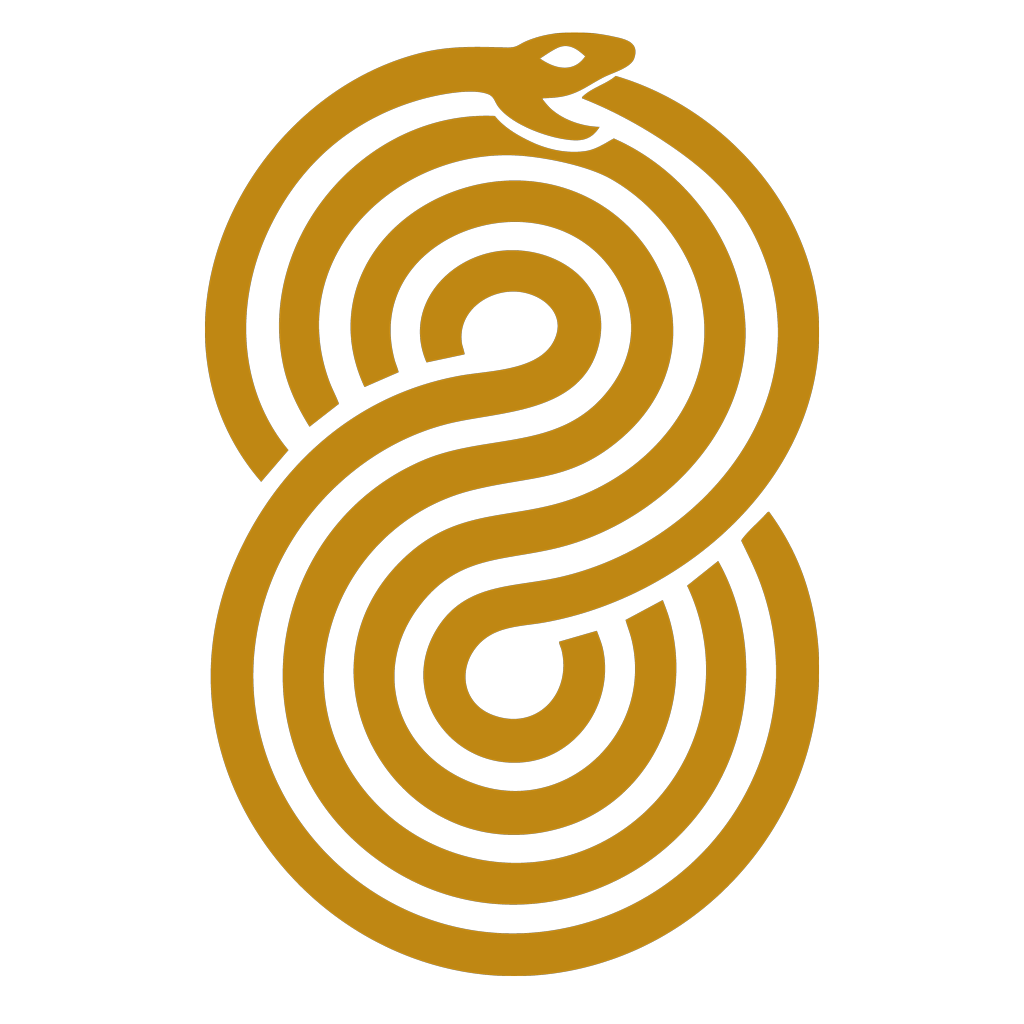
Collectors call attention to material and workmanship when the motif is in gold because the metal alters wear, craft techniques and the object’s use as jewelry rather than a purely amulet object.
Why gold matters for meaning and use
Gold changes how a maker and wearer might think about an ouroboros. In many periods gold signaled permanence, portable value and a wearable status object; on small rings its warmth and patina interact with design to influence how the motif is read in daily use. For buyers, a gold ouroboros often functions both as ornament and a compact symbolic statement.
Quick pre purchase checklist for assessing a gold ouroboros ring
Use with high resolution images
Early Egyptian and Mediterranean appearances of the ouroboros
Egyptian visual examples and associated renewal motifs
Some of the earliest securely dated visual uses of an ouroboros-like serpent appear in Egyptian contexts where the looped serpent is associated with regeneration and cycles such as the renewal of the sun, a reading that is common in museum overviews of the motif Encyclopaedia Britannica entry.
Egyptian representations are diverse in form and often appear in funerary or cosmological scenes where repetition and protection are central themes. When a serpent forms a closed loop it can function as a boundary, a container for a cosmic process, or a symbolic guard of transformation across life and afterlife.

By the Hellenistic and Roman periods the ouroboros appears in Mediterranean material culture as a motif in funerary objects, amulets and magical contexts, where it links to ideas of cyclical time and self-containment; object records and catalogue entries document its use in rings and amulets from this broad zone British Museum object record.
In those contexts the motif is often integrated into funerary imagery to suggest continuity across death and to mark objects intended for protection or transition. The presence of the ouroboros in a funerary setting does not mean it had a single meaning across all communities; instead it shared formal language that was adapted locally and across time.
Scholars caution against simple single-origin stories because the motif can occur independently and be repurposed in new cultural languages. Transmission from Egyptian visual culture into wider Mediterranean iconography is plausible, but pinpointing an exclusive line of descent is difficult and typically contested in specialist literature.
Alchemy, Gnostic and Hermetic readings: transformation, unity and self-containment
Alchemical emblem and the unity of opposites
From late antiquity into the medieval and early modern periods alchemical writers and illustrators adopted the ouroboros as an emblem for closed transformational circuits and the unity of opposites in materia transmutation literature, a meaning that became well established in European alchemical imagery by the Renaissance review article on ouroboros in alchemy.
In alchemical texts the self-consuming serpent expresses the idea that a process must culminate in a return to itself, an enclosed working that combines and reconciles contrary elements. That technical usage influences how many modern readers encounter the motif, especially when rings or pendants show explicit alchemical signs or later workshop styles.
Gnostic and Hermetic cosmological uses
Gnostic and Hermetic writings also use ouroboric imagery to convey cosmological self-sufficiency and recurring spiritual cycles rather than a literal biological interpretation; important manuscript collections preserve texts where such imagery frames metaphysical arguments Nag Hammadi Library texts.
Those textual traditions emphasize self-reference, the enclosed nature of a spiritual cosmos, and the idea of cycles in metaphysical development. Readers should treat such interpretations as part of a wider symbolic repertoire rather than a single authoritative meaning.
Follow Jakob on @auroraantiqua for behind the scenes context and provenance insight
Before relying on a single interpretation, consult catalogue notes and documented provenance for the specific object, and consider whether the piece’s context leans toward religious, funerary or later alchemical readings.
How museums and catalogues interpret ouroboros motifs on jewellery
Catalogue descriptions: protection, eternity, transformation
Museum catalogues and object records commonly describe ouroboros imagery on jewelry as invoking protection, eternity or transformative power when discussing rings and amulets, language that helps collectors understand likely uses for an object in its original culture Metropolitan Museum catalogue essay.
Catalogue entries often balance concise iconographic description with condition and provenance notes, giving readers both a reading of the motif and an evidence trail that supports dating or cultural attribution.
Role of provenance and object context in interpretation
Provenance and contextual notes in a collection record can show where a piece was excavated or how it entered a collection, and those details materially affect how curators frame meaning. A ring with a secure findspot in a funerary context will be read differently from a gold pendant acquired in later markets without clear documentation.

When curators or catalogues reference an ouroboros motif they typically link it to broader themes rather than a single statement, and they provide condition and restoration notes that help buyers and researchers understand how much of the object is original and how much was stabilized for display.
What a gold ouroboros ring commonly signifies for contemporary wearers
For many contemporary owners a gold ouroboros ring signifies continuity, renewal and unity in a personal or philosophical sense, a modern shorthand that draws on museum and catalogue language as well as popular readings of the motif Metropolitan Museum catalogue essay.

That contemporary resonance sits alongside specific historical layers. For example, a ring with a securely dated Roman catalogue record will most likely be framed through Mediterranean funerary or protective contexts, while a later gold pendant with added alchemical inscriptions will invite readings tied to transformation and philosophical unity.
When thinking about the motif in wearable form, note that material, scale and signs of use influence interpretation. A heavy gold ring worn daily will present different wear patterns than a fragile gold pendant preserved as part of a hoard, and those differences matter for reading the object’s past and present meanings.
How to evaluate a gold ouroboros ring before you buy: a practical checklist
Documentation and provenance questions to ask
Ask for clear provenance details: collection history, prior ownership notes, any catalogue citations or verification letters that accompany the object. Museum catalogue practices demonstrate how such documentation points to context and date, and buyer confidence increases when those trails exist British Museum object record.
Where possible request high resolution photographs showing hallmarks, inner band inscriptions, and views of the bezel and shoulders so you can compare visible style traits with catalogue examples. If a seller references a published catalogue entry, ask for the citation or an image of the catalogue page.
Condition, restoration notes and assessing wear consistent with age
Condition notes should say what was stabilized, what was repaired and what was intentionally left untouched, because restoration affects how a piece reads visually and historically. Good condition notes explain whether solder joins were added, whether surface fills were used, and whether patina is original or altered.
Look for wear consistent with age such as softened edges, discreet tool marks from historic repair, or even recurrent polishing on the inner band. Photographic detail and measured descriptions let you assess whether a ring’s current appearance is consistent with the stated period.
When technical uncertainty remains, seek a specialist opinion. A letter from a qualified historian, curator or an independent specialist can clarify dating or material identification in ways that short sales copy cannot, and reputable documentation reduces interpretive risk.
Common mistakes and misunderstandings when reading the ouroboros
One common error is to assume a single origin or a sole meaning for the motif; specialists emphasize layered and context dependent readings rather than a single origin story, so avoid binary claims about where the motif first appeared Encyclopaedia Britannica entry.
Another mistake is to conflate stylistic revival or modern reproduction with ancient origin. Gold can be worked in later periods in styles that echo older motifs, and without provenance or catalogue support a stylistic resemblance alone is not conclusive.
Interpretation combines the motif’s broad symbolic history with the object’s specific provenance, condition and any catalogue documentation; use those records and specialist opinion to form a conditional, evidence backed reading.
A quick remedial step is to consult museum catalogues and object records that document similar motifs; those records often clarify typical find contexts, likely functions and comparable dating that can guide buyer judgement museum catalogues.
Examples and a short guide: reading three hypothetical gold ouroboros rings
Example A: An Egyptian influenced ring with a clear catalogue record. If a museum entry or excavation report links the ring to a funerary deposit, the ouroboros motif will likely be read as part of renewal or protection rituals. Catalogue citations and findspot details materially increase interpretive clarity and buyer confidence British Museum object record.
Example B: A Hellenistic-style funerary ring without clear provenance. A ring that resembles Hellenistic patterns but lacks documentation should be treated with caution; stylistic parallels help form hypotheses but do not replace provenance or condition-based assessment.
Example C: A Renaissance or early modern alchemical pendant in gold. When a piece bears alchemical marks or emblems alongside an ouroboros the reading shifts toward transformation and the unity of opposites. Published studies of alchemical imagery help place such items in intellectual contexts and inform how a wearer might interpret the motif article on alchemy and the ouroboros.
Checklist reminder: verify provenance, request condition and restoration notes, compare hallmarks and measurements, and consult catalogue examples or specialists before purchase.
Collectors and catalogues commonly associate a gold ouroboros ring with continuity, renewal and unity, though exact meaning depends on the piece’s date, context and provenance.
Ask for provenance documentation, high resolution photos of hallmarks and inner bands, condition and restoration notes, and consult comparable museum catalogue records or a specialist.
Not necessarily. While alchemical traditions used the ouroboros for transformation, the motif also appears in funerary and protective contexts; interpretation depends on dating and associated inscriptions or marks.
More from Aurora Antiqua
References
- Talismans, Visitatori salutem, Szepmuveszeti Muzeum, Museum of Fine Arts Budapest
- About us, International Association of Dealers in Ancient Art
- Research report: export licensing and provenance, GOV.UK, Department for Culture, Media and Sport (DCMS)
- Stolen Works of Art Database, INTERPOL
- Archaeological materials, Icon, The Institute of Conservation (UK)