


Looking for the real thing? Browse genuine ancient rings for sale, each piece one of one, individually authenticated, with documented provenance. For the background, see the guide to ancient jewelry.
What is an ancient coin ring? A concise definition
An ancient coin ring is a finger ring that incorporates a circulated or specially struck coin, an intaglio, or a coin mounted as an ornament or seal. The term covers several practical approaches used through history, including coins recut or cut and folded to form a bezel, coins set into separate bezels, and intaglio-style mounts that functioned as seals or personal ornaments. The definition is descriptive and conditional: a given object can be identified as an ancient coin ring when study of its iconography, toolmarks and condition notes supports an historic origin rather than a modern conversion.
Today, dealer descriptions and specialist catalogues commonly pair condition notes, provenance documentation and restoration notes to help buyers understand each piece; these elements do not replace technical analysis but provide important context for assessment. Practical identification often depends on examining patina, visible toolmarks and iconographic details rather than a single visible trait.
A short reference for comparing legends and images across examples
Use alongside ruler and magnifier
Basic form and variations
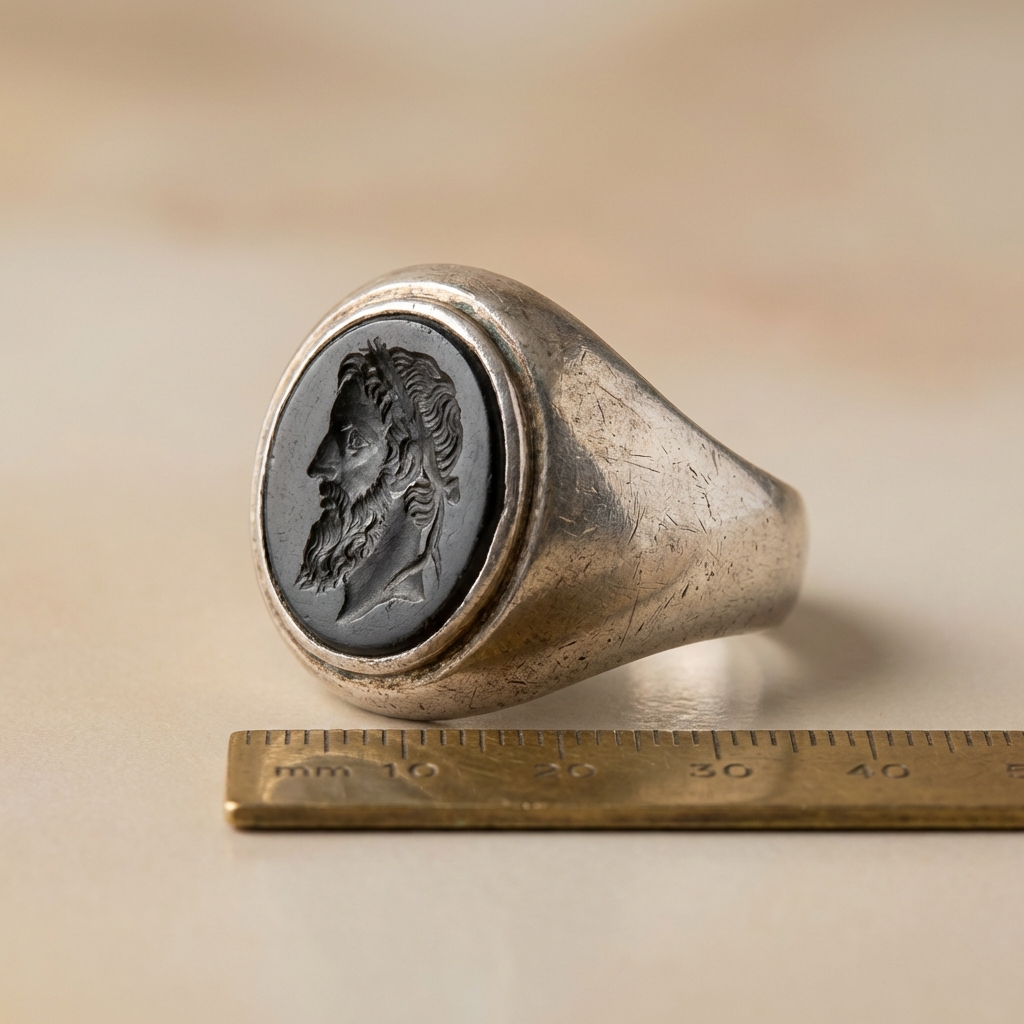
Forms vary from full coins used as an inset within a separately made bezel to coins cut, folded or pierced so that the metal itself forms part of the ring hoop. Intaglio-style rings may use a gem or hardstone with engraved imagery mounted alongside or instead of a coin. These variants can overlap in the same object: a coin with a cut edge may be set into a bezel whose shoulders and hoop were fashioned later.
Understanding these variants helps set expectations for condition and probable conservation needs, because different construction methods leave different stresses and corrosion patterns that affect long-term preservation.
How coin rings are presented today
Specialist sellers and museum catalogues typically present an object with a photographed view, condition notes describing patina and repairs, and provenance or collection history if available. See our rings collection.
For a curated perspective that pairs listing details with editorial context, compare specialist product descriptions that show photographs, measurements and collection history alongside condition statements, and read about the timeless appeal of Roman jewelry.
Early appearances: Hellenistic and Roman contexts
Coin-derived rings and mounted coins appear in the Hellenistic and Roman periods where coins were re-used as intaglios, seals or set bezels, often serving as personal amulets or status markers. Scholarship emphasises that re-use of coin imagery and intaglio technique can be traced to these Mediterranean contexts, where the image on coinage was repurposed for personal identification and display American Numismatic Society article.
Museum collections contain concrete examples that illustrate these practices. Objects catalogued as ring with intaglio show how a carved image or a mounted device could be used to seal wax or mark ownership, and provide a comparative anchor for studying workshop technique and iconography in other finds Metropolitan Museum collection entry.
Archaeological and numismatic evidence
Archaeological reports and numismatic literature record both the practice of adapting struck coin flans for mounting and the existence of purpose-made intaglios. Where a ring retains an intaglio or a mounted coin with clear portraits or legends, numismatists can often narrow a date range by comparing the portrait type or legend with known issues from coin catalogues American Numismatic Society article.
In Roman contexts particularly, coin imagery could serve layered meanings: a portrait might reference ruler and authority while the object itself functioned as a seal, an amulet or a visible marker of identity and status. Such layered roles mean that iconography and archaeological context are central to interpretation and dating.
When assessing an early example, consider the combination of iconography, toolmarks and find context rather than relying on a single visible trait to determine use or date.
Medieval and Renaissance reworking: continuity and change
In medieval and Renaissance Europe, circulating coins were commonly reworked into finger-rings or set into new mounts for devotional, heraldic or practical use. Reworking could involve folding, cutting or remounting worn coin flans so they became wearable, and cataloguing studies note these practices as part of broader re-use economies in later medieval material culture British Museum blog post.
Techniques varied regionally and chronologically. Some makers created folded mounts that used a portion of the coin as a bezel; others trimmed and fitted coins into separately made bezels. Comparison with documented collection histories can help situate a reworked piece within a likely time window.
A balanced assessment uses provenance documentation, detailed condition and restoration notes, magnified images of toolmarks and joins, and scientific tests when necessary. If these lines of evidence converge, they provide stronger support for an historic attribution than any single trait alone.
Devotional and heraldic uses often left distinctive traces: crosses, saints or heraldic motifs may have been added by punching or engraving, and the presence of later hallmarks or mounting styles can indicate a subsequent reworking for fashion or practical wear.
How coin rings were made: common historical techniques
Common historical manufacturing methods for coin rings include drilling or punching the coin center, cutting or folding the coin to form a bezel, and creating a separate bezel to hold the coin. These methods are documented in numismatic and conservation literature and leave diagnostic marks for study American Numismatic Society article.
Drilling or punching can leave concentric toolmarks or remnants of a hole; folding creates stressed creases and often a thinner cross section where the metal was bent; and a separately made bezel commonly shows soldering lines and contact marks where the coin sits into the seat. Each technique also presents different conservation priorities because folded or pierced coins can be mechanically weakened.
Drilling, punching and folding
When a coin was punched or drilled to accept a wire hoop, the edges of the hole and associated burrs are frequently visible to magnification and can be compared with period toolkits. Folded mounts commonly retain a visible seam and a difference in patina where the metal layers meet.
These features are practical clues for dating: toolmarks consistent with historical hand tools and wear consistent with prolonged circulation support a historic origin, while machine-made uniformity or suspiciously fresh solder joints can indicate modern work.
Bezel construction and separate mounts
Setting a coin into a separately constructed bezel allowed craftsmen to preserve more of the coin face while adding a more wearable shoulder and hoop. Solder lines, bezel seats and contact corrosion patterns are useful indicators of whether a bezel is contemporaneous with the coin or a later addition.
Because mounting methods affect how a ring wears and how corrosion develops, conservators evaluate construction in tandem with metallurgical and microscopy studies to form a secure interpretation Getty Conservation Institute overview.
What coin imagery and iconography can tell you
Coin imagery provides one of the clearest starting points for dating and attribution. Portraits, imperial titles, legends and recurring motifs can narrow possible date ranges and suggest geographic origin, but iconography must be read with caution because coins were often recut, mounted or worn before re-use.
Portrait types, legends and motifs are compared to numismatic catalogues to identify likely issues; where a portrait closely matches a known emperor or ruler, the possible date window tightens, though later re-use remains possible American Numismatic Society article.

Reading portraits, symbols and legends
Portraiture and legends can point to a ruler or mint, and religious or heraldic symbols may indicate devotional reuse. When legends are partially worn, imaging or angled lighting often improves legibility, allowing comparison with published types in numismatic databases.
Because re-cutting and wear can alter readable elements, combining visual reading with toolmark study and, when necessary, metallurgical testing strengthens any conclusion about date and origin.
Limits of iconographic dating
Iconography alone can be misleading. A well known portrait type might be copied or re-used centuries after it was struck, and cleaned or recut legends can create false confidence about dating. For these reasons iconographic evidence is best treated as one line of enquiry among others.
Where iconography suggests a date range that conflicts with construction or patina, request further documentation or test results before accepting the attribution.
How collectors today authenticate coin rings
Practical authentication steps for collectors include verifying documented provenance, checking for age-consistent patina and toolmarks, requesting conservation or restoration reports, and seeking metallurgical or imaging analysis when attribution is uncertain. These steps reflect both market practice and conservation guidance Getty Conservation Institute overview.
Current specialist market practice also places emphasis on transparent condition notes and provenance statements as part of buyer protection, though technical analysis such as X-ray imaging or elemental testing is often decisive in contested cases.
Documentation, condition notes and tests
Start with the documentation available: catalogue references, collection history and any verification letters. Good listings describe what was stabilised or repaired and identify any interventions that affect reading of toolmarks or patina. High-resolution photos at multiple angles and scale are essential for a preliminary assessment.
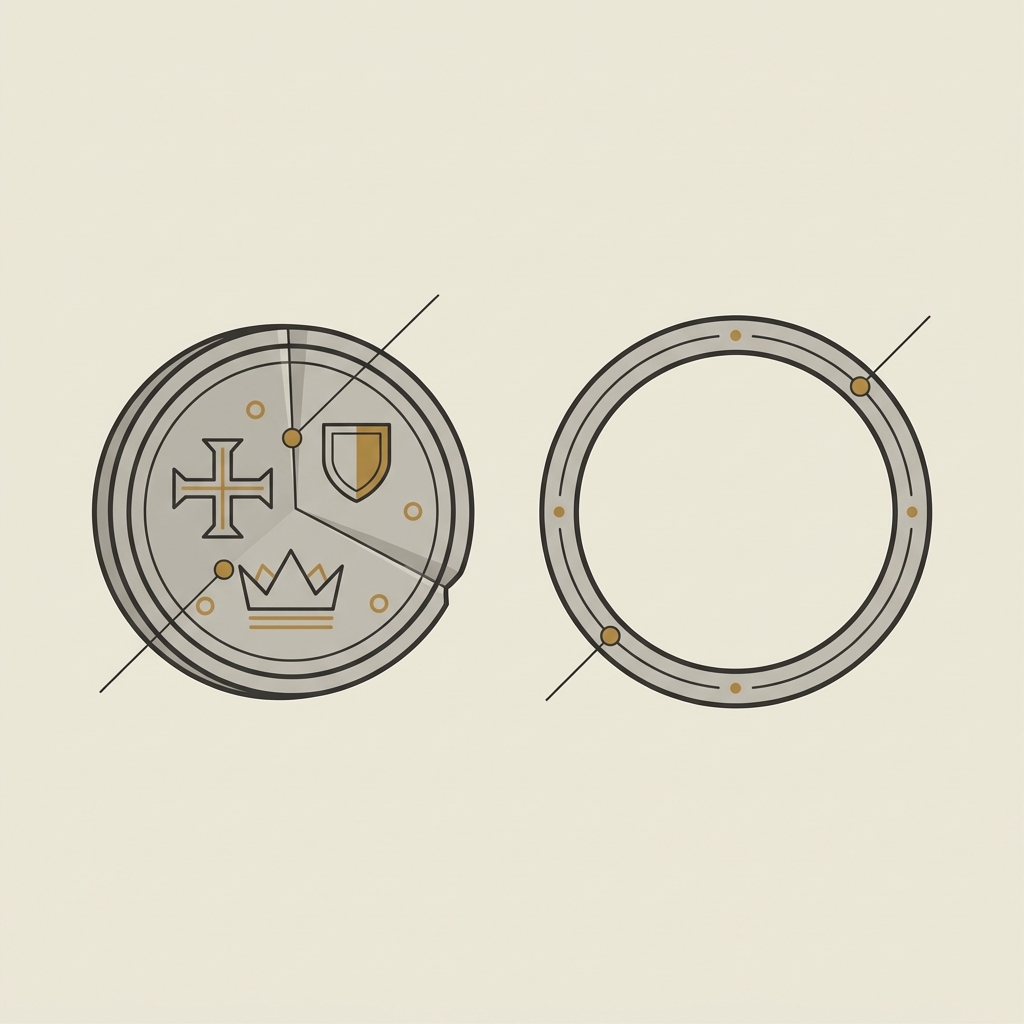
When attribution is uncertain, request microscope images of edges, solder lines and joins, or seek a conservation report that describes stabilisation treatments. These materials help specialists judge whether visible marks are consistent with historic hand tools.
When to request scientific analysis
Scientific tests are most useful when documentary and visual evidence disagree. Metallurgical analysis, microscopy and non-invasive imaging can reveal compositional patterns, joining methods and subsurface features that distinguish modern work from historic manufacture. Because such testing can require specialist facilities and expense, prioritise it for higher-value or contested items.
Decision checklist for buyers: what to prioritise
Use this short checklist when assessing a listing or object: provenance statement or collection history, clear condition photos with scale, detailed restoration notes listing what was stabilised or left untouched, visible toolmarks or microscope images, and a statement about available scientific testing when attribution is uncertain. Prioritise transparent documentation in the listing.
Copyable checklist for quick use: 1) Provenance and collection history; 2) Condition photos and dimensions; 3) Restoration report and conservation notes; 4) Magnified images of edges and joins; 5) Third-party testing when provenance or dating is disputed.
See provenance and restoration up close on Instagram
Review catalogue and condition photos carefully and ask the seller for microscope images or restoration reports when anything about the object's construction or patina seems unclear.
If several checklist items are missing, consider asking for additional documentation or a short delay to seek independent advice rather than proceeding on limited evidence.
Red flags and common mistakes when evaluating coin rings
Common pitfalls include modern conversions presented as ancient, ambiguous or missing provenance, and restoration described vaguely or not at all. Listings that lack magnified imagery of joins and edges make it difficult to assess toolmarks and solder lines, which are often decisive.
Overinterpreting patina is a frequent error; surface coloration can be altered by stabilisation treatments or environment, so patina should be assessed with knowledge of conservation history. Likewise, clear-looking legends or sharp portraits do not guarantee ancient origin, because recutting and modern mounting can create convincing appearances.
Attribution errors and modern conversions
Look for signs of modern machining, uniform filing marks or bright, recent solder that contrasts strongly with an otherwise aged surface. These are often indicators of modern conversion rather than historic reuse.
When in doubt, ask for provenance documentation and conservation reports and consider consulting a numismatist or conservator before completing a purchase.
Overinterpreting patina or iconography
Patina must be read in context. A consistent, adherent patina across joins and creases is more reassuring than surface-only coloration that wipes away or looks superficial. Microscopy can help determine whether surface patina is original or the result of recent treatment.
Iconography should be treated as one line of evidence. Combine it with toolmark reading, construction study and, where warranted, scientific testing.
Short case studies: Roman, Medieval and a modern listing
Roman intaglio rings often show a carved or incised design set into a metal seat; museum examples cited by numismatists demonstrate how portrait types and mounting style can support a Roman date when combined with find context Metropolitan Museum collection entry. For comparative examples see the Ancient Roman Rings collection.
A medieval reworked coin will typically show cut or folded flan edges and evidence of later punching for mounting; catalogue notes in museum and specialist literature describe these features and how they differ from purpose-made intaglios British Museum blog post.
A modern curated listing shows how provenance, condition photos and restoration notes are presented for buyers. Specialist sellers that include collection history and clear condition statements make it easier to assess whether additional testing is warranted, and such listings are a useful model when evaluating other offers.
Conservation, restoration and care for coin rings
Common conservation concerns for metal objects include active corrosion, loss of patina through abrasive cleaning, and structural weakness where coins were folded or pierced. Stabilisation approaches aim to arrest corrosion without removing historic surface evidence, and conservators document treatments in restoration notes Getty Conservation Institute overview.
Collectors should expect restoration notes to state what was stabilised, what repairs were made and what was intentionally left untouched. Such transparency helps later scholars and allows future conservators to make informed treatment choices.
Common conservation concerns
Avoid invasive cleaning or polishing without conservator advice. Abrasive treatment can remove patina and important toolmarks, and may complicate later scientific analysis. Proper storage in stable, low-humidity conditions and minimal handling reduce risk of new damage.
When acquiring an ancient ring for wear, discuss stabilisation history and ask a conservator whether the object is suitable for regular use or should remain a display piece.
What restoration notes should disclose
Useful restoration notes list stabilisation actions, any soldering or structural repairs, replaced components, and whether surface cleaning or chemical treatments were applied. This information matters for future care and for evaluating how interventions affect visible evidence used in authentication.
Where conservator reports exist, request copies; they provide language and observations that third parties can evaluate independently.
How museums and specialist dealers document provenance
Provenance statements commonly include collection history, prior ownership notes and catalogue references. Museums and specialist catalogues set a useful standard by pairing descriptive entries with accession or catalogue numbers and, when available, verification letters that document prior study or sale.
Clear provenance documentation reduces uncertainty but does not replace technical analysis when attribution is contested. A combination of collection history, condition notes and test results provides the most reliable basis for firm conclusions.
Types of provenance statements
Look for dated collection notes, accession references and any certificates or letters of verification that accompany an object. Photographic records in older sale catalogues or exhibition history can also strengthen a provenance chain.
Where documentation is thin or absent, treat attribution with healthy caution and consider third-party testing for higher-value objects.
Why documentation matters
Documentation helps establish lawful ownership and supports scholarly study. It also gives buyers and institutions a clearer sense of an object's collection history, which informs decisions about ethical acquisition and potential legal considerations.
Prefer sellers who describe provenance and restoration clearly rather than making broad claims without supporting documentation.
Legal and ethical considerations when buying or selling ancient coin rings
Ask sellers about lawful export, import documentation and any restrictions tied to cultural heritage. Laws differ by country and collectors should seek written provenance that addresses lawful ownership and export where relevant.
When documentation is missing or ambiguous, pause and, if necessary, consult a specialist or legal advisor. Responsible collecting emphasises transparency and documented ownership rather than proceeding with incomplete records.
Concluding takeaways: how to read, value and care for ancient coin rings
Combine documentation, visual inspection, toolmark reading and scientific testing when needed. Prioritise clear provenance, detailed condition notes and restoration disclosures in any listing you consider, and use magnified imagery and specialist reports to resolve difficult questions.
When in doubt about attribution or condition, consult a conservator or a numismatist who can advise on appropriate tests and conservation strategies. Treat wearable ancient pieces as artifacts that require conservator-informed care rather than everyday fashion jewelry.
Experts combine provenance documentation, examination of patina and toolmarks, and, when needed, scientific tests such as microscopy or metallurgical analysis to form a balanced judgement.
Folded mounts can indicate medieval reworking but are not uniquely diagnostic; confirm with toolmark study, patina consistency and documentary comparisons before concluding a date.
Daily wear can risk structural stress or abrasion; consult the seller's restoration notes and a conservator to determine whether an item has been stabilised for wear or is best reserved for occasional use.
More from Aurora Antiqua
References
- Gold necklace with coin pendants, Inv. 17.190.1655, The Metropolitan Museum of Art
- Octagonal Pendant, The Cleveland Museum of Art, Ohio
- Online Coins of the Roman Empire, American Numismatic Society and Institute for the Study of the Ancient World
- Online Coins of the Roman Empire: RIC II Trajan 109, American Numismatic Society
- Trésor hellénistique trouvé à Délos en 1964, École française d'Athènes, via Persée
- Application of multi-modal 2D and 3D imaging and analytical techniques, npj Heritage Science (Springer Nature)
- Long-term corrosion of copper alloys in the soil, Heritage Science (Springer Nature)
- Pliny the Elder, The Natural History, BOOK XXXIII, Perseus Digital Library, Tufts University (edition Bostock)
- Philip Kiernan and Klaus-Peter Henz, Rings from the Forbidden Forest, Cambridge University Press
- NIST Team Uses Neutron Beams to Authenticate Historic Coins and Spot Fakes