


Looking for the real thing? Browse genuine crusader rings for sale, each piece one of one, individually authenticated, with documented provenance. For the background, see the guide to medieval jewelry.
Quick answer: What the 'Rule of 72' means for an antique knights templar ring
The medieval "Rule of 72" refers to the organisation of the Knights Templar regula into seventy two short articles in surviving Latin manuscripts. This is a textual and structural feature of the order's rule, not a standard inscription found on small metalwork, so seeing a number or motif on a ring is not by itself proof of organisational practice Fordham Medieval Sourcebook.
No. Motifs can suggest associations but require supporting provenance, typology, and scientific or specialist evidence to form a credible attribution.
For a buyer, the practical implication is straightforward: an antique knights templar ring that looks Templar-like may still require independent evidence before a firm attribution. Market descriptions that lean on the phrase rule of 72 as if it were a hallmark are often simplifying a complex scholarly distinction, and collectors should expect condition notes and provenance to carry most of the weight in a credible claim.
The medieval Rule of 72: text, context and what scholars mean by '72'
The regula is the written rule that structured life in the medieval Order. Surviving Latin versions are organised into seventy two short articles (see Latin Rule on Wikipedia), and this organisation is the primary historical fact behind the phrase rule of 72 rather than an indication of material practice on rings or jewellery Fordham Medieval Sourcebook.
Historians use the regula to understand internal organisation, obligations, and administrative practice in the 12th century Order, so the number 72 matters mainly as a way of reading the Order's text and priorities. Translators and editions of the regula remain essential background for anyone connecting textual tradition with later symbolic interpretations.
Why the number 72 is also read symbolically in Templar studies
The number 72 has wider biblical and numerological resonances in Christian and Jewish traditions, and scholars treat symbolic readings as plausible but interpretive. That means 72 can appear in discussions of ritual symbolism and numerology (see a Latin Rule overview at Grokipedia), but such readings are not documentary proof that a specific ring was produced to reflect the regula Encyclopaedia Britannica.
Get the buyer's checklist
Download a short buyer's checklist or request condition-note guidance to make informed decisions about claimed Templar associations.
Applied to material culture, numerological associations can inform interpretation but they do not replace object-based evidence. A motif or number on a piece of crusader period jewelry may invite symbolic readings, yet without secure context or documentation it remains an interpretive possibility rather than a conclusive identification.
How medieval and crusader rings are documented in museums and finds databases
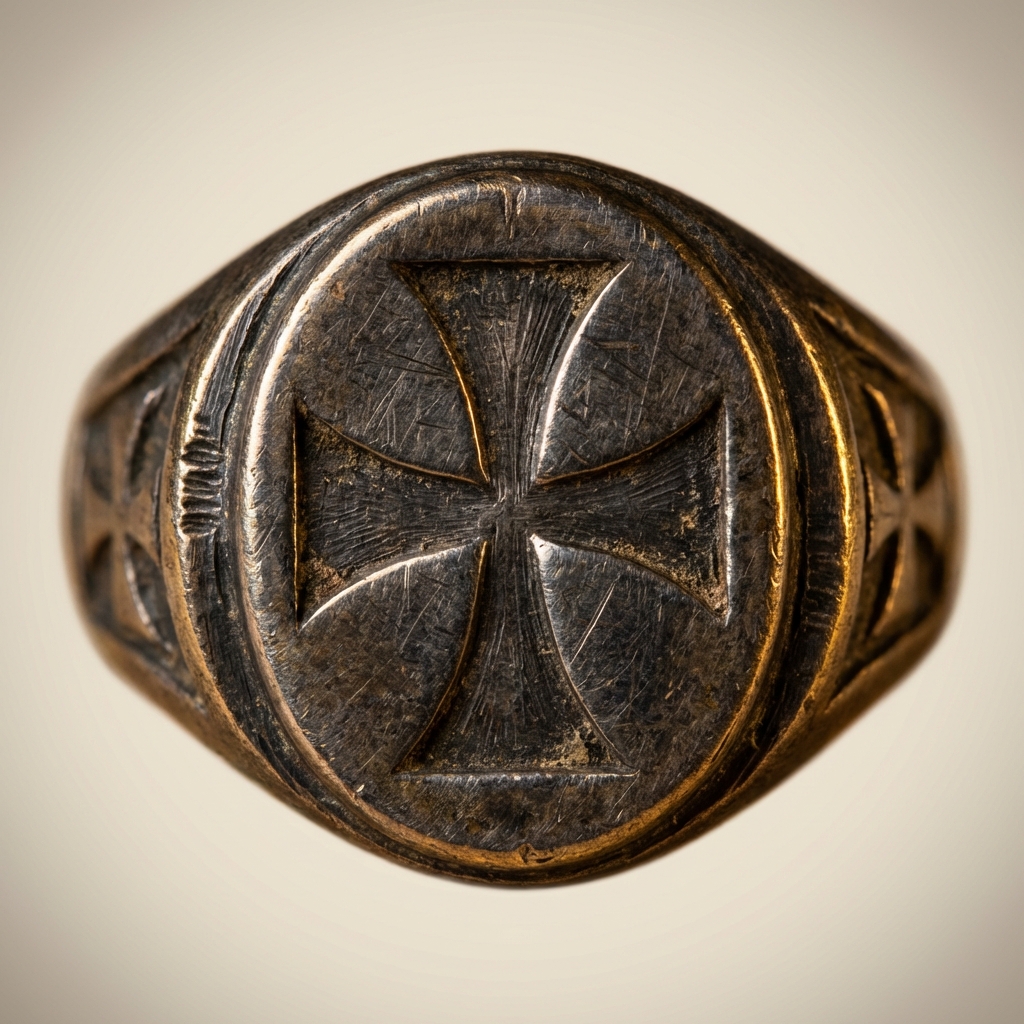
Find reports and Portable Antiquities Scheme entries show how context, typology, and prior ownership notes influence attribution. For collectors this means comparing listing images and descriptions with public object records is a practical first step when assessing any antique knights templar ring.
How specialists and conservators assess an antique knights templar ring
Conservators and specialists begin with careful condition notes: patina, wear consistent with age, visible tool marks, and clear restoration notes are baseline requirements to evaluate a claimed Templar association Portable Antiquities Scheme.

Specialists also compare the piece with dated museum examples and archival sources to check typological matches. Independent specialist reports from an experienced medieval jewellery conservator or academic can materially increase confidence in a Templar attribution where provenance or typology is ambiguous.
Practical step-by-step checklist to evaluate a ring before you buy
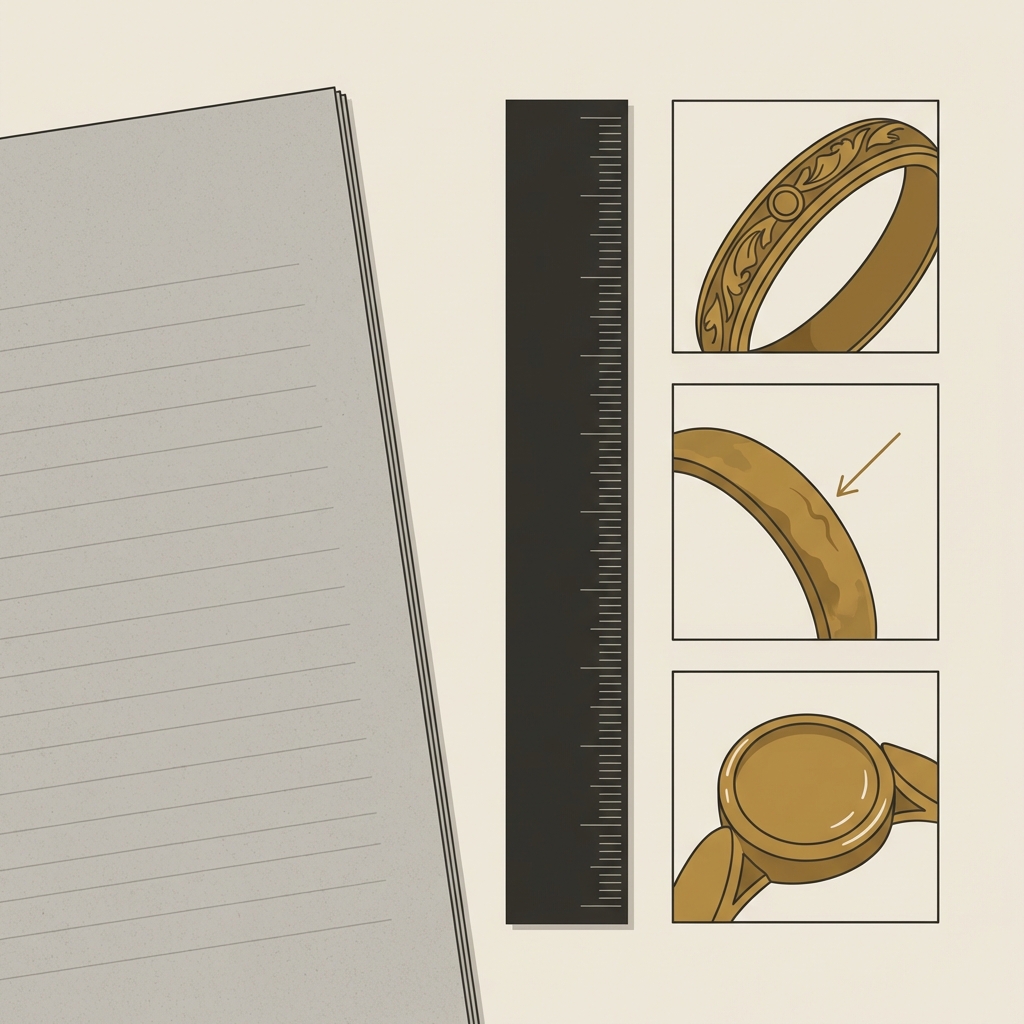
Insist on high-resolution photographs, clear measurements, and targeted images of the bezel, hoop, shoulders, and any tool marks or patina. These images let you and an expert assess wear consistent with age and look for modern interventions that might be obscured in poor photos Portable Antiquities Scheme.
Ask the seller for collection history, prior sale catalogues, conservation reports, or any paperwork that documents provenance. Compare images with museum records to check typological matches and weigh photographic evidence against stated provenance before forming a view on an antique knights templar ring.
Non-destructive scientific checks that specialists use
X-ray fluorescence for alloy composition is a common, non-destructive test that helps compare a metal's chemistry with period typologies; used alongside microscopy and detailed photography, it can flag later alloys or suspiciously modern mixes British Museum conservation guidance.
Point collectors to types of service to request for small metalwork
Contact local conservation labs for small-object assessments
Provenance, revivalism and why many market 'Templar' labels are uncertain
The 19th and 20th century produced a large revival of medieval styles and Templar imagery, and that revivalism has left many convincing modern copies and reinterpretations in the market, so provenance and collection history are critical to separate original crusader era pieces from later revivals Malcolm Barber, New Knighthood.
Documented collection history, sale catalogues, and specialist reports increase confidence in an attribution. In contrast, pieces offered with only a brief descriptive line or a sweeping Templar label should be treated cautiously until more evidence is supplied.

Common errors and red flags when evaluating listings for an antique knights templar ring
Restorations or later modifications can change a piece's appearance and produce false impressions of age or iconography. When in doubt, ask for close-up images of joints and any areas that look unusually clean relative to the rest of the item, and consider independent microscopy or conservator input.
Practical examples: reading three sample ring descriptions
Example A, a museum-type match, shows a typology and condition consistent with dated collections: accurate sizing and matching decorative details, consistent patina, and an accompanying collection history or catalogue entry. Where those elements align, the attribution to a crusader context is more credible and easier to verify against museum records British Museum collection records.
Example B looks visually convincing but lacks documentation. Motifs may match Templar-associated designs, yet without prior sale records or conservation notes the claim remains tentative. Example C is an obvious modern copy when alloy analysis and microscopy show modern techniques or inconsistent patina, and such findings should lead a buyer to decline the attribution unless new provenance emerges British Museum conservation guidance.
A decision framework: when to accept a Templar attribution and when to ask for more
Use a simple evidence-weighting approach: prioritize provenance documentation, then typological match with dated examples, then condition and scientific tests. If provenance is strong and typology aligns, scientific tests may be confirmatory. If provenance is weak, an independent specialist report is often warranted to raise or lower attribution confidence Portable Antiquities Scheme.
The absence of secure provenance does not automatically mean a piece is modern, but it does reduce confidence. Commission a specialist report when the item is high value or when typology and condition give conflicting signals about age and origin.
How Aurora Antiqua approaches Templar-associated pieces
Aurora Antiqua presents curated ancient rings with clear condition notes, historical context, and provenance references when available, following the same transparency collectors should expect from reputable sources. See our Medieval Crusader Rings collection. The shop frames Templar associations cautiously and avoids overstating claims in listing descriptions.
When a piece lacks robust provenance, Aurora Antiqua signals that uncertainty rather than asserting a firm organisational attribution. Restoration and preservation notes, and any available documentation, are included to help buyers make informed decisions about a potential purchase.
Concluding checklist: next steps if you want to pursue an antique knights templar ring
Request high-resolution images, condition and restoration notes, clear measurements, and any provenance documentation before committing to a purchase. Consider XRF or microscopy reports for high value pieces and retain copies of all communications and paperwork for your records Portable Antiquities Scheme. You can also reach out via our contact page for specific listing questions.
Compare the listing to museum records and published scholarship when possible, and commission an independent specialist report if there is substantial uncertainty about age or attribution. See our Q&A on what is a knights templar ring for practical guidance. A cautious, evidence-led approach gives the best chance of a reliable identification.
Further reading and the references behind this article
The principal primary text is the medieval regula, available in translation and the Latin edition as presented in standard online editions; this is the source for the regula's seventy two articles and a starting point for textual study Fordham Medieval Sourcebook (see also Rule of the Templars).
For object records and comparative material consult major museum catalogues and finds databases such as the British Museum collection and the Portable Antiquities Scheme, and consult conservation guidance for scientific testing protocols British Museum conservation guidance.
No. A motif can suggest a connection but is not proof. Credible attribution depends on provenance, typological comparison, condition notes, and where appropriate scientific tests.
Ask for prior collection history, sale catalogue entries, conservation reports, and any certificates or independent specialist opinions that accompany the item.
Commission tests like XRF or microscopy for higher value items or when typology and provenance are ambiguous; tests help as part of a broader assessment rather than as sole proof.
More from Aurora Antiqua
References
- About us, International Association of Dealers in Ancient Art
- Publication 561 (12/2025), Determining the Value of Donated Property, Internal Revenue Service (IRS), USA
- Object ID, International Council of Museums
- Stolen Works of Art Database, INTERPOL
- Research report: export licensing and provenance, GOV.UK, Department for Culture, Media and Sport (DCMS)
- The Past Polluted: A Pigovian Approach to the Black Market in Antiquities, International Journal of Cultural
- Signet Ring, Victoria and Albert Museum, London
- Ring, Victoria and Albert Museum, London
- Latin Rule, Wikipedia
- Rule of the Templars, The French of Outremer, frenchofoutremer.ace.fordham.edu