


Looking for the real thing? Browse authenticated Ancient Roman rings, each piece one of one, individually authenticated, with documented provenance. For the background, see the guide to Roman jewelry.
Which resins did Roman jewellers actually use? Definition and historical context
For collectors and historians asking what resin the Romans used most often in jewellery, the best-supported answer in current literature is Baltic succinite, commonly called Baltic amber. Recent provenance studies and museum syntheses identify Baltic succinite as the principal resin traded into Roman markets and used in beads and worked ornaments, which helps explain the frequent archaeological presence of amber in Mediterranean contexts Encyclopaedia Britannica on amber.
Succinite is a geologically distinct type of fossilized tree resin, defined by its chemical fingerprint and by forms of preservation that differ from younger or less polymerised resins. The term emphasises a specific palaeobotanical origin and a suite of material properties such as a characteristic infrared spectrum and a typical range of colours and translucencies.
When specialists write about Roman jewellery they commonly contrast succinite with other organic materials that can look similar, for example copal, which is geologically younger, or worked shell and jet that may have been used for ornament in overlapping contexts. Recent analytical work has also refined the picture, showing that some Roman-period finds include mixed inputs, where Baltic succinite is present alongside secondary Palaeogene sources; these findings refine our understanding of supply without overturning the central role of Baltic amber in Roman jewellery markets Journal of Archaeological Science provenance study.
It is important to recognise the limits of the evidence. Archaeological context and visual identification have long supported amber's dominance, but many small beads and worked pieces on the market and in collections still lack published instrumental analysis, which means cautious attribution remains necessary for some objects Encyclopaedia Britannica on amber.
What is amber and how archaeologists classify it
Amber is fossilized resin derived from ancient trees and preserved through geological time. Archaeologists and conservation scientists classify amber by its chemistry, age and palaeobotanical origin; succinite is the name given to the typical Baltic variety because of its distinctive chemical signature and the deposits that produced it.
Summary of archaeological finds in Roman-period contexts
Across Roman-period sites, amber appears primarily as beads, pendants and small worked pieces rather than large polished stones, and finds are often associated with trade deposits, burials and personal adornment assemblages. These distributions point to an established demand for amber within Roman social and artisanal systems.

How amber reached Roman workshops: trade routes and source regions
Roman-period supply of Baltic amber depended on both overland corridors traditionally termed Amber Road routes and on maritime transport through northern European and Mediterranean networks. Archaeological and historical indicators show that raw amber and finished beads moved along these pathways into Mediterranean consumption zones, where local workshops incorporated the resin into jewellery assemblies Journal of Archaeological Science provenance study.
Overland corridors connected Baltic and central European source areas with the Danube and Rhineland routes into the Roman world, while coastal and riverine shipping provided alternative, often faster, links for bulk movement. The mix of routes explains why amber appears across a wide area of the Roman economy and why local finds can reflect varied supply histories.
Recent provenance research emphasises that while Baltic succinite remained the dominant supply, some analysed items show mixed signatures that indicate secondary Palaeogene sources or admixtures at different points in the trade chain; such complexity points to regional variability in supply and to changing consumer preferences across time Journal of Archaeological Science provenance study.
Trade patterns matter for attribution because a worked bead found in a Mediterranean context may contain resin sourced many hundreds of kilometres away. Provenance results therefore must be read alongside archaeological context and typological study when assigning a geographic origin to a particular object.
How specialists identify ancient amber: FTIR, GC-MS and best-practice testing
Overview of instrumental methods: FTIR and GC-MS for ancient roman jewelry making
By 2024 and 2025 a consensus has formed in conservation science: Fourier transform infrared spectroscopy and gas chromatography coupled with mass spectrometry are the principal methods for distinguishing archaeological Baltic succinite from copal and modern imitations. These techniques measure different aspects of the material's chemistry, providing complementary evidence for identification Archaeometry review on spectroscopic and chromatographic discrimination.
FTIR collects an infrared spectrum that functions like a fingerprint for organic compounds. Succinite shows a set of absorption bands and spectral features that specialists compare with reference libraries to support attribution. GC-MS separates and identifies volatile and semi-volatile components; it can reveal degradation products and biomarkers that differ between ancient ambers and younger resins such as copal.
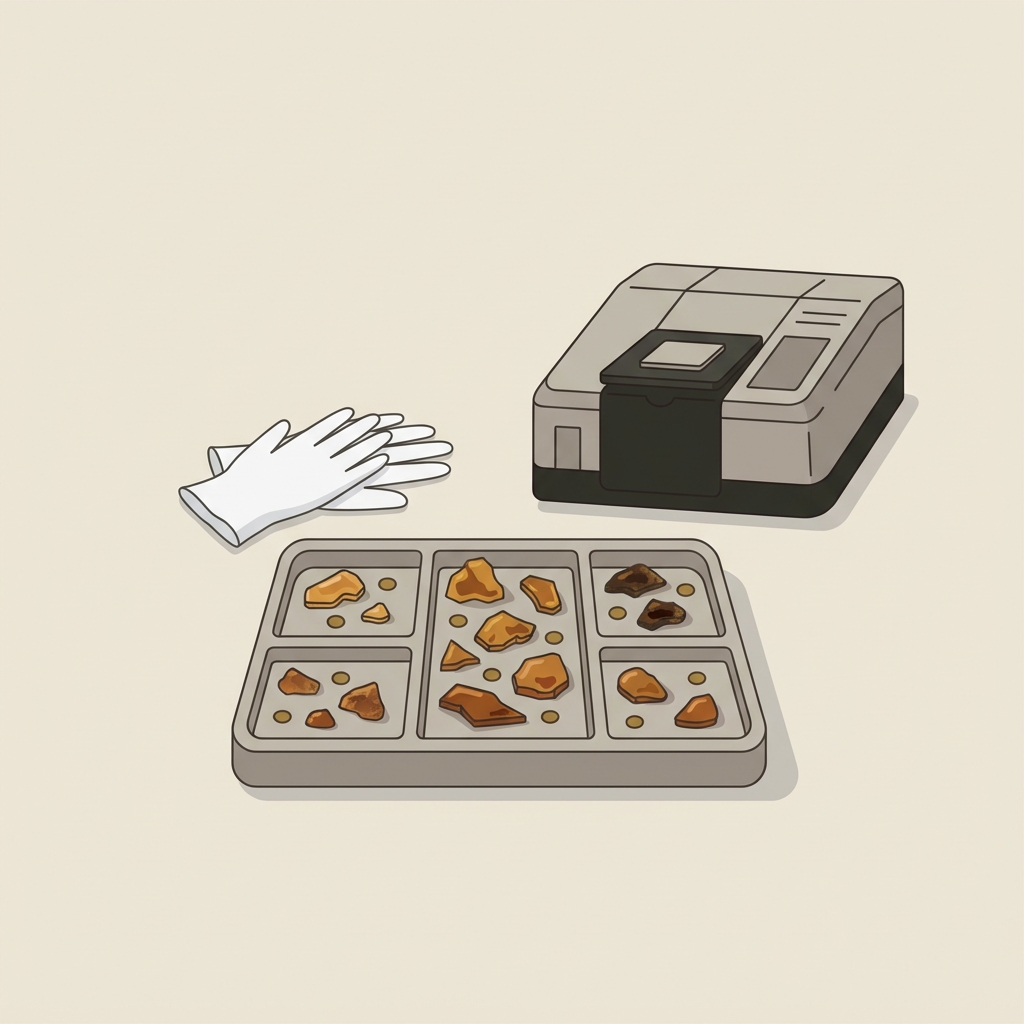
Readiness checklist for requesting FTIR or GC-MS on a small amber sample
Consult a conservation scientist before sampling
Both methods typically require only a very small sample or non-destructive sampling approaches, but they do involve specialist equipment and interpretation by experienced analysts. Recent literature recommends coordinated sampling of museum and market material to improve provenance resolution across collections Journal of Archaeological Science provenance study.
What results reliably distinguish Baltic succinite from copal and modern materials
When FTIR spectra show the diagnostic succinite bands and GC-MS profiles reveal aged biomarkers consistent with palaeoresin chemistry, specialists have strong evidence for a Baltic attribution. By contrast, copal tends to show chemical signatures of less polymerisation and different volatile components, while plastics and other synthetics have entirely different spectral baselines and fragmentation patterns Archaeometry review on spectroscopic and chromatographic discrimination.
Instrumental identification is not infallible; interpretation depends on high-quality reference libraries, careful sample handling and transparent reporting of methods. That is why analysts increasingly publish both spectra and chromatograms alongside their conclusions so readers can evaluate the basis for attributions.
Practical considerations for sampling and working with laboratories
Collectors and researchers should expect a few practical constraints. Laboratories generally ask for a clear micro-sample, agreement on minimal destructive sampling, and information about object provenance and previous treatments. Turnaround times and costs vary with the laboratory and the level of analysis requested, and accredited conservation science labs provide more robust reporting standards.
When asking a seller or curator about testing, request a clear statement of the method used and a copy of the laboratory report where available. If testing is not yet done, consider whether the object merits sampling given its condition and the seller's documentation.
Visual cues collectors can use and their limits
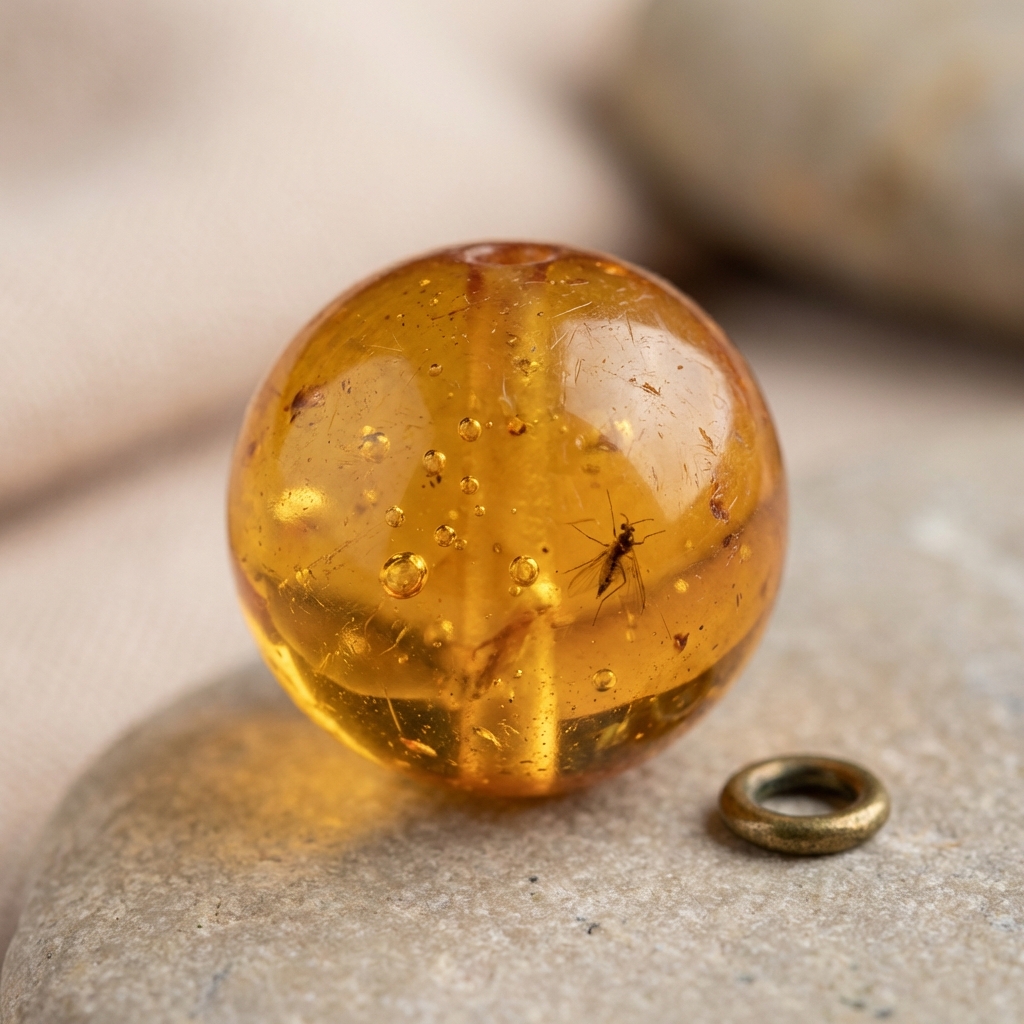
Visual inspection can provide helpful initial information. Museums and specialists commonly note indicators such as a warm colour range from pale yellow to deep cognac, a translucent ground, small gas bubbles, occasional insect inclusions and a surface patina that develops with long-term burial or handling Encyclopaedia Britannica on amber.
How sure can I be from photos alone?
Current evidence indicates Baltic succinite, or Baltic amber, was the dominant resin used in Roman jewellery, and collectors can best verify attribution by requesting provenance documentation and targeted FTIR or GC-MS testing while following conservation best practices.
Photographs help but have clear limits. Lighting, colour balance and digital smoothing can all mask natural textures and inclusions. Small bubbles and subtle internal fractures are often visible only with magnification or under controlled lighting, so photos should be complemented by descriptions of weight, translucency and any reported testing.
Many modern materials mimic amber's appearance, and some treatments and polishes can alter surface colour. Visual cues are best used as a triage step: they help prioritise items for further examination or testing but seldom suffice for definitive attribution British Museum collection guide to amber.
Conservation and care: preserving amber jewellery and worked pieces
Amber is an organic material that responds to environmental stress. Conservation guidance from major institutions advises avoiding solvents and polishes, protecting objects from ultraviolet light and from rapid temperature or humidity swings, and favouring minimal intervention to preserve patina and any inclusions AIC conservation guidelines on resins.
Storage should be stable and gentle: padded boxes, soft wrapping and avoidance of close contact with abrasive materials reduce the risk of surface damage. Display under low UV lighting and steady climate control reduces long-term degradation risks.

When buying from a curator or dealer, request condition notes and restoration notes that explain whether pieces were stabilised, cleaned or left untouched. At Aurora Antiqua, items are presented with condition descriptions and any available documentation to help collectors understand treatment history and provenance in context, without asserting absolute claims about every object.
Routine cleaning should be avoided. If necessary, conservators use specialised methods designed for organics and document any intervention. For private owners, seek professional advice before attempting any cleaning or consolidation.
Common identification pitfalls and market confusions
Collectors often encounter lookalikes. Copal, a younger resin, can resemble amber in colour and clarity but differs chemically and will not show the same aged biomarkers. Jet, shell and various modern plastics also mimic amber's appearance and weight, which is why testing plus documentation is essential when attribution matters Archaeometry review on spectroscopic and chromatographic discrimination.
Market descriptions may use historical-sounding terms or suggest a direct Roman origin without supporting provenance. That practice increases the importance of requesting condition notes, restoration records and any laboratory reports the seller can provide. Clear written correspondence about provenance becomes part of the object's documentation and should be preserved.
Finally, many small beads remain analytically untested in public records, and published datasets do not yet cover the full diversity of private market material. Until systematic FTIR and GC-MS surveys expand, some attributions will remain provisional and best expressed with conditional language.
Practical checklist for buyers and researchers
Ask sellers or curators for core documentation: clear high-resolution photos, measurements and weight, condition notes, restoration notes and any provenance statements or collection history. Request whether FTIR or GC-MS testing exists and, if so, ask to see the lab report.
See behind the scenes on @auroraantiqua
Check condition and provenance notes first, and consult a qualified conservation scientist or accredited lab before agreeing to any destructive testing
Use the following numbered checklist when assessing an amber piece
- Request provenance and collection history; ask for written documentation.
- Ask specifically whether FTIR or GC-MS testing has been performed and request copies of results.
- Request detailed condition and restoration notes, including what was stabilised or left untouched.
- Require high-resolution images under controlled lighting, and request views of inclusions or drill holes if present.
- If testing is required, agree sampling protocols and consult an accredited conservation science laboratory.
- Keep all written correspondence and lab reports with the object's documentation.
Independent lab testing is recommended when attribution affects scholarly use or high-value transactions. A lab report typically summarises methods, shows FTIR spectra or GC-MS chromatograms and provides an interpretation that can be discussed with a conservation scientist or experienced specialist before finalising any purchase.
Conclusion: what we know, what remains uncertain, and how to buy responsibly
Current evidence supports Baltic succinite as the dominant resin used in Roman-period jewellery, supplied through overland Amber Road corridors and by maritime trade routes; recent provenance studies further document both primary Baltic inputs and some secondary Palaeogene sources for particular finds Journal of Archaeological Science provenance study.
For collectors the practical implications are clear: rely on provenance documentation, request FTIR or GC-MS testing where attribution is important, and protect pieces with conservative storage and handling practices that follow conservation guidance AIC conservation guidelines on resins.
As systematic analytical coverage grows through coordinated FTIR and GC-MS surveys of museum and market material, attribution and provenance resolution should improve, refining our understanding of supply patterns in the Roman world. Until then, cautious, well-documented collecting supported by appropriate testing and conservation offers the most reliable route to buying responsibly.
Photos can show colour and inclusions but are not definitive; ask for magnified images, condition notes and request FTIR or GC-MS testing for conclusive identification.
No. Copal is a younger resin with different chemical markers; instrumental tests such as FTIR and GC-MS distinguish copal from archaeological Baltic amber.
Request detailed restoration notes that specify what was stabilised, repaired or left untouched, and ask whether any cleaning used solvents or polishes.